Why Bryson Tiller Is Not a Rapper: Defining the Trapsoul Genre
Bryson Tiller is categorized as an R&B and contemporary soul artist rather than a rapper, as his primary musical framework relies on melodic vocal delivery, harmonic layering, and song structures centered on atmosphere rather than rhyt...
Bryson Tiller is categorized as an R&B and contemporary soul artist rather than a rapper, as his primary musical framework relies on melodic vocal delivery, harmonic layering, and song structures centered on atmosphere rather than rhythmic lyricism. While he incorporates rhythmic cadence and hip-hop production elements, his artistic identity is rooted in the "Trapsoul" subgenre—a stylistic fusion of R&B vocal aesthetics and heavy trap-influenced beat production.
Contents
The Evolution of the "Trapsoul" Identity
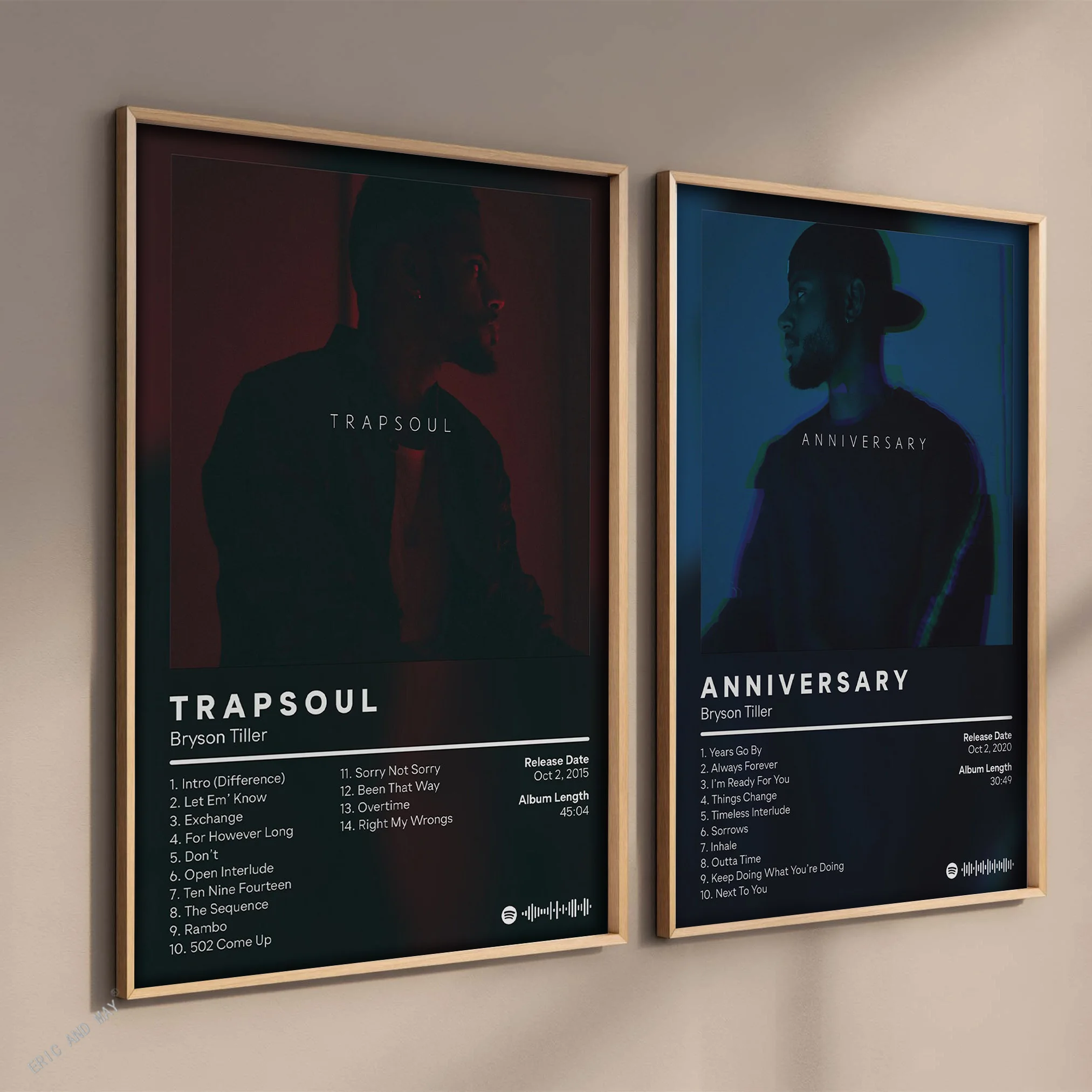
The confusion regarding whether Bryson Tiller is a rapper stems largely from the release of his breakout 2015 debut studio album, T R A P S O U L. The title itself acts as a manifesto for his artistic intent. In the mid-2010s, the intersection of hip-hop and R&B became increasingly blurred as trap music—characterized by 808-heavy drums, rapid hi-hats, and synth-heavy melodies—began to dominate the mainstream soundscape.
Tiller positioned himself in the center of this Venn diagram. By utilizing the production tools traditionally associated with Southern trap music, he created a sound that resonated with hip-hop audiences. However, a "rapper" is defined by the technical application of rhyme schemes, flow variations, and rhythmic speech patterns as the primary vehicle for storytelling. Tiller, by contrast, uses melody as his primary instrument. Even when his delivery leans into a syncopated, staccato cadence—often mistaken for rapping—it functions as a percussive melodic line rather than a lyrical verse.
Analyzing the Technical Differences
To distinguish between Tiller’s output and traditional rapping, it is necessary to analyze his technical approach to record making.
Vocal Melody vs. Rhythmic Speech
Rapping is inherently a linguistic art form where the phonetics of the words dictate the flow. The "rapper" prioritizes the arrangement of syllables to fit within the rhythmic grid of the bar. Bryson Tiller’s approach is fundamentally different; his vocals are usually centered around pitch-based melodic hooks, even during verses. He utilizes vocal doubling and layering, common in R&B, to create a lush sonic texture that would be considered cluttered or muddy in a traditional hip-hop context.
Production and Arrangement
The instrumentation on a Tiller track is specifically engineered to support a vocalist, not a rapper. In trap production designed for rappers, the space between the snare and the kick drum is left open to accommodate the vocal cadence. In Tiller’s tracks, that space is filled with synth pads, ambient vocal samples, and sustained bass notes that occupy the frequency range where a rapper would typically enunciate their syllables.
| Feature | Typical Rap Approach | Bryson Tiller (Trapsoul) |
|---|---|---|
| Primary Focus | Lyrical wit and flow | Melodic atmosphere |
| Beat Construction | Minimalist/Open for vocals | Harmonic/Layered |
| Vocal Technique | Cadence and rhyme scheme | Melisma and pitch-blending |
| Structure | Verse-heavy | Hook and bridge-focused |
The Influence of Contemporary R&B
Bryson Tiller operates within the lineage of contemporary R&B, which has always been defined by its ability to assimilate the dominant rhythmic trends of the day. Just as R&B artists in the 1990s integrated New Jack Swing and the 2000s integrated dancehall or pop-rap, Tiller integrated the aesthetic of Atlanta-born trap music.
This leads to the question of why he is often compared to rappers at all. The answer lies in the "lifestyle" branding. Much of the imagery and the lyrical subject matter found in his discography—materialistic aspirations, urban romance, and late-night nocturnal themes—overlaps significantly with the tropes found in modern hip-hop. However, sharing themes does not equate to sharing a technical craft.
Technical Depth: The Role of the DAW
One of the reasons Tiller's classification remains a point of debate in 2026 is the democratization of Digital Audio Workstations (DAWs). The ability for a producer or an artist to manipulate vocals in post-production has redefined what it means to be a "singer." Tiller utilizes pitch correction and vocal processing not as a crutch, but as an aesthetic choice, similar to how an electric guitarist uses pedals.
In the studio, Tiller’s sessions resemble those of a producer as much as a performer. He is known for crafting his own soundbeds, which allows him to weave his vocals into the arrangement at the composition stage. This is a practice more common among contemporary R&B vocalists who prioritize the "vibe" of the track over the lyrical density required of a traditional rapper.
Common Misconceptions
- "If he uses an 808, he is a rapper": This is a technical fallacy. The 808 drum machine is a staple of trap music, which is a subgenre of hip-hop, but its presence does not dictate the performer’s role. Modern R&B has fully adopted the 808 as its standard low-end foundation.
- "If he does a guest verse, he is a rapper": Artists often move between roles. When Tiller performs a "rap" verse, he is stepping into a different technical execution, but his core competency and discography remain anchored in melodic R&B.
- "The industry lists him under Hip-Hop/Rap on streaming platforms": Categorization by streaming services is often based on marketing and playlist placement rather than technical musical analysis. Being placed on a "Rap Caviar" playlist does not change the musical taxonomy of the track.
Troubleshooting Your Perception of the Genre
If you find it difficult to differentiate between Tiller and a rapper, listen for the following elements:
- Pitch Stability: Does the artist hold a note for an extended period, or does the vocal conclude on a breathy, non-pitched syllable? Tiller consistently opts for the former.
- Harmonic Interaction: Does the vocal melody move in parallel with the synthesizer or guitar line? If it does, the vocal is serving as a harmony, which is a hallmark of singing.
- Lyrical Density: Does the artist pack a high number of syllables into a single bar? Rappers generally aim for maximum density, whereas Tiller leaves significant melodic room to allow the music to "breathe."
Frequently Asked Questions
Does Bryson Tiller rap in any of his songs?
While Bryson Tiller incorporates rap-like flows and cadences into his music, these sections are typically used as rhythmic devices within a melodic framework. He occasionally delivers verses that mimic rap techniques, but his overall musical identity is defined by R&B conventions and melodic song construction.
Why is Bryson Tiller associated with hip-hop culture?
Tiller is associated with hip-hop due to the production style of his music—specifically his use of trap-influenced beats—and his stylistic overlap with hip-hop artists. He uses the sonic palette of Southern rap to enhance his R&B vocal delivery, creating a hybrid sound that bridges the two genres.
Is "Trapsoul" a formal genre or just a marketing term?
Trapsoul is recognized as a legitimate subgenre descriptor. It identifies a specific evolution in R&B where the traditional vocal styling and romantic songwriting tropes are married to the aggressive, percussion-driven, and synth-heavy sound of trap music. It is a stylistic bridge rather than just a marketing gimmick.
How does his vocal training influence his classification?
Tiller’s reliance on pitch-based phrasing, melisma (the singing of a single syllable of text while moving between several different notes in succession), and dynamic vocal layering indicates a background or stylistic preference for R&B vocal performance over the rhythm-focused delivery of a rapper.
Can an artist be both a rapper and a singer?
Yes, many artists are hybrids. However, in the context of Bryson Tiller, the distinction is important because his career success was built on the specific fusion of his R&B identity with trap production, rather than a split focus on both rapping and singing.
Conclusion: Focusing on the Artistry
The debate surrounding Bryson Tiller's classification is largely a matter of genre nomenclature failing to keep up with artistic innovation. Tiller is a quintessential contemporary R&B artist who utilizes the sonic tools of the trap era. To appreciate his work fully, listeners should move away from the binary of "rapper versus singer" and recognize that he is an atmospheric songwriter whose instrument of choice is a blend of melody and rhythm. If you are looking to understand his sound, focus on his T R A P S O U L era to see the foundation of this fusion, and compare it to traditional R&B to see how he subverts the genre's expectations while remaining fundamentally rooted in vocal melody.
Image Gallery