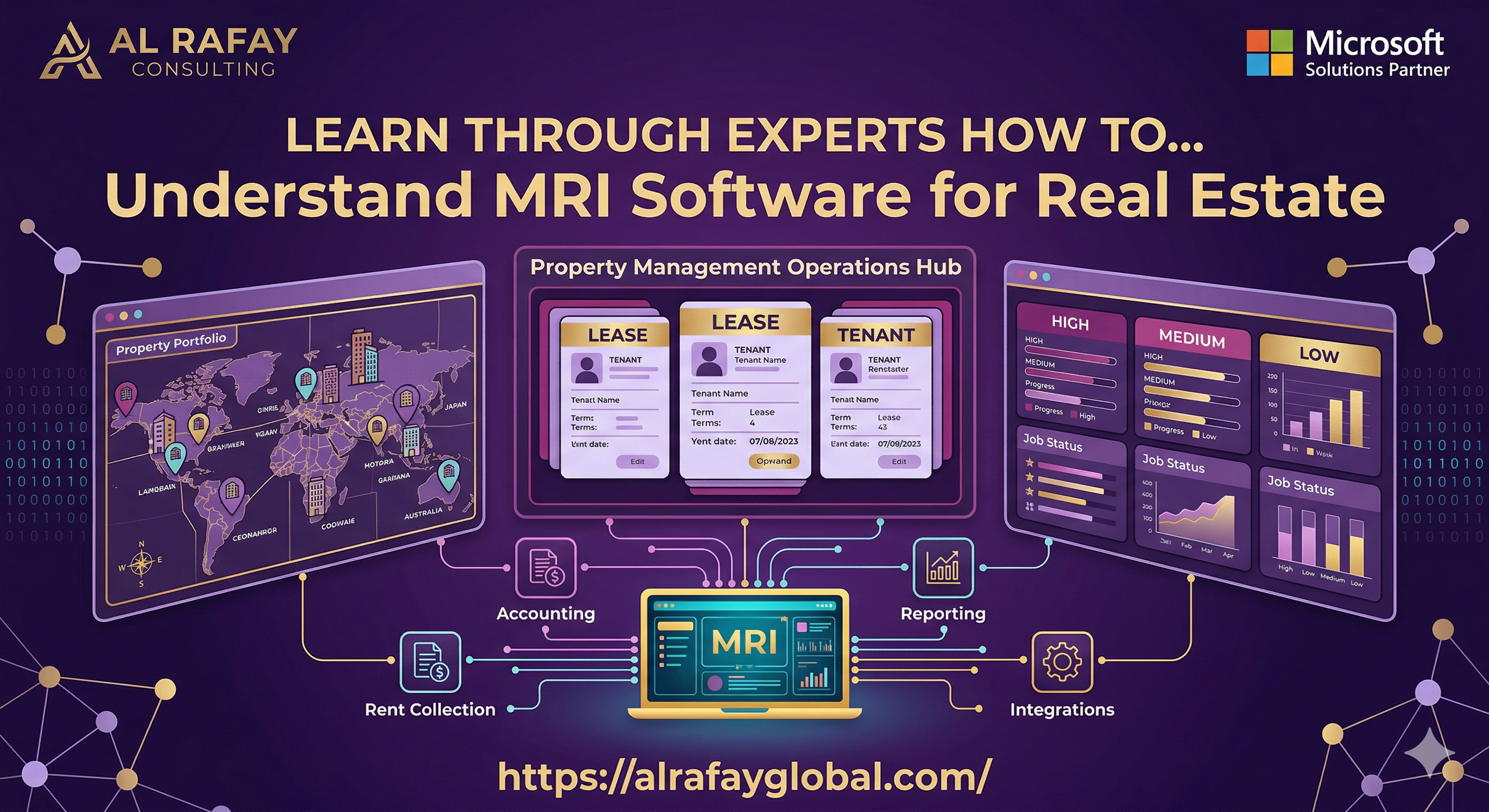
Why the MRI Real Estate Software Debate Matters
The debate surrounding MRI Software matters because it represents the fundamental choice between an open, "best-of-breed" technology ecosystem and a closed, "all-in-one" suite. For real estate firms in 2026, this decision dictates thei...
The debate surrounding MRI Software matters because it represents the fundamental choice between an open, "best-of-breed" technology ecosystem and a closed, "all-in-one" suite. For real estate firms in 2026, this decision dictates their ability to integrate emerging AI tools, maintain data sovereignty, and scale operations without vendor lock-in.
Contents
The landscape of property management technology has shifted from simple accounting tools to complex data ecosystems. At the center of this evolution is MRI Software, a legacy player that has championed an "open and connected" philosophy. The debate over whether this approach is superior to the integrated, closed-loop models offered by competitors like Yardi or RealPage is not merely a technical one; it is a strategic crossroad for the global real estate industry.
The Core of the Debate: Open vs. Closed Ecosystems
To understand why the MRI debate is so persistent, one must first understand the two competing philosophies in PropTech (Property Technology). On one side, you have the "All-in-One" solution. These platforms aim to provide every possible feature—from accounting and leasing to maintenance and resident portals—within a single, proprietary ecosystem.
On the other side is MRI’s "Open and Connected" model. MRI provides the core financial and management engine but builds its architecture to allow third-party applications to plug in seamlessly. This "best-of-breed" approach allows a real estate firm to use MRI for its general ledger while using specialized, niche startups for things like AI-driven lead scoring or advanced ESG (Environmental, Social, and Governance) reporting.
The debate matters because it forces firms to choose between simplicity and flexibility. A closed system is often easier to manage initially because there is "one throat to choke" when things go wrong. However, an open system like MRI prevents a firm from being held hostage by a single vendor’s development roadmap. If a new, revolutionary AI tool for property valuation hits the market in 2026, MRI users can typically integrate it faster than those waiting for a closed-platform vendor to build their own version.
Data Sovereignty and the API Economy
In 2026, data is the most valuable asset a real estate investment trust (REIT) or property management firm owns. The MRI debate centers heavily on who actually controls that data. MRI has historically been more permissive regarding data access, providing robust APIs (Application Programming Interfaces) that allow firms to extract their information for use in external data warehouses or business intelligence tools like Power BI or Tableau.
In contrast, more restrictive platforms often charge significant "integration fees" or limit the frequency of data calls, effectively creating a "data jail." For modern firms, the ability to run cross-platform analytics—comparing property management data against external market trends or weather patterns—is a competitive necessity. The debate matters because choosing a platform that restricts data flow can stifle a firm’s ability to innovate and respond to market shifts.
The Role of MRI Partner Connect
A significant pillar of MRI's argument is the Partner Connect program. This is a curated marketplace of third-party vendors that have already built integrations with MRI. The existence of this ecosystem shifts the debate from "What can this software do?" to "What can this platform enable?"
By 2026, the number of specialized PropTech solutions has exploded. Large firms no longer want a "jack of all trades" software; they want a core system that acts as a reliable foundation for a stack of high-performance tools. MRI’s commitment to this model has forced the rest of the industry to become more open, proving that the "debate" itself has moved the needle toward better interoperability for all users.
Operational Flexibility vs. Implementation Complexity
A common critique in the MRI debate is the complexity of implementation. Because MRI is highly customizable and designed to integrate with other tools, setting it up is rarely a "plug-and-play" experience. It requires a clear strategy and often a dedicated IT team or a third-party consultant to manage the various integrations.
This leads to a divide in the target audience:
- Small to Mid-Market Managers: May find the MRI debate less relevant because they lack the resources to manage multiple integrations. For them, a closed, "good enough" system might be more efficient.
- Enterprise and Global Institutional Investors: For these players, the debate is critical. They operate across different jurisdictions with different tax laws and reporting requirements. They need the flexibility to swap out localized modules without overhauling their entire global accounting system.
Comparison of Market Philosophies (2026 Status)
The following table compares the primary characteristics of MRI’s open approach against the traditional closed-suite model prevalent in the industry.
| Feature | MRI "Open & Connected" | Traditional "All-in-One" Suites |
|---|---|---|
| Integration Philosophy | API-first; encourages 3rd party tools. | Native-first; prioritizes in-house modules. |
| Data Access | High; typically allows external BI tools. | Restricted; often requires internal reporting. |
| Customization | Extensive via flexible schemas and toolkits. | Standardized; limited to vendor parameters. |
| Vendor Lock-in | Low; modules can be swapped. | High; difficult to extract specific data. |
| Initial Complexity | High; requires strategic planning. | Moderate; standardized setup process. |
| Innovation Speed | Fast; leverages the entire PropTech market. | Slower; dependent on vendor R&D cycles. |
| Target Audience | Enterprise, Global, and Complex portfolios. | Mid-market and residential managers. |
Why the Debate Matters for AI Integration
As we navigate 2026, Artificial Intelligence has moved from a buzzword to a functional requirement. Large Language Models (LLMs) and predictive analytics require massive amounts of clean, structured data to be effective.
The MRI debate is vital here because an open architecture allows firms to feed their property data into custom-built AI models. If a firm is locked into a closed system, they are limited to the AI features that the vendor chooses to provide. If the vendor's AI is subpar or expensive, the firm’s operational efficiency suffers. By maintaining an open stance, MRI allows firms to choose the best AI agents for tenant communication, lease abstraction, or energy optimization, ensuring the firm stays at the cutting edge of technology.
Strategic Cost Considerations
The debate also has a significant financial component. While a closed system might have a lower upfront cost, the "hidden" costs of lack of choice can be staggering.
- Module Monopolies: In a closed system, if the vendor raises the price of their "Maintenance Module," the user has no choice but to pay.
- Efficiency Gaps: If a third-party tool can reduce vacancy cycles by two days more than the native module, the lost revenue over a large portfolio can far exceed the cost of the software itself.
MRI’s model fosters competition. Because third-party vendors know they can integrate with MRI, they are constantly competing to offer better features and pricing to MRI users. This ecosystem-driven competition ultimately benefits the end-user by driving down costs and driving up quality.
Frequently Asked Questions
Is MRI Software better for residential or commercial real estate?
MRI has its roots in commercial real estate and remains a dominant force there due to its complex recovery and escalation features. However, through acquisitions and platform development, it has become highly competitive in the residential and multi-family sectors. The "debate" is equally relevant in both, as both sectors increasingly rely on specialized PropTech for tenant experience and building automation.
Does MRI's open philosophy lead to higher security risks?
Open does not mean "unprotected." MRI uses standardized API protocols and OAuth authentication to ensure data transfers are secure. The debate regarding security often centers on the "surface area" of the tech stack; while an open system has more integration points, it also allows firms to use specialized, high-tier cybersecurity tools that might not be available in a closed suite.
How does the MRI debate affect smaller property management firms?
For smaller firms, the debate is often a cautionary tale about scalability. While a small firm might not need 20 integrated apps today, choosing a closed system can create significant "technical debt" that makes it expensive to move to a more robust platform once the firm grows.
Can MRI handle global portfolios with different currencies?
Yes, this is one of the areas where the MRI debate favors the open model. Global firms often need specific "localization" apps for tax compliance in different countries. MRI’s ability to plug in these local solutions while maintaining a centralized global ledger is a primary reason it is favored by international institutional investors.
What is the biggest drawback of the MRI approach?
The primary drawback is the "integration fatigue." Managing multiple vendors, contracts, and support lines can be taxing for an undersized IT department. The debate matters because firms must weigh the benefit of flexibility against the overhead of managing a multi-vendor environment.
Final Recommendation
When evaluating the MRI real estate software debate, the decision should be based on your five-year growth strategy. If your goal is to maintain a lean, standardized operation with minimal IT involvement, a closed "all-in-one" suite may serve you well. However, if you view technology as a competitive advantage and intend to leverage AI, custom analytics, and specialized PropTech tools to maximize asset value, the open architecture championed by MRI is the superior strategic choice.
Firms should begin by auditing their current data silos. If you find that your team is manually exporting CSV files from your current software to perform basic analysis, it is a clear sign that you are on the wrong side of the openness debate. Moving toward a platform like MRI in 2026 is not just an IT upgrade; it is an investment in the future agility of your real estate business.
Image Gallery