Where to Invest IRA Money Wisely: A Strategic Framework for Retirement Growth
Investing your Individual Retirement Account (IRA) money wisely requires balancing long-term growth objectives with your personal risk tolerance, time horizon, and tax-advantaged goals. By utilizing a diversified mix of low-cost index...
Investing your Individual Retirement Account (IRA) money wisely requires balancing long-term growth objectives with your personal risk tolerance, time horizon, and tax-advantaged goals. By utilizing a diversified mix of low-cost index funds, exchange-traded funds (ETFs), or target-date funds, investors can effectively manage market volatility while compounding wealth over decades, ensuring their assets align with their projected retirement date.
Contents
Understanding the Fundamentals of IRA Investing
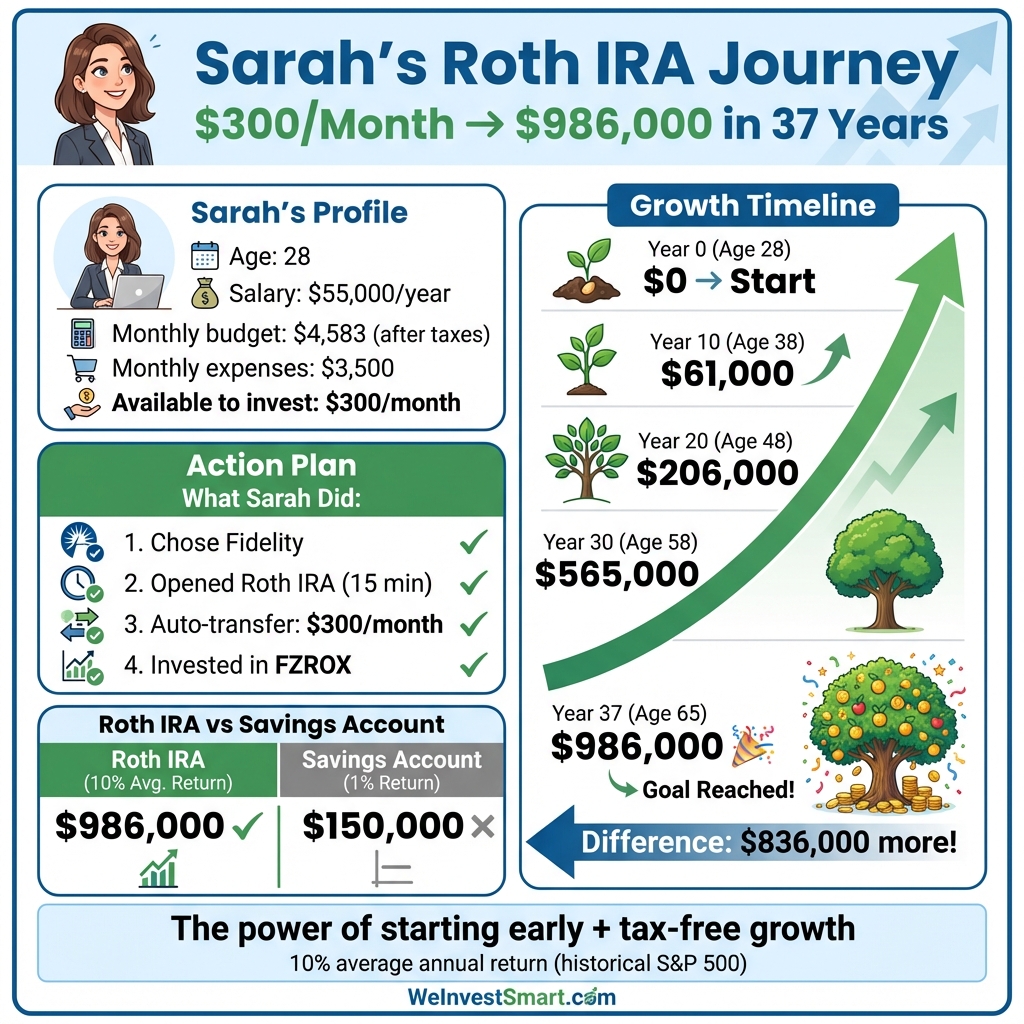
An IRA is not an investment in itself; rather, it is a tax-advantaged container that holds various investment vehicles, such as stocks, bonds, mutual funds, and ETFs. Because IRAs offer significant tax benefits—either through tax-deferred growth in a Traditional IRA or tax-free withdrawals in a Roth IRA—the primary objective is to maximize the growth of the underlying assets within the account.
Before selecting specific investments, you must determine your investment horizon. If you are decades away from retirement, your portfolio should generally lean toward higher-growth assets like equities. As you approach retirement, your strategy should shift toward capital preservation and income-generating assets, such as high-quality bonds or dividend-paying stocks. The "wise" choice is always one that minimizes management fees and administrative costs, as these expenses can significantly erode your compounding returns over a 20- or 30-year period.
The Role of Asset Allocation and Diversification
The foundation of a wise IRA strategy is asset allocation. This is the practice of spreading your capital across different asset classes to reduce the impact of market volatility. If one sector of the economy performs poorly, another may remain stable or grow, cushioning your overall portfolio from steep losses.
Core Asset Classes
- Equities (Stocks): These offer the highest long-term growth potential but come with the most significant short-term risk. Diversification within equities is achieved by owning shares across large-cap, mid-cap, and small-cap companies, as well as domestic and international markets.
- Fixed Income (Bonds): Bonds act as a stabilizer. They provide regular interest payments and generally exhibit lower volatility than stocks. Government bonds (Treasuries) and investment-grade corporate bonds are standard choices for conservative to moderate portfolios.
- Cash and Equivalents: While necessary for emergency funds, holding significant amounts of cash in an IRA is generally discouraged because it rarely earns enough interest to outpace inflation.
Implementation Strategy
Most investors find success using a "core and satellite" approach. The core of the portfolio consists of broad-market index funds that provide low-cost exposure to the entire economy. Satellite positions—which should be kept to a small percentage of the total portfolio—can be used for specific sector bets or higher-risk growth opportunities that you believe will outperform the broader market.
Comparison of Common IRA Investment Vehicles
Choosing the right instrument depends on your level of engagement. If you prefer a hands-off approach, automated options are available; if you prefer control, self-directed portfolios are the standard.
| Investment Vehicle | Management Effort | Risk Level | Primary Benefit |
|---|---|---|---|
| Target-Date Funds | Very Low | Varies by Date | Automatic rebalancing and glide path |
| Broad Market ETFs | Low | Moderate/High | Low expense ratios; immediate diversification |
| Individual Stocks | High | High | Potential for alpha (outperformance) |
| Bond Funds | Low | Low/Moderate | Steady income and capital stability |
| Robo-Advisors | Very Low | Tailored to User | Algorithmic optimization and tax-loss harvesting |
Leveraging Low-Cost Index Funds and ETFs
In 2026, the consensus among financial experts remains that low-cost index funds and ETFs are the most efficient tools for long-term retirement planning. These funds track a specific market index, such as the S&P 500 or a total international stock index, providing broad exposure without the high fees associated with actively managed mutual funds.
The "wise" aspect of using index funds lies in the expense ratio. An expense ratio represents the annual fee charged by the fund manager. While a 1% fee might seem negligible, it reduces your total investment capital every year. Over 30 years, a 1% fee can result in tens of thousands of dollars of lost potential growth. Investors should prioritize funds with expense ratios below 0.10% whenever possible.
Factors That Influence Your Investment Decisions
Your Time Horizon
If you are 30 years old, you have time to recover from market cycles. You can afford to hold a higher percentage of stocks. If you are 60 years old, your window to recover from a major market downturn is smaller, necessitating a move toward bonds or high-yield cash equivalents.
Risk Tolerance
Risk tolerance is twofold: your capacity for risk (financial ability to lose money) and your appetite for risk (your emotional reaction to market swings). A wise investor does not choose a high-risk portfolio if they plan to panic-sell during the first 10% market correction.
Tax Implications
While all growth inside an IRA is tax-advantaged, consider the difference between a Traditional IRA and a Roth IRA. In a Traditional IRA, your investments will eventually be taxed as ordinary income upon withdrawal. In a Roth IRA, your money grows tax-free, and withdrawals are tax-free in retirement. Because of this, some investors choose to place higher-growth assets in their Roth IRAs to maximize the tax-free gain.
Common Mistakes to Avoid
- Over-Trading: Attempting to time the market by buying and selling frequently leads to missed opportunities and increased transaction friction. Retirement investing is a game of patience.
- Chasing Past Performance: Just because a specific sector or stock had an excellent year in 2025 does not mean it will continue to outperform in 2026. Avoid "hot" stocks that deviate from your long-term plan.
- Ignoring Inflation: Keeping your IRA money in a high-yield savings account or a certificate of deposit (CD) might feel "safe," but it often fails to beat inflation over long periods, meaning your purchasing power in retirement will decrease.
- Lack of Rebalancing: If your target is to hold 70% stocks and 30% bonds, a strong year in the stock market might push your allocation to 80/20. Failing to rebalance leaves you exposed to higher risk than you originally intended.
Frequently Asked Questions
Should I use a robo-advisor for my IRA?
Robo-advisors are excellent for individuals who do not want to manage their own portfolios. They automatically handle asset allocation, diversification, and rebalancing for a modest fee, making them a wise choice for hands-off investors.
What is a "glide path" in target-date funds?
A glide path refers to the automatic adjustment of a fund’s asset allocation over time. As you approach the target retirement year, the fund manager automatically shifts the assets from aggressive stocks to more conservative bonds.
Can I hold real estate in an IRA?
Yes, through a self-directed IRA, you can hold alternative assets like real estate or private equity. However, these require significantly more oversight and have higher administrative costs than traditional stocks and bonds.
How often should I check my IRA performance?
Checking your performance once or twice a year is generally sufficient. Frequent monitoring often leads to impulsive decisions based on short-term market noise rather than long-term retirement goals.
Is it wise to hold dividend stocks in an IRA?
Dividend stocks are effective in an IRA because they provide a steady income stream that can be reinvested without incurring immediate taxes. Reinvesting these dividends is a powerful way to accelerate the compounding process.
Final Recommendations for Your Portfolio
To manage your IRA wisely in 2026, start by assessing your current asset allocation. If you are managing your own account, simplify your holdings into a few low-cost index funds that cover the total stock market and the total bond market. Ensure your allocation aligns with your age and retirement timeline, and commit to a strategy of periodic rebalancing—perhaps once annually or when your allocations drift by more than 5%. If you find the process overwhelming, consider moving your assets to a target-date fund or a reputable robo-advisor that aligns with your risk profile. Retirement success is rarely about picking the perfect asset; it is about consistent, low-cost investing over a long period.
Image Gallery