Understanding Auto Insurance in Turlock: Coverage, Requirements, and Rates
Navigating auto insurance in Turlock, California, requires understanding state-mandated liability minimums, local driving conditions in Stanislaus County, and factors that influence premium costs. Drivers must maintain specific financi...
Navigating auto insurance in Turlock, California, requires understanding state-mandated liability minimums, local driving conditions in Stanislaus County, and factors that influence premium costs. Drivers must maintain specific financial responsibility limits while balancing optional coverages like comprehensive and collision to protect against local accident and theft risks.
Contents
Introduction to California Auto Insurance Regulations
Securing auto insurance in Turlock begins with complying with California state law. Unlike "no-fault" states, California operates under a "fault" system, meaning the driver who causes an accident is financially responsible for the resulting damages, medical bills, and property repairs. Because of this legal framework, selecting appropriate coverage limits is a critical step in protecting personal assets from severe litigation or out-of-pocket expenses following a collision.
The California Department of Insurance regulates admitted carriers operating within the state, establishing rules regarding rate changes, non-renewals, and claims handling. When shopping for policies in Turlock, consumers deal with carriers licensed by the state, ensuring recourse through the California Department of Insurance if disputes arise. Understanding these regulatory boundaries helps policyholders evaluate quotes objectively and ensure their chosen insurer is authorized to do business in California.
State-Mandated Minimum Requirements
Every registered vehicle operating on public roads in Turlock must meet California's compulsory financial responsibility laws. These laws dictate the absolute minimum bodily injury and property damage liability limits an owner must carry.
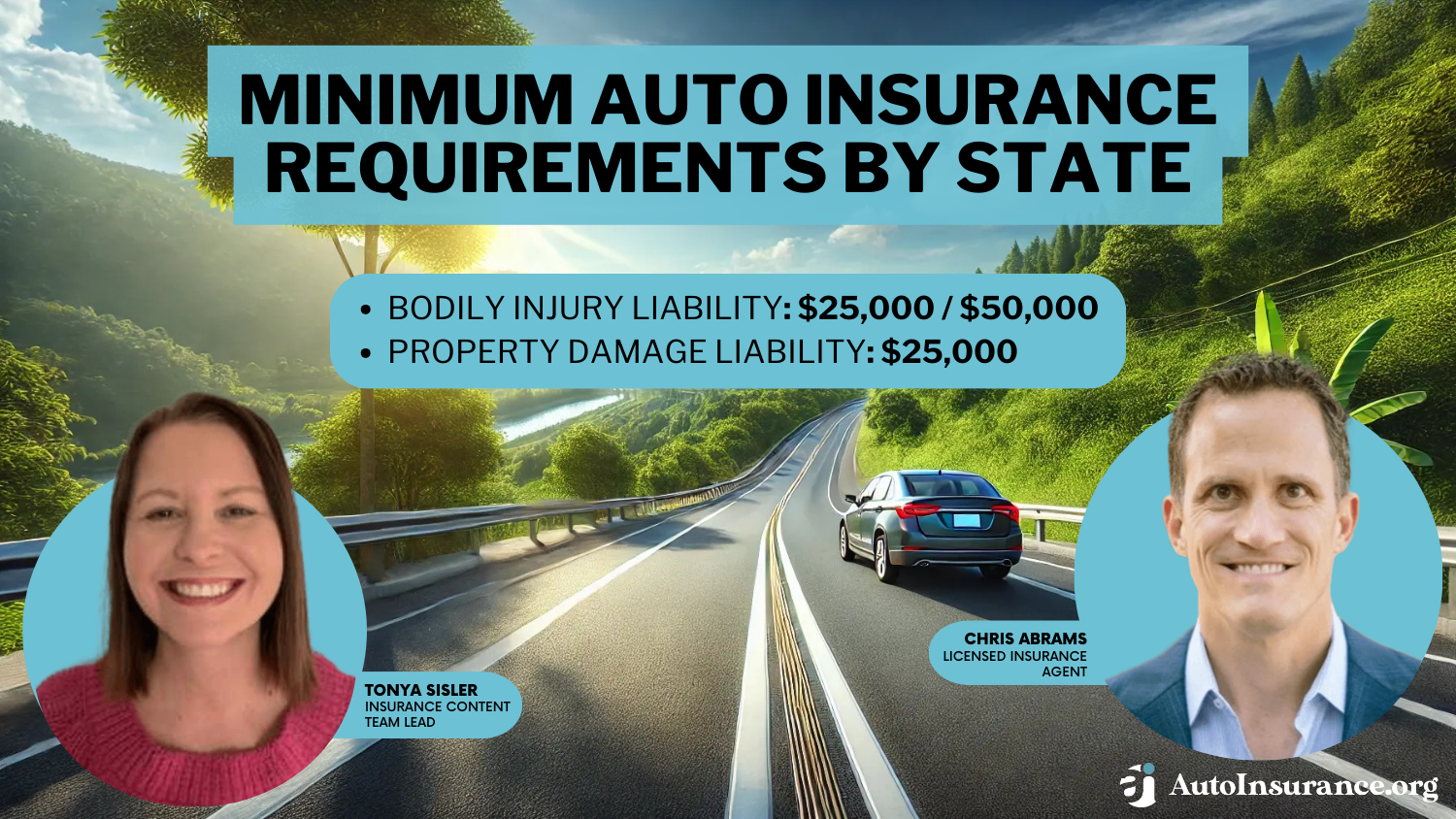
Under current California statutes, the mandatory minimum liability coverage is commonly expressed as a split limit, such as 15/30/5. Breaking down these numbers clarifies precisely what financial protection is—and is not—provided by the state minimum:
- $15,000 for bodily injury liability per person: The maximum amount your insurer will pay for the medical expenses or death of a single individual injured in an accident you cause.
- $30,000 for total bodily injury liability per accident: The aggregate maximum payout for all combined injuries or fatalities resulting from a single accident you cause.
- $5,000 for property damage liability per accident: The maximum amount your insurer will pay to repair or replace another person's vehicle, fence, building, or other property damaged in an accident you cause.
While purchasing these minimum limits satisfies legal registration requirements with the California Department of Motor Vehicles (DMV), insurance professionals universally caution that $5,000 in property damage or $15,000 in bodily injury is rarely sufficient. Modern vehicle replacement costs and emergency medical care frequently exceed these thresholds, leaving underinsured motorists personally liable for the remaining balance.
Optional Coverages for Comprehensive Protection
Because state minimums leave significant financial exposure, most Turlock drivers supplement their policies with optional coverages designed to safeguard their own vehicles and passengers. Selecting these additions depends on the vehicle's age, market value, and whether it is financed or leased.
| Coverage Type | What It Protects Against |
|---|---|
| Collision Coverage | Damage to your vehicle from a crash with another car or object. |
| Comprehensive Coverage | Theft, fire, vandalism, animal strikes, and weather events. |
| Uninsured/Underinsured Motorist | Accidents caused by a driver with no insurance or low limits. |
| Medical Payments (MedPay) | Medical and funeral expenses for you and your passengers. |
Collision and Comprehensive Insurance
Collision coverage pays to repair or replace your vehicle if it collides with another car or stationary object, regardless of fault. Comprehensive coverage addresses non-collision events, such as windshield cracks from highway debris, vehicle theft, vandalism, or damage caused by hitting an animal. If you carry an auto loan or lease, your lender will almost certainly require you to maintain both collision and comprehensive coverage with specified deductible levels, typically $500 or $1,000.
Uninsured and Underinsured Motorist (UM/UIM)
Despite mandatory insurance laws, a notable percentage of drivers in California operate vehicles without valid coverage. Uninsured Motorist Bodily Injury (UMBI) covers your medical bills, lost wages, and pain and suffering if an uninsured driver hits you. Given regional uninsured motorist statistics in the Central Valley, carrying UMBI and Uninsured Motorist Property Damage (UMPD) is a prudent risk-management decision.
Factors Influencing Auto Insurance Rates in Turlock
Insurance companies use sophisticated actuarial models to determine premium rates. While national and state trends affect baseline pricing, several localized factors specifically impact drivers residing in Turlock, ZIP codes 95380 and 95382.
Local Driving Environment and Traffic Density
Turlock is situated along the heavily traveled Highway 99 corridor in the Central Valley. Commuter traffic, agricultural transport trucks, and regional transit contribute to traffic congestion and collision frequencies along major arteries like Lander Avenue, Geer Road, and Monte Vista Avenue. Insurers factor local accident statistics, municipal traffic density, and regional vehicle theft rates into rate calculations. According to reports published by the California Highway Patrol and local law enforcement agencies, vehicle theft remains a persistent property crime concern across Stanislaus County, which directly influences comprehensive insurance premiums.
Individual Driver Risk Profiles
Beyond geography, personal rating factors heavily dictate individual policy costs:
- Driving Record: Clean driving records yield the lowest rates. Speeding tickets, at-fault accidents, and DUI convictions trigger significant surcharges and can reclassify a driver into a high-risk tier.
- Annual Mileage: Commuting long distances outside Turlock—such as to Modesto, Merced, or across the Altamont Pass toward the Bay Area—increases exposure miles, raising rates compared to drivers with short local commutes.
- Vehicle Make and Model: Luxury vehicles, sports cars, and models frequently targeted by thieves cost more to insure due to higher repair parts expenses and replacement costs.
- Credit History: In accordance with California regulations, insurers' use of credit-based insurance scores is strictly limited or prohibited compared to states that permit broad credit scoring, placing greater emphasis on driving history and experience.
Strategies for Managing and Reducing Premiums
Managing auto insurance costs in Turlock without sacrificing essential protection involves leveraging available discounts, adjusting deductibles strategically, and shopping the insurance market periodically.
Maximizing Available Discounts
Most carriers offer a variety of discounts that can lower annual premiums. Consumers should verify eligibility for the following:
- Multi-Policy Discounts: Bundling auto insurance with homeowners, renters, or umbrella policies through the same carrier.
- Multi-Vehicle Discounts: Registering and insuring multiple household vehicles under a single policy.
- Good Driver Discounts: Maintaining a clean driving record free of chargeable accidents or major moving violations for a specified consecutive period, as outlined by Proposition 103 guidelines in California.
- Safe Driver Technology: Enrolling in telematics or app-based monitoring programs that track driving habits, speed, braking, and phone usage.
- Low Mileage Discounts: Demonstrating lower-than-average annual mileage if the vehicle is primarily used for occasional errands or remote work.
Adjusting Deductibles Wisely
Raising your collision and comprehensive deductibles from $500 to $1,000 typically reduces your premium. However, policyholders must ensure they have adequate cash reserves set aside to pay the higher deductible out-of-pocket in the event of an unexpected claim. Lowering coverage limits to save money is generally discouraged, as a single severe accident can quickly exhaust inadequate policy limits.
Frequently Asked Questions
What happens if I am caught driving without insurance in Turlock?
Driving without proof of financial responsibility in California violates Vehicle Code Section 16028. Penalties include steep fines, license suspension, vehicle impoundment, and the requirement to file an SR-22 certificate—a form proving financial responsibility—for three consecutive years, which substantially increases future insurance rates.
Are insurance rates in Turlock higher than the national average?
California auto insurance rates fluctuate based on regional litigation costs, medical expenses, and traffic density. While Turlock experiences lower traffic density than major metropolitan centers like Los Angeles or San Francisco, Central Valley insurance rates reflect regional accident frequencies, uninsured motorist percentages, and vehicle repair labor costs.
Do I need to purchase collision coverage if my car is fully paid off?
If your vehicle is older and has a low market value, paying for collision and comprehensive coverage may exceed what the insurer would pay out in a total loss. Evaluating the vehicle's current book value against the combined annual cost of these optional coverages helps determine whether dropping them to save money makes financial sense.
How does California's Proposition 103 affect my auto insurance?
Passed by voters in 1988, Proposition 103 requires insurance companies operating in California to secure prior approval from the Insurance Commissioner before implementing any rate changes. It also mandates that rates be primarily determined by driving safety record, annual mileage, and years of driving experience, rather than geographic lines alone.
What steps should I take immediately after an accident in Turlock?
First, ensure everyone involved is safe and call 911 if there are injuries or significant traffic hazards. Exchange insurance information, driver's licenses, and contact details with other involved drivers. Document the scene with photographs, gather witness statements if possible, and report the incident to your insurance carrier promptly to initiate the claims process.
Next Actions for Turlock Drivers
Review your current declarations page to verify your liability limits, deductibles, and endorsement types. If your policy reflects state minimums or lacks adequate uninsured motorist protection, request quotes from multiple licensed carriers to benchmark competitive rates across the Central Valley market. Maintain proper proof of insurance inside your vehicle at all times to ensure compliance with California law.
Image Gallery