Comprehensive Guide to Army Service Uniform (ASU) Wear and Regulations for 2026
Proper ASU uniform wear refers to the strict adherence to Department of the Army Regulation 670-1 (AR 670-1) and Department of the Army Pamphlet 670-1 (DA PAM 670-1), which govern the configuration of the Blue Army Service Uniform. As...
Proper ASU uniform wear refers to the strict adherence to Department of the Army Regulation 670-1 (AR 670-1) and Department of the Army Pamphlet 670-1 (DA PAM 670-1), which govern the configuration of the Blue Army Service Uniform. As of 2026, the Blue ASU serves primarily as the Army Dress Uniform for formal occasions, ceremonies, and social functions, following the full implementation of the Army Green Service Uniform (AGSU) for daily business wear.
Contents
This guide focuses specifically on the United States Army Service Uniform (ASU) regulations. If you are seeking information regarding Arizona State University (ASU) apparel or campus dress codes, please note that this article is dedicated to military uniform compliance and technical specifications for service members.
The Evolution of the Army Service Uniform in 2026
As we move through 2026, the landscape of Army heraldry and individual appearance has stabilized following the mandatory transition period to the Army Green Service Uniform (AGSU). For today's Soldier, the "ASU" specifically refers to the blue coat and trousers/skirt combination. While the AGSU has reclaimed its place as the primary "Service" uniform for office environments and recruiting duties, the Blue ASU remains the gold standard for formal excellence.
The Blue ASU is essentially the Army's version of a tuxedo or formal suit. It is required for all officers and non-commissioned officers (NCOs) and is optional for junior enlisted personnel for formal events. The uniform symbolizes the heritage of the Continental Army and requires meticulous attention to detail to maintain the high standards of the profession of arms.
Formal Designations of the Blue ASU
Depending on the configuration and the events attended, the Blue ASU can be categorized into different levels of formality:
- Class A ASU: Includes the blue coat, trousers/skirt, long-sleeve white shirt, and necktie/neck tab. All ribbons, badges, and accoutrements are worn.
- Class B ASU: Includes the white shirt (long or short sleeve) and trousers/skirt without the blue coat. Ribbons and badges are worn on the shirt.
- Dress Blue (Formal): Worn with a bow tie instead of a four-in-hand tie for evening social functions (after 1800 hours).
Core Components of the Blue ASU Configuration
Maintaining the professional appearance of the Blue ASU in 2026 requires an understanding of both the fabric and the fit. The uniform is typically constructed from a wool-polyester blend (often the 55/45 tropical weight) to ensure breathability while maintaining a crisp, pressed look.
The Blue Service Coat
The coat is an ornamental garment that must fit the torso without excessive bunching. The sleeve length should extend to one inch below the wrist bone. For officers, the coat features a 1.5-inch gold braid on the sleeve. For enlisted personnel, the sleeve features the appropriate rank insignia and service stripes (one for every three years of honorable service).
Trousers and Skirts
- Trousers: Male trousers must reach the top of the instep in the front and be midway between the top of the heel and the top of the shoe in the back. A slight "break" in the front crease is the standard.
- Skirts (Female): The skirt length must fall between one inch above and two inch below the midpoint of the knee.
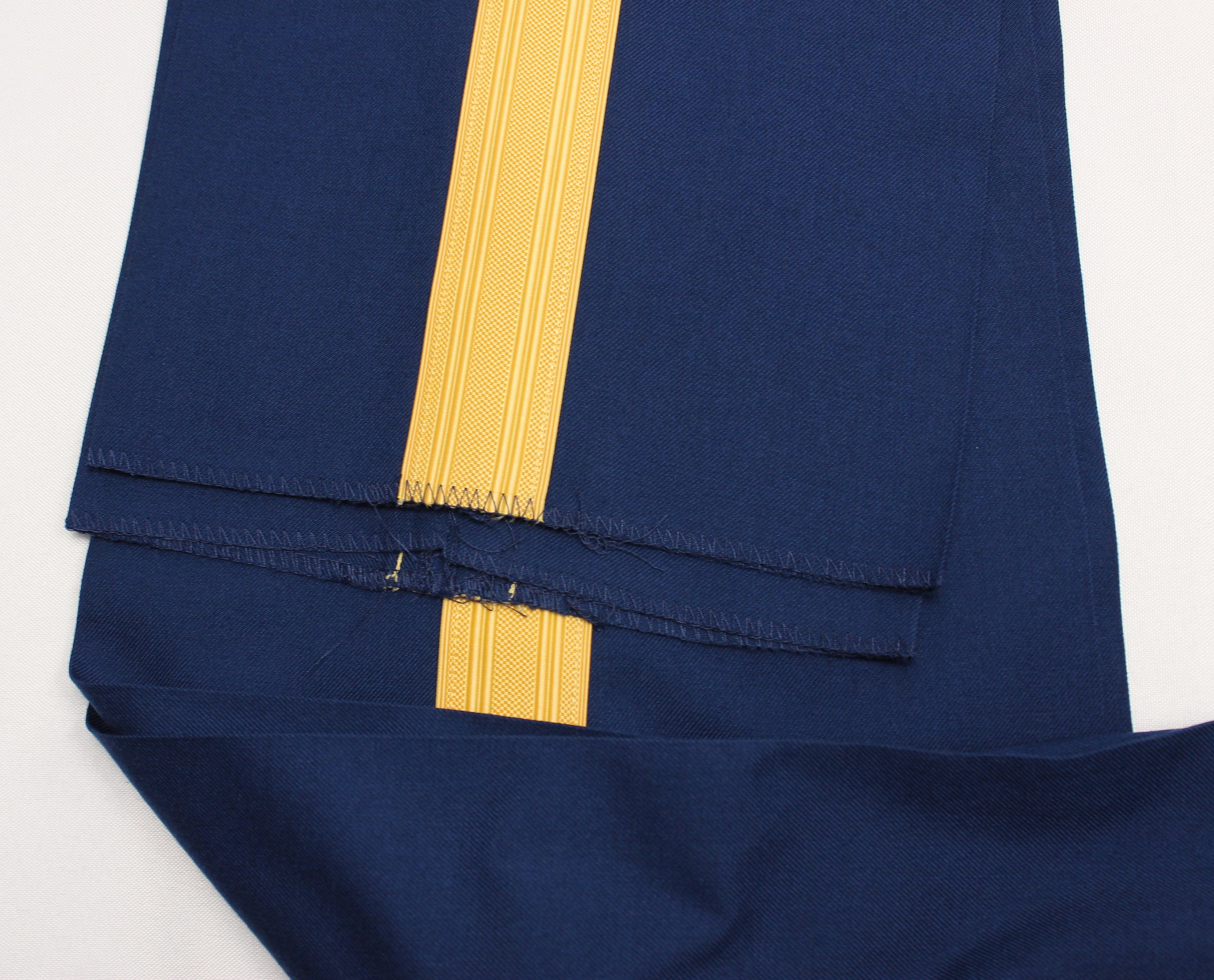
- The Gold Stripe: For NCOs (Corporal and above) and Officers, a 1.5-inch gold braid is worn on the outside of each trouser leg.
Headgear Requirements
In 2026, the primary headgear for the Blue ASU is the Service Cap (the "bus driver" cap). While the black beret was previously a standard for all uniforms, current regulations emphasize the Service Cap for formal Blue ASU occasions to maintain a traditional silhouette. Officers wear the cap with the "scrambled eggs" (gold bullion oak leaf motifs) on the visor if they are at the rank of Major or above.
Precise Accoutrement Placement: The 1/8 Inch Rule
The difference between a "first-time go" and a uniform deficiency often comes down to millimeters. AR 670-1 mandates specific measurements for every pin, ribbon, and badge.
Male ASU Alignment Specifications
Nameplate Placement The nameplate is centered on the flap of the right breast pocket, between the top of the button and the top of the pocket seam.
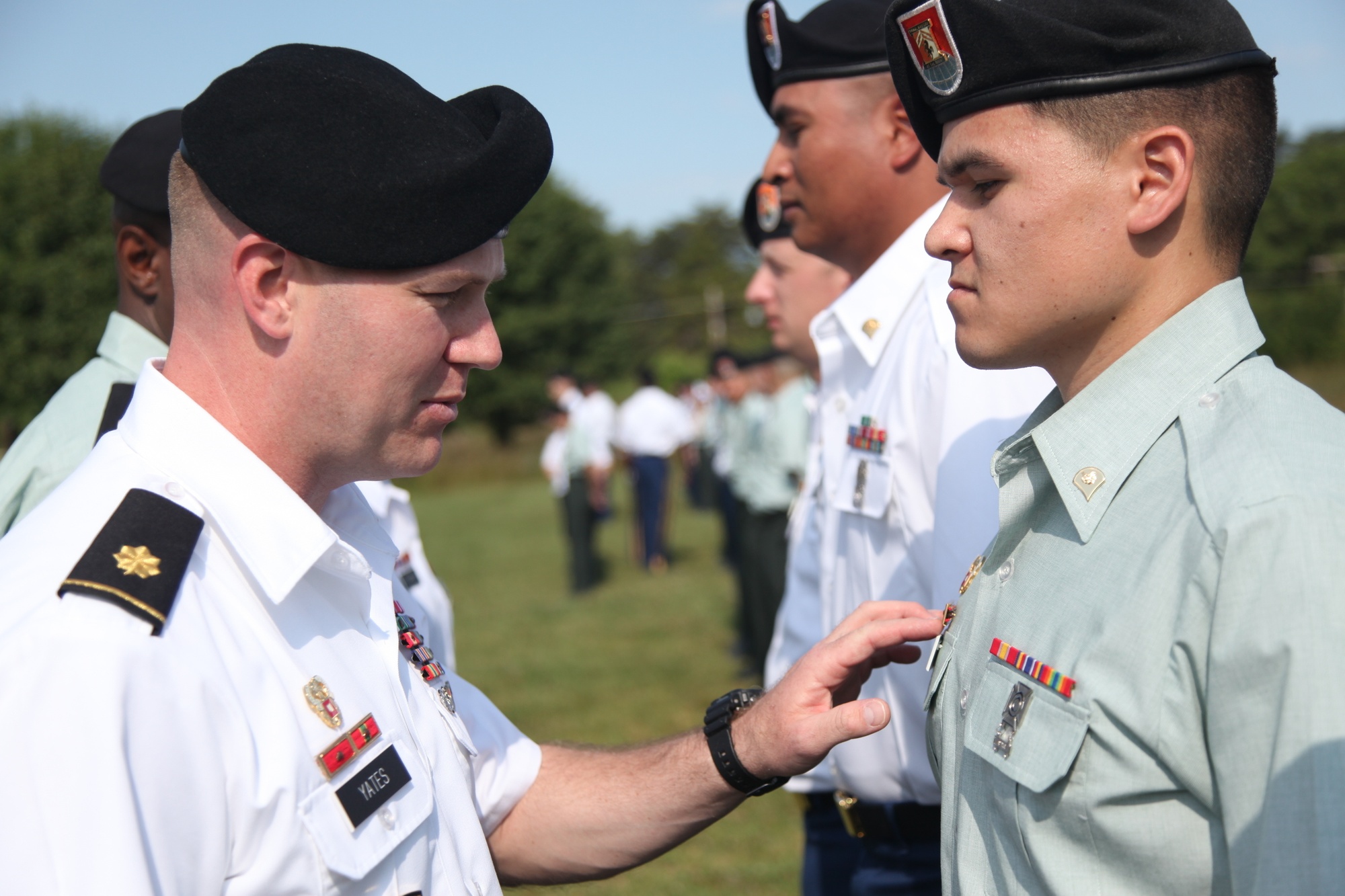
Ribbons and Awards Ribbons must be centered 1/8 inch above the left breast pocket flap. They are worn in order of precedence from the wearer's right to left.
U.S. and Branch Insignia The "U.S." disk is placed on the wearer's right collar, centered between the top and bottom edge, with the bottom of the disk 1 inch above the notch. The Branch insignia is placed on the left collar in a mirroring position.
Female ASU Alignment Specifications
Because female coats do not have breast pockets, the placement is based on the "imaginary line" or the coat's lapel geometry.
Nameplate Placement The nameplate is centered on the right side, between 1 and 2 inches above the top button of the coat, adjusted to the individual's conformation.
Ribbons and Awards The bottom row of ribbons must be centered on the left side, with the bottom row parallel to the bottom edge of the nameplate.
Unit Awards Permanent unit awards (like the Presidential Unit Citation) are worn 1/2 inch above the nameplate on the right side.
Detailed Comparison: Blue ASU vs. Army Green Service Uniform (AGSU)
As of 2026, Soldiers must distinguish between when to wear the "Blues" and when to wear the "Greens." The following table outlines the technical and situational differences.
| Feature | Blue Army Service Uniform (ASU) | Army Green Service Uniform (AGSU) |
|---|---|---|
| Primary Use (2026) | Formal, Ceremonial, Evening Social | Daily Business, Office, Recruiting |
| Mandatory for Officers | Yes | Yes |
| Mandatory for Enlisted | Yes (NCOs) / Optional (Junior) | Yes (All) |
| Coat Color | Heritage Blue (Dark Blue/Light Blue) | Heritage Green (Olive Drab) |
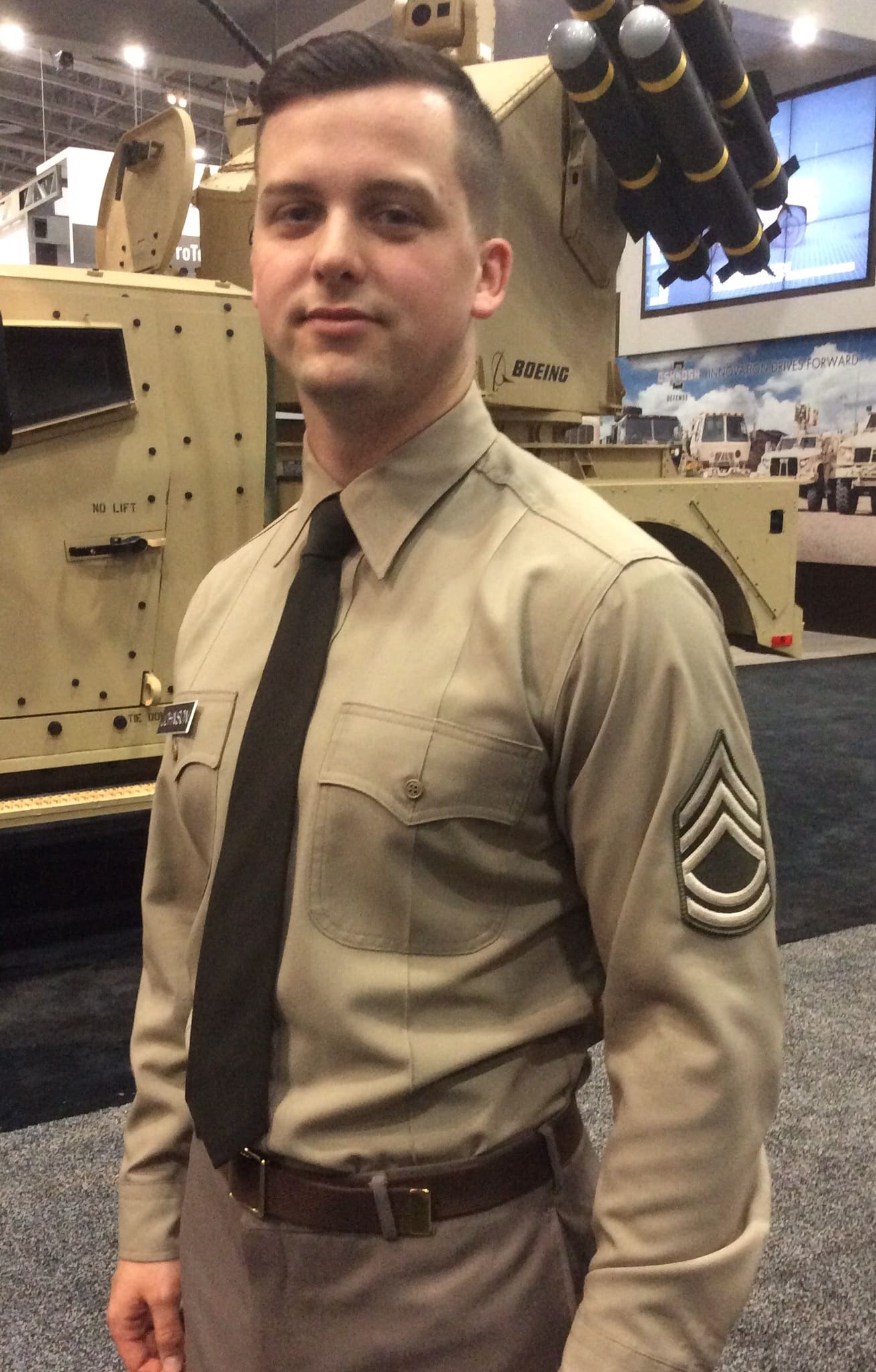
| Shirt Color | White | Heritage Tan (Khaki) |
| Tie/Tab Color | Black | Heritage Brown |
| Footwear | Black Oxford (High Gloss or Leather) | Walnut/Brown Leather |
| Standard Headgear | Service Cap (Blue) | Garrison Cap or Service Cap (Green) |
| Service Stripes | Gold on Blue | Heritage Tan on Green |
Grooming and Appearance Standards (AR 670-1 Compliance)
The uniform is only as professional as the Soldier wearing it. In 2026, grooming standards continue to evolve to balance modernization with the disciplined "military image."
- Hair Standards (Male): Hair must be tapered and not touch the ears or collar. The bulk of the hair must not interfere with the proper wear of headgear. Sideburns cannot extend below the lowest part of the exterior ear opening.
- Hair Standards (Female): Regulations allow for multiple hairstyles, including braids, twists, and locs, provided they maintain a professional appearance and allow headgear to fit snugly. Ponytails are authorized in all uniforms, including the ASU, as long as they do not compromise safety or functionality.
- Cosmetics and Jewelry: Jewelry is limited to one ring per hand (in addition to a wedding set) and a wristwatch. For females in the Blue ASU, optional stud earrings (gold, silver, or pearl) are authorized but must be matched and no larger than 6mm.
- Tattoos: The 2026 standards remain consistent with the recent updates: no tattoos on the face, head, or neck (with the exception of one visible neck tattoo not exceeding 1 inch), and no tattoos that are extremist, indecent, or racist.
Maintenance and Care for Professional Longevity
The Blue ASU represents a significant financial investment. Proper maintenance ensures the uniform remains "inspection-ready" for years.
- Dry Cleaning: The wool-blend fabric should never be machine washed. Professional dry cleaning is required. However, over-cleaning can lead to fabric "shine." It is recommended to dry clean only after heavy use or when visible staining occurs.
- Storage: Always hang the coat on a wide-shoulder contoured hanger to maintain the shape of the shoulder pads. Use a breathable garment bag to prevent dust accumulation.
- Brass and Brightwork: Use a polishing cloth for "Stay-Brite" insignia. If using traditional brass, ensure no polish residue remains on the fabric of the uniform. Many Soldiers in 2026 prefer the "Stay-Brite" (anodized) versions of buttons and badges to avoid the need for constant polishing.
- Shoe Care: For leather Oxfords, a high-spit shine is expected. If wearing high-gloss (poromeric) shoes, ensure they are wiped clean of dust and scuffs before every wear.
Common ASU Wear Mistakes and How to Fix Them
Even seasoned NCOs can make errors when configuring a new set of Blues. Avoid these frequent pitfalls:
- Incorrect Service Stripe Count: Service stripes represent three years of honorable service each. Ensure your stripes match your "Basics" or "Pay Entry Basic Date" (PEBD).
- Gig Line Misalignment: On the Class B uniform, the "gig line" (the vertical line formed by the shirt edge, belt buckle, and trouser fly) must be perfectly straight.
- Ribbon Gap: There should be no space between the rows of ribbons unless the wearer has a specific anatomical need for a "staggered" appearance to accommodate the lapel.
- Improper Tie Length: For males, the tip of the four-in-hand tie must fall between the top and bottom of the belt buckle.
Frequently Asked Questions
Can I wear the Blue ASU for a wedding in 2026?
Yes, the Blue ASU is highly encouraged for formal civilian events such as weddings, funerals, and galas. When worn to a "black-tie" equivalent event after 1800 hours, you should wear the black bow tie instead of the standard necktie to convert the uniform into the "Dress Blue" configuration.
Is the black beret still authorized with the Blue ASU?
While the black beret remains an authorized headgear for the Army, in 2026 it is rarely worn with the Blue ASU for formal ceremonies. The Service Cap is the preferred headgear for the "Dress" appearance. However, specific units (like Rangers or Airborne) may have local policies regarding their organizational berets.
How do I determine the correct placement for unit citations?
Unit citations are worn on the wearer's right side, centered 1/8 inch above the nameplate. If you have multiple unit awards, they are stacked with no space between them. Ensure you are only wearing permanent unit awards (awards given to the unit while you were assigned to it) unless the unit is currently in a "temporary" wear status for a specific ceremony.
Are "all-weather" coats authorized with the ASU?
Yes, the black all-weather coat and the black windbreaker are authorized for wear with the Blue ASU. However, for formal ceremonies, the coat is usually removed upon entering the facility. In 2026, many Soldiers also utilize the black "Heritage" overcoat for extreme cold weather environments.
What is the 2026 policy on wearing the ASU at political events?
As per Department of Defense (DoD) directives, wearing the Army uniform at political rallies, protests, or events where a direct or implied endorsement of a candidate or cause could be perceived is strictly prohibited. The ASU should be reserved for official military functions and private formal social events.
Summary of 2026 Standards
The Army Service Uniform continues to be the premier representation of military discipline and history. By adhering to the 1/8 inch placement rules, maintaining strict grooming standards, and understanding the situational shift between the Blue ASU and the AGSU, Soldiers ensure they uphold the dignity of the United States Army. Always consult the latest version of AR 670-1 and your unit's Standard Operating Procedures (SOP) before a major inspection or ceremony to verify any localized changes or specific commander's intent.
Image Gallery