Navigating Wake County Tax Records: The 2026 Official Access and Property Assessment Guide
Accessing Wake County tax records is essential for property owners, real estate investors, and prospective buyers looking to evaluate real estate values, verify ownership histories, and review historical tax assessments in North Caroli...
Accessing Wake County tax records is essential for property owners, real estate investors, and prospective buyers looking to evaluate real estate values, verify ownership histories, and review historical tax assessments in North Carolina.
Contents
Wake County tax records provide comprehensive public data regarding real estate valuations, ownership histories, tax payments, and spatial mapping across municipalities like Raleigh, Cary, Apex, and Wake Forest. Whether you are conducting a title search, preparing a real estate appeal, or examining historical property values for the 2026 tax year, understanding how to navigate the Wake County Revenue Department and iMAPS databases ensures efficient and accurate information retrieval.
Understanding Wake County Property Assessments and Tax Valuations
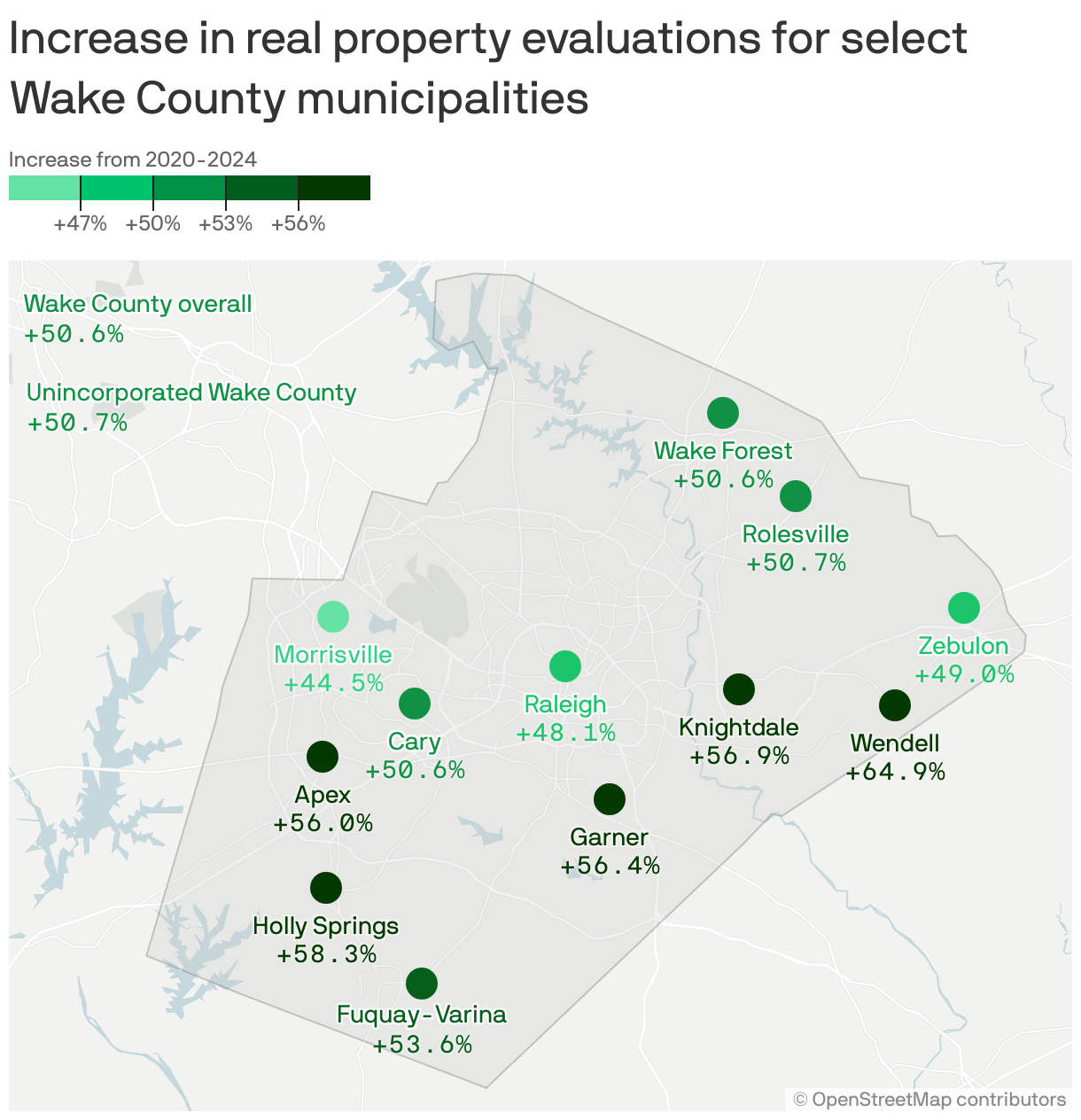
Property assessments in Wake County form the structural foundation for local government funding, supporting public schools, infrastructure, emergency services, and county administration. The Wake County Revenue Department continuously manages property valuations, applying standardized appraisal methodologies to maintain equity across residential, commercial, and industrial sectors.
Real estate values fluctuate based on market dynamics, neighborhood demand, structural improvements, and economic growth throughout the Research Triangle. Property assessments are categorized into distinct valuation components that directly influence annual tax liabilities:
- Land Value: The estimated market value of the underlying bare plot of land based on comparable sales and zoning designations.
- Building Value: The assessed replacement cost minus depreciation for all permanent structures located on the parcel.
- Deferred Value: Special exemptions or deferments applied under North Carolina law, such as present-use value for agricultural, horticultural, or forest land.
- Total Assessed Value: The combined sum of land and building values, representing the baseline figure upon which county and municipal property tax rates are levied.
Property owners must recognize that the assessed value recorded in the Wake County tax database reflects market conditions evaluated during the county's scheduled revaluation cycles. North Carolina general statutes govern these reappraisals, ensuring that property values remain aligned with actual real estate market trends.
How to Search Wake County Tax Records Online
The most efficient method for retrieving property information involves utilizing the official online digital portals maintained by Wake County government agencies. These systems offer public access to property cards, ownership records, deed references, and tax ledger histories without requiring an in-person visit to the Wake County Courthouse or the Wake County Justice Center in downtown Raleigh.
To perform a successful property query, users can leverage several primary search criteria within the county's digital infrastructure:
- Real Estate ID (REID): A unique alphanumeric identifier assigned to every distinct parcel of real estate in Wake County. Entering a valid REID yields direct, unambiguous access to the target property record.
- Owner Name: Searching by individual or corporate name allows researchers to compile portfolios or verify historical ownership chains, though common names may yield multiple results requiring secondary verification.
- Property Address: Inputting the specific street number, street name, and optional zip code directs users to the correct parcel, provided the address format matches the county's standardized addressing directory.
- Deed Book and Page: Legal researchers possessing recorded deed references from the Wake County Register of Deeds can cross-reference property histories directly through the integrated tax and mapping tools.
| Search Method | Best Used For | Accuracy Level | Common Pitfall |
|---|---|---|---|
| Real Estate ID (REID) | Direct parcel lookup | Absolute (100%) | Entering typos or outdated REID numbers from old documents. |
| Property Address | Standard residential searches | High | Street name variations (e.g., Road vs. Drive, or directional prefixes). |
| Owner Name | Portfolio analysis & genealogy | Moderate | Multiple owners sharing identical names or corporate naming variations. |
| GIS Map Click / iMAPS | Boundary verification & spatial queries | High | Selecting the wrong parcel boundary in dense commercial developments. |
Utilizing Wake County iMAPS for Spatial and Parcel Data
In addition to traditional text-based tax ledgers, Wake County provides an advanced geographic information system known as iMAPS. This interactive mapping tool integrates tax records with spatial aerial photography, zoning layers, flood hazard zones, and municipal extraterritorial jurisdiction (ETJ) boundaries.
When investigating a property through iMAPS, users can visualize topographical features, utility easements, and adjacent parcel ownership. This spatial context is vital for understanding property dimensions, setback requirements, and proximity to municipal infrastructure or environmental constraints such as watershed protection areas.
- Zoning Overlays: Identify whether a parcel is zoned for single-family residential (R-4, R-30), commercial (CX), or mixed-use developments.
- Flood Plain Boundaries: Review FEMA flood insurance rate maps overlaid directly onto tax parcels to assess flood risks and mandatory insurance requirements.
- Voting Districts and Schools: Determine assigned public school districts, county commissioner zones, and municipal voting precincts associated with the real estate parcel.
Interpreting Wake County Tax Bills and Payment Histories
Once you locate a specific property record, analyzing the financial ledger provides insight into tax liabilities, payment statuses, and exemption applications. Wake County operates on a calendar fiscal year where property taxes are billed in July and become delinquent on January 6 of the following year.
Property tax bills are calculated by multiplying the total assessed value by the combined tax rates of Wake County and the applicable municipality (such as Knightdale, Garner, Morrisville, or Fuquay-Varina). Reviewing the historical payment log within the tax records helps verify whether previous owners cleared all financial obligations or if outstanding liens remain attached to the title.
- Base Tax Rate: The aggregate rate per one hundred dollars of assessed value established annually by the Wake County Board of Commissioners and local city councils.
- Special District Taxes: Additional levies applied for specialized municipal services, fire protection districts, or transit authorities.
- Payment Status Indicators: Real-time markers showing whether current and prior-year taxes are paid in full, deferred, or currently accruing statutory interest and penalties due to delinquency.
Appealing Your Wake County Property Tax Assessment
Property owners who believe their assessed valuation exceeds current fair market value possess the legal right to file an informal appeal or a formal review through the Wake County Board of Equalization and Review. Successfully contesting an assessment requires objective market data rather than subjective disagreements over tax rates.
Navigating the appeal process involves specific documentation standards and adherence to strict submission deadlines established during the county's revaluation cycles.
- Gather Comparable Sales: Collect documented closing prices from recent sales of structurally similar properties within the immediate neighborhood sold around the effective revaluation date.
- Identify Structural Errors: Inspect the Wake County property card for factual inaccuracies, such as incorrect square footage, miscalculated bathroom counts, unpaved driveway statuses, or failure to account for deferred maintenance.
- Submit Formal Evidence: File the appeal application through the designated county portal or via written documentation within the mandatory statutory window, providing clear photographic and appraisal evidence to substantiate the requested valuation adjustment.
Frequently Asked Questions
How can I find the owner of a property in Wake County using only an address?
You can find the property owner by entering the street address into the Wake County Real Estate Property Search portal or the iMAPS mapping tool. These platforms immediately display the recorded deed holder's name alongside mailing addresses and assessment details.
What is a Wake County REID number and where do I find it?
A REID (Real Estate Identification) number is a unique parcel number assigned to every piece of real estate in Wake County. It is prominently displayed at the top of property tax bills, online tax records, and Wake County deeds recorded at the Register of Deeds office.
When are Wake County property taxes due and when do they become delinquent?
Wake County property tax bills are typically mailed in July of each year and are payable upon receipt. Taxes become delinquent if unpaid by January 6, after which statutory interest charges and collection penalties accrue monthly.
How do I appeal my property tax assessment in Wake County?
To appeal an assessment, you must file a formal or informal appeal with the Wake County Revenue Department during the designated open review period, providing evidence such as independent appraisals or comparable neighborhood sales to support a lower valuation.
Can I view historical tax payment records for a Wake County parcel online?
Yes, the online Wake County tax record database maintains multi-year financial ledgers showing past tax payments, exemptions, deferred values, and any outstanding balances or active tax liens associated with the parcel.
Conclusion and Official Access
Navigating Wake County tax records empowers property owners, buyers, and financial professionals to make informed real estate decisions backed by verified public data. By utilizing official county portals like the Wake County Real Estate Search and iMAPS, stakeholders can accurately evaluate property values, review tax obligations, and verify legal ownership histories. For the most up-to-date portal access, assessment schedules, and direct filing forms, visit the official Wake County Government digital services website.
Image Gallery