Why You Need a Lexington Car Injury Attorney After an Accident
Navigating the aftermath of a collision requires understanding complex state insurance statutes, calculating true long-term damages, and protecting your legal rights against aggressive insurance carriers. A Lexington car injury attorne...
Navigating the aftermath of a collision requires understanding complex state insurance statutes, calculating true long-term damages, and protecting your legal rights against aggressive insurance carriers. A Lexington car injury attorney provides local legal knowledge, manages claims under Kentucky's choice no-fault system, gathers critical evidence, and advocates for maximum financial recovery while you focus on medical healing.
Contents
Understanding Kentucky's Unique Auto Insurance and Injury Laws
Motor vehicle accident claims in Kentucky operate under a distinct legal framework compared to many other states. Understanding how local statutes govern personal injury claims is essential before making decisions about medical treatment, insurance communications, or settlement offers.
- Choice No-Fault System: Basic PIP covers first $10,000 medical/lost wages regardless of fault.
- Tort Threshold Criteria: Exceed $1,000 in medical costs OR suffer fracture, permanent disfigurement/injury.
- Pure Comparative Fault: Damages reduced by fault %; recovery still possible even if partially at fault.
- Statute of Limitations: 2 years from injury date or 2 years from the last PIP payment (KRS 304.39-230).
Kentucky’s Choice No-Fault System and PIP Coverage
Kentucky is categorized as a "choice no-fault" auto insurance state under the Kentucky Motor Vehicle Reparations Act. By default, every auto insurance policy issued in the Commonwealth includes Personal Injury Protection (PIP) benefits, also known as basic reparations benefits (BRB).
- Basic PIP Coverage: Provides up to $10,000 per person per accident for economic losses—primarily medical bills, lost wages, and essential service expenses—regardless of who caused the collision.
- Opt-Out Provision: Drivers have the right to reject no-fault coverage in writing by filing a rejection form with the Kentucky Department of Insurance. Rejecting PIP allows a driver to preserve full tort rights to sue an at-fault driver without meeting statutory thresholds, but it also means the driver cannot collect immediate PIP benefits from their own policy.
- Primary Carrier Rules: PIP coverage follows the vehicle in which you were a passenger or driver, or applies through your own policy if hit as a pedestrian.
Meeting the Statutory Tort Threshold to File a Personal Injury Lawsuit
To step outside Kentucky's no-fault system and file a fault-based personal injury lawsuit or claim for pain and suffering against the responsible driver, an injured person must satisfy specific statutory thresholds set forth in KRS 304.39-060. You can pursue a third-party tort claim if your accident-related injuries meet at least one of the following criteria:
- Medical Expense Threshold: Medical expenses resulting from the accident exceed $1,000 in necessary treatment cost.
- Permanent Disfigurement: The injury results in permanent disfigurement or scarring.
- Fracture: The collision causes a fracture to a bone.
- Permanent Injury or Loss of Function: The accident causes permanent injury, permanent loss of a bodily function, or death.
A local Lexington car injury attorney evaluates medical records and billing statements to determine whether your injuries clear these statutory hurdles, ensuring your third-party liability claim is legally grounded.
Pure Comparative Fault Rules in Kentucky
Kentucky operates under a pure comparative fault system pursuant to KRS 411.182. Under pure comparative fault, an injured party can recover financial compensation even if they were partially at fault for the accident—even if they were 99% responsible.
However, the total recovery award is reduced in direct proportion to the injured person's assigned percentage of fault. For example, if a jury determines total damages are $100,000 but assigns 20% of the blame to you for speeding, your final recovery is reduced by 20% to $80,000. Insurance adjusters frequently exploit this rule by attempting to shift disproportionate blame onto crash victims to reduce payout obligations. Experienced legal counsel builds evidentiary arguments to minimize fault attributions.
Statute of Limitations for Motor Vehicle Accidents in Kentucky
Timing is critical when preserving personal injury rights in Kentucky. Under KRS 304.39-230, the statute of limitations for motor vehicle personal injury claims is generally two years from the date of the injury, or two years from the date of the last PIP payment made by the insurance carrier, whichever is later.
For property damage claims, the deadline is typically two years from the crash date under KRS 413.125. Failing to file a lawsuit before the statutory deadline permanently bars recovery, making prompt legal review essential after a crash in Lexington or Fayette County.
Critical Ways a Lexington Car Injury Attorney Protects Your Claim
Handling an auto accident claim independently often leaves injury victims at a disadvantage against well-resourced insurance companies. A dedicated personal injury attorney performs several vital functions during the life of a claim.
- INJURY OCCURS IN LEXINGTON
- ATTORNEY INVESTIGATION & PROOF
- Crash reports (LPD)
- Traffic cameras / Surveillance
- Witness interviews
- Black box data retrieval
- MEDICAL TREATMENT & VALUATION
- Managing PIP benefits
- Future medical projections
- Documenting lost wages
- NEGOTIATION OR LITIGATION
- Pre-suit demand package
- Fayette Circuit Court lawsuit
- Trial / Mediation recovery
Investigating the Crash Scene and Preserving Evidence
Physical evidence disappears rapidly following a highway or intersection collision. Local attorneys immediately deploy investigators to:
- Secure collision reports filed by the Lexington Police Department or Kentucky State Police.
- Retrieve surveillance footage from nearby businesses along major Lexington corridors like New Circle Road, Nicholasville Road, Richmond Road, or I-75/I-64.
- Obtain vehicle Event Data Recorder (EDR) or "black box" data showing vehicle speed, braking actions, and steering input prior to impact.
- Locate and interview eyewitnesses before memories fade.
- Coordinate accident reconstruction experts to model crash mechanics when liability is disputed.
Calculating Full Economic and Non-Economic Damages
Insurance company settlement offers frequently account only for existing, immediate medical expenses, ignoring the full extent of long-term losses. An attorney quantifies both immediate and future damages, including:
- Medical Expenses: Emergency care at regional trauma centers like UK Albert B. Chandler Hospital or Baptist Health Lexington, ongoing physical therapy, surgeries, medications, and specialized medical equipment.
- Future Medical Needs: Projections for life-care plans, ongoing rehabilitation, or future surgical interventions verified by medical experts.
- Lost Income and Earning Capacity: Compensation for missed work hours, used PTO, and long-term reduction in earning potential due to permanent disability.
- Pain and Suffering: Non-economic damages covering physical pain, emotional distress, loss of enjoyment of life, and anxiety resulting from the trauma.
- Loss of Consortium: Compensation awarded to a spouse for the loss of companionship and marital services.
Countering Aggressive Insurance Adjuster Tactics
Insurance adjusters are trained negotiators working on behalf of insurance companies to minimize payouts. Common tactics include asking for recorded statements shortly after the crash, requesting blanket medical record releases, offering lowball early settlements before injuries are fully diagnosed, or claiming your injuries were pre-existing.
A personal injury lawyer takes over all direct communication with adjusters, preventing you from making statements that could inadvertently undermine your liability position or damage claim valuation.
Self-Representation vs. Hiring a Lexington Car Injury Attorney
Deciding whether to hire an attorney depends on crash severity, liability clarity, and insurance willingness to negotiate fairly. The table below outlines key procedural differences.
| Consideration | Self-Representation (Pro Se) | Working with a Lexington Injury Attorney |
|---|---|---|
| Primary Focus | Managing bodily pain while handling complex legal paperwork independently. | Focused on recovery while legal counsel manages paperwork, deadlines, and negotiations. |
| Investigation Scope | Limited to basic police reports and personal photos taken at the scene. | Comprehensive: subpoenaing traffic cameras, accident reconstruction, and expert witness testimony. |
| Knowledge of Insurance Rules | Vulnerable to technical policy exclusions, liability shifts, and premature settlement releases. | Applies Kentucky PIP statutes, bad-faith insurance laws, and comparative fault defenses. |
| Damage Valuation | Often calculates only past medical bills and immediate lost paychecks. | Integrates future care projections, vocational assessments, and non-economic pain damages. |
| Litigation Capability | Limited ability to effectively navigate trial rules in Fayette Circuit Court. | Formal court filings, depositions, pre-trial motions, mediation, and jury trial representation. |
| Fee Structure | No direct legal fee, but risks leaving substantial settlement value on the table. | Contingency fee model: no upfront legal costs; attorney is paid a percentage of recovered funds. |
Navigating the Legal Process in Lexington, Kentucky
Understanding the step-by-step path of a personal injury claim helps manage expectations and reduces stress during recovery.
1. Initial Consultation and Case Assessment
During an initial case review, an attorney evaluates the crash circumstances, reviews police reports, checks insurance coverage levels, and determines whether statutory thresholds are met. Most Lexington injury attorneys conduct this consultation free of charge.
2. Managing PIP Benefits and Medical Treatment
While liability is investigated, your attorney helps manage your $10,000 PIP benefit allocation. Counsel ensures medical providers submit bills correctly to PIP adjusters to avoid unnecessary collections or delays in ongoing treatment at local clinics or hospital systems.
3. Assembling the Demand Package
Once you reach Maximum Medical Improvement (MMI)—the point where your medical condition has stabilized and long-term prognosis is clear—your lawyer compiles a comprehensive settlement demand package. This package contains medical records, itemized billing, expert economic reports, proof of lost earnings, and a written narrative describing the crash's impact on your life.
4. Settlement Negotiations and Mediation
The insurance company receives the demand and responds with an acceptance, counteroffer, or denial. Your attorney engages in back-and-forth negotiations to reach a full financial settlement. If out-of-court negotiations stall, the parties may engage in formal mediation, guided by a neutral third party.
5. Filing a Lawsuit in Fayette County Courts
If the insurance carrier refuses a fair settlement, your lawyer files a formal complaint in the Fayette Circuit Court (for claims exceeding $5,000) or District Court. The case enters the discovery phase, where both sides exchange evidence, take depositions under oath, and prepare for trial. Many cases resolve during discovery, but having a trial-ready lawyer provides leverage throughout negotiations.
- Crash Occurs
- Medical Attention & PIP Initiation: Open basic PIP claim for immediate care
- Legal Representation Engaged: Evidence collection & investigation
- Reach MMI: Maximum Medical Improvement established
- Settlement Demand Sent: Comprehensive economic/pain documentation
- Negotiation Outcomes:
- Fair Offer Reached: Case Settled
- Offer Denied / Disputed:
- Lawsuit Filed in Fayette Circuit Court
- Discovery, Mediation, or Jury Trial
Important Factors When Selecting a Local Attorney
Not all legal representation is identical. When choosing a lawyer in Lexington, consider the following specific factors:
- Local Court Familiarity: Look for counsel with experience appearing before the judges of the 22nd Judicial Circuit (Fayette County) and an understanding of local civil court rules.
- Resource Availability: Serious injury claims require financial capital to hire accident reconstructionists, medical specialists, forensic accountants, and vocational experts. Ensure the firm has the backing to fund these costs upfront.
- Trial Experience: Many claims resolve via negotiation, but an insurance company's willingness to make a fair offer increases when they know opposing counsel regularly takes cases to trial.
- Transparent Fee Agreements: Request a clear, written contingency fee agreement explaining the percentage fee schedule, how case expenses are handled, and how funds are disbursed upon resolution.
Frequently Asked Questions
What should I do immediately after a car accident in Lexington, KY?
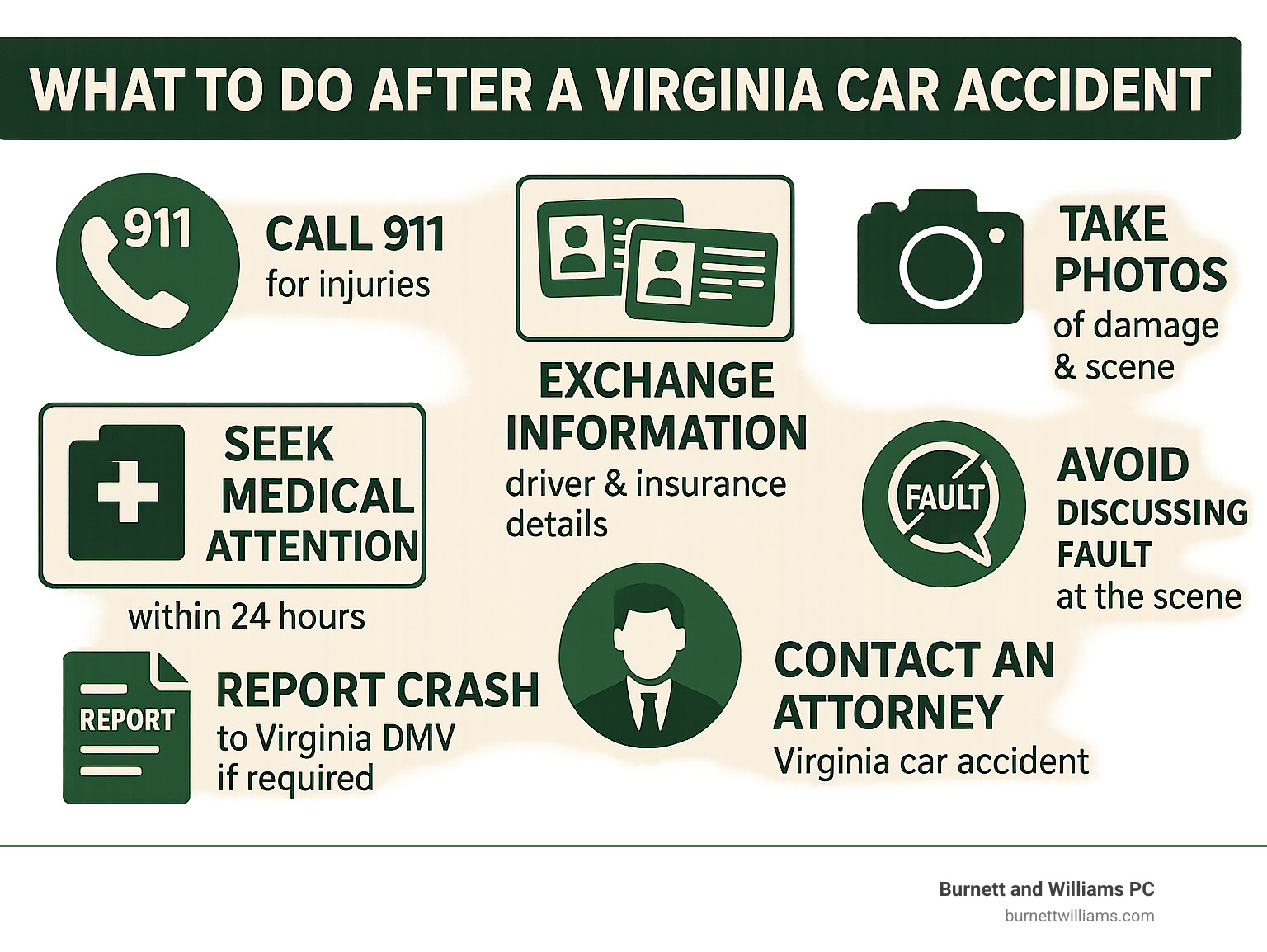
First, check for injuries and call 911 so the Lexington Police Department or emergency services respond. Seek medical care immediately, either at an emergency room or urgent care center. Take photographs of vehicle positions, road conditions, damage, and visible injuries. Exchange driver and insurance information, but avoid discussing fault or making recorded statements to insurance adjusters until you consult a lawyer.
How much does it cost to hire a Lexington car injury attorney?
Most personal injury attorneys operate on a contingency fee basis. This means you pay no upfront fees or out-of-pocket retainer costs. The lawyer's fee is a set percentage (typically 33.3% to 40%) of the total financial recovery obtained through settlement or trial verdict. If the attorney does not secure a recovery, you generally owe no legal fees.
What if the driver who hit me is uninsured or underinsured?
If the at-fault driver has no liability insurance or insufficient coverage to pay for your injuries, you can file a claim under your own policy's Uninsured Motorist (UM) or Underinsured Motorist (UIM) coverage. In Kentucky, UM coverage is mandatory unless rejected in writing, while UIM coverage is optional but highly recommended. An attorney helps navigate UM/UIM claims against your own insurer to ensure you receive available compensation.
How long does a personal injury case take to settle in Fayette County?
Simple claims with minor injuries and clear liability may resolve within 3 to 6 months once medical treatment finishes. Complex claims involving severe injuries, high medical expenses, disputed fault, or multiple vehicles can take 12 to 24 months or longer, particularly if a formal lawsuit must be litigated in Fayette Circuit Court.
Can I still recover compensation if I was partially at fault for the crash?
Yes. Kentucky follows a pure comparative fault rule under KRS 411.182. You can recover damages even if you share fault for the accident. Your total financial compensation is reduced by your assigned percentage of responsibility. An attorney works to minimize the percentage of fault assigned to you by insurance adjusters or a court jury.
Recommended Next Steps
If you or a family member sustained injuries in a motor vehicle accident in Lexington or Fayette County, taking organized steps protects your legal options and health:
- Obtain Complete Medical Records: Continue all recommended treatments and keep detailed records of medical providers, prescription costs, and physical therapy visits.
- Secure the Official Collision Report: Request a copy of your accident report directly from the investigating law enforcement agency or through official portals like the Kentucky State Police E-Crash Portal.
- Avoid Early Settlement Offers: Do not sign liability waivers, medical releases, or financial settlements from an insurance carrier before having the agreement reviewed by legal counsel.
- Schedule a Case Evaluation: Speak with a qualified local car accident attorney to evaluate your PIP options, establish liability proof, and assess the full potential value of your personal injury claim.
Disclaimer: This article is provided for informational purposes only and does not constitute formal legal advice. Personal injury statutes, court rules, and insurance regulations are subject to statutory amendments and specific factual context. Consult a licensed Kentucky attorney for individual legal advice regarding your specific situation.
Image Gallery