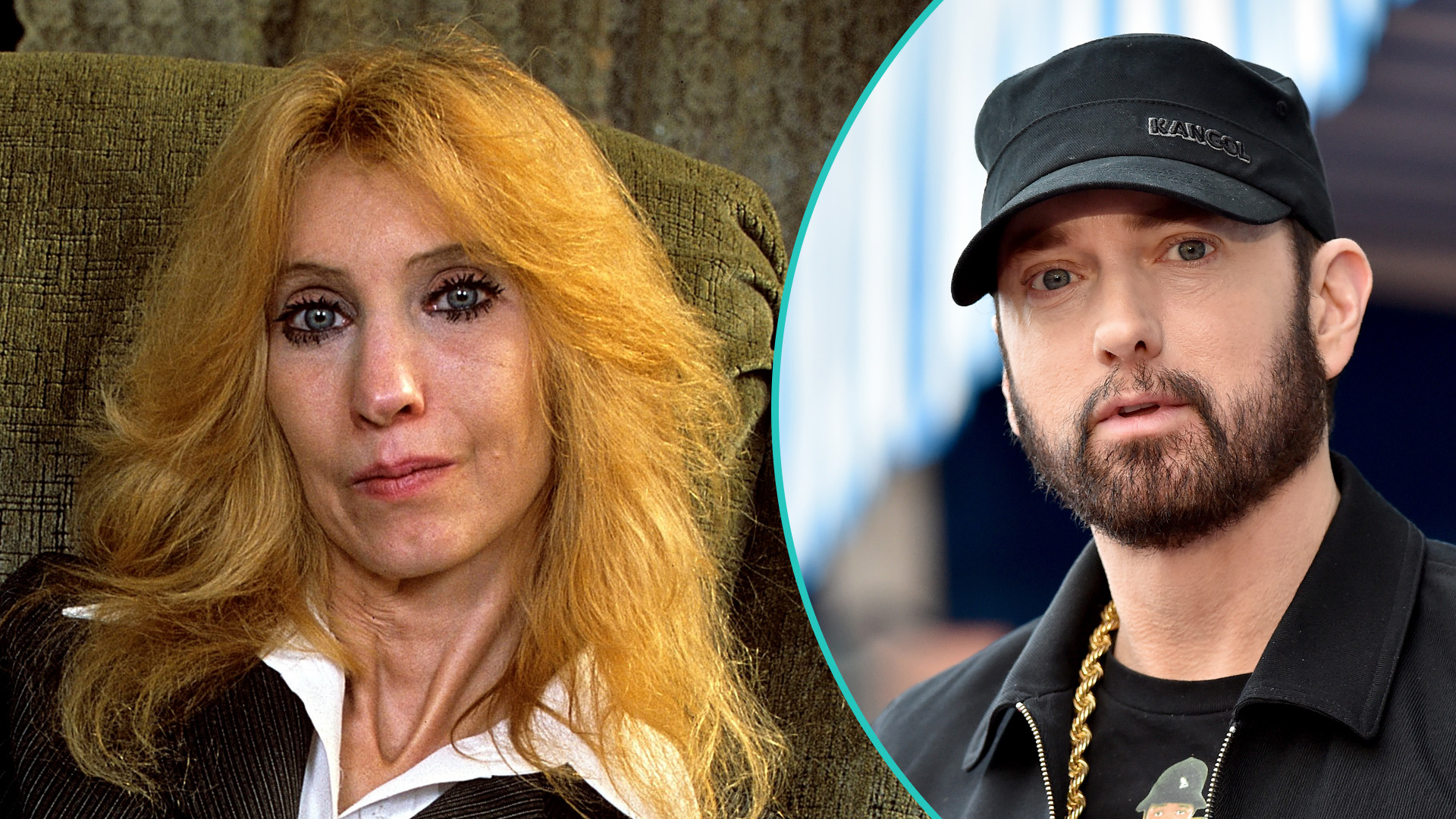
Eminem Mother Song: The Evolution from "Cleanin' Out My Closet" to "Headlights"
Eminem has written several songs about his mother, Debbie Nelson, but the two most prominent are the 2002 hit "Cleanin' Out My Closet," an aggressive denunciation of her parenting, and the 2013 ballad "Headlights," a heartfelt public a...
Eminem has written several songs about his mother, Debbie Nelson, but the two most prominent are the 2002 hit "Cleanin' Out My Closet," an aggressive denunciation of her parenting, and the 2013 ballad "Headlights," a heartfelt public apology where he expresses forgiveness, acknowledges her struggles, and expresses enduring love.
Contents
Across a career spanning more than three decades, the fraught relationship between Marshall Mathers (Eminem) and his mother served as one of the primary emotional engines of his music. While early releases used hostility toward his mother as dark fuel for his Slim Shady persona, his later catalog documents a poignant journey toward accountability, empathy, and family reconciliation. Understanding which "mother song" listeners are seeking requires examining the striking artistic and personal evolution between his early anger and his mature reflection.
The Two Defining Eminem Mother Songs: Rage vs. Reconciliation
Eminem’s discography contains dozens of passing bars and skits referencing his upbringing, but two specific tracks represent opposite ends of his emotional spectrum. These two records stand as bookends to one of the most publicly documented mother-son disputes in modern music history.
1. "Cleanin' Out My Closet" (2002): The Peak of Anger
Released as the second single from Eminem's critically acclaimed fourth studio album, The Eminem Show (2002), "Cleanin' Out My Closet" remains one of the most searing diss tracks ever directed at a family member. Produced by Eminem and Jeff Bass, the song features a steady, marching drum cadence paired with a mournful guitar loop, creating a tense atmosphere for Eminem's confession.
In the record, Eminem systematically airs his childhood grievances. He addresses:
- Allegations that his mother suffered from Munchausen syndrome by proxy, claiming she convinced him he was perpetually sick as a child.
- The emotional scars left by an unstable home life, frequent evictions, and prescription drug misuse.
- His vow that she would never see her granddaughter, Hailie Jade.
The hook contains an explicit, sarcastic apology: "I never meant to hurt you, I never meant to make you cry, but tonight I'm cleanin' out my closet." Despite its caustic nature, the track was an enormous commercial success, peaking at number four on the US Billboard Hot 100 and charting inside the top ten internationally. It captured the raw, unfiltered resentment that characterized Eminem's early-2000s creative peak, giving voice to listeners dealing with their own generational trauma while exposing his private family turmoil on a global stage.
2. "Headlights" (2013): The Definitive Apology
Over a decade after "Cleanin' Out My Closet," Eminem released The Marshall Mathers LP 2 (2013), featuring track fourteen: "Headlights," with guest vocals from Nate Ruess, lead singer of the band Fun. Produced by Emile Haynie and Jeff Bhasker, the song represents an unprecedented 180-degree turn in tone, temperament, and message.
"Headlights" serves as an open, earnest apology letter to Debbie Nelson. Rather than relitigating past pain, Eminem reflects on the mutual damage caused by their public feud. Key revelations and themes in the song include:
- Retiring the Past: Eminem explicitly states that he can no longer perform "Cleanin' Out My Closet," admitting that he cringes whenever it plays on the radio.
- Empathy for Her Struggles: He acknowledges that his mother was dealing with her own mental health burdens and systemic poverty, stating that she did the best she could under impossible circumstances.
- Regret Over Alienation: He laments that his younger brother, Nathan, had to be placed in foster care, and grieves the years of separation that kept Debbie from being a presence in his and his children’s lives.
- Unconditional Love: The chorus and bridge build toward a cathartic declaration: despite the estrangement, he loves her and will always recognize her as his mother.
The accompanying music video, directed by Academy Award-winner Spike Lee and released on Mother's Day in May 2014, was filmed on location in Detroit and framed entirely from Debbie Nelson's physical perspective. It follows her character trying unsuccessfully to reach her famous son, sifting through childhood photo albums, and ultimately sharing a bittersweet, tearful embrace with him outside his gate.
Chronological Overview of Songs Addressing His Mother
While "Cleanin' Out My Closet" and "Headlights" are the primary focus of listener searches, Eminem’s treatment of his mother evolved over several albums. Each era of his discography reflects a different phase of his psychological processing.
- 1999: "My Name Is" (Shock-value humor)
- 2000: "Kill You" (Violent artistic catharsis)
- 2002: "Cleanin' Out My Closet" (Personal grievance & resentment)
- 2009: "My Mom" (Addiction origins & dark satire)
- 2013: "Headlights" (Sincere apology & forgiveness)
- 2024: "Somebody Save Me" (Generational legacy & regret)
"My Name Is" (1999)
Eminem introduced himself to mainstream culture on The Slim Shady LP with the opening single "My Name Is." The very first verse contains the inflammatory line: "I just found out my mom does more dope than I do." At this stage, Eminem used his mother primarily as shock material to establish the irreverent, line-crossing boundary of Slim Shady.
"Kill You" (2000)
The opening song on The Marshall Mathers LP directly confronted his mother's reaction to his newfound fame. Driven by aggressive basslines and provocative lyricism, the song features Eminem venting about childhood beatings, neglect, and the early stages of the legal disputes brewing between them. While written through a deliberate horrorcore filter, the underlying frustration was intensely real.
"My Mom" (2009)
Following a five-year hiatus and a near-fatal methadone overdose, Eminem released Relapse in 2009. On the track "My Mom," produced by Dr. Dre, Eminem adopts an exaggerated vocal cadence to examine his own chemical dependency through the lens of his mother’s behavior. While framed with dark humor, the song makes a serious psychological point: Eminem recognized that his addiction to Valium and prescription sedatives directly mirrored the household environment in which he was raised.
"Somebody Save Me" (2024)
On his 2024 release, The Death of Slim Shady (Coup de Grâce), Eminem looks back on an alternate timeline where his addiction claimed his life. While primarily dedicated to his children (Hailie Jade, Alaina, and Stevie), the album continues his mature perspective on family trauma, demonstrating that the hostility that defined his early career had been permanently retired in favor of grief, preservation, and generational healing.
Comparative Analysis: "Cleanin' Out My Closet" vs. "Headlights"
To quickly determine which song matches your search, consider how the two landmark tracks contrast across themes, musical style, and their standing in Eminem's discography:
| Attribute | "Cleanin' Out My Closet" | "Headlights" |
|---|---|---|
| Album | The Eminem Show (2002) | The Marshall Mathers LP 2 (2013) |
| Primary Genre | Hardcore Hip-Hop / Rap Rock | Pop-Rap / Power Ballad |
| Key Collaborators | Jeff Bass (Co-producer) | Nate Ruess (Vocals), Emile Haynie, Jeff Bhasker |
| Dominant Emotion | Bitter rage, vindication, pain | Remorse, empathy, reconciliation |
| Core Lyric Theme | Blaming his mother for childhood illnesses, evictions, and trauma | Forgiving his mother, recognizing her humanity, apologizing for his attacks |
| Billboard Peak | #4 (US Hot 100) | #45 (US Hot 100) |
| Current Performance Status | Retired: Eminem publicly refuses to perform the song live | Active: Acknowledged by Eminem as his definitive stance |
| Music Video Focus | Eminem digging a grave in the rain; childhood flashbacks | Shot from Debbie's POV; struggling through Detroit, Mother's Day release |
The Real-Life Relationship: Lawsuits, Memoir, and Closure
The lyrics in Eminem's music did not exist in a vacuum; they triggered severe legal and personal consequences for both Marshall Mathers and Deborah Nelson.
The $10 Million Defamation Lawsuit (1999–2001)
Following the release of The Slim Shady LP and Eminem's explosive interviews claiming his mother abused drugs and sued schools for money, Debbie Nelson retained legal counsel. In 1999, she filed a $10 million defamation lawsuit against her son in Macomb County, Michigan, alleging that his lyrics had subjected her to public ridicule, loss of housing, and emotional distress.
In 2001, Macomb County Circuit Court Judge Mark Switalski finalized a settlement for $25,000. However, after substantial legal fees were deducted, Debbie reportedly received approximately $1,600. The legal battle severed any remaining communication between mother and son for years and fueled the fiery writing of The Eminem Show.
Debbie Nelson’s Memoir (2008)
In 2008, Debbie Nelson published her autobiographical account, My Son Marshall, My Son Eminem, co-authored with Rachel Elrick. In the book, Nelson sought to provide her side of the story. She detailed the extreme poverty of their life in Missouri and Detroit, insisted she worked multiple jobs to support Marshall, and claimed that the exaggerated "bad mother" narrative was an intentional marketing strategy devised to give Eminem street credibility in a predominantly Black hip-hop industry.
While she expressed deep hurt over how she was portrayed in global anthems, she consistently maintained that she loved her son and hoped for reconciliation before her life ended.
Debbie Nelson's Passing (2024)
In December 2024, Debbie Nelson passed away at the age of 69 in St. Joseph, Missouri, following a battle with advanced lung cancer. In the years preceding her death, reports from family insiders indicated that while their relationship was never completely traditional or without boundaries, the intense public hostility had subsided. Eminem’s release of "Headlights" served as his final public, artistic word on their relationship—a permanent record ensuring that forgiveness, rather than malice, closed their chapter in hip-hop history.
Why Eminem Retired "Cleanin' Out My Closet"
Artists rarely disown their biggest commercial hits, but Eminem's decision to ban "Cleanin' Out My Closet" from his live concerts remains a rare case of artistic accountability.
During the song's prime, it was a staple of the Anger Management Tour, greeted with massive stadium roars. However, as Eminem achieved long-term sobriety in 2008 and watched his own children reach adulthood, his perspective on parenthood shifted fundamentally. He realized that publicly shaming his mother was causing collateral damage to his younger half-brother Nathan and his daughters.
In "Headlights," he raps:
"That song I no longer play at shows and I cringe every time it's on the radio..."
Since 2013, Eminem has kept that promise. Even during major festival headlining sets and international stadium tours, "Cleanin' Out My Closet" has been removed from his setlists, replaced by tracks that reflect his technical evolution or later collaborative work.
Frequently Asked Questions
Which Eminem song is an apology to his mother?
"Headlights," released in November 2013 on The Marshall Mathers LP 2, is Eminem's explicit apology track to his mother, Debbie Nelson. Featuring Nate Ruess on the hook, the song expresses regret for his past attacks, forgives her for childhood hardships, and states that he still loves her.
Did Eminem's mother actually sue him?
Yes. In 1999, Debbie Nelson filed a $10 million defamation lawsuit against Eminem, claiming his lyrics and promotional interviews painted her as an unfit, drug-dependent mother. The case was settled in 2001 for $25,000, most of which went toward her attorney's fees.
What is the song where Eminem raps about his mother putting Valium in his food?
The song is "My Mom," the second official track on Eminem's 2009 album Relapse. In the chorus, he raps: "My mom loved Valium and lots of drugs / That's why I'm on what I'm on 'cause I'm my mom." The song explores the roots of his chemical dependency through dark, satirical storytelling.
Why does Eminem refuse to perform "Cleanin' Out My Closet"?
Eminem stopped performing "Cleanin' Out My Closet" because he regretted the pain the song caused his mother and family. After getting sober and maturing, he stated in "Headlights" that hearing the song makes him cringe, leading him to permanently remove the track from his live concert setlists.
Who directed the music video for Eminem's mother apology song?
The music video for "Headlights" was directed by acclaimed filmmaker Spike Lee. Filmed entirely in Detroit, Michigan, the video was released on Mother's Day in May 2014 and uniquely shows the narrative through the physical point of view of Eminem's mother.
Recommended Next Steps
If you want to fully experience the narrative arc of Eminem's relationship with his mother, listen to the records chronologically:
- Start with the anger: Listen to "Cleanin' Out My Closet" on The Eminem Show to understand the depth of his early resentment and the technical aggression of his early-2000s flow.
- Examine the turning point: Listen to "My Mom" on Relapse to see how he began to connect his own adulthood struggles with his upbringing.
- Experience the resolution: Watch the official Spike Lee-directed music video for "Headlights" (featuring Nate Ruess). Pay attention to the lyrical contrasts and visual storytelling, which provide the final, definitive resolution to Eminem's most infamous family storyline.
Image Gallery