Navigating the Illinois Workers Compensation Claim Adjustment Process
Navigating an Illinois workers compensation claim adjustment requires understanding statutory timelines, reporting duties, and the rights of injured employees. An adjustment determines your benefit eligibility, medical care approvals,...
Navigating an Illinois workers compensation claim adjustment requires understanding statutory timelines, reporting duties, and the rights of injured employees. An adjustment determines your benefit eligibility, medical care approvals, and wage replacement amounts after a workplace injury under the Illinois Workers' Compensation Act.
Contents
Understanding the Illinois Workers Compensation System
The Illinois workers compensation system functions as a no-fault insurance program designed to provide timely medical care and financial protection to employees who suffer work-related injuries or contract occupational diseases. Under the Illinois Workers' Compensation Act, covered employers are strictly liable for accidental injuries arising out of and in the course of employment. This statutory framework removes the requirement for an injured worker to prove employer negligence, substituting civil tort litigation for an administrative dispute resolution model administered by the Illinois Workers' Compensation Commission (IWCC).
When an injury occurs, the employer’s insurance carrier or third-party administrator (TPA) initiates an internal review known as a claim adjustment. This evaluation process determines whether the insurer will accept liability, contest the claim, or investigate further before rendering a decision. Understanding this adjustment phase is critical because it directly influences whether your medical bills are paid promptly and whether you receive temporary total disability (TTD) benefits while recovering from your injury.
Immediate Steps Following a Workplace Injury
Protecting your legal rights during a workers compensation claim adjustment begins the moment an injury happens. Failing to follow statutory procedures or missing reporting deadlines can give the insurance carrier grounds to delay or deny your benefits.
Immediate Medical Attention and Employer Notification
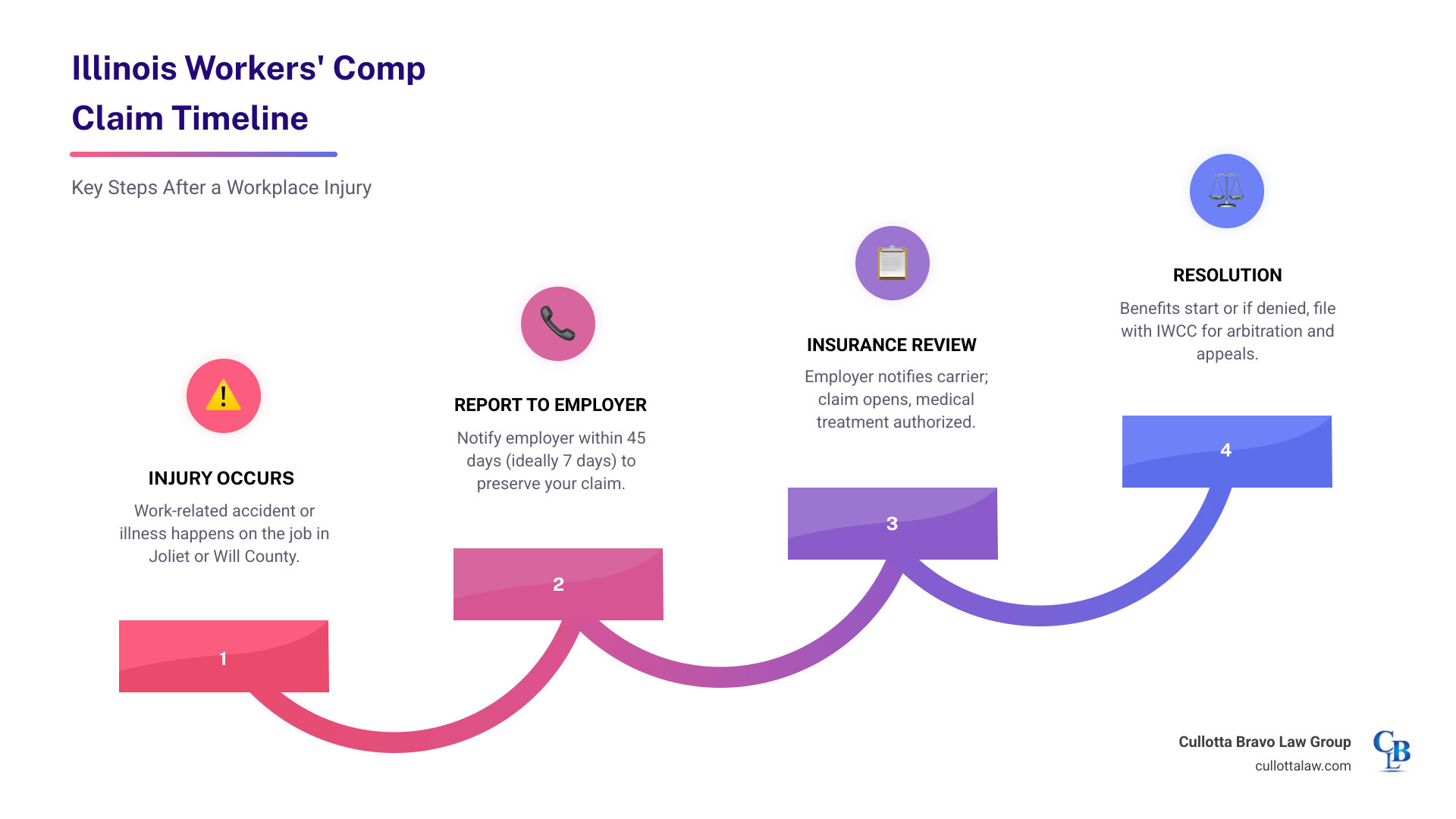
Your primary priority following a workplace accident is securing necessary medical treatment. Inform the treating physician explicitly that the injury occurred on the job so they can document the incident correctly in your medical records. Under Illinois law, you must notify your employer of the accident as soon as possible, but no later than 45 days from the date of the incident. Delaying notification beyond this 45-day window can result in a complete forfeiture of your right to compensation.
Documenting the Incident
To safeguard your claim against adjuster skepticism, maintain a comprehensive paper trail. Record the exact date, time, location, and description of the accident. Keep copies of all incident reports filed with your employer, medical evaluations, diagnostic imaging reports, prescription receipts, and correspondence with insurance adjusters. This documentation serves as foundational evidence if the claim adjustment process results in a dispute before the IWCC.
The Role and Responsibilities of the Claims Adjuster
During the adjustment phase, the insurance adjuster acts as the primary decision-maker on behalf of your employer. Their mandate is to investigate the facts of the accident, verify coverage, evaluate medical necessity, and manage the financial payout of the claim.
Investigation and Fact-Finding
The adjuster will review the employer's first report of injury, interview the employer and witnesses, and request your relevant medical records. They will scrutinize whether the accident occurred within the scope of employment and whether pre-existing conditions contributed to your current medical state. Because insurance adjusters handle high volumes of claims, maintaining clear, prompt, and professional communication is essential to prevent administrative delays.
Types of Benefits Evaluated During Adjustment
- Temporary Total Disability (TTD): Replaces a portion of your lost wages (typically two-thirds of your average weekly wage) if your doctor restricts you from working entirely.
- Temporary Partial Disability (TPD): Bridge benefits paid if you return to work on light duty earning less than your pre-injury wage.
- Medical Expenses: Coverage for all reasonable and necessary medical, surgical, and hospital services required to cure or relieve the effects of the injury.
- Permanent Partial Disability (PPD): Compensation awarded if you sustain permanent functional loss or impairment after reaching maximum medical improvement (MMI).
Common Challenges and Dispute Resolution
Not every workers compensation claim adjustment proceeds smoothly. Insurers frequently dispute claims, issue temporary denials, or terminate benefits prematurely based on independent medical examinations (IMEs) or missing documentation.
Handling Claim Delays and Denials
If an adjuster delays accepting your claim or issues a formal denial, you are not without recourse. Common reasons for denial include late reporting, disputes over whether the injury arose out of employment, or allegations that the injury resulted from intoxication or horseplay. When a dispute arises, you can file an Application for Adjustment of Claim with the IWCC. This legal filing initiates formal proceedings, leading to settlement conferences, arbitration hearings, and potential appeals before the Commission.
Independent Medical Examinations (IMEs)
Under Section 12 of the Illinois Workers' Compensation Act, an employer has the right to require an injured employee to submit to an examination by a physician of the employer's choice. Insurance adjusters frequently use IMEs to obtain a second opinion on your treatment plan, work restrictions, or the permanence of your injury. Attending these examinations is mandatory, but you have the right to request a copy of the examiner's report and have your treating physician review its findings.
Key Illinois Workers Compensation Milestones and Deadlines
| Statutory Requirement | Timeframe / Rule | Description |
|---|---|---|
| Notice to Employer | Within 45 days | Must notify employer of the accident verbally or in writing to preserve rights. |
| Statute of Limitations (Filing) | 3 years from injury or 2 years from last payment | Deadline to file an Application for Adjustment of Claim with the IWCC if disputes arise. |
| Waiting Period for TTD | 3 working days | TTD benefits are not paid for the first 3 days of disability unless the incapacity continues for 14 or more days. |
| Choice of Medical Providers | Two providers + chain of referral | Injured workers may choose their primary treating doctor and a second provider without prior approval. |
Frequently Asked Questions
What should I do if the insurance adjuster ignores my calls or delays my benefits?
Document every attempt to contact the adjuster in writing via email or certified mail. If benefits are unreasonably delayed or denied without cause, your attorney can petition the IWCC for penalties and attorney's fees under Sections 19(k) and 19(l) of the Act.
Can my employer choose which doctor I see in Illinois?
Under Illinois law, you generally have the right to select your own treating physicians. You are entitled to be treated by your choice of two doctors, plus any specialists to whom they refer you. You do not have to accept treatment exclusively from a company-designated clinic unless you agree to it.
What is Maximum Medical Improvement (MMI)?
Maximum Medical Improvement is the point at which your treating physician determines that your condition has stabilized and further recovery or healing is unlikely, even with additional medical treatment. Reaching MMI often triggers the evaluation of permanent partial disability benefits and the transition out of temporary wage replacement.
Am I required to give a recorded statement to the insurance adjuster?
While insurance adjusters often request recorded statements early in the adjustment process to evaluate liability, you are not strictly required to provide one without preparation. Because statements can be used out of context to minimize your claim, consult with a qualified legal professional before agreeing to a recorded interview.
Can I settle my Illinois workers compensation claim for a lump sum?
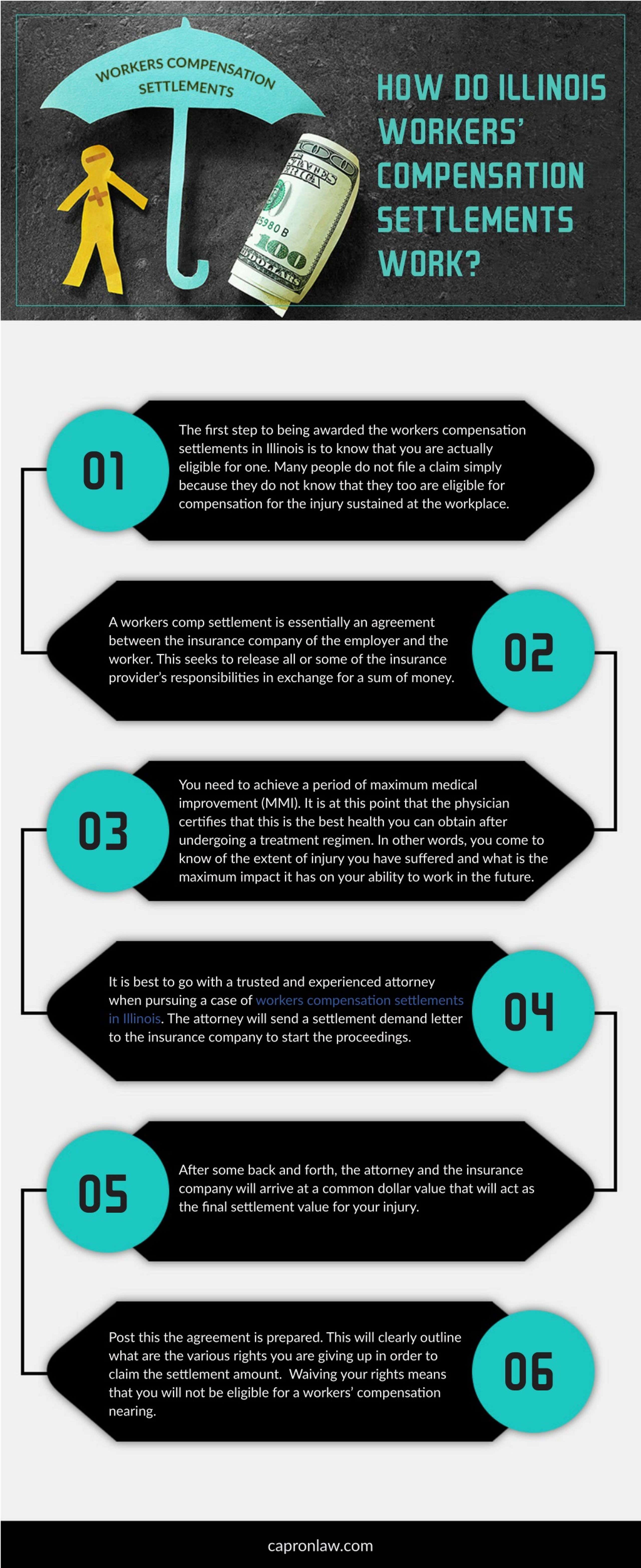
Yes, claims can be resolved through a lump sum petition settlement (Section 9) or a disputed contract settlement (Section 19(h)). Once approved by an arbitrator at the IWCC, a lump sum settlement closes your right to future medical or financial benefits for that specific injury, making careful financial and medical evaluation essential.
Next Actions and Professional Guidance
Successfully managing an Illinois workers compensation claim adjustment requires vigilance, organization, and adherence to strict legal deadlines. Because insurance carriers employ adjusters and legal teams whose primary goal is cost containment, protecting your interests often requires expert advocacy. If your claim faces significant delays, disputed medical treatments, or a formal denial, consult with a licensed attorney specializing in Illinois workers compensation law to evaluate your options and represent your case before the Commission.
Image Gallery