The Hidden Animal Easter Eggs in Jeep Models: A Complete Identification Guide
Hidden animal easter eggs in Jeep models are small, molded graphics, glass etchings, and interior stampings secretly incorporated into vehicles like the Wrangler, Gladiator, Compass, Renegade, and Cherokee. These hidden creatures—inclu...
Hidden animal easter eggs in Jeep models are small, molded graphics, glass etchings, and interior stampings secretly incorporated into vehicles like the Wrangler, Gladiator, Compass, Renegade, and Cherokee. These hidden creatures—including geckos, spiders, Bigfoot, the Loch Ness Monster, and T-Rex footprints—serve as playful homages to nature, off-road exploration, and brand lore.
Contents
The Origin and Purpose of Jeep’s Hidden Easter Eggs
Jeep’s tradition of hiding visual surprises throughout its lineup dates back to 1997 during the redesign of the Jeep Wrangler (TJ generation). Product designer Michael Santoro wanted to establish a distinct stylistic link to the brand's historic military heritage. He added an icon of the iconic seven-slot grille and round headlights into the cowl plastic beneath the windshield wipers. The subtle design touch resonated with automotive enthusiasts and executive leadership, establishing an official brand habit.
When Stellantis (formerly Fiat Chrysler Automobiles) expanded the Jeep lineup under the design direction of Ralph Gilles and Mark Allen, the design team embraced this concept fully. Designers were given freedom to embed hidden motifs throughout new body styles. While many easter eggs feature classic Willys MB silhouettes, map topography, or historic branding, animal graphics became one of the most popular sub-genres of Jeep design cues.
These animal graphics connect the physical vehicle to the outdoors and nature. They offer original owners an engaging discovery process after purchase, often discovered while washing the exterior, topping up windshield washer fluid, or vacuuming the cabin floor mats.
- 1997: First Easter Egg on Wrangler TJ (Seven-Slot Grille)
- 2011: Expanded Graphics on Grand Cherokee & Wrangler (JK)
- 2015: Renegade Launch Introduces "Ciao Baby!" Spider & Bigfoot
- 2017: Compass Launch Adds Loch Ness Monster & Plastic Lizard
- 2020: Gladiator Floor Mats Feature T-Rex & Willys Graphics
Model-by-Model Breakdown of Jeep Animal Easter Eggs
Different Jeep models contain distinct animal figures tailored to their specific market segment, assembly heritage, or thematic design language. Below is a comprehensive breakdown of the verified animal easter eggs found across modern Jeep platforms.
Jeep Compass: Marine Life and Reptiles
The Jeep Compass features some of the most distinct aquatic and reptilian easter eggs in the current lineup, strategically placed on exterior glass and underhood plastics.
- The Loch Ness Monster (Plesiosaur): On the lower right corner of the rear windshield glass, a subtle dark silhouette of the Loch Ness Monster—or a generic plesiosaur—can be seen "swimming" along the bottom perimeter. This graphic is printed directly into the black ceramic frit border of the glass. Designers incorporated this creature as a playful nod to the vehicle's capability to ford deep standing water up to its official depth rating.
- The Plastic Lizard (Gecko): Located beneath the front windshield wipers on the plastic cowl panel, a raised 3D plastic molding of a gecko or lizard appears to crawl across the air intake vents. Because this detail is cast in the same dark matte plastic as the cowl tray, it is virtually invisible unless inspected up close during routine maintenance or wiper blade replacement.
Jeep Renegade: Spiders, Bigfoot, and Amphibians
As one of the first vehicles designed under the joint Italian-American partnership, the subcompact Jeep Renegade contains more hidden icons than almost any other vehicle in its class.
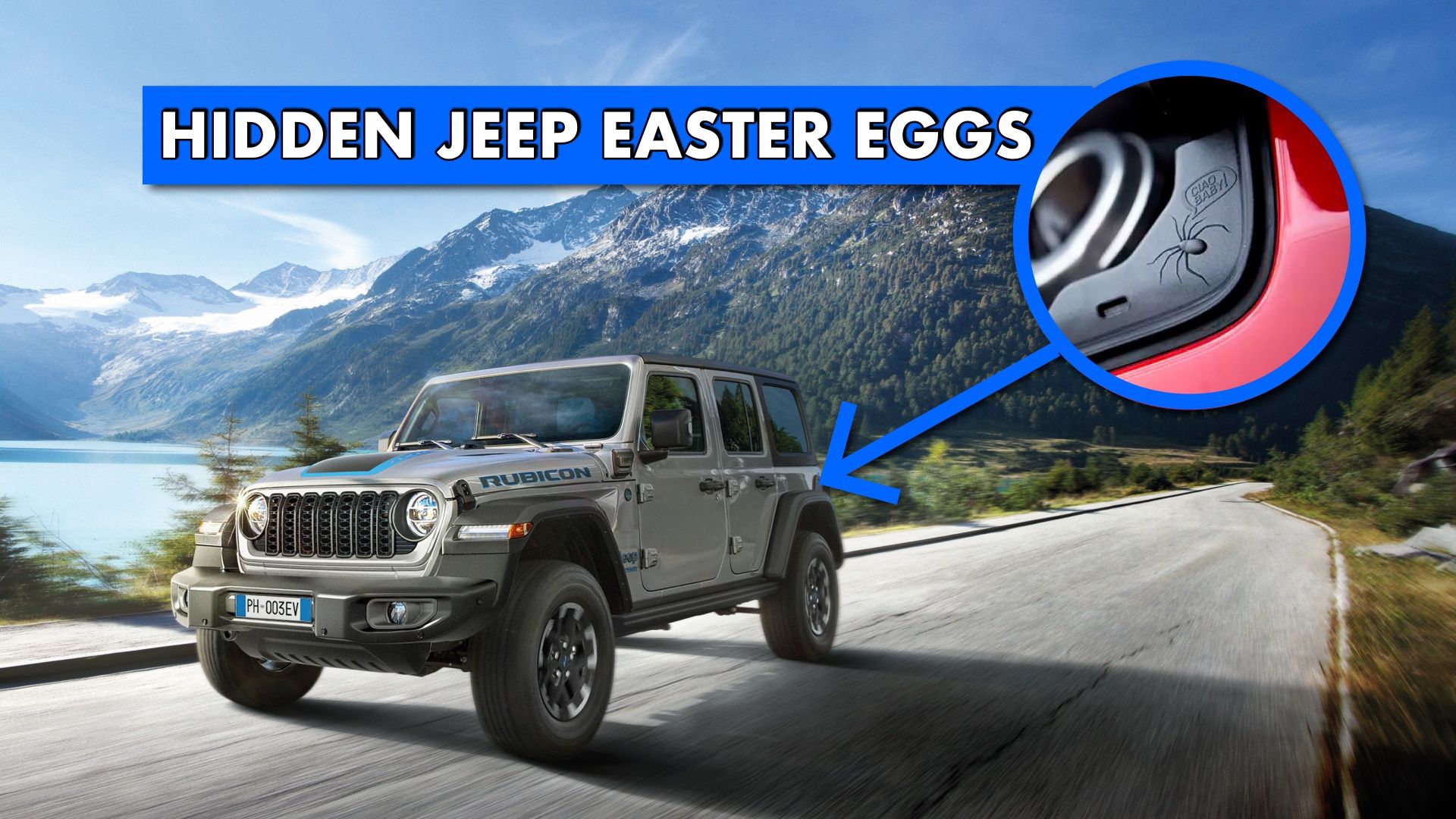
- The "Ciao Baby!" Spider: Inside the fuel filler housing, beneath the capless fuel door, a small plastic spider is molded into the fuel bezel. A tiny speech bubble next to the spider reads "Ciao Baby!" This easter egg celebrates the Renegade’s shared platform with the Fiat 500X and its assembly at the Melfi Plant in Italy, bridging American design with European manufacturing.
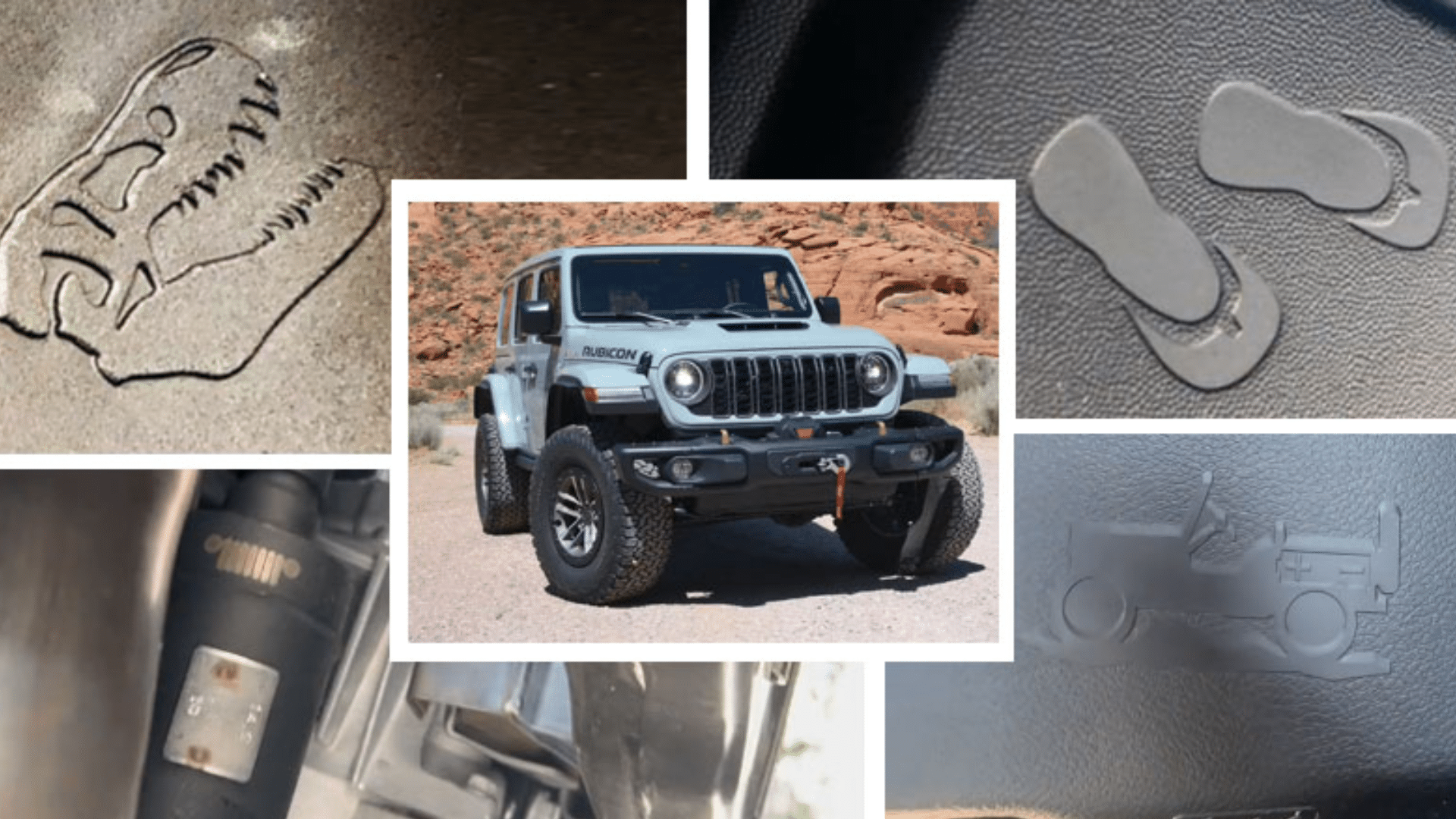
- The Bigfoot (Sasquatch) Silhouette: On the lower right corner of the rear windshield, a tiny silhouette of Bigfoot is etched into the glass ceramic border. The creature is depicted walking across the glass, symbolizing the vehicle's inclination for remote wilderness trails where mythical cryptids might roam.
- The Hidden Toad / Frog: Molded into the plastic cowl structure near the base of the front windshield is a small frog outline. Like the Compass gecko, this design element is integrated directly into the plastic body component.
Jeep Gladiator & Wrangler: Prehistoric Predators and Rugged Wildlife
The midsize Gladiator truck and iconic Wrangler SUV incorporate animal motifs that emphasize raw mechanical power, durability, and extreme terrain conquest.
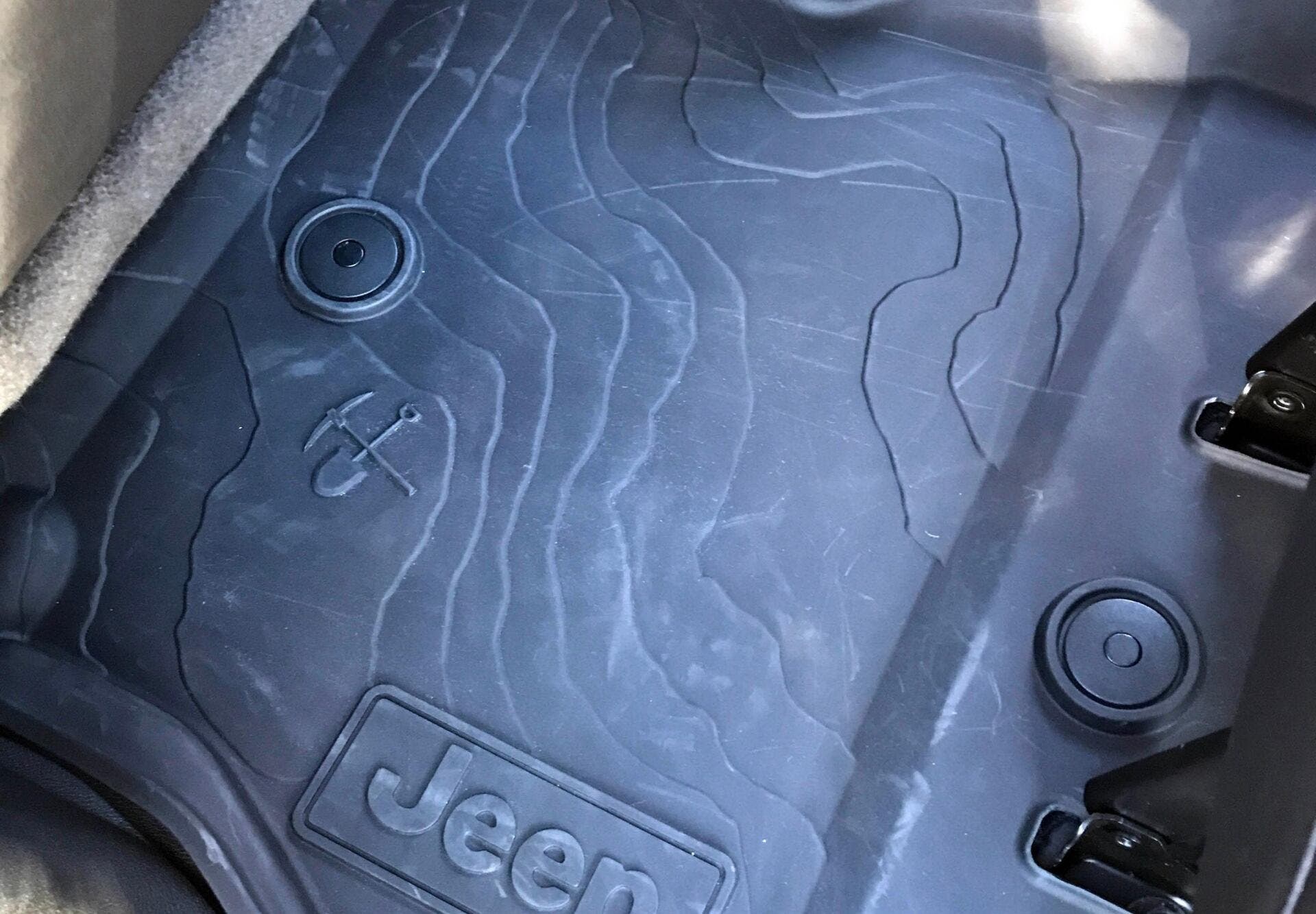
- The T-Rex (Tyrannosaurus Rex) vs. Willys: On factory optioned all-weather rubber floor mats for the Jeep Gladiator and select Wrangler models, detailed texture moldings show a T-Rex footprint next to a classic Willys MB vehicle graphic. On some floor mat designs, the scale outline of a T-Rex appears to be chasing the small Willys Jeep, representing the evolutionary fight between raw mechanical strength and ancient natural forces.
- The Gorilla Icon (Corning Gorilla Glass): For factory vehicles equipped with optional heavy-duty windshield glass, or official Mopar replacement windshields made with Corning Gorilla Glass, a small gorilla head graphic is permanently etched into the lower corner of the glass above the identification bug. This serves as both a structural branding identifier and a functional confirmation of chip-resistant glass installation.
Jeep Cherokee & Other Trim Variations
- The Small Fly / Insect: On select model years of the Jeep Cherokee (KL series) and Renegade, a tiny fly icon is molded into the plastic trim surrounding the center storage console tray or printed on the windshield perimeter.
- Topographic Fauna: Certain special edition trims, such as Trailhawk and Desert Hawk models, feature interior rubber mat inserts stamped with topographic maps of iconic off-road locations (such as Moab, Utah, or the Rubicon Trail), complete with small animal tracks embedded along the trail routes.
How to Find and Spot Hidden Easter Eggs on Your Jeep
Spotting these hidden animal icons requires knowing where to look and understanding the materials used during assembly. Jeep designers deliberately obscure these graphics in secondary visual zones that require close inspection.
- Windshield & Rear Glass Borders (Ceramic Frit Etchings)
- Plastic Windshield Cowl Trays (Molded Plastic Reliefs)
- Fuel Filler Cavities (Molded Bezel Details)
- Rubber Floor Mat Trays & Storage Liners (Molded Textures)
- Center Console & Speaker Trim Rings (Stamped Patterns)
Key Visual Zones to Inspect
- Glass Ceramic Frit Borders: Examine the black shaded borders surrounding the front windshield, rear liftgate window, and quarter glass. Use a bright LED flashlight, holding it at a 45-degree angle to reveal low-contrast silk-screened etchings near the edges.
- Exterior Plastic Cowls: Open the hood and inspect the black plastic trim panel spanning the area between the engine bay and the bottom of the windshield glass. Look closely near the wiper blade pivot arms for raised plastic outlines.
- Fuel Filler Pocket: Pop open the fuel cap door and clean away dust or road grime around the filler neck ring. Check the inner plastic sidewalls for molded relief figures.
- Cabin Floor Cavities: Remove the rubber floor mats and wash away dirt using water and a mild detergent. The animal footprints and chased Willys graphics are often hidden within the raised water-channeling ribs of the floor liners.
Comparative Overview of Jeep Animal Easter Eggs
The following table summarizes verified animal easter eggs found across major production Jeep models:
| Jeep Model | Animal Graphic | Vehicle Location | Material / Feature Type | Significance & Story |
|---|---|---|---|---|
| Jeep Compass | Loch Ness Monster | Rear Windshield (Lower Right) | Etched Ceramic Glass Frit | Nods to water-fording capability and deep-water capability. |
| Jeep Compass | Lizard / Gecko | Front Windshield Plastic Cowl | Molded Thermoplastic | Symbolizes grip, traction, and desert off-road adaptability. |
| Jeep Renegade | "Ciao Baby!" Spider | Fuel Filler Door Cavity | Molded Fuel Ring Housing | Commemorates Italian manufacturing plant assembly in Melfi. |
| Jeep Renegade | Bigfoot (Sasquatch) | Rear Windshield Corner | Etched Ceramic Glass Frit | Celebrates wilderness exploration and hidden outdoor legends. |
| Jeep Renegade | Toad / Frog | Front Wiper Cowl Vents | Molded Thermoplastic | Highlights nature integration and wet-weather capability. |
| Jeep Gladiator | T-Rex Footprint | All-Weather Rubber Floor Mats | Deep-Channel Molded Rubber | Represents evolutionary power and fun rivalry with terrain. |
| Jeep Wrangler | Gorilla Head Logo | Front Windshield Glass Corner | Laser Glass Etching | Identifies factory-installed Corning Gorilla Glass option. |
| Jeep Cherokee | House Fly / Insect | Center Console Tray / Glass | Molded Textured Plastic | Playful interior detail intended to surprise detailing owners. |
Collector Value, Trim Differences, and Maintenance Considerations
While hidden animal easter eggs do not alter mechanical performance or vehicle towing capacity, they play a notable role in brand identity, resale satisfaction, and maintenance decisions.
Impact of Glass Replacements
One of the most frequent ways owners lose their hidden animal graphics is through standard windshield replacement. Standard third-party aftermarket windshields often lack the proprietary ceramic frit graphics used by original equipment manufacturers (OEM).
- OEM Glass vs. Aftermarket Glass: If a rock chip forces a windshield replacement on a Compass or Renegade, a generic aftermarket glass pane will omit the Bigfoot or Loch Ness Monster etching. To maintain these details, vehicle owners must request original OEM Mopar glass through their insurance carrier or glass service provider.
- Gorilla Glass Upgrades: When replacing cracked windshields on Wranglers or Gladiators, opting for Mopar Corning Gorilla Glass restores structural resistance and adds the gorilla head emblem to the lower corner.
| Feature / Graphic | OEM Mopar Glass | Aftermarket Glass |
|---|---|---|
| Corner Willys Graphic | Included | Usually Absent |
| Bigfoot / Nessie Etching | Included | Absent |
| Gorilla Glass Emblem | If Spec/Ordered | Absent |
| Structural Fitment | Exact Match | Varies by Brand |
Trim-Level Variations
Not every trim level within a model line features the exact same easter egg set. Special off-road packages such as Trailhawk, Rubicon, and Mojave often include exclusive graphics not found on base Sport or Latitude trims:
- Trailhawk Models: Frequently include additional red-accented animal details or trail maps within rubber compartment liners.
- Base Models: Typically retain standard glass etchings (like the Bigfoot or Loch Ness Monster) and molded cowl animals, but may omit detailed interior rubber mat designs unless optioned with factory all-weather floor protection.
Frequently Asked Questions
Why does Jeep place hidden animals and easter eggs on its vehicles?
Jeep incorporates hidden animal graphics and Easter eggs to inject personality into its vehicle designs, pay homage to natural outdoor environments, and reward owners with unexpected visual details. What began as an informal gesture by designer Michael Santoro on the 1997 Wrangler has grown into an official design signature managed by Stellantis styling teams.
Do all modern Jeep models have hidden animal easter eggs?
Most modern Jeep models produced since 2015 include at least one hidden icon, but animal-specific graphics are most common on the Renegade, Compass, Gladiator, Wrangler, and Cherokee. Base fleet trim levels or vehicles fitted with non-OEM replacement parts may lack certain graphics.
Will replacing my Jeep's windshield remove the hidden easter egg graphics?
Yes, replacing an original factory windshield with a standard non-OEM aftermarket glass pane usually removes the ceramic frit etchings such as the Bigfoot silhouette or Loch Ness Monster. To preserve these icons, owners must specifically request OEM Mopar glass during repair.
What is the story behind the spider saying "Ciao Baby!" on the Jeep Renegade?
The spider graphic inside the Renegade's fuel filler cavity is a humorous reference to the vehicle's production origin. Built at the Stellantis plant in Melfi, Italy, on a platform shared with Fiat, the spider's Italian greeting "Ciao Baby!" celebrates the blend of American Jeep styling and Italian manufacturing.
Which Jeep model features the hidden Loch Ness Monster?
The Loch Ness Monster (or plesiosaur) etching is located on the rear windshield glass of the Jeep Compass. It was introduced as a tongue-in-cheek graphic referencing the vehicle's standing-water fording abilities.
Practical Recommendations for Jeep Owners
- Perform an Easter Egg Audit: Take a flashlight and inspect your vehicle's windshield frit borders, cowl tray under the wipers, inside the fuel cap filler door, and under the floor mats to identify all hidden factory graphics.
- Specify OEM Glass During Claims: If your Jeep requires windshield or window replacement due to road debris damage, inform your insurance adjuster that your vehicle features original equipment safety and decorative glass etchings. Request Mopar original equipment to preserve the factory animal graphics.
- Protect Interior Moldings: When cleaning interior plastic trays or all-weather floor mats, avoid harsh chemical solvents that can degrade textured rubber surfaces where footprint graphics are molded.
Image Gallery