Tribal Tattoos: Styles, Cultural Meaning, Modern Designs, and Placement Guide
A tattoo of tribal origin represents one of humanity's oldest forms of personal expression, ritual marking, and cultural identity. Featuring dense black ink, bold geometry, and anatomical flow, tribal tattoos encompass distinct indigen...
A tattoo of tribal origin represents one of humanity's oldest forms of personal expression, ritual marking, and cultural identity. Featuring dense black ink, bold geometry, and anatomical flow, tribal tattoos encompass distinct indigenous heritage traditions—such as Polynesian Tatau and Filipino Batok—as well as contemporary neo-tribal aesthetics designed specifically for decorative anatomical contouring.
Contents
Understanding tribal tattooing requires distinguishing between sacred cultural traditions and modern decorative interpretations. Whether you are drawn to ancestral heritage, heavy blackwork linework, or contemporary cyber-sigilism, selecting the right tribal tattoo demands knowledge of cultural respect, structural anatomy, pain tolerance, and technical ink execution.
The Historical and Cultural Lineages of Tribal Tattoos
Body ornamentation through skin puncture spans thousands of years across every inhabited continent. Rather than representing a single uniform aesthetic, traditional tribal tattooing involves distinct regional disciplines, each with its own visual vocabulary, social function, and spiritual significance.
Polynesian Traditions: Tatau, Ta Moko, and Marquesan Symbols
The islands of the Polynesian triangle developed some of the most intricate tattoo systems in history. Across these cultures, body art served as a visual biography, denoting social status, genealogical rank, prowess in navigation or warfare, and rites of passage.
- Samoan Tatau: Administered using hand-tapping tools (sau) made from boar tusks and bone, Samoan tattooing includes the male Pe'a (covering from the mid-torso to the knees) and the female Malu (extending from the upper thighs to below the knees). The geometric arrangements reflect community duty, courage, and balance.
- Māori Tā Moko: In Aotearoa (New Zealand), Tā Moko traditionally carved patterns into the facial skin and body using bone chisels (uhi). The spirals and curved patterns (koru) signify ancestral lineage (whakapapa). Non-Māori individuals wishing to wear these motifs generally receive Kirituhi, an open-style body art created specifically without conveying restricted ancestral claims.
- Marquesan Enata: Indigenous to the Marquesan Islands, these motifs utilize anthropomorphic shapes (enata), oceanic elements, and geometric block shading to narrate life achievements, divine protection, and lineage.
Southeast Asian Traditions: Filipino Batok and Dayak Art
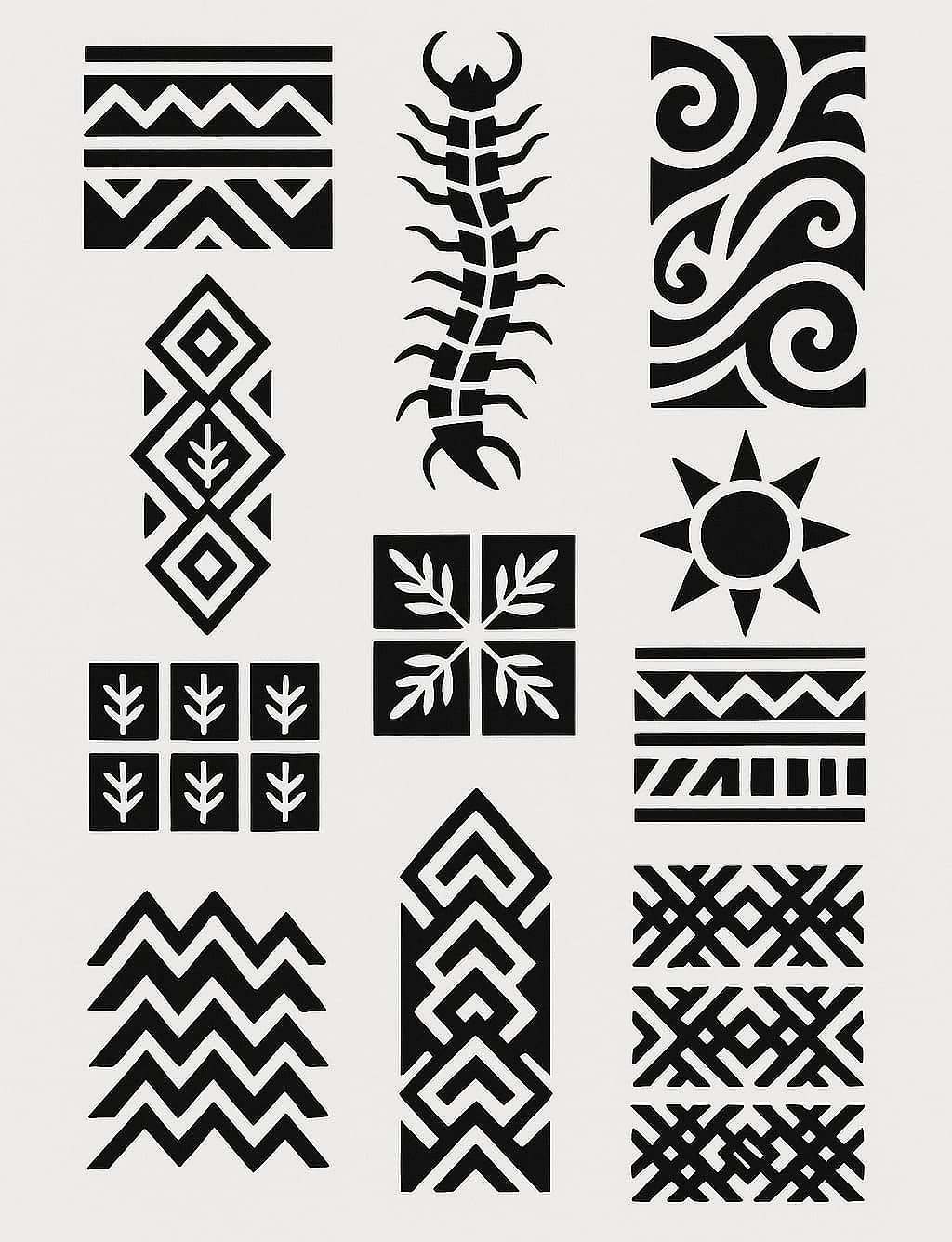
In the mountainous regions of northern Luzon in the Philippines, indigenous groups like the Kalinga preserve the ancient practice of Batok. Administered with a citrus thorn secured to a bamboo stick, patterns often mirror rice terraces, centipedes (gayaman) for protection, and python skin for resilience. Similarly, the Dayak people of Borneo carry sacred motifs such as the Bungai Terung (eggplant blossom), tattooed on the shoulders to symbolize the transition to adulthood and the journey away from one's home village.
European and Nordic Lineages: Celtic and Pictish Geometry
Historical European tribes utilized body ornamentation for tribal identification and combat psychological conditioning. Celtic body art relied on endless knots, key patterns, and zoomorphic spirals reflecting cyclical life and interconnectedness. The Picts of ancient Scotland derived their name from the Roman term Picti (the painted ones), utilizing zoomorphic figures, ironwork spirals, and astronomical alignments across their skin.
Modern Interpretations: From 1990s Aesthetics to Neo-Tribalism
The modern Western resurgence of tribal tattoos evolved through distinct creative phases, transforming ancestral motifs into purely aesthetic subcultures.
The 1990s Western Tribal Phenomenon
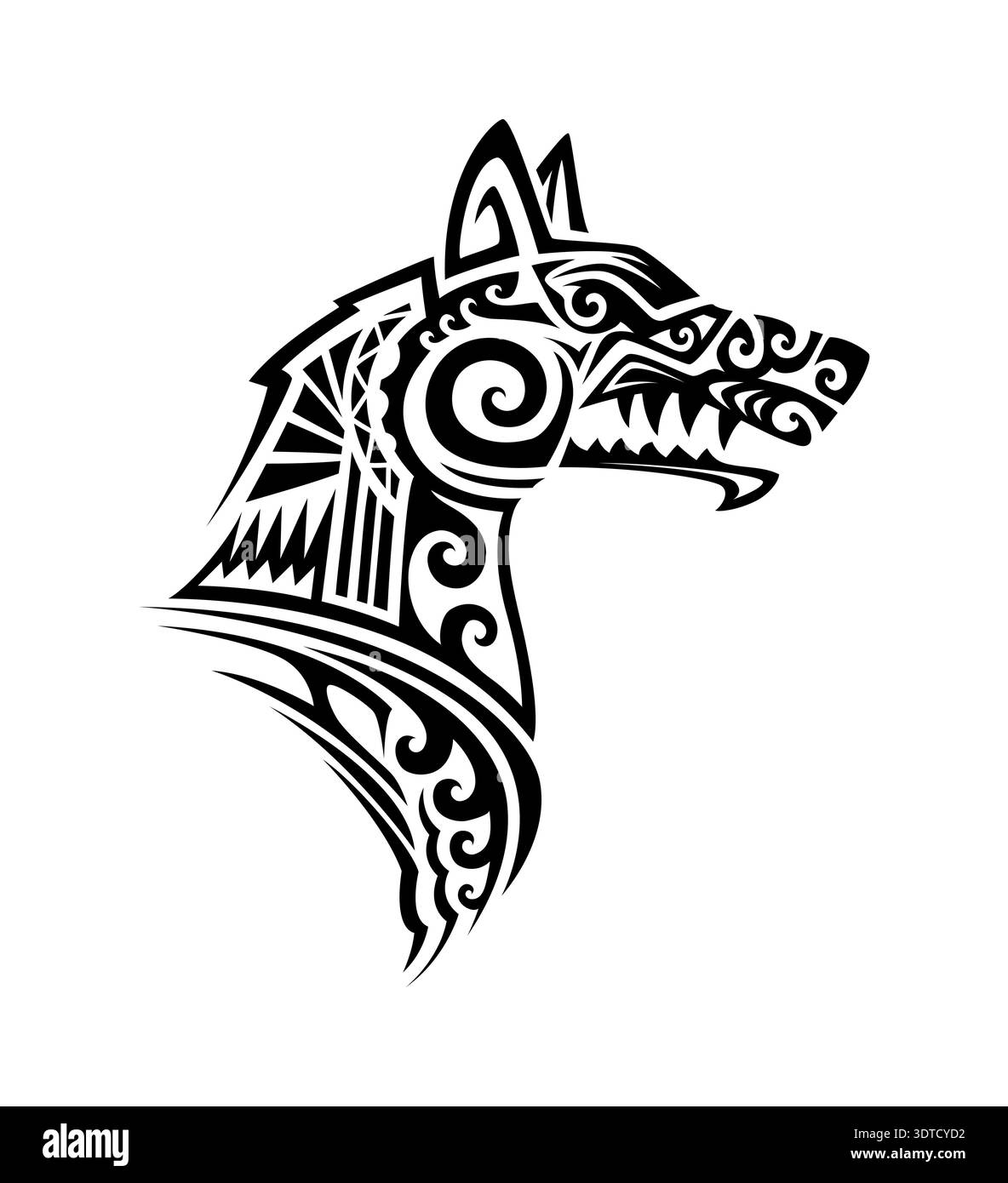
During the 1980s and 1990s, artists popularized bold, sweeping black silhouettes characterized by needle-sharp points, swooping curves, and barbed forms. While inspired by Oceanic and Bornean silhouettes, these designs shed ancestral symbolism in favor of maximizing contrast and tracing muscle mass. Often applied across the deltoid, bicep, or lower back, this style prioritized high-contrast aesthetic impact over narrative storytelling.
Neo-Tribal and Cyber-Sigilism
Contemporary tattooing has reimagined tribal structures into experimental subgenres:
- Neo-Tribal / Abstract Blackwork: Modern tattoo artists blend heavy black fills with brutalist architectural lines, fluid biomechanical forms, and micro-textures. These designs disregard traditional tribal motifs, focusing instead on pure kinetic motion across the body.
- Cyber-Sigilism: Emerging through digital subcultures, cyber-sigilism combines the sharp, spiky silhouettes of 1990s tribal with fine-line needle groupings, glitch aesthetics, and industrial hardware imagery. These designs are lighter, more organic, and mimic insectoid or technological forms.
Comparison of Tribal Tattoo Styles
Evaluating different tribal tattoo styles involves understanding their historical roots, traditional tool applications, and modern adaptation rules.
| Tattoo Tradition / Style | Geographic Origin | Traditional Application Method | Visual Characteristics | Cultural Accessibility Status |
|---|---|---|---|---|
| Samoan Tatau | Samoa | Hand-tapped bone/tusk comb (Sau) | Dense geometric panels, balanced grids, bandings | Restricted (Pe'a / Malu are community-sanctioned) |
| Māori Kirituhi | New Zealand (Aotearoa) | Hand-tapped bone chisel or machine | Spirals (koru), chevron motifs, natural curves | Open to all individuals (non-genealogical) |
| Kalinga Batok | Philippines | Calamansi thorn on bamboo stick | Linear hatching, chevrons, diamond python scales | Cultural heritage; best obtained via direct lineage artists |
| Borneo Dayak | Borneo (Malaysia / Indonesia) | Two-man hand tapping technique | Shoulder rosettes (Bungai Terung), dog-dragons | Ancestral markers; open variations available |
| Celtic Knotwork | British Isles / Western Europe | Historical staining, modern tattoo machine | Interlocking knots, zoomorphic lines, step patterns | Open to all individuals |
| 1990s Bold Tribal | Western / International | Modern coil or rotary machines | Symmetrical black points, heavy black arcs | Open to all individuals (Purely decorative) |
| Contemporary Neo-Tribal | Global contemporary | Rotary machine (Magnum & fine-line grouping) | Fluid organic arcs, asymmetrical flow, cyber-sigils | Open to all individuals (Aesthetic movement) |
Cultural Appropriation vs. Cultural Appreciation
Before getting a tribal tattoo rooted in indigenous culture, consider the ethics of skin marking. Many tribal patterns are not mere art; they represent sacred visual languages, active family crests, and protected community assets.
Sacred markings like the Māori Tā Moko or Samoan Pe'a require recognized genealogical ties, formal village sanction, and ritual initiation. Wearing these without authorization is considered an act of cultural erasure and misappropriation.
To approach cultural tribal designs ethically, follow these foundational standards:
- Distinguish Sacred from Open Styles: If you admire Polynesian aesthetics but lack genealogical heritage, opt for Kirituhi, designed specifically by indigenous artists to share Māori artistry with outsiders without claiming unearned ancestral credentials (whakapapa).
- Commission Cultural Specialists: Seek out an indigenous practitioner or a licensed artist trained directly under an apprentice lineage within that tradition.
- Avoid Commercial Copying: Never bring a photograph of an individual's personal tribal tattoo to a commercial shop to replicate. Traditional tattoos tell an individual's specific personal story; duplicating it copies someone else's personal and familial identity.
- Embrace Secular Neo-Tribal Styles: If you prefer pure aesthetics without cultural or ceremonial commitments, explore Western blackwork, contemporary neo-tribal, or abstract ornamentations.
Anatomy and Placement: Flowing With Body Mechanics
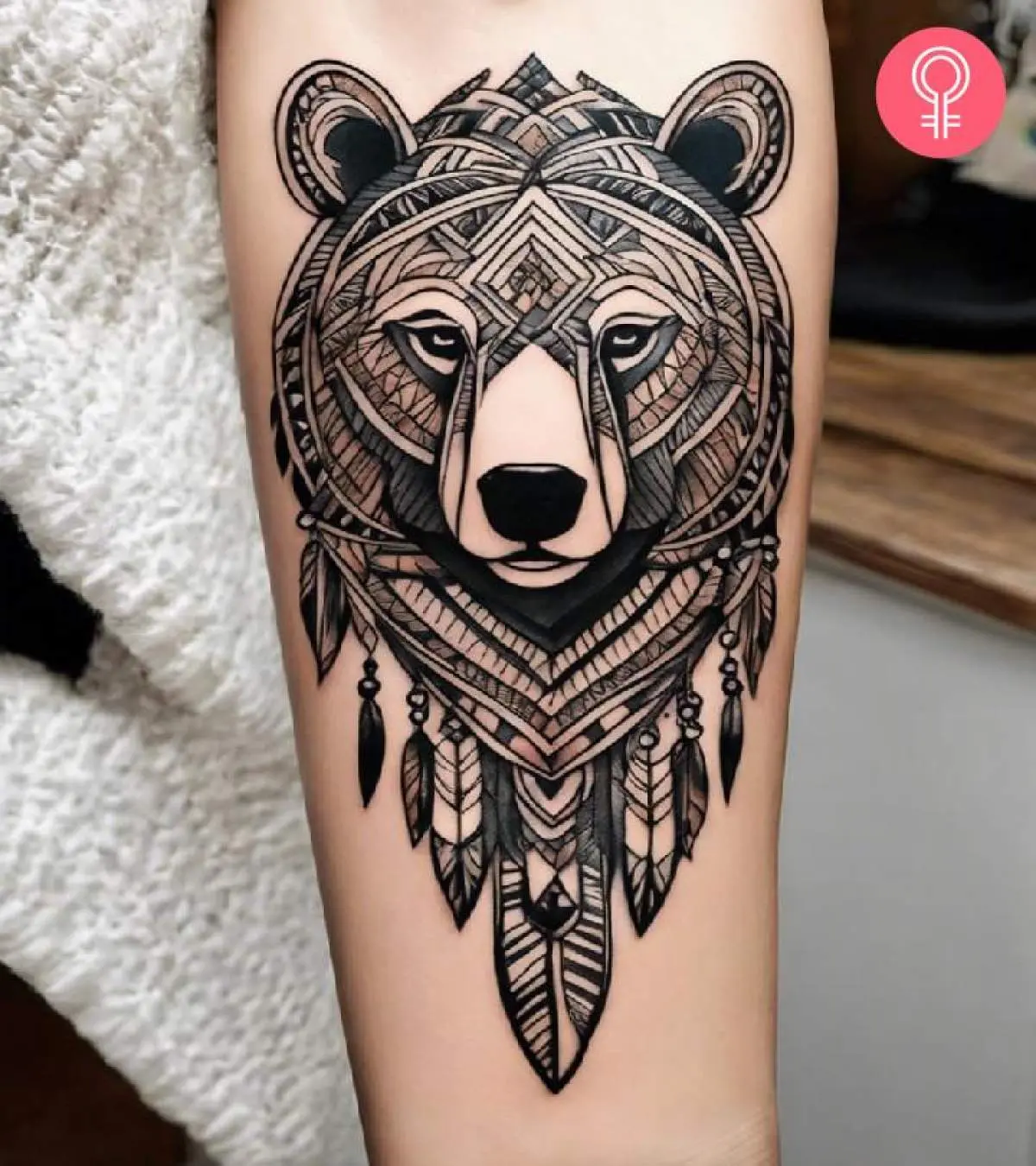
Tribal tattoos rely heavily on negative space and anatomical harmony. Unlike illustrative realism, which can sit within an isolated frame, a tribal tattoo must dynamically interact with human musculature.
Deltoid, Bicep, and Shoulder Cap
The classic tribal sleeve works best when the primary focal point centers on the deltoid muscle. Curved arcs should wrap the outer head of the deltoid, leading down through the triceps and wrapping toward the inner forearm. If the lines are stamped flat without accounting for arm rotation, the shapes warp when the arm moves.
Chest and Sternum Formations
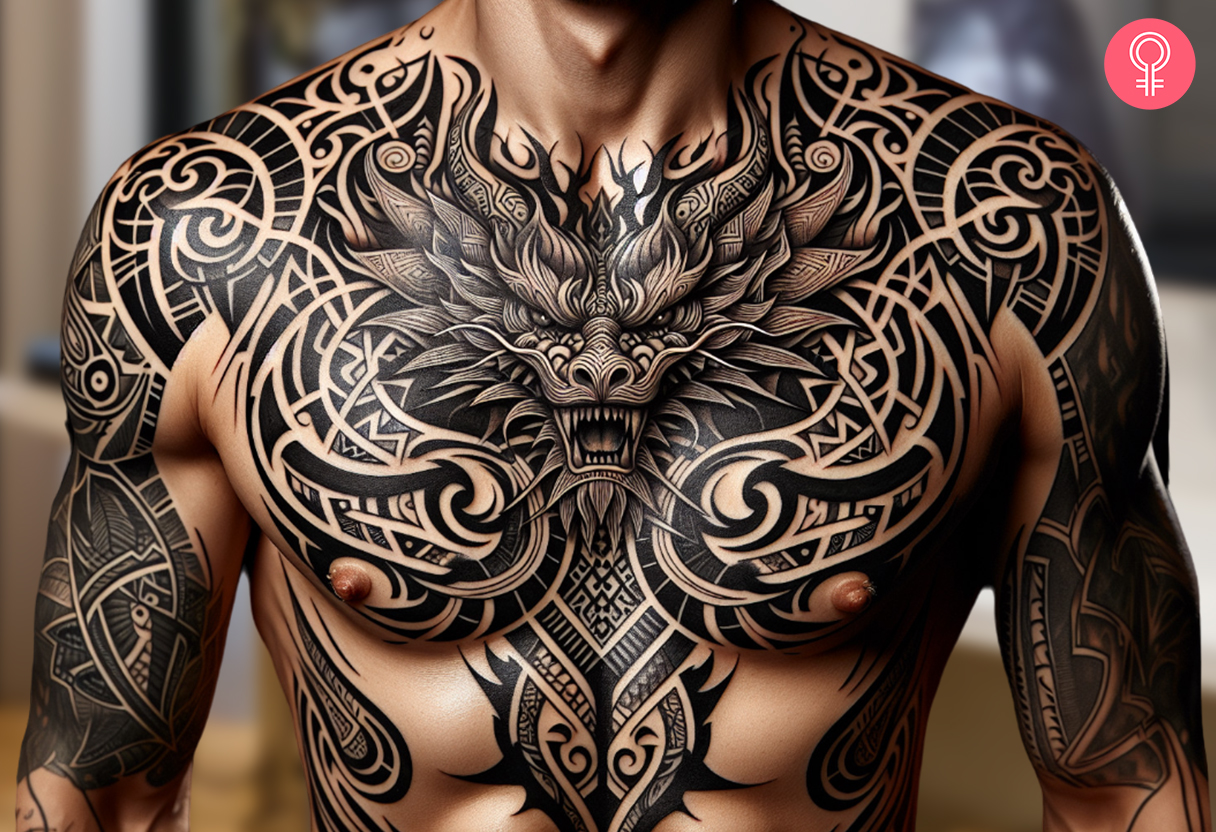
Chest plates require bilateral symmetry or deliberately counter-balanced asymmetry. Bold arcs should trace the pectoralis major and follow the collarbone. Traditional tribal chest designs taper toward the sternum, drawing the eye down through the abdominal core.
Leg Sleeves and Calves
The gastrocnemius (calf muscle) and tibia (shin) offer distinct structural opportunities. Strong vertical spine structures running up the shin bone ground the design, while curved secondary bands wrap the muscular curve of the calf, emphasizing physical movement.
Technical Execution: Needles, Inks, and Saturation
Applying high-density tribal tattoos requires specific technical execution. Solid blackwork does not allow for blending errors; patchy fills, uneven line weights, or ink blowouts are immediately noticeable.
Needle Selection and Groupings
- Linework: Sharp borders and foundational outlines are laid using round liners (typically 7RL to 14RL) with medium to long tapers. Clean, continuous passes prevent micro-breaks in the geometric symmetry.
- Solid Black Packing: Large curved magnum needles (ranging from 15CM to 49CM) are used to saturate large areas. Needles must run at a consistent dermal depth (1.5mm to 2mm) in tight, controlled circular or cross-hatch motions to eliminate gaps without chewing up the skin.
Pigment Standards and Safety
Executing dense black coverage requires high-grade carbon-black pigments formulated for long-term lightfastness. Artists select professional, highly concentrated carbon dispersals that adhere to global health regulations (such as EU REACH standards). High-grade carbon inks minimize the risk of fading into green or blue hues over decades of UV exposure.
Tribal Tattoo Aftercare and Healing Protocol
Tribal tattoos subject the dermis to extensive needle trauma due to the heavy saturation required for solid black fills. Healing dense black pigment demands structured aftercare to avoid ink loss, infection, and excessive scabbing.
- Immediate Wrap Management: Leave the protective film (such as medical-grade polyurethane adhesive film or sterile absorbent wrap) on for the duration recommended by your artist—typically 24 to 72 hours for adhesive barriers, or 3 to 5 hours for standard films.
- Gentle Washing: Wash the tattoo twice daily using lukewarm water and a fragrance-free, antibacterial liquid soap. Use your clean fingertips only; never scrub with a washcloth or sponge.
- Controlled Moisture Application: Apply a minimal layer of unscented, water-based ointment or specialized tattoo lotion twice daily. Over-moisturizing causes bubbling and draws ink out of the healing wound.
- Manage Heavy Scabbing Without Picking: Dense blackwork naturally forms thick scabs. Picking, scratching, or rubbing these scabs pulls pigment out of the dermis, leaving permanent, pale holidays (unpigmented spots) that require painful touch-ups.
- Strict UV Protection: Once healed, always apply broad-spectrum SPF 50 sunscreen to your tattoo. Deep black carbon deposits degrade rapidly under ultraviolet radiation, causing premature fading and softening crisp edges.
Frequently Asked Questions
Is it offensive to get a tribal tattoo if you are not from that culture?
It depends entirely on the design's cultural classification and sacred status. Sacred marks tied to lineage—such as Māori Tā Moko or Samoan Pe'a—are reserved for those within the culture, and copying them is considered offensive. However, open traditions like Māori Kirituhi, European Celtic knotwork, and modern abstract neo-tribal tattoos are intentionally open for anyone to wear respectfully.
What is the difference between Polynesian Tatau and Neo-Tribal tattoos?
Polynesian Tatau is a traditional, culturally specific body-marking practice carrying ancestral lineage, status, and community responsibilities. Neo-tribal tattooing is a contemporary artistic movement that borrows aesthetic cues—such as sharp points, heavy black fields, and dynamic flow—solely for personal, abstract, and visual purposes, free from sacred cultural rules.
Do solid black tribal tattoos hurt more than linework tattoos?
Yes, solid black tribal tattoos typically cause more discomfort than simple linework. While outlines require a single, fast pass with a round liner, saturating dense tribal fields requires multiple passes across the same area using large magnum needle groupings, intensifying skin irritation and trauma.
How long does a full tribal sleeve take to complete?
A full tribal arm or leg sleeve generally requires between 20 and 40 total hours of tattooing, broken into multiple sessions spaced 3 to 4 weeks apart. The exact time depends heavily on your body size, the intricacy of the patterns, the density of the solid black fills, and your pain tolerance.
Can old 1990s tribal tattoos be successfully covered up or reworked?
Covering old 1990s tribal tattoos is challenging because of their dense, saturated black ink. Traditional cover-ups require either even darker, larger blackwork designs or several sessions of Q-switched or picosecond laser tattoo removal to lighten the pigment before applying a new design. Alternatively, artists can modernize them by reworking them into modern neo-tribal or geometric patterns.
When planning your tribal tattoo, invest time into researching its cultural lineage, finding an artist specialized in high-saturation blackwork, and designing around your body's natural anatomy to achieve a timeless, striking piece of body art.
Image Gallery