Understanding the Lawyer Retainer Fee: A Comprehensive Guide
A lawyer retainer fee is an upfront payment made by a client to an attorney to secure their professional services for a specific legal matter. This fee acts as a down payment against future hourly work or a flat fee for specific servic...
A lawyer retainer fee is an upfront payment made by a client to an attorney to secure their professional services for a specific legal matter. This fee acts as a down payment against future hourly work or a flat fee for specific services, establishing the formal professional relationship and ensuring the attorney is committed to your case while covering initial administrative costs.
Contents
When you begin the search for legal representation, the financial structure of the engagement is often the most significant hurdle. Understanding how retainer fees operate is essential for managing your legal budget and setting expectations for the attorney-client relationship.
How a Retainer Fee Functions
In most legal practices, the retainer fee is not an additional "service fee" that disappears upon payment; rather, it is typically held in a specialized account known as an IOLTA (Interest on Lawyers Trust Accounts) or a client trust account. Under the rules of professional conduct in most jurisdictions, lawyers are prohibited from commingling these funds with their personal or business operating accounts.
As the attorney performs work on your behalf—conducting research, drafting motions, attending hearings, or communicating with opposing counsel—they will invoice their time against that initial deposit. When the funds in the trust account are depleted, the attorney will typically request that you replenish the retainer to ensure ongoing representation.
It is important to distinguish between two primary types of retainers:
- The Classic/Trust Retainer: This is the most common model. The money belongs to the client until it is "earned" by the attorney through billable work. If the case concludes and there is money left over, the lawyer must refund the balance to the client.
- The "Earned upon Receipt" or Flat Fee Retainer: In some specific circumstances, particularly with flat-fee engagements, an attorney may define the retainer as fully earned the moment it is paid. This is less common and usually subject to strict scrutiny by bar associations to ensure it is not considered excessive or unearned.
Factors That Influence the Size of a Retainer
The amount requested for a retainer is not arbitrary. It is generally calculated based on the attorney's assessment of the complexity, duration, and potential risks associated with your case. Several factors typically dictate this figure:
- Attorney Experience and Billing Rate: A senior partner at a prestigious firm will naturally require a higher initial retainer than a solo practitioner or a newer associate, reflecting their billable hourly rate.
- Anticipated Complexity: If your legal issue involves complex litigation, extensive discovery, or multiple expert witnesses, the attorney will account for the higher volume of "front-loaded" work by requesting a larger retainer.
- Geographic Jurisdiction: Legal costs vary significantly by region. Retainers in major metropolitan centers are generally higher than those in rural areas due to differing market rates and overhead costs.
- Scope of Representation: A retainer to represent you through a specific, time-limited task (such as drafting a contract) will be lower than a retainer intended to cover comprehensive representation in a multi-year civil lawsuit.
Comparison of Fee Structures
Not all legal matters are billed in the same way. Understanding the context of your legal need is key to determining if a retainer is the appropriate financial model.
| Fee Model | Typical Use Case | How It Works |
|---|---|---|
| Trust Retainer | Litigation, Family Law | Client deposits funds; lawyer bills against it hourly. |
| Flat Fee | Estate Planning, Simple LLC Formation | One-time payment for a specific, defined outcome. |
| Contingency | Personal Injury, Class Action | Lawyer takes a percentage of the final settlement/award. |
| Subscription | Corporate Retainer, Small Business | Monthly recurring fee for general advisory access. |
The Legal Agreement: The Retainer Letter
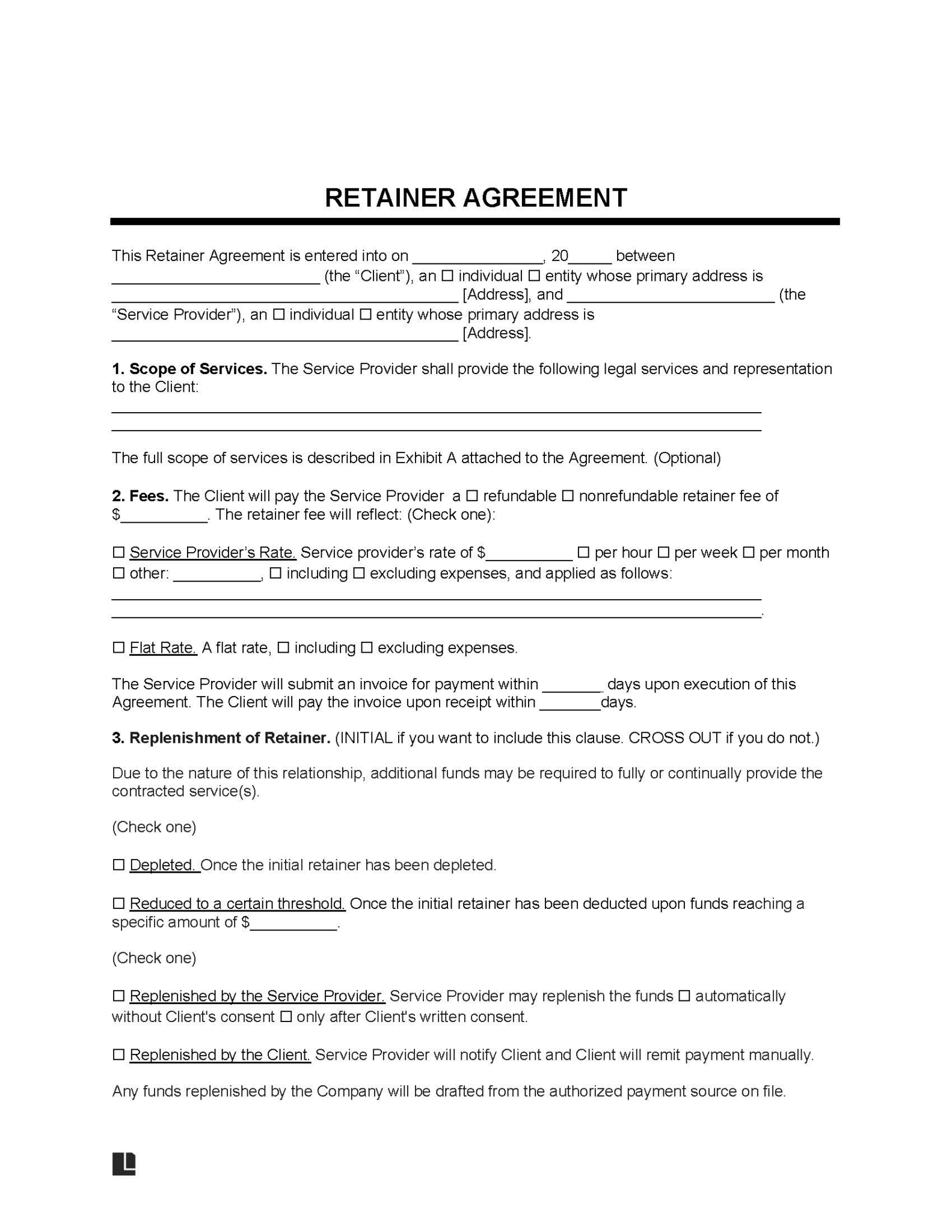
Never provide payment without a signed retainer agreement. This document is a binding contract that outlines the specific parameters of your professional relationship. In 2026, most firms provide these electronically for secure signature, but the legal substance remains the same.
The agreement should explicitly state:
- The Scope of Work: What specific legal matters does the retainer cover? Does it include appeals? Does it cover costs for filing fees or expert witnesses?
- Hourly Rates: The exact rate for the lead attorney, associates, and even paralegals.
- The Termination Clause: What happens if you decide to switch attorneys mid-case? The agreement must specify how your remaining balance will be returned to you.
- Billing Frequency: How often will you receive an itemized statement showing exactly how your funds were spent?
Common Mistakes to Avoid
- Failing to Request Itemized Invoices: You have the right to know exactly how your money is being spent. Ensure the retainer agreement includes a commitment to provide detailed monthly statements.
- Assuming the Retainer Covers Everything: Most retainers are "work-only" funds. Filing fees, court costs, travel expenses, and copy fees are often billed in addition to the work covered by the retainer. Always clarify this in your initial consultation.
- Ignoring the Replenishment Clause: If your case is ongoing and the retainer drops below a certain amount, the lawyer will request "replenishment." If you cannot replenish, the lawyer may have the right to withdraw from your case, subject to court approval.
Limitations and Professional Advice
The information provided here is for educational purposes regarding the standard mechanics of lawyer retainer fees and should not be construed as legal advice. Every jurisdiction—whether at the state or national level—has its own specific rules regarding attorney trust accounts and fee disputes. If you are currently in a dispute regarding your retainer, you should contact your local bar association's ethics department, which provides resources for clients to understand their rights and the professional responsibilities of the attorneys in that jurisdiction.
Frequently Asked Questions
Can I get my retainer back if I fire my lawyer? Yes. In the majority of cases, if you terminate the lawyer-client relationship, the attorney is required to perform a final accounting. They must refund any portion of the retainer that has not yet been earned through billable hours or costs incurred, provided there are no outstanding undisputed invoices.
Is a retainer the same as a contingency fee? No. A contingency fee is a "no win, no fee" arrangement where the lawyer is paid only if they win your case, taking a percentage of the settlement. A retainer is an upfront payment for services rendered, regardless of the outcome of the case.
What happens if I cannot afford the full retainer amount? Some attorneys may be willing to offer a payment plan, or you might look for legal clinics and pro bono organizations. If you cannot afford a private retainer, check if your jurisdiction offers "low bono" services or if you qualify for legal aid.
Are court costs included in the retainer? Usually, no. Court filing fees, discovery costs, and expert witness fees are "hard costs." Most retainer agreements specify that these costs are separate and will be deducted from the retainer or billed separately as they arise.
Why does my lawyer need me to "replenish" the retainer? This is standard practice when a case takes longer than expected. Once the initial deposit is exhausted, the lawyer requires a top-up to ensure they can continue working on your behalf without the risk of unpaid hours.
Next Steps
Before hiring an attorney, verify that your expectations align with their billing practices. During your initial consultation, ask for a draft of their standard retainer agreement. Review the document carefully—specifically the sections on billing increments (e.g., are they billing in 6-minute or 15-minute intervals?) and the termination policy. If the terms are unclear, do not hesitate to ask for clarification before signing.
Image Gallery