A History of Virtual Reality Technology: From Analog Stereoscopy to Spatial Computing
The history of virtual reality technology spans nearly two centuries, originating with early optical experiments in stereoscopy before evolving through mechanical simulators, room-sized computer systems, and modern wireless spatial com...
The history of virtual reality technology spans nearly two centuries, originating with early optical experiments in stereoscopy before evolving through mechanical simulators, room-sized computer systems, and modern wireless spatial computing devices. Virtual reality (VR) transformed from a theoretical concept into an immersive interactive medium by solving complex engineering challenges across optics, real-time computer graphics, low-latency motion tracking, and human-perceptual matching.
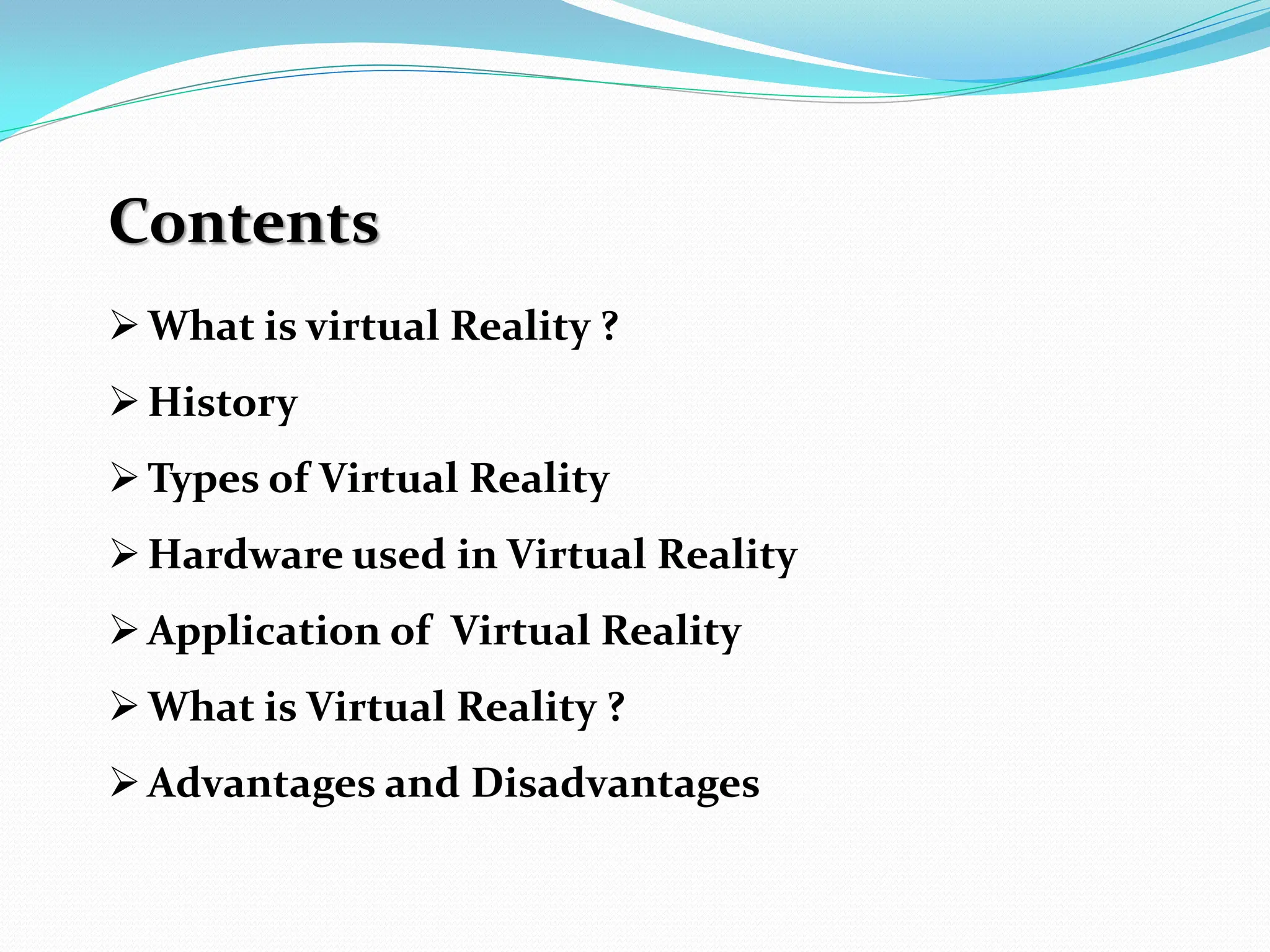
Contents
Early Foundations: Pre-Digital Simulation and Mechanical Immersion (1838–1960s)
Before electronic digital computing, researchers and inventors sought to recreate convincing sensory experiences using mechanical, optical, and chemical media. The core underlying concept of visual immersion—presenting slightly offset two-dimensional images to each eye to recreate three-dimensional depth perception—was first mathematically documented in 1838 by English scientist Sir Charles Wheatstone. Wheatstone invented the stereoscope, establishing that binocular vision relies on stereopsis, where the human brain combines two distinct 2D images to construct depth.
| Year / Era | Milestone |
|---|---|
| 1838 | Wheatstone Stereoscope (Binocular depth perception principles) |
| 1956 | Heilig's Sensorama (Mechanical multisensory arcade simulator) |
| 1968 | Sutherland's Sword of Damocles (First computer-driven HMD) |
| 1985 | VPL Research & NASA VIEW (Term "Virtual Reality" popularized) |
| 1992 | CAVE Projection System (Room-scale spatial visualization) |
| 2012 | Oculus Rift Kickstarter (Modern low-latency consumer revival) |
| 2020s | Standalone Spatial Computing (Inside-out tracking & passthrough) |
In the mid-20th century, mechanical automation allowed inventors to construct immersive multisensory simulators. In 1956, cinematographer Morton Heilig began building the Sensorama, patented in 1962. The Sensorama was an arcade-style booth that combined 3D stereoscopic visual playback, stereo audio, vibrating seating, ambient wind, and targeted scent emitters to simulate experiences such as riding a motorcycle through New York City.
Heilig also patented the first head-mounted display (HMD) design in 1960, known as the Telesphere Mask. The device provided wide-angle stereoscopic video and stereophonic sound without computer interaction.
- Stereoscopic Video
- Binaural Audio
- Multisensory Spatial Experience
- Tactile / Environmental
In 1961, engineers Charles Comeau and James Bryan at Philco Corporation developed Headsight, the first functional motion-tracked HMD. Designed for hazardous military surveillance, Headsight incorporated a cathode-ray tube (CRT) display for a single eye paired with a magnetic tracking system linked to a motorized remote video camera. When the user moved their head, the remote camera pivoted accordingly. Headsight provided remote presence rather than computer-generated virtual environments, establishing the foundation for head-tracked displays.
The Digital Genesis: Computer Graphics and Academic Research (1965–1980s)
The transition from video transmission to computer-generated real-time graphics began in the late 1960s under the direction of computer science pioneer Ivan Sutherland. In 1965, Sutherland outlined his vision of the "Ultimate Display"—a display computer capable of rendering a synthetic world so realistic that an observer could interact with objects visually, acoustically, and tactilely.
- Mechanical / Optical Systems (1838 - 1960s)
- Real-Time Graphic Computing (1968 - 1980s)
- Commercial Hype & Industrial (1990s)
- Low-Latency Consumer Revival (2012 - 2020)
- Modern Spatial Computing (2020s - Present)
In 1968, Sutherland and his student Bob Sproull constructed the first computer-graphics-driven head-mounted display at Harvard University, officially named the Three-Dimensional Display, but famously nicknamed The Sword of Damocles. Because the mechanical head-tracking hardware and heavy CRT display modules were too heavy for a user to support naturally, the apparatus was suspended overhead by a mechanical ceiling arm. The system updated wireframe 3D graphics in real time as the user moved their head, proving that dynamic graphics could adjust seamlessly to human movement.
During the 1970s and 1980s, development shifted toward military aviation flight simulators, medical research, and space exploration. The U.S. Air Force developed the Super Cockpit program under Thomas Furness, creating flight-helmet systems that projected computer-generated tactical overlays, terrain mapping, and thermal imagery directly over a pilot's field of view.
Concurrently, the NASA Ames Research Center initiated the VIVED (Virtual Interactive Environment Workstation) program, later expanded into the VIEW project by Scott Fisher in the mid-1980s. NASA combined off-the-shelf liquid crystal displays (LCDs), wide-angle optics, ultrasound tracking, and custom data-entry gloves to build an affordable interactive research system.
- VPL DataGlove (Flex Sensor Tracking)
- NASA VIEW Station (Stereoscopic Display)
- High-Level Graphic Engine Visualization
In 1984, Jaron Lanier founded VPL Research, one of the first commercial companies devoted to manufacturing interactive virtual reality systems. Lanier is widely recognized for coining and popularizing the term Virtual Reality in 1987 to distinguish fully immersive digital environments from non-immersive graphics simulations. VPL manufactured and sold foundational input and output hardware, including:
- The DataGlove (1985): A glove fitted with fiber-optic sensors that measured finger flexion and optical tracking markers to detect hand spatial location.
- The EyePhone (1989): A commercial HMD utilizing color LCD displays, wide-angle Fresnel lenses, and dynamic head tracking.
Despite their technical innovation, these early industrial systems cost tens of thousands of dollars and suffered from severe graphic latency, restricting their adoption to university laboratories, government entities, and corporate research hubs.
The 1990s Hype, Arcade Eras, and Technical Bottlenecks
During the 1990s, virtual reality entered consumer awareness, accompanied by significant commercial interest and high market expectations. Entertainment companies sought to adapt professional VR technology for public arcades and home video game consoles.
In 1991, W Industries launched the Virtuality system in arcades worldwide. Created by Dr. Jonathan Waldern, Virtuality arcade machines featured networked multi-player capability, stereoscopic HMDs, low-latency magnetic tracking, and interactive hand controllers. While popular as novel public attractions, the equipment remained prohibitively expensive and mechanically complex for private consumers.
1990s VR Limits:
- High System Hardware Cost
- Insufficient GPU Speed
- High Display Latency
- Low Panel Resolution & FPS
Major video game platform holders attempted to release home products, but were limited by the processing constraints of contemporary hardware:
- Sega VR (1993): Announced for the Sega Genesis console, this HMD featured integrated head tracking and stereo sound. Sega canceled the product before launch, citing persistent user motion sickness, high component costs, and software rendering bottlenecks.
- Nintendo Virtual Boy (1995): Designed by Gunpei Yokoi, the Virtual Boy was sold as a portable 32-bit 3D gaming console. To keep retail prices manageable, Nintendo used monochrome red light-emitting diode (LED) displays reflected off vibrating mirrors. The device was mounted on a table stand without head-tracking capabilities. It was a commercial failure due to poor ergonomic comfort, lack of true immersion, monochrome visuals, and reports of eye fatigue.
- VFX1 Headgear (1995): Developed by Forte Technologies for personal computers, the VFX1 offered dual liquid-crystal displays, three-axis head tracking, and integrated stereo headphones. However, high graphics processing requirements prevented broad commercial adoption.
Concurrently, researchers seeking alternatives to heavy, low-resolution HMDs developed projection-based spatial environments. In 1992, Carolina Cruz-Neira, Daniel J. Sandin, and Thomas A. DeFanti at the University of Illinois at Chicago introduced the CAVE (Cave Automatic Virtual Environment). The CAVE projected high-resolution 3D graphics onto the walls and floor of a room, requiring users to wear lightweight shutter glasses synchronized with the projectors. The CAVE established a reliable standard for scientific data visualization, architectural design, and industrial engineering during the late 1990s and early 2000s.
The Modern Renaissance: Low-Latency Displays and Mobile Processing (2012–2020)
By 2010, rapid advancements in mobile phone technologies—driven by smartphones—drastically reduced the cost, weight, and size of high-density display panels, inertial measurement units (IMUs), and compact power supplies. These hardware shifts enabled a major revival of consumer virtual reality.
In 2012, 19-year-old inventor Palmer Luckey created a functional HMD prototype using a wide-field-of-view display panel paired with custom optical lenses and fast-sampling IMU sensors. By applying software distortion correction to pre-warp rendered graphics before sending them to the screen, Luckey eliminated the need for complex, heavy optical lens stacks.
- Raw Render Frame
- Radial Warp Shader
- Custom Lens Projection
- Correct Distortion
Luckey launched a Kickstarter crowdfunding campaign for the Oculus Rift developer kit, raising over $2.4 million. The prototype captured the attention of computer graphics pioneer John Carmack, who helped refine the software stack, focus on reducing end-to-end motion-to-photon latency below 20 milliseconds, and implement techniques like Asynchronous Timewarp (ATW) to mitigate visual stutter.
MOTION-TO-PHOTON LATENCY PIPELINE:
- Head Motion
- IMU Readout
- GPU Graphic Render
- Software Timewarp
- Panel Refresh
- Light
Target Latency Budget: Less than 20 milliseconds
In 2014, Facebook (now Meta) acquired Oculus VR for approximately $2 billion, triggering massive investments across the technology sector:
- Google Cardboard (2014) & Gear VR (2015): Early mobile implementations inserted smartphones into low-cost plastic or cardboard frames, relying on the smartphone’s internal displays and IMUs to provide entry-level 3-Degree-of-Freedom (3DoF) experiences.
- HTC Vive (2016): Developed jointly by HTC and Valve Corporation, the Vive introduced precise room-scale 6-Degree-of-Freedom (6DoF) spatial tracking using external infrared laser emitters known as Lighthouse tracking.
- PlayStation VR (2016): Sony launched an HMD connected directly to the PlayStation 4 home console, bringing 6DoF virtual reality experiences to millions of console users.
The Standalone and Spatial Computing Era (2020s–Present)
As consumer adoption grew, industry efforts shifted away from expensive tethered personal computer systems and complex external tracking stations toward standalone wireless HMDs that perform all graphics processing, positional tracking, and spatial audio calculations locally.
Evolution to Standalone:
- External PC / Cable Tether (Outside-In Emitters/Sensors)
- Standalone Onboard Processing (Computer Vision Inside-Out)
The introduction of the Oculus Quest (2019) and Meta Quest 2 (2020) demonstrated that mobile system-on-chip (SoC) architectures could power fully mobile 6DoF tracking using integrated computer vision camera systems—a technique known as inside-out tracking. Inside-out systems use wide-angle optical cameras mounted directly on the display chassis alongside machine-learning algorithm suites to continuously construct simultaneous localization and mapping (SLAM) positional maps of the surrounding environment.
INSIDE-OUT TRACKING ARCHITECTURE:
- Inputs:
- Chassis Camera 1
- Chassis Camera 2
- Chassis Camera 3
- Chassis Camera 4
- Processing:
- SLAM Vision Engine + Onboard IMU Sensor Fusion
- Output:
- Real-Time 6DoF Spatial Pose
By the mid-2020s, hardware manufacturers introduced major display and optical breakthroughs:
- Pancake Optics: Replacing bulky Fresnel lenses with folded optical light paths allowed manufacturers to decrease the depth and forward weight of headsets, bringing displays significantly closer to the user's eyes while retaining high visual clarity.
- Micro-OLED High-Density Displays: Transitioning from traditional liquid-crystal LCD displays to Micro-OLED panels enabled extreme pixel density—exceeding 3,000 pixels per inch—virtually eliminating the visual "screen-door effect" (visible spaces between individual pixels).
- Real-Time Mixed Reality Passthrough: High-resolution stereoscopic camera sensors feed low-latency, real-time video of the physical surroundings directly into the visual display. This bridges virtual reality and augmented reality, allowing software developers to blend virtual 3D elements into the user's physical surroundings.
The launch of enterprise-grade and premium consumer systems, such as the Meta Quest 3 and the Apple Vision Pro, cemented the broader paradigm shift toward Spatial Computing. Spatial computing emphasizes precise hand tracking without physical controllers, eye-gaze selection models, continuous real-time depth mapping, and full multisensory passthrough integration.
Technical Comparison of Historical VR Eras
| Historical Era | Representative Systems | Primary Display Technology | Tracking Capability | Typical System Latency | Primary Operational Constraints |
|---|---|---|---|---|---|
| Mechanical & Analog (1950s–1960s) | Sensorama, Telesphere Mask, Headsight | Dual CRT / Stereoscopic Film | 2DoF Mechanical / Remote Motorized | System dependent (Analog) | Purely playback driven; no interactive graphics computation. |
| Academic Early Digital (1968–1980s) | Sword of Damocles, NASA VIEW, VPL EyePhone | Monochrome CRT / Low-Res Color LCD | 3DoF to 6DoF Mechanical / Ultrasonic / Magnetic | > 100 ms | Severe visual lag; low polygon throughput; high system cost. |
| Consumer Hype Era (1990s) | Virtuality Arcade, Nintendo Virtual Boy, VFX1 | Monochrome LED / Dual LCD | 3DoF to 6DoF Magnetic / Optical | 50–100 ms | High motion sickness rates; rendering constraints; limited consumer GPU availability. |
| Early Consumer Revival (2012–2018) | Oculus Rift CV1, HTC Vive, PlayStation VR | High-Refresh Rate OLED / LCD | 6DoF Outside-In (Lighthouse / Camera) | 15–20 ms | Mandatory computer/console cable tethers; complex external tracking sensor setups. |
| Standalone Spatial Era (2020s–Present) | Meta Quest Series, Apple Vision Pro | High-Density LCD / Micro-OLED with Pancake Lenses | 6DoF Inside-Out Computer Vision SLAM + Eye/Hand Tracking | < 12 ms | Battery capacity density; thermal dissipation in light form factors. |
Core Technical Evolution: Tracking, Displays, and Render Pipelines
Understanding the technical progression of virtual reality requires examining three foundational subsystem branches: head tracking, display optics, and graphics rendering pipelines.
1. Tracking Telemetry: 3DoF vs. 6DoF and Sensor Fusion
Positional tracking determines how a system maps real-world movements into virtual space:
3-Degrees-of-Freedom (3DoF) (Rotational Only):
- Pitch
- Yaw
- Roll
6-Degrees-of-Freedom (6DoF) (Rotational + Translational):
- Pitch
- Yaw
- Roll
- X, Y, Z Translation (Forward/Back, Left/Right, Up/Down)
3-Degrees-of-Freedom (3DoF): Tracks rotational motion along three perpendicular axes: Pitch (tilting up and down), Yaw (swiveling left and right), and Roll (tilting side to side). Early displays and mobile smartphone holders relied exclusively on 3DoF tracking, using onboard accelerometers and gyroscopes.
6-Degrees-of-Freedom (6DoF): Tracks rotational motion along the three primary axes while simultaneously measuring translational movement along the X, Y, and Z axes (moving forward/backward, left/right, and up/down).
Early tracking systems used mechanical arms (Sutherland's Sword of Damocles) or magnetic fields. Magnetic tracking required placing a magnetic transmitter nearby while receivers mounted on the user detected changes in field strength. However, magnetic tracking suffered from latency, limited spatial range, and electromagnetic interference from surrounding metallic objects. Modern systems rely on Sensor Fusion, combining high-frequency IMU reads (sampling at 1,000 Hz or higher) with optical computer vision cameras running visual SLAM algorithms to correct sensor drift in real time.
2. Display Architecture and Optical Lens Systems
To create visual immersion, display panels must maintain high refresh rates (at least 90 Hz to 120 Hz) to prevent visual motion sickness, while offering wide field-of-view (FOV) optics spanning 90 to 110 degrees or more.
| Traditional Lens (Fresnel Design) | Modern Folded Optics (Pancake Lens) |
|---|---|
| Bulky Optical Distance | Polarized Light Bouncing |
| Single Focal Path Length | Compact Physical Footprint |
| Visible Concentric Rings | Edge-to-Edge Visual Clarity |
Early systems used large dual CRTs mounted on heavy structural frames, followed by low-resolution liquid crystal panels in the 1990s. As display panels miniaturized, optical design faced trade-offs between physical thickness, spatial field of view, and optical distortions.
The widespread adoption of Fresnel lenses in the 2010s reduced display weight by carving concentric surface grooves into thin plastic lenses. However, Fresnel lenses caused optical artifacts, such as glare rays in high-contrast scenes. Modern spatial headsets use pancake lens designs, which use polarized layers to bounce light back and forth internally before reaching the eye. This folded optical path reduces the physical distance needed between display panels and lenses, leading to slimmer, better-balanced HMD designs.
3. Graphics Rendering Engines and Latency Optimization
The human vestibular system (inner ear balance) and visual cortex are sensitive to discrepancies between physical head movement and the visual display update. This delay is known as motion-to-photon latency. If latency exceeds 20 milliseconds, users frequently experience motion sickness and disorientation.
- Head Movement Sensors
- Hardware Graphic Rendering
- Asynchronous Reprojection (Adjusts Frame to New Sensor Data)
- Low-Persistence Display (Prevents Motion Blur Distortion)
To combat motion sickness, modern software graphics stacks use specialized hardware-level techniques:
- Asynchronous Timewarp (ATW) & SpaceWarp (ASW): If an application fails to render a new frame in time for the display panel update, the runtime engine takes the most recently rendered image and shifts it mathematically using the latest IMU orientation telemetry. This updates the view perspective before presenting the frame to the user, preventing visual lag.
- Low-Persistence Displays: Traditional displays illuminate pixels continuously for the full duration of a display frame, causing perceived motion blur during rapid head movement. Modern VR displays use short light pulses (sub-millisecond illumination per frame), displaying imagery only when the user's eye gaze and rendered frames align. This technique eliminates perceived motion blur.
Frequently Asked Questions
What was the first virtual reality headset ever created?
The first motion-tracked head-mounted display (HMD) was Headsight, built in 1961 by Philco Corporation engineers Charles Comeau and James Bryan. However, Headsight displayed live video feeds from a remote camera rather than synthetic computer graphics. The first real-time computer-graphics-driven head-mounted display was constructed in 1968 by Ivan Sutherland and Bob Sproull at Harvard University, nicknamed The Sword of Damocles.
Who coined the term "Virtual Reality"?
The term "Virtual Reality" was coined and popularized by computer scientist and musician Jaron Lanier in 1987. Lanier founded VPL Research, one of the earliest commercial firms to design, manufacture, and sell interactive VR peripherals, including the DataGlove and the EyePhone HMD.
Why did 1990s virtual reality fail to achieve mass consumer adoption?
1990s virtual reality suffered from severe technical limitations relative to public expectations. Graphical processing units (GPUs) of the era could not generate high-frame-rate 3D graphics, leading to severe visual motion-to-photon latency (> 50 milliseconds). Additionally, high component costs, low display panel resolutions, heavy mechanical HMD weight, and high rates of motion sickness prevented home products like the Nintendo Virtual Boy and canceled Sega VR from achieving market success.
What is motion-to-photon latency, and why is it critical to VR?
Motion-to-photon latency is the total time delay between a user physically moving their head or body and the virtual displays rendering the updated visual perspective. To avoid sensory conflict—where the inner ear senses movement before the eyes see visual movement—end-to-end motion-to-photon latency must remain below 20 milliseconds. Exceeding this latency threshold causes motion sickness, dizziness, and visual disorientation.
How does inside-out tracking differ from outside-in tracking?
Outside-in tracking relies on external cameras or stationary laser beacons (such as Valve's Lighthouse stations) placed around the perimeter of a room to track spatial sensors mounted on an HMD and controllers. Inside-out tracking uses optical cameras and depth sensors mounted directly on the body of the HMD itself. Algorithms process this incoming video feed alongside onboard inertial sensors to construct a real-time spatial map (SLAM) of the surrounding physical environment without requiring external equipment.
Summary and Future Directions
The technological trajectory of virtual reality reflects a shift from early mechanical simulators to digital, low-latency spatial computing systems. Breakthroughs in mobile displays, computer vision algorithms, low-power graphics processing, and advanced optics resolved early performance bottlenecks, transforming VR into a versatile technology used across industries.
For modern engineers, software developers, and research institutions, spatial computing technology now extends well beyond consumer gaming. VR serves as an essential framework for scientific visualization, remote surgical collaboration, architectural prototyping, industrial training, and human-computer interaction research. As pancake optics, micro-OLED manufacturing, real-time spatial mapping, and eye-tracking systems continue to mature, virtual reality technology will increasingly merge physical and digital space.
Image Gallery