How Much Is CPI Insurance on a Wells Fargo Auto Loan? Costs, Removal, and Refunds
Collateral Protection Insurance (CPI) on a Wells Fargo auto loan typically costs between $100 and $250 per month, or $1,200 to $3,000 annually. The exact amount depends on your vehicle's valued replacement cost, your outstanding loan b...
Collateral Protection Insurance (CPI) on a Wells Fargo auto loan typically costs between $100 and $250 per month, or $1,200 to $3,000 annually. The exact amount depends on your vehicle's valued replacement cost, your outstanding loan balance, and state insurance regulations, with premiums added directly to your loan principal where they accrue interest.
Contents
What Is CPI Insurance on a Wells Fargo Auto Loan?
Collateral Protection Insurance—often referred to as forced-placed or lender-placed insurance—is a specialized insurance policy purchased by a vehicle lender when a borrower fails to maintain required physical damage coverage on a financed vehicle.
When you finance a car through Wells Fargo Auto, your retail installment contract requires you to carry continuous primary insurance. Specifically, this means comprehensive and collision coverage that names Wells Fargo as the loss payee (lienholder). If your policy lapses, if your coverage limits drop below the lender's threshold, or if your insurance company fails to notify Wells Fargo of your policy renewal, the bank's automated tracking system flags your account.
If proof of acceptable coverage is not submitted after formal notifications, Wells Fargo purchases a CPI policy on your vehicle through a third-party insurer and charges the premium directly to your loan account.
How CPI Is Placed on Your Account
- Insurance Lapses or Proof Is Missing
- Auto insurer cancels policy or fails to update lender.
- Lender Sends Warning Notices
- Wells Fargo mails requests for updated insurance verification.
- Forced Placement of Policy
- Lender purchases CPI and adds premium to loan balance.
- Monthly Payment Increases
- Premium plus interest is factored into monthly bill.
Critical Difference: Lender Protection vs. Borrower Protection
It is crucial to understand that CPI is designed to protect Wells Fargo's financial interest in the vehicle, not your personal financial liability or legal defense.
- What CPI Covers: Repair or replacement costs for the financed vehicle if damaged or totaled, up to the remaining loan balance or vehicle value.
- What CPI Excludes: Bodily injury liability, third-party property damage, medical payments, personal injury protection (PIP), roadside assistance, or rental car reimbursement.
Because CPI does not satisfy state-mandated minimum liability insurance laws, driving a vehicle with only CPI coverage can result in traffic fines, driver's license suspension, or vehicle registration revocation.
How Much Does CPI Insurance Cost? Premium Breakdown
CPI premiums are notoriously expensive compared to traditional auto insurance policies obtained through the voluntary market. While standard full-coverage auto insurance costs vary based on driver age, location, and driving record, CPI pricing is calculated based on risk pools, loan sizes, and flat underwriting schedules.
| Insurance Type | Average Monthly Cost | Average Annual Cost | Primary Beneficiary | Includes Liability Protection? |
|---|---|---|---|---|
| Voluntary Full Coverage | $100 – $180 | $1,200 – $2,160 | Borrower & Lienholder | Yes (State Required) |
| Wells Fargo CPI Insurance | $100 – $250+ | $1,200 – $3,000+ | Lienholder (Wells Fargo) | No |
Why Is CPI Insurance So Expensive?
- No Individual Underwriting: Unlike commercial auto insurers that review your personal driving record, credit score, and usage habits to offer competitive pricing, CPI programs apply group rates that account for high-risk borrower pools.
- Administrative and Servicing Fees: The lender and its third-party insurance administrator bundle administrative overhead and tracking expenses into the total premium charged to your loan account.
- Compounding Interest Charges: When CPI is placed on your account, Wells Fargo adds the full annual or semi-annual premium to your principal loan balance. Because interest accrues on the full balance, you end up paying the interest rate on the forced-placed insurance premium.
For example, if a $1,800 annual CPI premium is added to an auto loan with a 7% interest rate, the actual cost over the remainder of the loan term will exceed $1,800 due to compound interest.
The Wells Fargo CPI Controversy: Historical Context and Safeguards
To fully understand CPI practices at Wells Fargo, it is helpful to review the regulatory history surrounding lender-placed auto insurance.
Between 2005 and 2016, Wells Fargo improperly added CPI policies to hundreds of thousands of auto loan accounts. In many cases, borrowers already maintained valid comprehensive and collision coverage through independent insurers, but administrative failures and tracking errors resulted in improper forced placement.
In 2017 and subsequent regulatory actions, federal oversight bodies—including the Consumer Financial Protection Bureau (CFPB) and the Office of the Comptroller of the Currency (OCC)—investigated these practices. The findings revealed that improper CPI fees forced thousands of borrowers into payment default and led to wrongful vehicle repossessions.
Regulatory Enforcement and Consumer Restitution
As a result of enforcement actions and class-action settlements, Wells Fargo was required to:
- Pay over $1 billion in remediation, refunds, and civil monetary penalties to affected auto loan customers.
- Overhaul its insurance tracking procedures and third-party vendor management systems.
- Establish clear grace periods and multi-notice warning requirements before placing insurance.
- Provide automatic, prompt refunds for pro-rata periods when borrowers demonstrate prior continuous coverage.
These regulatory interventions established stricter standards for how auto lenders handle forced-placed insurance, ensuring borrowers receive fair notice and straightforward paths to dispute erroneous charges.
How CPI Impacts Your Loan Payments and Risk of Repossession
When CPI is applied to your Wells Fargo auto loan, the financial consequences go beyond the immediate price of the premium:
Payment Shock and Monthly Adjustments
When a CPI premium is added to your account balance, Wells Fargo recalculates your required monthly payment to ensure the loan pays off on its original maturity date. This often leads to an unexpected payment increase of $100 to $300 per month.
Unintentional Payment Default
If you have automated bill payments set up through your bank or online account, your recurring payment may not automatically adjust to cover the higher amount. Partial payments can lead to delinquent status reports to credit bureaus, late fees, and potential repossession proceedings.
Negative Credit Impact
Unpaid CPI charges that cause payment defaults can damage your credit score. If a vehicle is repossessed due to fees originating from incorrect forced-placed insurance, lenders are required by regulatory orders to correct credit bureau reporting upon verification of continuous coverage.
Step-by-Step: How to Remove CPI Insurance and Get a Refund
If you notice a CPI charge on your Wells Fargo auto loan statement, you can take immediate action to remove the policy and obtain a full or pro-rata refund.
Steps to Remove CPI and Claim Refund
- Obtain Insurance Declarations Page
- Ensure comprehensive/collision & Wells Fargo lienholder.
- Submit Document to Insurance Tracking Center
- Upload via online portal or fax directly.
- Request Retroactive Cancellation & Credit
- Confirm full or pro-rata adjustment to loan principal.
- Verify Account Statement Update
- Check next billing cycle for balance adjustment.
Step 1: Obtain Your Declarations Page
Contact your private auto insurance agent or company and request a copy of your Insurance Declarations Page for the entire timeframe in question.
To be accepted by Wells Fargo, the document must state:
- Your vehicle's Year, Make, Model, and Vehicle Identification Number (VIN).
- Effective coverage start and expiration dates.
- Comprehensive and Collision deductibles (typically $1,000 or less, depending on contract terms).
- Wells Fargo Auto listed as the Loss Payee / Lienholder with the correct loss payee address.
Note: An insurance ID card is generally insufficient proof because it does not explicitly state coverage types, deductibles, or loss payee details.
Step 2: Submit Proof of Coverage to Wells Fargo
Submit your Declarations Page to Wells Fargo Auto's designated insurance verification portal or processing center:
- Online Upload: Visit the official Wells Fargo insurance verification website specified on your notification letter.
- Phone Support: Contact Wells Fargo Auto Customer Service directly to confirm the exact fax number or mailing address for insurance documentation.
- Direct Agent Request: Ask your insurance agent to send the Declarations Page directly to Wells Fargo's loss payee department.
Step 3: Request Retroactive Cancellation and Balance Adjustment
- If you had continuous coverage: Wells Fargo must cancel the CPI policy retroactively to the date your private policy took effect and issue a 100% refund of all CPI charges, including accrued interest and associated late fees.
- If you had a lapse in coverage: Wells Fargo will cancel the CPI policy effective on the date your new private insurance began. You will receive a pro-rata refund for the remaining unused portion of the CPI premium.
Step 4: Confirm Your Statement Adjustment
After submitting proof, monitor your account statement online. The refund is typically applied directly as a credit toward your outstanding loan principal balance. If your monthly payment was adjusted upward, request confirmation of your corrected monthly payment amount.
How to Prevent Unintentional CPI Placement
To avoid accidental CPI placement and administrative errors:
- Keep Lienholder Information Current: Ensure your voluntary insurance policy lists Wells Fargo Auto as the primary lienholder with the correct address.
- Provide Immediate Renewal Proof: Whenever you switch insurance providers or renew your policy, ask your insurer to send an updated Declarations Page to Wells Fargo.
- Open Lender Correspondence Promptly: Never ignore mailings or electronic alerts from Wells Fargo Auto regarding insurance status. Resolving discrepancies early prevents insurance placement.
- Maintain Required Deductibles: Ensure your comprehensive and collision deductible levels comply with your loan contract limits.
Frequently Asked Questions
Does Wells Fargo CPI insurance satisfy legal state driving requirements?
No. CPI insurance only covers physical loss or collision damage to the financed vehicle to protect the lender's loan balance. It does not provide third-party liability insurance, bodily injury protection, or property damage coverage required by state motor vehicle laws. Driving with only CPI coverage can lead to legal penalties and license suspension.
Why did Wells Fargo place CPI insurance on my account if I already had auto insurance?
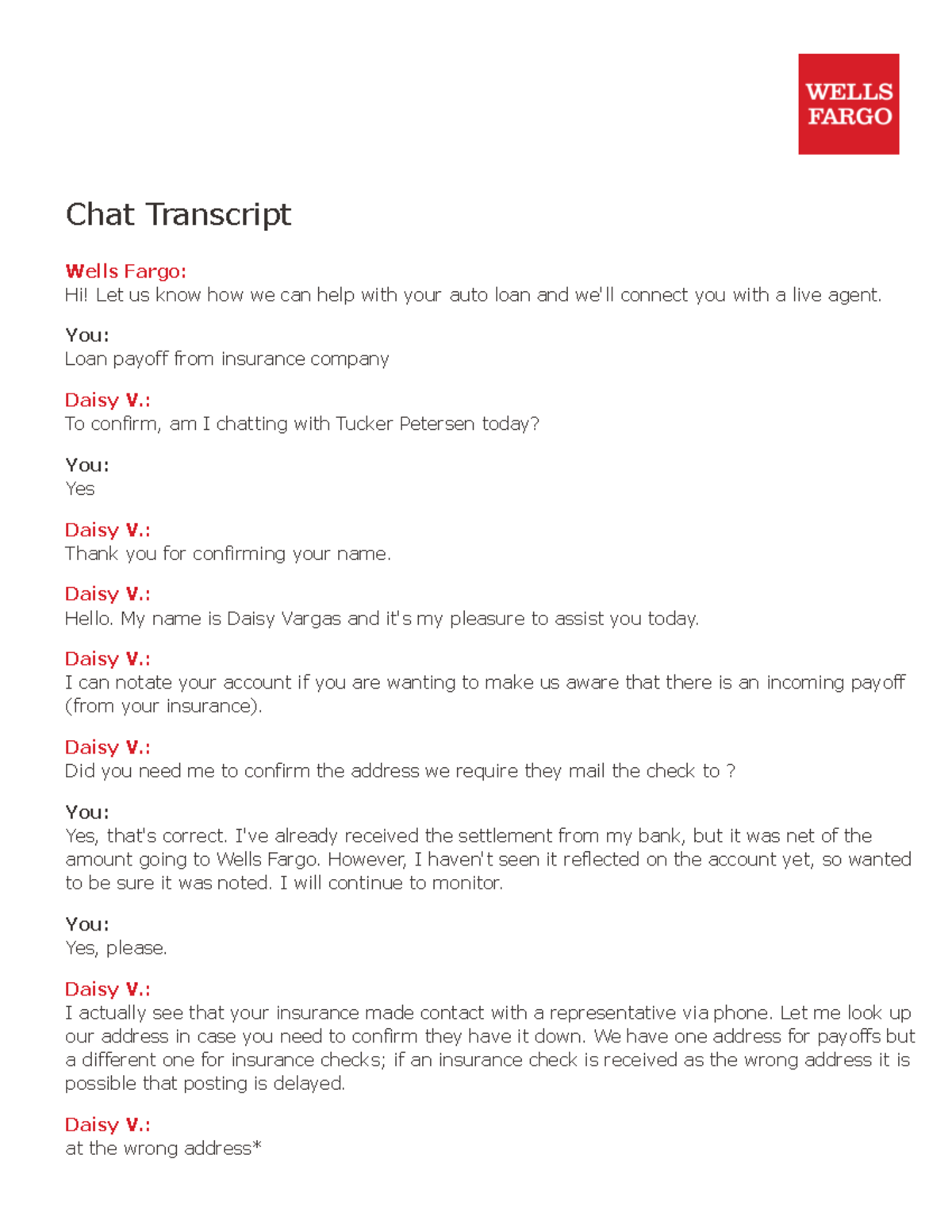
CPI is usually placed because of an administrative information gap. This occurs if your auto insurance carrier failed to send an updated Declarations Page upon policy renewal, if you changed insurance companies without updating the loss payee details, or if your name or VIN was misspelled on the policy documentation.
How long does it take for Wells Fargo to process a CPI refund?
Once valid proof of coverage (a complete Insurance Declarations Page) is received and processed, refund credits are typically applied to your auto loan account within 7 to 15 business days. You will see the adjustment reflected as a balance reduction on your next monthly statement.
Will a CPI refund reduce my current monthly payment or loan term?
Applying a CPI refund reduces your principal loan balance. Depending on how your account was adjusted when the insurance was originally added, the refund will either lower your required monthly payment back to its original amount or reduce the total number of remaining payments required to pay off the loan.
What should I do if Wells Fargo refuses to remove CPI charges erroneously?
If you have provided valid proof of continuous comprehensive and collision coverage and Wells Fargo fails to remove the CPI charges, you can submit a formal inquiry through the bank's escalation channels. If unresolved, you may file a consumer complaint with federal oversight regulators such as the Consumer Financial Protection Bureau (CFPB) or the Federal Trade Commission (FTC).
Summary and Next Steps
CPI insurance on a Wells Fargo auto loan adds a substantial cost—typically $100 to $250 per month—to your auto financing payments. Because forced-placed insurance provides minimal financial protection for drivers and accrues interest on your loan balance, avoiding or immediately removing forced placement should be a top priority.
If CPI has been placed on your loan:
- Contact your auto insurance provider immediately to secure a full Insurance Declarations Page.
- Verify that Wells Fargo Auto is correctly listed as the loss payee.
- Submit the document promptly to Wells Fargo Auto Insurance Verification.
- Follow up to ensure a full or pro-rata credit is applied to your principal balance and interest charges are reversed.
Disclaimer: Financial products, lender guidelines, and servicing procedures are subject to updates. For individual account details, dispute resolutions, or policy verifications, contact Wells Fargo Auto directly or review your original retail installment agreement.
Image Gallery