Ford Raptor Generations: Complete Evolution, Specs, and Buyer’s Guide
The Ford F-150 Raptor spans three distinct generations: the First Generation (2010–2014) powered by naturally aspirated V8 engines; the Second Generation (2017–2020) introducing a twin-turbo EcoBoost V6 and aluminum body; and the Third...
The Ford F-150 Raptor spans three distinct generations: the First Generation (2010–2014) powered by naturally aspirated V8 engines; the Second Generation (2017–2020) introducing a twin-turbo EcoBoost V6 and aluminum body; and the Third Generation (2021–present) featuring a coil-sprung rear suspension, available 37-inch tires, and the supercharged V8 Raptor R.
Contents
- Gen 1: 2010–2014
- 5.4L V8 / 6.2L V8
- 6-Speed Auto (6R80)
- FOX 2.5 Bypass Shocks
- Steel Body / SVT Tuning
- Gen 2: 2017–2020
- 3.5L Twin-Turbo V6 (450 hp)
- 10-Speed Auto (10R80)
- Aluminum Body (-500 lbs)
- FOX 3.0 Live Valve (2019+)
- Gen 3: 2021–Present
- 3.5L HO V6 / 5.2L SC V8
- 5-Link Rear Coil Suspension
- FOX 3.1 Live Valve Shocks
- 35" or Factory 37" Tires
Overview of the Ford Raptor Lineage
When Ford Special Vehicle Team (SVT) introduced the F-150 SVT Raptor for the 2010 model year, it established a brand-new segment in the automotive industry: a high-speed, factory-built off-road performance pickup capable of tackling desert terrain straight off the dealership lot. Prior to the Raptor, truck enthusiasts had to rely heavily on aftermarket suspension builds and custom long-travel kits to achieve high-speed off-road capability.
Over its production history, the F-150 Raptor has evolved from a niche specialty truck into a cornerstone of Ford Performance. Each generation introduced major engineering shifts, including updates to chassis architecture, internal bypass shock technology, powertrain designs, and electronics management. Understanding the technical evolution across these generations is critical for buyers evaluating new models or searching for pre-owned performance trucks.
First Generation F-150 SVT Raptor (2010–2014): The Off-Road Pioneer
- Front Control Arms: 11.0" Front Suspension Travel
- FOX 2.5 Bypass Shocks: Internal Bypass Damping
- Rear Leaf Springs: 12.0" Rear Suspension Travel
The first-generation Raptor made its debut in 2010 under Ford's SVT division. Designed specifically for high-speed desert running, the Gen 1 Raptor was engineered with a track width seven inches wider than the standard F-150, requiring distinctive front and rear widebody fenders and marker lights mandated by federal vehicle width regulations.
Powertrain & Performance
The 2010 model launched with two engine choices:
- 5.4L Triton V8: Base engine producing 310 horsepower and 365 lb-ft of torque.
- 6.2L Boss V8: Optional engine producing 411 horsepower and 434 lb-ft of torque.
The 5.4L V8 was underpowered for the truck's heavy curb weight and was quickly discontinued after 2010. For 2011 through 2014, the 411-hp 6.2L V8 became standard. Paired with a 6R80 six-speed automatic transmission, the Gen 1 Raptor delivered instant throttle response and an iconic, deep V8 exhaust note.
| Engine | Output |
|---|---|
| 5.4L Triton V8 (2010 Only) | 310 hp / 365 lb-ft |
| 6.2L Boss V8 (2011–2014) | 411 hp / 434 lb-ft |
Chassis & FOX Suspension Setup
The defining feature of the Gen 1 SVT Raptor was its suspension system. Co-developed with FOX Racing Shocks, the truck utilized FOX 2.5-inch Internal Bypass shocks. These position-sensitive dampers allowed soft initial valving for smooth highway riding while stiffening progressively near full compression to absorb heavy off-road landings.
- Front Travel: 11.0 inches, supported by cast-aluminum lower control arms.
- Rear Travel: 12.0 inches, utilizing a traditional leaf spring layout.
- Cabin Configuration: Offered initially only in a SuperCab configuration; a four-door SuperCrew option was added in 2011.
Second Generation F-150 Raptor (2017–2020): EcoBoost & High-Tech Damping
- High-Output EcoBoost: 450 hp / 510 lb-ft Torque
- Aluminum-Alloy Body: ~500 lbs Weight Reduction
- FOX 3.0 Live Valve: Real-Time Electronic Adjustments
After skipping the 2015 and 2016 model years during the transition to the aluminum-bodied F-150 platform, Ford launched the Second Generation Raptor for 2017. Dropping the "SVT" prefix, the truck was developed by the newly consolidated Ford Performance team.
3.5L Twin-Turbo EcoBoost & 10-Speed Transmission
The Gen 2 Raptor made a bold departure from traditional V8 muscle by adopting a 3.5-liter High-Output EcoBoost twin-turbo V6.
- Output: 450 horsepower and 510 lb-ft of torque, outperforming the outgoing 6.2L V8 by 39 hp and 76 lb-ft.
- Transmission: Introduction of the 10R80 10-speed automatic transmission, co-developed with General Motors, providing tighter gear spacing and optimized power delivery.
- Transfer Case: Featured a torque-on-demand transfer case combining a mechanical lock 4WD system with an all-wheel-drive center differential mode.
High-Strength Aluminum Body & FOX Live Valve Upgrades
By utilizing a high-strength, military-grade aluminum-alloy body mounted on a fully boxed high-strength steel frame, Ford trimmed roughly 500 pounds off the chassis compared to the Gen 1 model.
Suspension components were upgraded significantly:
- FOX 3.0 Internal Bypass Shocks: Increased shock diameter provided larger fluid volume to mitigate thermal fade during sustained desert runs.
- Increased Travel: Front wheel travel expanded to 13.0 inches, while rear travel increased to 13.9 inches.
- FOX Live Valve Technology (2019–2020): Mid-cycle updates introduced electronically controlled active damping. Live Valve adjusted fluid compression rates in real time based on steering inputs, throttle position, and terrain sensors, preventing bottom-outs dynamically.
Third Generation F-150 Raptor & Raptor R (2021–Present): Coil-Sprung Dominance
- 5-Link Rear Suspension: 24" Coil Springs & Panhard Rod
- FOX 3.1 Live Valve: Electronically Controlled Damping
- Raptor R Option: 5.2L Supercharged V8 (700+ hp)
The Third Generation Raptor debuted for the 2021 model year, focusing heavily on rear suspension architecture, structural refinement, and digital connectivity.
Five-Link Rear Suspension & Factory 37-Inch Tires
The most substantial engineering upgrade in Gen 3 was replacing the traditional rear leaf springs with an all-new five-link rear suspension setup. Featuring extra-long trailing arms, a Panhard rod, and 24-inch coil springs, this configuration provided superior axle control, enhanced traction over rough terrain, and improved articulation.
- Suspension Dampers: Next-generation FOX 3.1 Live Valve shocks equipped with position-sensitive damping and electronically controlled fluid valves capable of changing damping rates 500 times per second.
- Suspension Travel: With standard 35-inch tires, travel reached 14.0 inches up front and 15.0 inches in the rear.
- 37-Inch Tire Package: For the first time, Ford offered factory 37-inch BFGoodrich All-Terrain T/A KO2 tires. Selecting this package adjusts frame shock brackets and alters travel to 13.0 inches front and 14.1 inches rear due to clearance constraints.
| Feature | 35-Inch Package | 37-Inch Package |
|---|---|---|
| Front Wheel Travel | 14.0 inches | 13.0 inches |
| Rear Wheel Travel | 15.0 inches | 14.1 inches |
| Ground Clearance | 12.0 inches | 13.1 inches |
| Approach Angle | 31.0 degrees | 33.1 degrees |
The Return of the V8: Raptor R
In response to market demand for V8 power, Ford introduced the Raptor R for the 2023 model year.
- Engine: Borrowed from the Mustang Shelby GT500, a 5.2-liter supercharged V8 ("Predator") fitted with a recalibrated 2.65-liter Eaton supercharger and optimized oil cooling.
- Output: Delivered 700 horsepower and 640 lb-ft of torque for 2023, which was updated to 720 horsepower for the 2024 model year refresh.
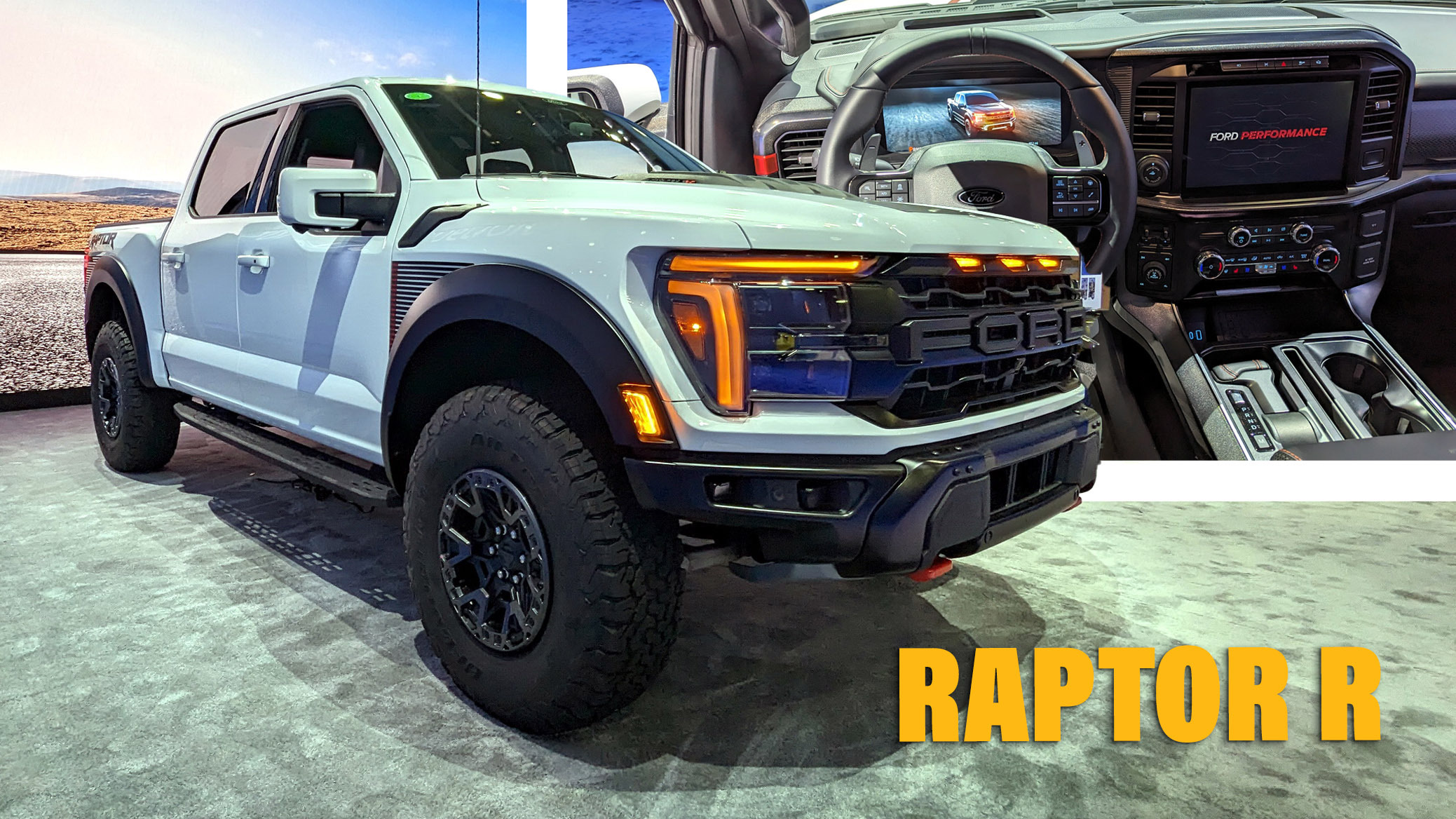
- Distinguishing Features: Functional hood vent, code orange tow hooks, specialized interior badging, and stiffer front spring rates to support the increased engine weight.
Comparing Ford Raptor Generations
| Technical Feature | Generation 1 (2010–2014) | Generation 2 (2017–2020) | Generation 3 (2021–Present) | Raptor R (2023–Present) |
|---|---|---|---|---|
| Engine | 5.4L V8 (2010) / 6.2L V8 | 3.5L HO EcoBoost V6 | 3.5L HO EcoBoost V6 | 5.2L Supercharged V8 |
| Horsepower | 310 hp (5.4L) / 411 hp (6.2L) | 450 hp | 450 hp | 700 hp (23) / 720 hp (24+) |
| Torque | 365 lb-ft / 434 lb-ft | 510 lb-ft | 510 lb-ft | 640 lb-ft |
| Transmission | 6-Speed Auto (6R80) | 10-Speed Auto (10R80) | 10-Speed Auto (10R80) | 10-Speed Auto (10R80) |
| Rear Suspension | Leaf Springs | Leaf Springs | 5-Link Coil Springs | 5-Link Coil Springs |
| Shock Absorbers | FOX 2.5" Internal Bypass | FOX 3.0" Bypass (Live Valve 19+) | FOX 3.1" Live Valve | FOX 3.1" Live Valve |
| Front/Rear Travel | 11.0" / 12.0" | 13.0" / 13.9" | 14.0" / 15.0" (35" tires) | 13.0" / 14.1" (37" tires) |
| Body Construction | Steel Body | High-Strength Aluminum | High-Strength Aluminum | High-Strength Aluminum |
| Factory Tire Sizes | 35-inch (315/70R17) | 35-inch (315/70R17) | 35-inch or 37-inch | 37-inch standard |
Ranger Raptor & Bronco Raptor: Expanding the Family
The success of the F-150 Raptor prompted Ford to expand the nameplate to other vehicle segments:
- Ford Raptor Family
- F-150 Raptor
- Full-size truck
- 3.5L V6 / 5.2L V8
- Ranger Raptor
- Mid-size truck
- 3.0L Twin-Turbo V6
- Bronco Raptor
- Off-road SUV
- 3.0L Twin-Turbo V6
- F-150 Raptor
Ranger Raptor
Initially launched globally in 2019 with a 2.0-liter bi-turbo diesel engine, the Ranger Raptor expanded to North America for the 2024 model year. The North American spec features a 3.0-liter EcoBoost V6 producing 405 horsepower and 430 lb-ft of torque, along with FOX 2.5 Live Valve shocks and front/rear locking differentials on a mid-size chassis.
Bronco Raptor
Introduced for the 2022 model year, the Bronco Raptor ("Ultra4-inspired") applies the Raptor treatment to an SUV platform. It features a 3.0-liter twin-turbo EcoBoost V6 generating 418 horsepower, heavy-duty Dana 44 front and Dana 60 rear axles, FOX 3.1 Live Valve shocks, and massive 37-inch tires as standard equipment.
Maintenance, Common Issues, and What to Look For When Buying Used
Purchasing a used Ford Raptor requires specific scrutiny due to the high-stress environment these trucks are designed to handle.
Generation 1 Considerations (2010–2014)
- Frame Bending: Early Gen 1 models subjected to severe high-speed off-roading without aftermarket frame support (bump stop kits) experienced frame bending directly above the rear axle bump stops.
- Shock Rebuild Intervals: The original non-electronic FOX 2.5 shocks require rebuilding every 30,000 to 50,000 miles to replace fluid, seals, and nitrogen charges.
- Fuse 27 Issue: The fuel pump relay fuse (Fuse 27) in the engine bay box is prone to melting. Ford issued a technical service bulletin (TSB) recommending a fuse relocation kit.
- Power Steering Pump: High-speed maneuvering on high-friction surfaces puts heavy stress on the hydraulic power steering pump, leading to premature wear.
Generation 2 Considerations (2017–2020)
- Cam Phaser Rattle: Early 3.5L EcoBoost engines (2017–2019) frequently suffer from cold-start cam phaser rattle. Unresolved cam phaser play can lead to timing chain stretching and engine fault codes.
- 10-Speed Transmission Hesitation: 2017–2018 models may exhibit harsh or delayed shifts between 3rd, 4th, and 5th gears. TSB software updates or replacement CDF clutch drums often resolve these issues.
- IWE (Integrated Wheel Ends): Vacuum-operated front hub engagement rings can fail or leak, resulting in grinding noises when transitioning into 4WD.
Generation 3 Considerations (2021–Present)
- Software & OTA Updates: The advanced electrical architecture requires keeping software updated for the SYNC 4 infotainment system and drive mode control modules.
- Shock Servicing: Live Valve shock solenoids require specialized diagnosis equipment if electronic fault codes appear on the dash.
Frequently Asked Questions
Which Ford Raptor generation has a V8 engine?
The First Generation (2010–2014) came standard with a V8 engine—a 5.4L V8 in early 2010 models and a 6.2L V8 from late 2010 through 2014. High-output V8 power returned in 2023 with the launch of the Third-Generation F-150 Raptor R, powered by a 5.2-liter supercharged V8.
Can you tow with a Ford Raptor?
Yes, but towing capacities are lower than standard F-150 models due to soft off-road suspension springs.
- Gen 1: Rated up to 8,000 lbs (SuperCrew).
- Gen 2: Rated up to 8,000 lbs.
- Gen 3: Rated up to 8,200 lbs.
How do I tell a Gen 1, Gen 2, and Gen 3 Raptor apart from the outside?
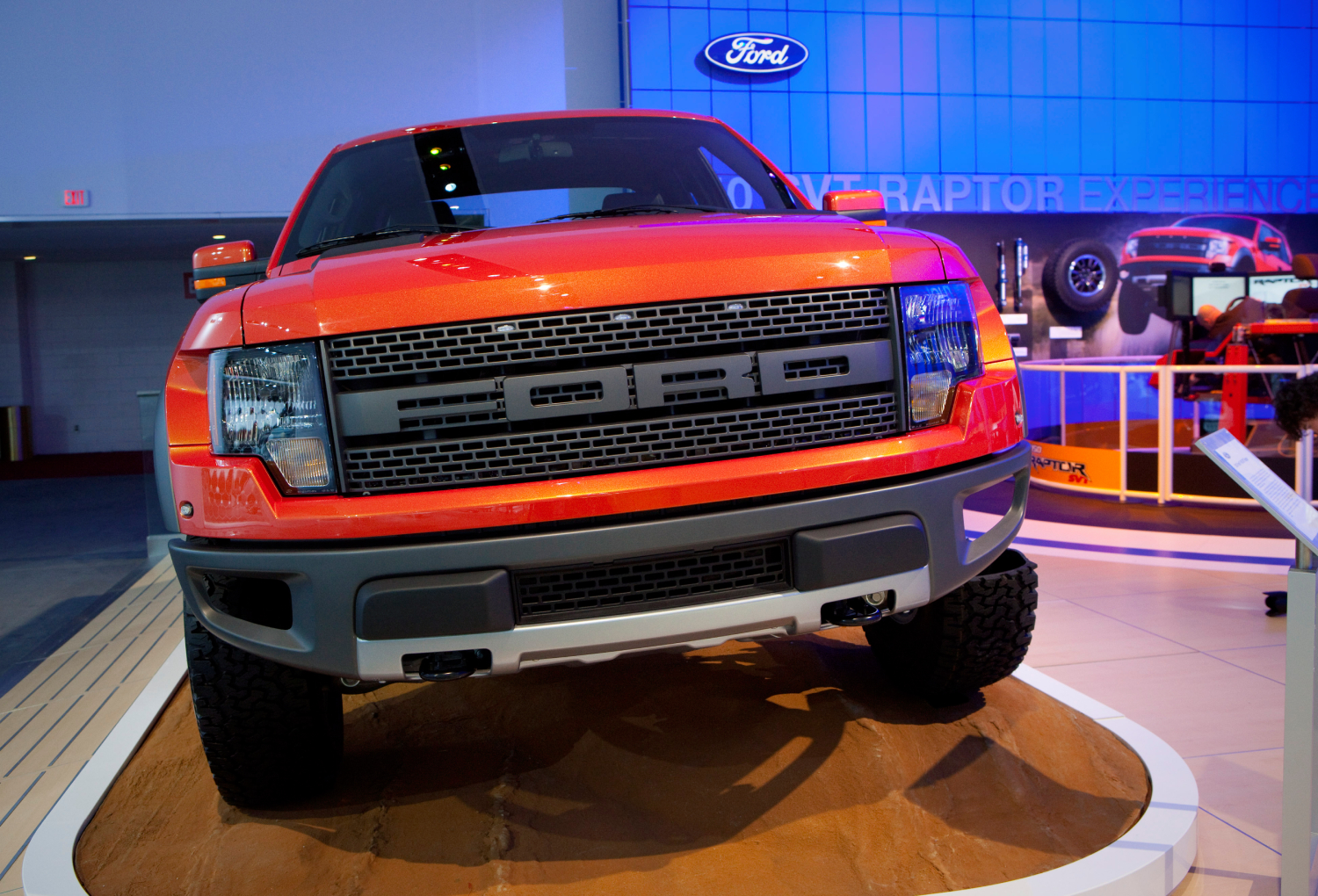
- Gen 1 (2010–2014): Features a steel body with rounded cab lines, SVT side badges, dual hood vents, and halogen lighting signatures.
- Gen 2 (2017–2020): Shows sharper aluminum body lines, dual exhaust outlets integrated into the rear bumper, wider front mesh grilles, and rectangular LED headlights.
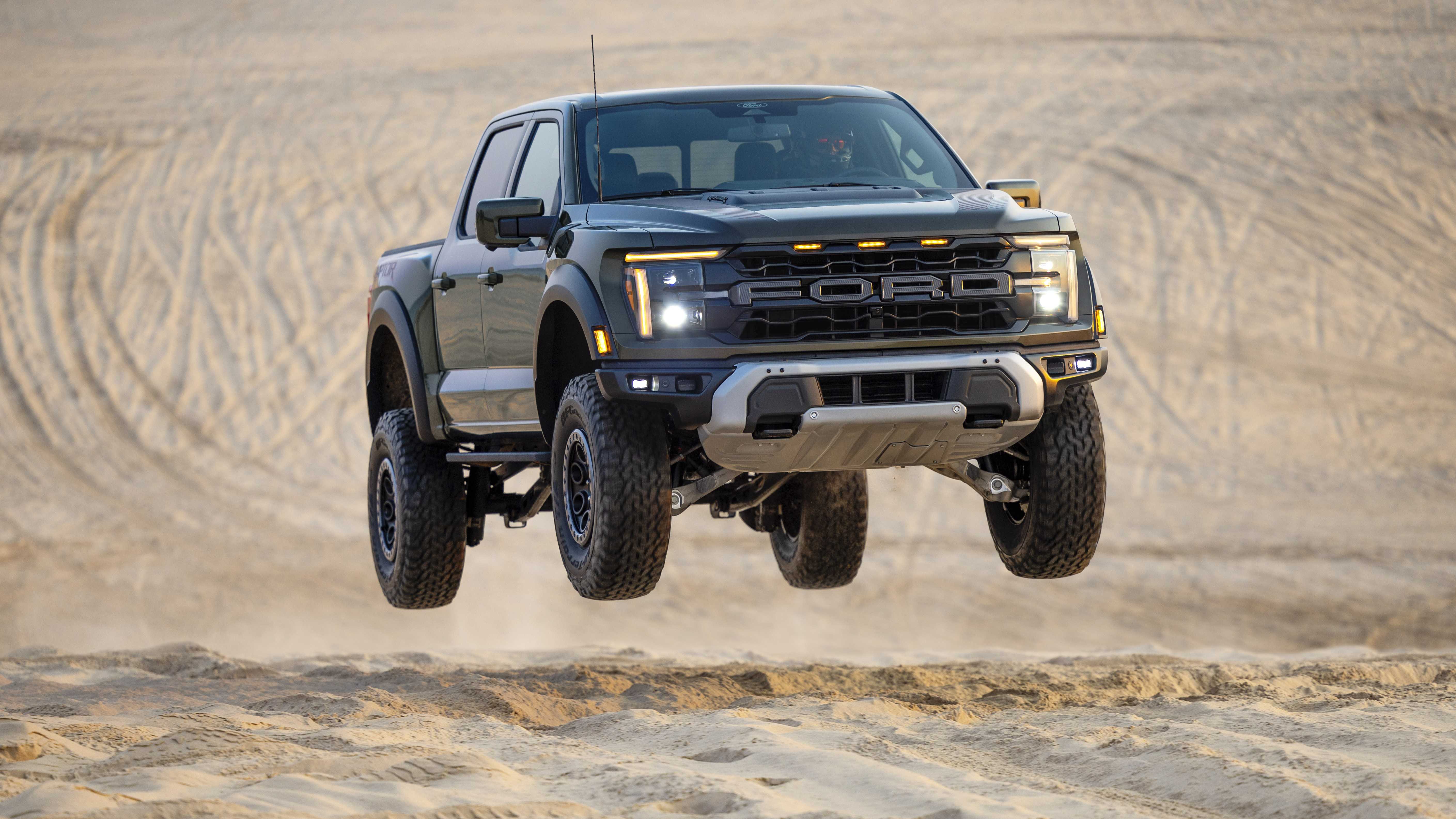
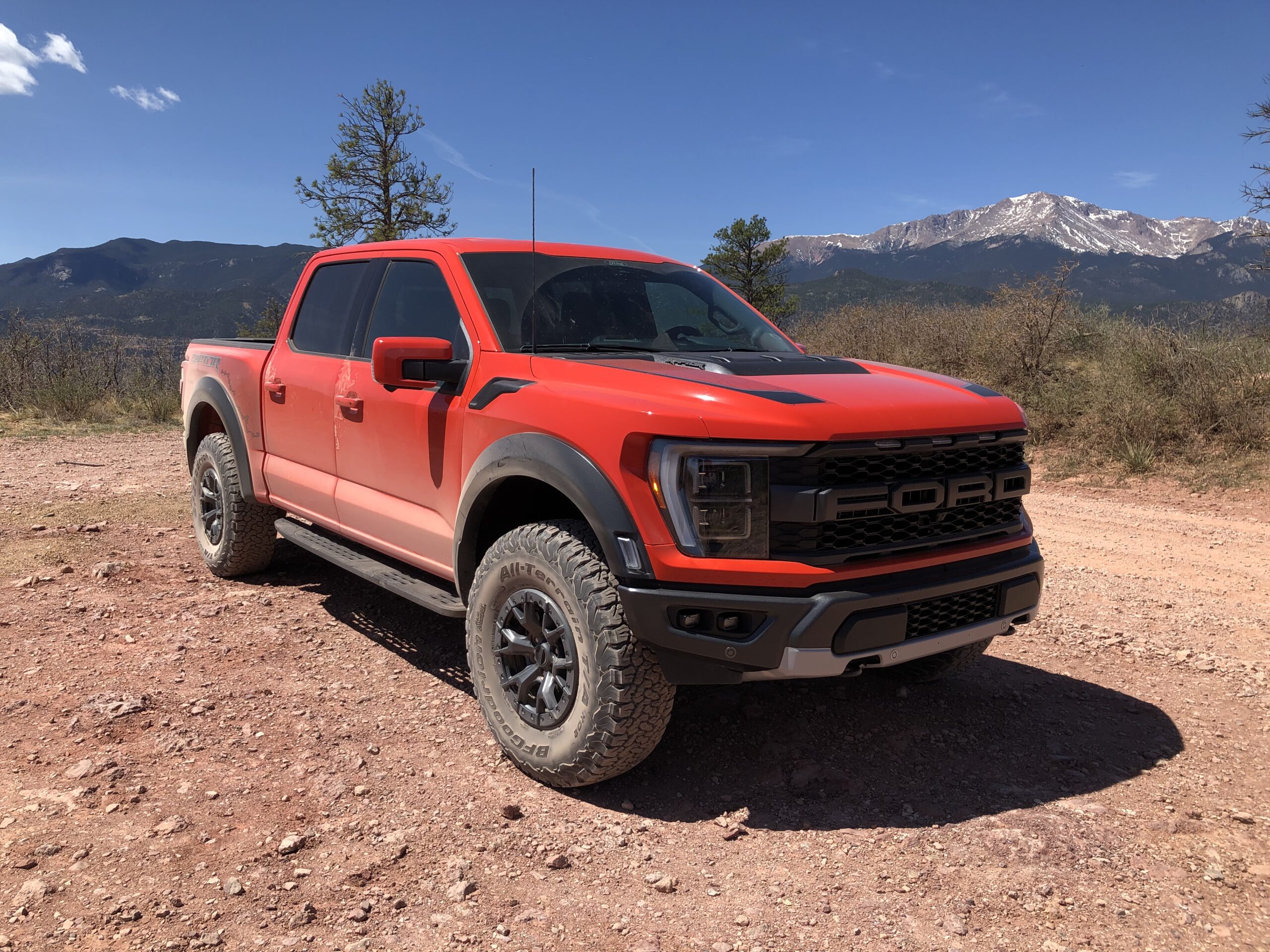
- Gen 3 (2021–Present): Features a redesigned front grille with daytime running lights extending to the outer fender edges, a prominent hood scoop, and a five-link coil rear axle visible from behind.
What is the difference between standard FOX shocks and Live Valve shocks?
Standard FOX Internal Bypass shocks (used on 2010–2018 models) use mechanical velocity ports to control fluid flow based on shock position. FOX Live Valve shocks (introduced in 2019) add electronically controlled solenoids that adjust compression damping rates in real time based on steering, terrain, throttle, and sensor inputs.
Is the Raptor R faster than the standard twin-turbo V6 Raptor?
Yes. The 3.5L twin-turbo EcoBoost V6 Raptor accelerates from 0 to 60 mph in approximately 5.2 to 5.5 seconds. The supercharged 5.2L V8 Raptor R accelerates from 0 to 60 mph in roughly 3.6 to 3.9 seconds, making it one of the quickest factory production pickup trucks ever built.
Final Verdict: Which Generation Should You Buy?
Choosing the right Ford Raptor generation depends on your performance priorities, mechanical comfort, and budget:
- Select a Gen 1 (2010–2014) if you want an iconic naturally aspirated V8 rumble, simple mechanical systems, and lower initial entry costs. Ensure you inspect the rear frame rails for bends and check service records for shock rebuilds.
- Select a Gen 2 (2017–2020) if you prefer high low-end torque, substantial weight savings, modern aluminum body rust-resistance, and updated daily driver tech. Target 2019–2020 models if you want active FOX Live Valve shock technology.
- Select a Gen 3 (2021–Present) if you want maximum suspension refinement, factory 37-inch tire capabilities, and advanced cabin electronics. For buyers requiring extreme supercharged V8 muscle, the Raptor R stands at the top of the lineup.
Before purchasing any used Raptor, arrange an independent pre-purchase inspection with a certified technician experienced in Ford Performance products to evaluate frame integrity, shock wear, and transfer case operation.
Image Gallery