Auto Insurance Price Range Explained: Rates, Factors, and Coverage Levels
In 2026, the standard price range for auto insurance in the United States generally spans from $600 to $1,200 per year for basic state-minimum liability policies, and between $2,000 and $3,600 per year for comprehensive full-coverage p...
In 2026, the standard price range for auto insurance in the United States generally spans from $600 to $1,200 per year for basic state-minimum liability policies, and between $2,000 and $3,600 per year for comprehensive full-coverage policies. Individual premiums fluctuate significantly based on your driving history, geographic location, age, vehicle type, credit history, and selected policy limits.
Contents
Understanding auto insurance pricing requires looking beyond a single average number. Because insurance carriers calculate premiums using complex risk-assessment algorithms, two drivers living on the same street can receive drastically different quotes. Evaluating the full auto insurance price range helps you understand what constitutes a fair rate for your specific risk profile, why prices vary between providers, and how to select adequate financial protection without overpaying.
What Is the Typical Auto Insurance Price Range?
Auto insurance pricing operates across a wide spectrum. On the lowest end of the spectrum, an experienced driver with a clean driving record living in a rural state may pay as little as $450 to $700 annually for minimum liability coverage. On the highest end, a young driver with a recent moving violation living in a high-density metropolitan area could face annual full-coverage quotes exceeding $5,000 to $7,000.
Macroeconomic conditions continue to influence baseline insurance costs. Severe weather events, supply chain shifts for replacement parts, and the growing sophistication of vehicle technology—such as advanced driver-assistance systems (ADAS) embedded in bumpers and windshields—have increased the average severity of insurance claims. Consequently, insurance carriers adjust their baseline rate filings with state insurance commissioners to reflect higher loss ratios, shifting the national price range upward for all driver categories.
Disclaimer: Auto insurance regulations, mandatory minimums, and pricing factors vary by state and jurisdiction. The rates cited in this guide represent nationwide statistical ranges and averages for general educational purposes. Consult a licensed insurance agent or broker for individualized policy quotes.
Core Coverage Levels and Their Impact on Costs
The single largest structural factor determining where your premium falls within the auto insurance price range is the extent of coverage you purchase. Insurance policies are structured around modular coverage components, each adding to the total policy premium.
- FULL COVERAGE POLICY
- Liability Insurance
- Bodily Injury Liability
- Property Damage Liability
- Physical Damage
- Collision Coverage
- Comprehensive Coverage
- Optional Policy Endorsements
- Uninsured/Underinsured Motorist
- Personal Injury Protection (PIP)
- Gap Insurance
- Roadside Assistance
- Liability Insurance
1. State-Minimum Liability Coverage
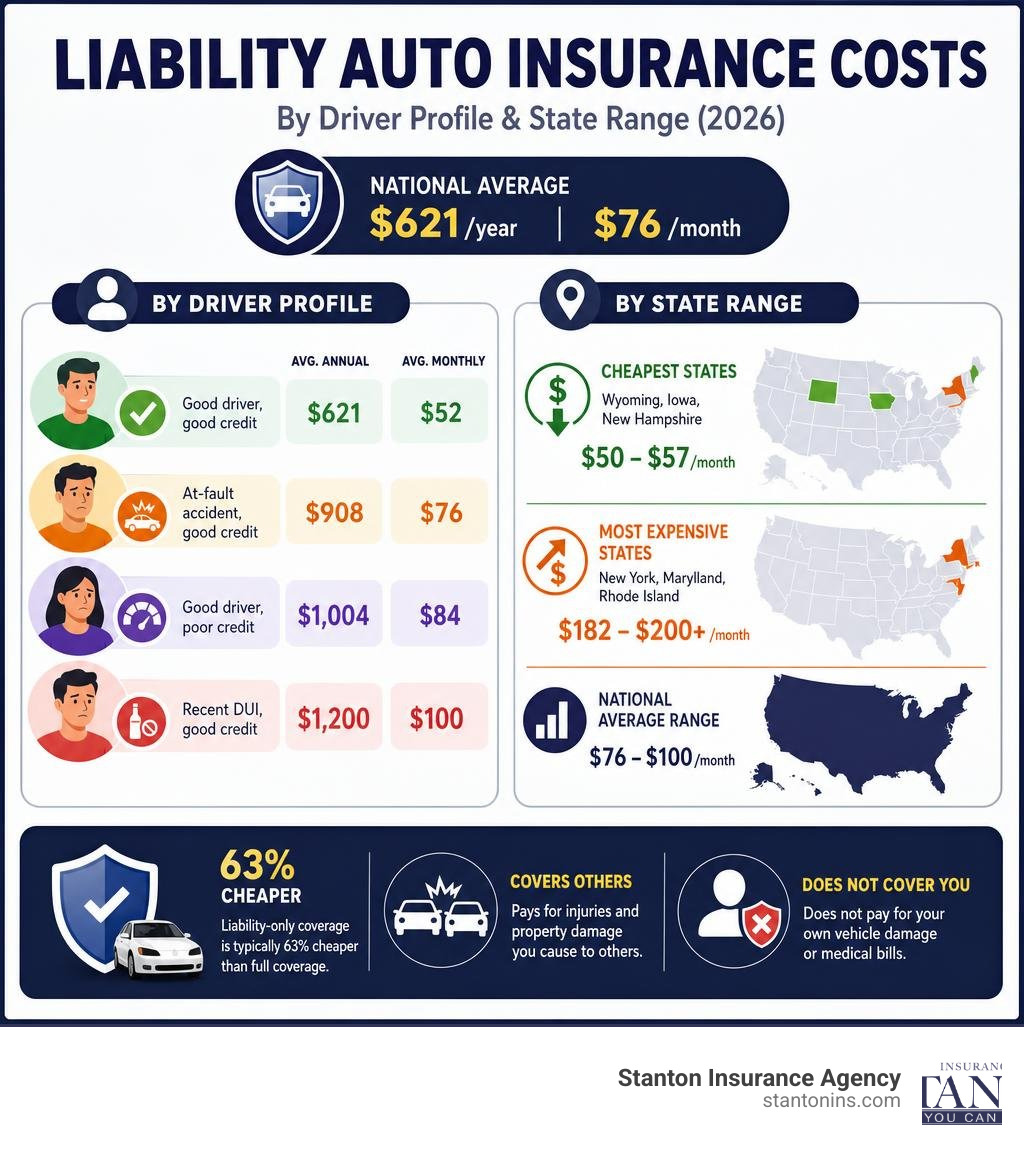
State-minimum liability policies represent the baseline cost tier. Liability insurance pays for physical injuries and property damage you cause to other people in an at-fault accident. It does not cover damage to your own vehicle.
Every state (with rare statutory exceptions like New Hampshire, which requires proof of financial responsibility instead) sets legal minimum limits for liability. These are typically expressed as split limits, such as 25/50/25:
- $25,000 for bodily injury per person.
- $50,000 for total bodily injury per accident.
- $25,000 for property damage per accident.
Because minimum liability policies offer low indemnity limits and cover no physical damage to your own car, they occupy the bottom tier of the price range ($600 to $1,200 annually on average). However, carrying only minimum liability leaves you exposed to significant personal financial risk if an accident exceeds those low policy limits.
2. Full Coverage Insurance
"Full coverage" is not a legal policy definition, but an industry term referring to a policy that combines mandatory liability coverage with physical damage protections for your vehicle—specifically Collision and Comprehensive coverage.
- Collision Coverage: Pays to repair or replace your vehicle if it collides with another vehicle, object, or flips over, regardless of fault.
- Comprehensive Coverage: Pays for loss or damage resulting from non-collision events, including theft, vandalism, fire, severe weather, hail, falling objects, or hitting an animal.
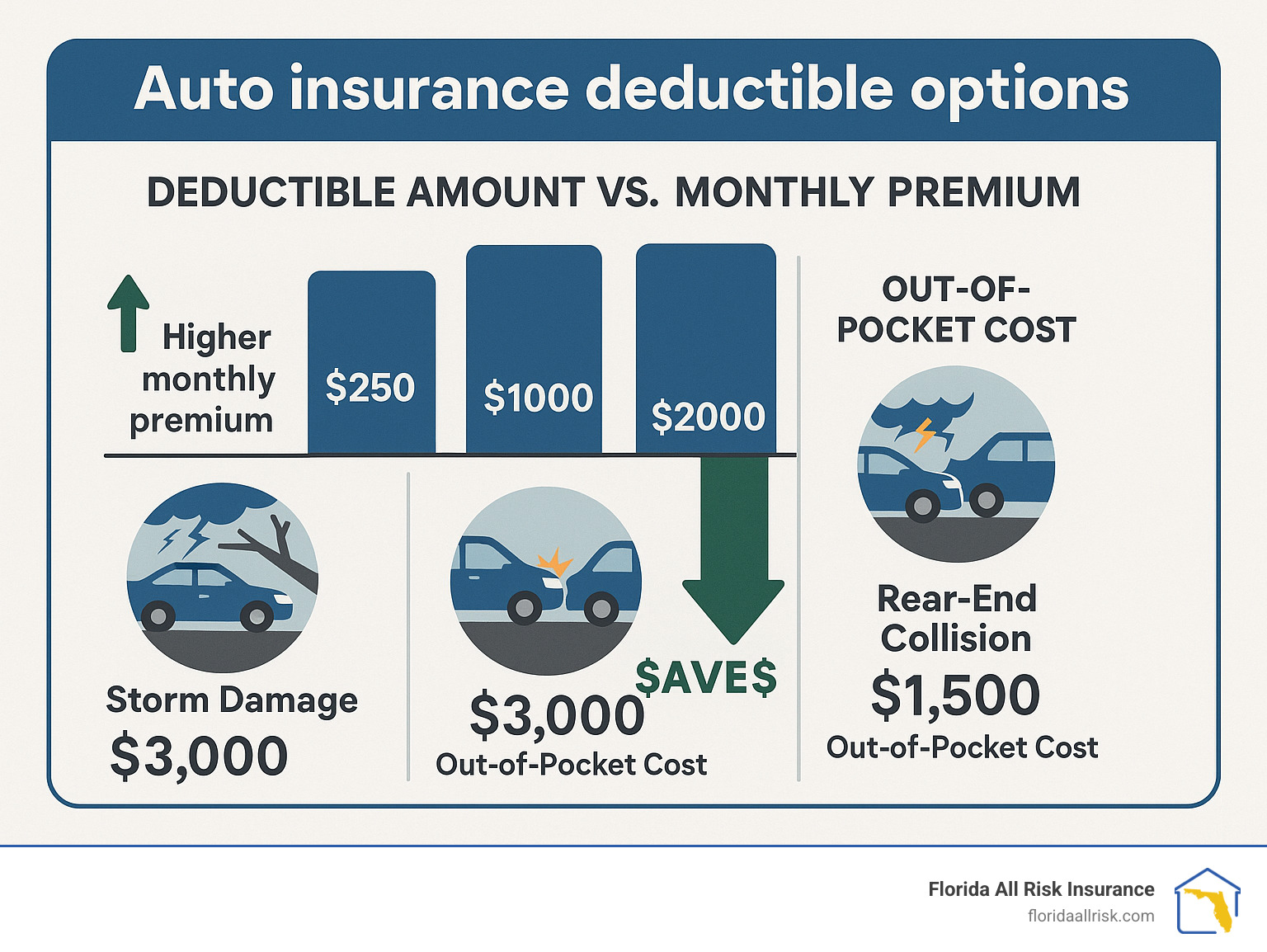
Full coverage typically costs 100% to 200% more than basic liability alone, bringing the national average range to $2,000–$3,600 per year. The exact cost within this range depends heavily on the deductibles you select. Choosing a higher out-of-pocket deductible (e.g., $1,000 instead of $250) lowers the premium by shifting more initial financial risk back to the policyholder.
3. Optional Endorsements and Add-Ons
Additional endorsements expand protection but incrementally increase your total bill:
- Uninsured/Underinsured Motorist (UM/UIM): Protects you if hit by a driver without insurance or insufficient coverage ($50–$300/year).
- Personal Injury Protection (PIP) / Medical Payments (MedPay): Pays for medical expenses for you and your passengers regardless of fault ($50–$200/year).
- Gap Insurance: Pays the difference between a vehicle's actual cash value (ACV) and the remaining balance on an auto loan or lease ($20–$100/year when bought through an insurer).
- Roadside Assistance and Rental Reimbursement: Provides towing, battery jump-starts, and rental car coverage during repairs ($30–$80/year combined).
Primary Factors That Shift Your Auto Insurance Rate
Actuaries design underwriting models to predict the probability that a policyholder will file a claim and the expected severity of that claim. The following key variables explain why individual rates land on different points of the auto insurance price scale:
Driving History and Violations
Your record on the road is the primary indicator of future risk. A clean driving history with no moving violations or at-fault accidents keeps your quotes near the bottom of your demographic price tier. Conversely:
- A single speeding ticket can increase premiums by 15% to 30%.
- An at-fault accident can raise rates by 35% to 50% for three to five years.
- A Driving Under the Influence (DUI) conviction can cause premiums to surge by 70% to 150% or more, often requiring an SR-22 financial responsibility filing and moving the driver into high-risk specialty insurance pools.
Age and Driving Experience
Statistical data published by the Federal Highway Administration and insurance industry research groups consistently shows that younger drivers, particularly teenagers, have higher crash rates per mile driven due to inexperience.
- Drivers aged 16 to 19: Face the highest annual auto insurance price ranges, often between $3,500 and $7,000+ for full coverage.
- Drivers aged 30 to 60: Experience the lowest overall rates, assuming a clean record.
- Senior Drivers (75+): May see gradual rate increases as statistical accident risks rise again due to age-related changes in vision and reaction speeds.
Geographic Location and ZIP Code
Insurance rates are localized down to the ZIP code level. Insurers analyze local population density, traffic congestion statistics, litigation frequency, auto theft rates, and regional climate patterns (such as hail risks or flood zones). A driver moving from a rural town to a densely populated city center can see their annual premium double without changing their vehicle or coverage options.
Credit-Based Insurance Scores
In states where legally permitted, insurance companies use credit-based insurance scores to help determine policy pricing. Actuarial studies indicate a correlation between financial credit stability and risk management on the road. Drivers with high credit scores generally pay significantly less than drivers with poor credit scores.
However, several states—including California, Massachusetts, Hawaii, and Michigan—prohibit or strictly limit the use of credit scores in auto insurance underwriting and rate-setting.
Vehicle Characteristics
The make, model, year, and trim level of your car directly affect physical damage coverage pricing:
- Repair Costs: Vehicles built with specialized materials (such as aluminum unibodies) or high-tech sensor suites cost more to repair, driving up collision premiums.
- Safety Ratings: Cars with high crashworthiness ratings from the Insurance Institute for Highway Safety (IIHS) often qualify for lower liability and medical coverage tiers.
- Theft Rates: Frequently stolen vehicle models command higher comprehensive coverage rates.
Auto Insurance Price Ranges by Risk Profile
To illustrate how coverage levels and risk factors interact, the table below outlines typical annual price ranges across standardized driver profiles.
| Driver Profile | Policy Type | Estimated Annual Price Range | Primary Price Drivers |
|---|---|---|---|
| Clean Record (Age 35-55) | State Minimum Liability | $500 – $900 | Low risk profile, basic state-required limits only. |
| Clean Record (Age 35-55) | Full Coverage ($500 Deductible) | $1,800 – $2,800 | Standard adult rate, includes collision and comprehensive protection. |
| Young Driver (Age 18-21) | Full Coverage ($500 Deductible) | $3,600 – $6,500+ | High statistical risk associated with limited driving experience. |
| Driver with 1 At-Fault Accident | Full Coverage ($500 Deductible) | $2,600 – $4,200 | Surcharge applied for historical claim payout and elevated risk rating. |
| Driver with 1 DUI Conviction | Full Coverage ($500 Deductible) | $3,800 – $7,500+ | High-risk underwriting bracket; may require SR-22 state filings. |
| Senior Driver (Age 70+) | Full Coverage ($500 Deductible) | $2,100 – $3,400 | Moderate rate increase based on age-related risk metrics. |
| Poor Credit Rating (Where Allowed) | Full Coverage ($500 Deductible) | $2,900 – $4,800 | Non-driving risk indicator applied in eligible states. |
How Insurance Companies Calculate Rates
The rate you are quoted is governed by insurance math and state regulatory oversight. Every insurer files its underwriting guidelines and rate matrices with the state department of insurance.
- Base Rate (State & ZIP Code)
- × Driver Risk Factor (Age, Experience, Record)
- × Vehicle Risk Factor (Repair Costs, Safety, Theft)
- × Credit-Based Score (Where Permitted)
- × Coverage Multiplier (Limits & Deductible Tier)
- − Applicable Discounts (Bundling, Telematics, Safety)
- = Final Premium Quote
- Base Rate Establishment: The carrier sets a baseline cost for a standard policy in a specific territory based on overall claims paid out in that area (loss ratio).
- Underwriting Tiering: The carrier applies rating factors (multipliers) based on your individual risk inputs: age, driving record, vehicle model, and annual mileage.
- Discount Deductions: Credits are applied to lower the calculated rate if you qualify for risk-reducing programs.
- Telematics Adjustments: Modern insurers increasingly offer usage-based insurance (UBI) programs. By monitoring driving metrics—such as hard braking, cornering speed, acceleration, night driving, and mobile phone distraction—via a smartphone app or OBD-II plug-in device, carriers adjust rates downward for demonstrably safe drivers or upward for risky driving patterns.
Practical Strategies to Lower Your Position in the Price Range
If your insurance quotes fall on the higher end of the expected spectrum, several practical strategies can help reduce your annual costs without sacrificing necessary protection:
1. Shop and Compare Quotes Annually
Insurance carriers weigh risk factors differently. One company may penalize a past speeding ticket heavily, while another carrier specializes in insuring drivers with minor infractions. Obtain quotes from at least three to five distinct carriers—including national insurers and regional mutual companies—every year or two.
2. Optimize Policy Deductibles
Increasing your collision and comprehensive deductibles from $250 or $500 to $1,000 can lower your physical damage premium premiums by 15% to 30%. Ensure you keep sufficient funds in an emergency savings account to cover the higher out-of-pocket amount if you need to file a claim.
3. Bundle Insurance Policies
Combining auto insurance with homeowners, condo, or renters insurance with the same carrier is one of the most effective ways to lower costs. Multi-policy discounts frequently reduce total premiums across both policies by 10% to 25%.
4. Audit Your Drivers and Mileage
If your work habits change—such as switching to a permanent work-from-home schedule—notify your insurer. Reducing your reported annual mileage from 15,000 miles to 6,000 miles can drop your policy into a lower risk tier. Additionally, ensure drivers who no longer live in your household (such as adult children who have moved out) are formally removed from your policy.
5. Take Advantage of Available Discounts
Check with your insurer to ensure all eligible discounts are actively applied to your account:
- Good Student Discount: For high school or college students maintaining a "B" average (3.0 GPA) or higher.
- Defensive Driving Course: Completion of an accredited driver safety course (often mandatory for senior driver discounts in many states).
- Affinity Discounts: Group savings offered through employers, alumni associations, professional organizations, or military service.
Frequently Asked Questions
Why did my auto insurance price increase if I didn't have any accidents?
Auto insurance rates can rise due to broader regional economic factors even if your personal driving record remains flawless. Industry-wide rate increases occur when an insurer experiences higher overall claim payouts across a geographic region due to inflation, higher repair and labor costs, increased vehicle theft, or severe weather events. In response, carriers file for rate increases with state insurance departments to maintain financial solvency.
Is liability-only insurance enough, or should I buy full coverage?
State-minimum liability insurance satisfies legal requirements, but leaves your own vehicle completely unprotected against accidents, weather damage, or theft. If your vehicle is financed or leased, your lender will mandate full coverage (collision and comprehensive). If you own your car outright, a common rule of thumb is to evaluate its actual cash value (ACV). If annual physical damage premiums plus your deductible approach or exceed the total value of the car, carrying liability-only coverage may be financially reasonable.
How long do accidents and tickets affect my auto insurance rate?
In most states, moving violations and at-fault accidents remain on your insurance driving record for three to five years. Minor moving violations typically impact rates for three years, while major infractions—such as DUIs or reckless driving—can influence premiums, SR-22 requirements, and underwriting eligibility for five to ten years depending on state law.
Does the color of my vehicle affect its insurance price?
No. Vehicle color has zero impact on auto insurance pricing. Insurance companies do not track car color in their underwriting processes. Rates for physical damage coverage are determined by the vehicle's make, model, body type, engine size, safety ratings, vehicle age, and historical repair costs.
Can insurance companies check my credit score without my permission?
When you request an auto insurance quote, carriers generally run a "soft credit pull" to calculate your credit-based insurance score in states where it is legally permitted. Soft inquiries do not impact your credit score. Insurers include consent language in quote applications informing you of this check. If you live in a state that explicitly bans credit-based insurance scoring (such as California or Massachusetts), insurers are legally prohibited from reviewing or using your credit data for underwriting.
Next Steps for Evaluating Your Policy
To ensure your current auto insurance rate is fair for your coverage level and risk profile:
- Review Your Declaration Page: Locate your policy declaration page to check your exact coverage limits, optional endorsements, and current deductibles.
- Determine Your Vehicle's Value: Use independent valuation resources such as Kelley Blue Book or NADA Guides to compare your car's market value against the annual cost of your physical damage coverage.
- Gather Competitive Quotes: Request quotes from multiple insurance carriers using identical coverage limits and deductibles to establish an accurate price baseline for your current situation.
Image Gallery