Custom Lending Software Development: Architecture, Compliance, and Implementation Guide
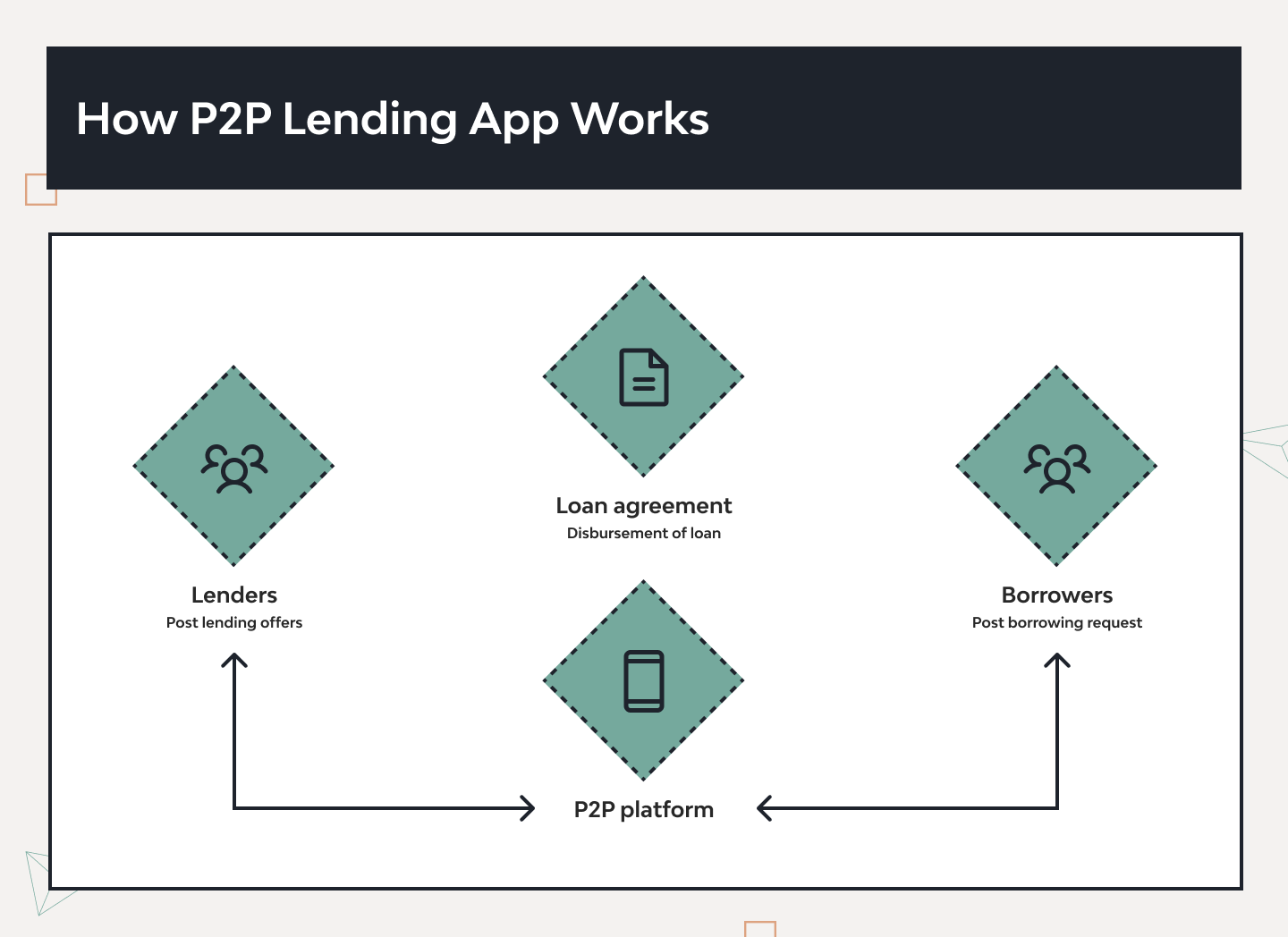
Custom lending software development is the process of engineering tailored digital platforms for loan origination, automated underwriting, servicing, and debt collection. Unlike off-the-shelf loan management systems, custom lending sol...
Custom lending software development is the process of engineering tailored digital platforms for loan origination, automated underwriting, servicing, and debt collection. Unlike off-the-shelf loan management systems, custom lending solutions allow financial institutions, fintechs, and non-bank lenders to deploy proprietary credit scoring models, scale microservices architectures, maintain strict regulatory compliance, and retain total data ownership across commercial, consumer, and mortgage operations.
Contents
Core Architecture of Modern Digital Lending Platforms
Building a high-throughput, resilient lending platform requires a decoupled, event-driven microservices architecture. A modern system splits complex lending lifecycles into autonomous modules connected via high-performance REST and gRPC application programming interfaces (APIs). This ensures independent scalability, isolated fault domains, and zero-downtime updates across critical financial services.
(No code blocks used - architectural concepts presented in text and structural components)
1. Loan Origination System (LOS) Modules
The Loan Origination System serves as the primary entry point for prospective borrowers and loan officers. It manages digital application intake, document extraction using Optical Character Recognition (OCR), identity verification, and initial pre-qualification screening.
- Digital Borrower Portal: Responsive, multi-channel interfaces supporting self-service document uploading, real-time application tracking, and electronic signatures via providers like DocuSign or Adobe Sign.
- Know Your Customer (KYC) and Anti-Money Laundering (AML) Gateway: Integrations with global identity verification services (such as LexisNexis, Persona, or Trulioo) to execute real-time sanction checks, biometric liveness validation, and PEP (Politically Exposed Persons) screening.
- Document Management Engine: Secure blob storage coupled with machine learning pipelines that auto-classify paystubs, bank statements, tax returns (W-2s, 1040s), and corporate financial statements while redacting Sensitive Personal Information (SPI).
2. Decision Engines and Automated Underwriting
The automated decision engine processes incoming application data against custom credit policies, alternative data sources, and machine-learning scoring algorithms to deliver instant credit decisions.
- Traditional Credit Bureau Connectors: Automated API connections to major credit bureaus (Equifax, Experian, TransUnion) to retrieve structured credit reports, trade line data, and FICO scores.
- Alternative Data Ingestion: Real-time financial aggregation tools (such as Plaid, MX, or Yodlee) that pull cash flow trends, recurring expense metrics, payroll data, and open banking transactions to evaluate thin-file or subprime applicants accurately.
- Rules Engine and Risk Modeling: Custom rule orchestration execution environments (e.g., Drools, Camunda, or proprietary Python-based risk engines) that evaluate cash flow metrics, Debt-to-Income (DTI) ratios, and Loan-to-Value (LTV) benchmarks within milliseconds.
3. Loan Servicing, Payment Processing, and Ledger Engines
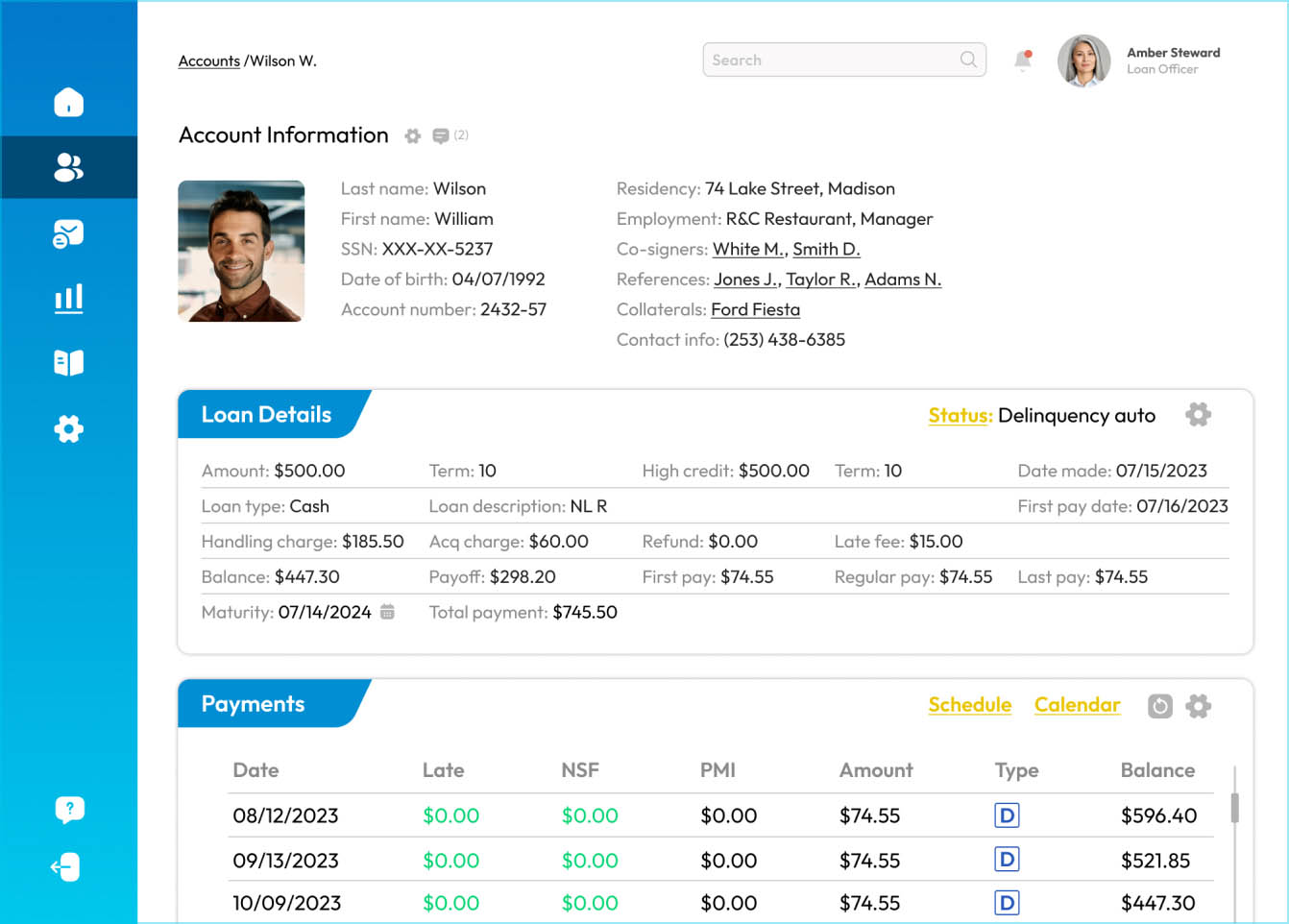
Once an application is approved and funds are disbursed, control transitions to the servicing platform. This subsystem manages repayment schedules, interest calculations, financial accounting, and delinquency workflows.
- Double-Entry General Ledger: Immutable transaction databases that maintain strict debit and credit balances for principal, interest, late fees, escrow accounts, and investor participation splits.
- Payment Gateway Intermediaries: Direct pipelines into standard clearing systems including ACH networks, FedNow, Real-Time Payments (RTP), wires, and debit payment processing systems.
- Automated Collections Engine: Dynamic escalation workflows for overdue accounts, including automated SMS/email reminders, dynamic repayment plan restructuring options, and automated write-off tracking.
Regulatory Compliance and Security Frameworks
Lending applications handle highly sensitive personal identification records, tax disclosures, and direct monetary movements. Consequently, custom lending software development must prioritize compliance by design, incorporating security controls directly into application logic and deployment pipelines.
Regulatory Compliance Strategy Lenders must build security frameworks directly into their software codebase rather than auditing after deployment. This includes encrypting data at rest using AES-256 standards, enforcing continuous TLS 1.3 encryption for data in transit, and isolating databases containing consumer credit credentials from public-facing Web microservices.
Data Protection & Privacy Standards
- Gramm-Leach-Bliley Act (GLBA): Mandates that financial institutions explain their information-sharing practices to consumers and safeguard sensitive corporate and personal financial records.
- SOC 2 Type II Compliance: Independent audits confirming that cloud architecture meets rigorous trust services criteria across security, availability, processing integrity, confidentiality, and privacy.
- ISO 20022 Financial Messaging: The globally accepted standard for electronic data interchange between financial institutions. Custom payment engines built today must process ISO 20022 XML payment formats natively.
Fair Lending & Algorithmic Governance
- Equal Credit Opportunity Act (ECOA / Regulation B): Prohibits credit discrimination based on race, color, religion, national origin, sex, marital status, or age. Machine learning models used for automated underwriting must undergo rigorous disparate impact testing to prevent algorithmic bias.
- Fair Credit Reporting Act (FCRA): Requires systems to provide dynamic Adverse Action notices explaining exact reasons for loan denial, including underlying credit scoring factors.
- Truth in Lending Act (TILA / Regulation Z): Mandates standardized disclosures regarding Annual Percentage Rates (APR), total finance charges, payment schedules, and prepayment penalties prior to contract execution.
Tech Stack Selection for Scalable Lending Systems
Choosing the correct technologies directly impacts transaction processing latency, data integrity, security resilience, and maintenance overhead. The stack must balance enterprise-grade reliability with developer efficiency.
| Architectural Layer | Recommended Technologies | Primary Technical Purpose |
|---|---|---|
| Frontend Frameworks | React.js, Next.js, Angular, Flutter | Secure, dynamic web and mobile interfaces for borrower applications and internal back-office administration portals. |
| Backend Services | Java (Spring Boot), Go, Node.js, Python (FastAPI) | High-concurrency transaction processing, microservice orchestrations, business logic execution, and API routing. |
| Database Engines | PostgreSQL, CockroachDB, Amazon Aurora | ACID-compliant relational databases for accurate double-entry transaction ledgers and relational financial data. |
| NoSQL & Cache | Redis, MongoDB, Cassandra | In-memory caching for session management, fast credit scoring rules lookup, and unstructured application data. |
| Event Streaming | Apache Kafka, RabbitMQ, AWS EventBridge | Asynchronous processing of credit checks, notification distribution, repayment processing events, and telemetry logs. |
| Cloud Infrastructure | AWS, Microsoft Azure, Google Cloud Platform | SOC 2 and PCI-compliant cloud hosting with dynamic auto-scaling, infrastructure-as-code (Terraform), and HSM encryption key management. |
| Integrations | Plaid, DocuSign, Experian, LexisNexis, Stripe | Specialized third-party services integrated via enterprise API gateway architectures. |
Custom vs. Off-the-Shelf Lending Software: Strategic Comparison
Selecting between proprietary custom software development and off-the-shelf Software-as-a-Service (SaaS) loan management platforms is a foundational business decision. While SaaS systems provide faster initial deployments, custom solutions yield greater operational agility and eliminate per-loan licensing fees over time.
| Evaluation Metric | Custom Lending Software | Off-the-Shelf SaaS Solutions |
|---|---|---|
| Initial Capital Expenditure | High. Requires engineering teams, UI/UX designers, regulatory counsel, and cloud architects. | Low. Setup fees are typically limited to configuration and initial data migration. |
| Time to Market | 6 to 12 months for a fully compliant, production-ready MVP. | 1 to 3 months using standard templates and out-of-the-box configurations. |
| Underwriting Customization | Complete control over risk algorithms, alternative data models, and proprietary decisioning rules. | Restricted to vendor-supported rule structures and pre-integrated credit bureaus. |
| Total Cost of Ownership (TCO) | Decreases relative to volume. Fixed maintenance costs regardless of loan processing volume. | Escalates continuously due to per-application, per-loan, or monthly active user licensing fees. |
| API Integration Flexibility | Unlimited capacity to integrate internal legacy core databases, custom payment rails, and proprietary scoring platforms. | Limited to pre-built vendor connectors or costly custom add-on integration services. |
| Data Ownership & Privacy | Complete ownership and control of customer data within private cloud infrastructure. | Customer data resides on third-party multi-tenant servers, introducing third-party risk. |
Step-by-Step Custom Software Development Lifecycle for Fintech
Developing commercial-grade digital lending platforms demands a disciplined, security-focused software engineering lifecycle (SDLC). The process must balance rapid feature delivery with exhaustive security controls and financial auditing.
Phase 1: Requirements Engineering and Regulatory Discovery
Before writing code, product managers, technical architects, and legal compliance officers define functional specifications and regulatory boundaries.
- Define Target Lending Products: Clarify credit structures (e.g., unsecured personal loans, revolving lines of credit, merchant cash advances, commercial real estate mortgages, or Buy Now Pay Later [BNPL] programs).
- Map Compliance Requirements: Establish required regional disclosures, legal interest rate caps (usury laws), data residence compliance, and identity validation protocols.
- Specify Third-Party APIs: Identify required credit bureaus, identity verification services, payment gateways, and banking core interfaces.
Phase 2: Domain-Driven Architectural Design
Architects establish the high-level infrastructure design, database schemas, and microservice boundaries using domain-driven design principles.
- Database Modeling: Construct ACID-compliant double-entry ledger structures capable of tracking principal, interest accruals, past-due balances, and partial fee payments without rounding errors.
- API Contract Definition: Draft strict OpenAPI / Swagger contracts for core services, ensuring secure backend communication across microservices.
- Security Architecture: Design Role-Based Access Controls (RBAC), multi-factor authentication (MFA) workflows, and cloud network topologies using private subnets, Web Application Firewalls (WAF), and Key Management Services (KMS).
Phase 3: Iterative Development and Microservice Integration
Engineering teams build the backend infrastructure, scoring engines, and user-facing frontend interfaces concurrently using Agile methodology.
- Core Services Engine: Implement the loan application state machine, underwriting rules engine, payment gateway connectors, and document processing systems.
- Integrations Layer: Build fault-tolerant abstraction layers around third-party credit bureau APIs to handle upstream outages gracefully using retry queues and fallback procedures.
- Front-End Implementation: Develop accessible, responsive borrower intake portals and enterprise administrative back-office dashboards.
Phase 4: Rigorous Quality Assurance and Penetration Testing
Fintech applications require elevated testing parameters compared to standard enterprise software.
- Automated Unit & Integration Testing: Execute exhaustive automated testing suites covering interest calculation edge cases, payment failure scenarios, and boundary value conditions.
- Penetration Testing: Engage certified third-party ethical hackers to perform static and dynamic application security testing (SAST/DAST), API security audits, and vulnerability scans.
- Fair Lending Algorithmic Audits: Conduct statistical validation on custom scoring engines to ensure full compliance with non-discrimination mandates.
Phase 5: Deployment, Monitoring, and Operational Maintenance
The platform is deployed using continuous delivery (CI/CD) pipelines into hardened, automated cloud environments.
- Blue-Green Deployment Execution: Roll out software updates with zero downtime by shifting live production traffic gradually between redundant environment setups.
- Continuous Observability: Implement comprehensive logging and monitoring (using tools like Prometheus, Datadog, or OpenTelemetry) to track application latency, credit engine execution speeds, database locks, and payment processing error rates in real time.
Common Architectural Bottlenecks and Risk Mitigation Strategies
Lending platforms must operate reliably during period-end payment processing spikes and volatile market movements. Engineers frequently encounter performance bottlenecks in double-entry ledgers, external API integrations, and rule engines.
1. High Latency in Bureau API Integrations
Direct API calls to external credit bureaus can take anywhere from 1.5 to 5 seconds to return full credit files. Blocking application threads while waiting for these responses impairs user experience and degrades system throughput.
- Mitigation Strategy: Implement asynchronous execution patterns. Use message brokers like Apache Kafka or RabbitMQ to dispatch credit bureau requests asynchronously, allowing the client interface to render loading states while background workers process, parse, and write returned bureau data into the local cache.
2. Double-Entry Ledger Race Conditions
Simultaneous payment postings, automated fee accruals, and manual adjustments by customer service representatives can trigger balance calculation race conditions and database locks.
- Mitigation Strategy: Utilize optimistic concurrency controls or strict event-sourcing patterns. In an event-sourced ledger system, account states are calculated by replaying an immutable stream of recorded transaction events rather than updating single database rows concurrently.
3. Rule Engine Execution Overheads
Complex credit models processing thousands of conditional logic trees can slow down loan decisioning times if executed directly within application backend services.
- Mitigation Strategy: Decouple rule engines into dedicated high-performance microservices. Maintain rule definitions in compiled formats and cache active borrower attributes in memory using Redis to achieve microsecond decisioning latencies.
Frequently Asked Questions
What is custom lending software development?
Custom lending software development is the engineering of proprietary, purpose-built digital applications tailored to an institution's specific loan origination, credit scoring, underwriting, servicing, and collections workflows. Unlike rigid SaaS alternatives, custom software allows complete control over code, data, risk models, and third-party integrations.
How long does it take to build custom digital lending software?
Developing a fully functional, production-ready Minimum Viable Product (MVP) for a custom lending platform typically takes between 6 and 12 months. Timeline variations depend on the complexity of underwriting algorithms, the number of third-party API integrations, specific regulatory jurisdictions, and the depth of back-office administrative features required.
What are the standard security standards required for lending platforms?
Lending systems must enforce strict financial cybersecurity standards. Key frameworks include SOC 2 Type II compliance, ISO/IEC 27001 certification, PCI-DSS compliance (if handling credit card transactions directly), AES-256 data encryption at rest, TLS 1.3 encryption in transit, and adherence to regional privacy frameworks like GLBA, CCPA, or GDPR.
How do decision engines automate loan approvals in custom software?
Automated decision engines evaluate borrower inputs against custom-built credit rule matrices and machine learning models. By pulling real-time data from credit bureaus, bank account aggregators, and identity databases, the engine checks criteria such as minimum credit scores, Debt-to-Income (DTI) thresholds, and cash-flow reserves to generate instant approvals, rejections, or referrals for manual underwriting within seconds.
Can custom lending software integrate with legacy banking software?
Yes. Custom lending software can be engineered with specialized integration wrappers, enterprise service bus (ESB) interfaces, or RESTful API gateways designed specifically to communicate with legacy core banking platforms such as FIS, Fiserv, or Jack Henry. This enables modern digital front-ends to synchronize loan accounts and ledger entries seamlessly with mainframes.
Technical Transformation Roadmap
Building custom lending software transforms financial institutions from static loan processors into agile, data-driven credit providers. By taking direct ownership of your digital infrastructure, you eliminate recurring vendor licensing dependencies, deploy market-differentiating underwriting models, and maintain complete oversight of institutional risk. Establish your enterprise platform architecture by engaging certified fintech engineering teams, mapping exact regulatory requirements, and engineering modular microservice platforms built for long-term scalability.
Image Gallery