What the Typical Life Insurance Rates Reveal About Personal Finance, Risk, and Health
Typical life insurance rates serve as a precise financial barometer, reflecting how underwriters quantify human longevity, behavioral risk, and economic value. When examining aggregate premium data across different age brackets, covera...
Typical life insurance rates serve as a precise financial barometer, reflecting how underwriters quantify human longevity, behavioral risk, and economic value. When examining aggregate premium data across different age brackets, coverage types, and health classifications, these figures reveal much more than the baseline cost of securing a death benefit. They expose systemic actuarial trends, the tangible financial penalties of lifestyle choices, and the profound economic impact of delaying coverage. By dissecting what these standard rates disclose, consumers can better navigate the complex insurance market, optimize their financial planning, and understand the core variables that move pricing from affordable to prohibitive.
Contents
The Core Mechanics of Life Insurance Pricing
Life insurance pricing is not arbitrary; it is built on rigorous statistical modeling, actuarial science, and risk pooling. Insurance companies evaluate pools of applicants to predict mortality rates within specific cohorts. When looking at typical life insurance rates, the fundamental principle at play is the transfer of financial risk from the individual to the institution in exchange for regular premium payments.
Underwriters look at several fixed and dynamic variables to determine an applicant's risk profile. These include current age, biological sex, personal medical history, family medical history, occupation, and avocation risks. Because mortality risk increases exponentially as a person ages, premium rates rise correspondingly. Understanding these mechanics helps applicants realize why timing is arguably the most critical financial factor in purchasing a policy. A policy bought at age thirty locks in a mortality risk baseline that is vastly different from one initiated at age fifty.
Furthermore, insurance carriers separate policies into broad structural categories, primarily term life insurance and permanent life insurance (such as whole or universal life). Term insurance provides pure death protection for a specified period (e.g., 10, 20, or 30 years) and features lower, predictable initial rates. Permanent life insurance builds cash value alongside a lifetime death benefit, resulting in significantly higher baseline premiums. The disparity between these rates reveals how much consumers pay for lifelong guarantees versus temporary income replacement needs.
Age and Gender: The Primary Determinants of Baseline Costs
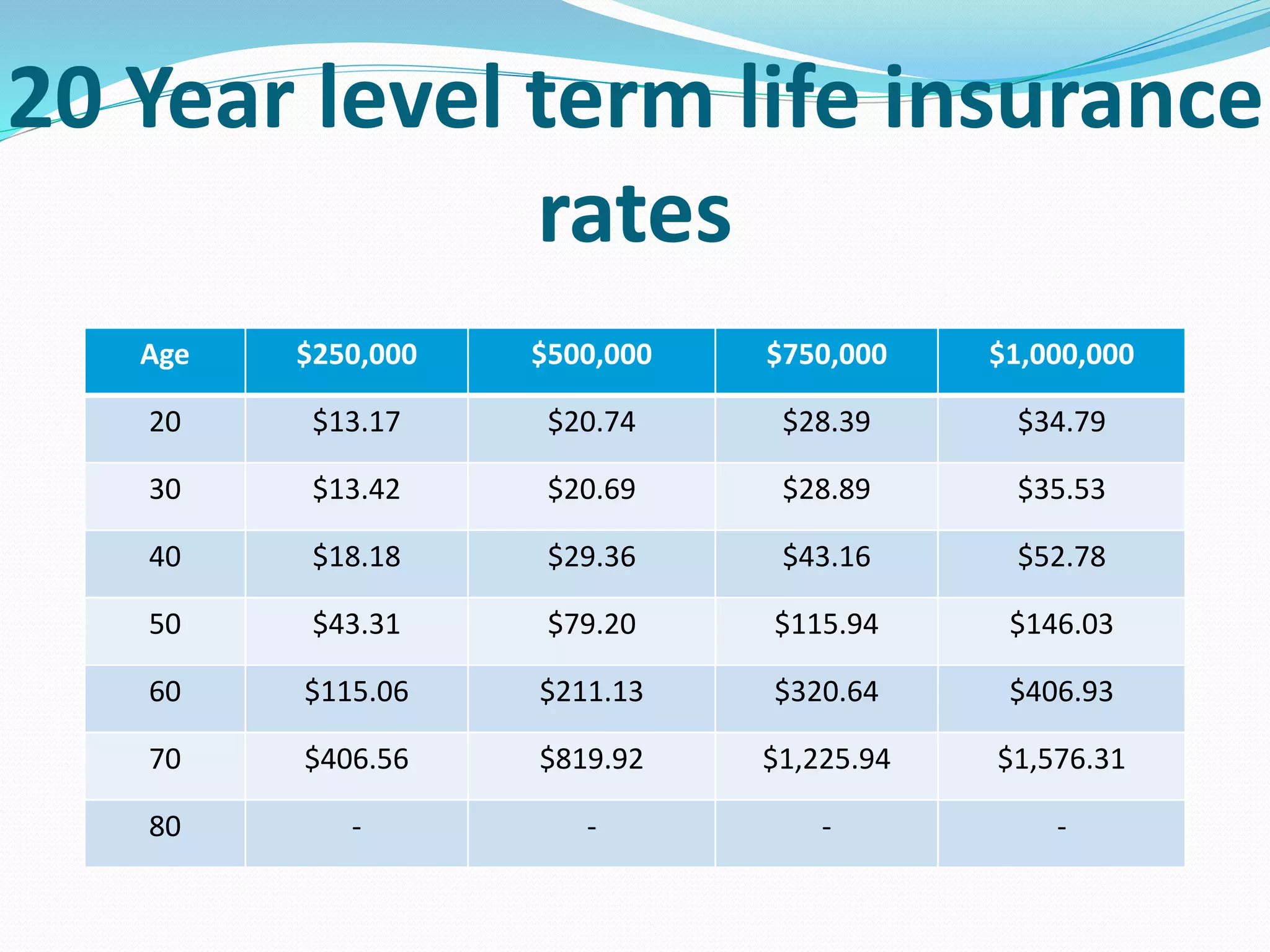
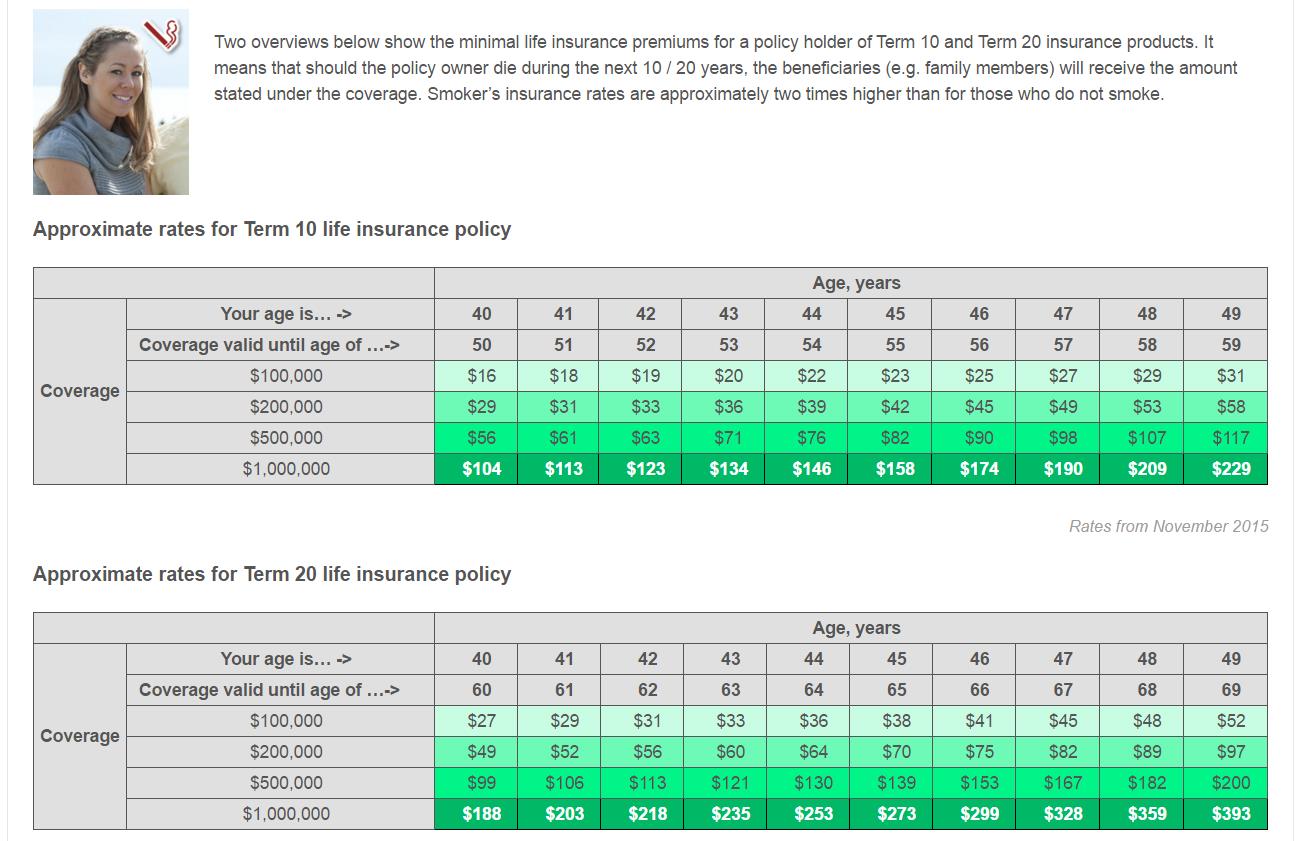
Age is the single most influential variable in life insurance rate calculations. Typical life insurance rates illustrate an exponential, rather than linear, increase in cost as individuals age. For a healthy 30-year-old purchasing a 20-year term policy with a $500,000 death benefit, monthly premiums are often modest, frequently ranging between $20 and $30. For a 50-year-old purchasing the exact same amount and term length, those monthly premiums can easily triple or quadruple.
| Age Bracket | Estimated Monthly Premium (Term 20, $500K, Preferred Health) | Key Risk Factor |
|---|---|---|
| 30 Years Old | $20 – $35 | Extended mortality horizon, minimal chronic illness risk |
| 40 Years Old | $35 – $65 | Early onset of age-related biomarkers, rising family obligations |
| 50 Years Old | $90 – $150 | Accelerated actuarial curve, higher incidence of medical flags |
| 60 Years Old | $250 – $400 | Approaching end of standard term availability, high risk pool |
Gender also plays a consistent role in standard pricing models. Statistical data consistently shows that biological females have a longer average life expectancy than biological males across almost all global demographics. Consequently, typical life insurance rates for women are noticeably lower than those for men of the same age, health status, and coverage amount. This gender pricing differential reflects empirical mortality tables rather than discretionary underwriting choices.
Health Classifications and Underwriting Revelations
Beyond age and gender, an applicant's medical profile dictates where they fall on the pricing spectrum. Life insurance companies typically categorize applicants into tiers such as Preferred Plus (or Preferred Best), Preferred, Standard Plus, and Standard, with substandard or table-rated categories for those with significant health complications.
The underwriting process involves a detailed review of medical records, prescription history databases, motor vehicle reports, and often a paramedical exam that checks blood pressure, cholesterol levels, height-to-weight ratios, and blood or urine samples. The rates associated with these tiers reveal how heavily the insurance industry penalizes preventable health risks:
- Tobacco and Nicotine Use: Tobacco users face rates that are often double or triple those of non-smokers. This stark contrast highlights the long-term actuarial costs associated with smoking-related illnesses.
- Body Mass Index (BMI): Falling outside standardized height-and-weight charts can bump an applicant from a Preferred tier to a Standard tier, substantially increasing long-term out-of-pocket costs.
- Controlled vs. Uncontrolled Conditions: Chronic conditions like hypertension or type 2 diabetes do not automatically disqualify an applicant, but the rates reveal a strict dividing line. Well-managed conditions with consistent medication compliance incur much lower rate penalties than erratic or untreated conditions.
The Economic Impact of Waiting to Buy Coverage
One of the most revealing aspects of typical life insurance rates is the financial penalty of procrastination. Many individuals delay purchasing coverage because they perceive themselves as healthy or believe their current financial obligations are manageable. However, waiting even five to ten years to secure a policy introduces compounding financial disadvantages.
When an applicant ages, they do not just face higher rates due to the passage of time; they also run the statistical risk of developing minor or major health issues that can permanently alter their underwriting tier. A minor uptick in blood pressure or the discovery of elevated cholesterol during a routine physical can shift an applicant from a Preferred tier to a Standard tier. Combined with the age-related rate increase, this shift can double the lifetime cost of a 20- or 30-year term policy.
Therefore, rate tables expose life insurance as a perishable asset. Securing coverage early locks in a lower cost basis when mortality risk is lowest, acting as a financial hedge against future health and age developments.
Common Misconceptions About Life Insurance Rates
Navigating life insurance quotes often involves cutting through pervasive myths regarding cost and availability. Examining actual rate data dispels several common misconceptions that prevent individuals from seeking adequate protection:
- The "Too Expensive" Myth: Many consumers overestimate the cost of term life insurance by as much as 500%, often confusing expensive whole life products with affordable term options. Standard term rates for young, healthy adults are frequently lower than the cost of monthly streaming subscriptions or daily specialty coffee purchases.
- Employer-Provided Coverage is Enough: Group life insurance policies provided by employers typically offer coverage equal to one or two times an employee's salary. However, rates and data reveal that these policies are rarely portable, terminate upon job separation, and fall drastically short of replacing a working parent's actual economic value over a 20-year horizon.
- Stay-at-Home Parents Do Not Need Coverage: Because stay-at-home parents do not earn a visible salary, households often skip insuring them. Life insurance rate data and economic studies show that replacing the childcare, household management, and administrative labor of a stay-at-home parent requires significant capital, making individual policies essential.
Strategic Steps to Securing the Best Rates
For consumers analyzing typical life insurance rates with the goal of securing a policy, several strategic actions can help minimize premiums and maximize coverage efficiency:
- Lock in Term Lengths Strategically: Align the term length of the policy with your longest financial obligation, such as the remaining years on a mortgage or the time until children graduate from college, to avoid paying for unnecessary years of coverage.
- Optimize Health Markers Before Underwriting: If possible, schedule your paramedical exam after a period of stable nutrition, regular exercise, and controlled blood pressure. Small improvements in biomarkers can shift an applicant into a more favorable pricing tier.
- Shop the Open Market: Independent insurance brokers can compare quotes across dozens of an "A-rated" carriers, as underwriting guidelines for specific conditions vary widely from one company to another.
- Consider Accelerated Underwriting: Many modern carriers offer data-driven underwriting paths that skip the physical needle-prick exam for healthy applicants under certain age and coverage thresholds, streamlining the path to locking in preferred rates.
Frequently Asked Questions
How much does a typical $500,000 term life insurance policy cost?
For a healthy 35-year-old non-smoker, a 20-year term policy with a $500,000 death benefit typically costs between $20 and $30 per month. Pricing varies based on exact health classification, family medical history, and state regulatory guidelines.
Why are life insurance rates higher for men than women?
Actuarial tables and mortality statistics consistently show that biological females have a longer average life expectancy than biological males. Insurance companies price policies based on this statistical risk differential, resulting in lower baseline premiums for women.
Does employer-provided life insurance affect my need for an individual policy?
Employer-sponsored group life insurance is a useful supplement, but it is rarely sufficient for comprehensive family protection. These policies are tied to employment, typically offer limited coverage amounts (such as one year's salary), and do not transfer if you change jobs or retire.
Can I change my life insurance rate class if my health improves?
Some insurance policies feature riders or provisions that allow for reconsideration if you experience major positive health changes, such as quitting smoking or losing significant weight. Alternatively, healthy policyholders can sometimes re-apply with a new carrier for a better rate, though new underwriting will apply.
What is the difference between term and permanent life insurance pricing?
Term life insurance provides temporary coverage for a specific period and features lower, level premiums. Permanent life insurance covers you for your entire life and includes a cash-value savings component, making its baseline premiums significantly higher than term rates for the same death benefit.
How does tobacco use impact life insurance premiums?
Tobacco and nicotine use—including cigarettes, cigars, pipes, and sometimes e-cigarettes or nicotine replacement therapies—typically doubles or triples life insurance rates compared to non-smoker classifications due to increased long-term health risks.
Conclusion and Next Actions
Examining typical life insurance rates reveals a transparent market driven by age, health, and behavioral risk factors. Rather than viewing insurance premiums as an unpredictable expense, consumers should view them as a reflection of actuarial reality where early action yields substantial long-term savings. To secure the most advantageous rates, evaluate your family's actual income replacement needs, request quotes from multiple independent carriers, and lock in coverage before age and health milestones increase your baseline risk profile.
Image Gallery