Charge Off Duration: How Long It Stays on Your Credit Report
A charge-off remains on your credit report for seven years from the date of the first missed payment that led to the default. While the creditor writes off the debt as a loss for accounting purposes, the legal obligation to pay remains...
A charge-off remains on your credit report for seven years from the date of the first missed payment that led to the default. While the creditor writes off the debt as a loss for accounting purposes, the legal obligation to pay remains, and the negative entry significantly impacts your credit score throughout that duration.
Contents
Defining a Charge-Off: What Happens Behind the Scenes?
A charge-off is one of the most misunderstood terms in the world of consumer finance. Many consumers mistakenly believe that once a debt is "charged off," it has been forgiven or canceled. In reality, a charge-off is a formal accounting declaration by a creditor—typically a bank or credit card issuer—stating that the debt is unlikely to be collected.
From an internal perspective, the creditor moves the account from its "assets" column to a "loss" column. This usually occurs after 120 to 180 days of non-payment. However, this is a tax and regulatory maneuver for the lender; for the consumer, the debt remains legally valid. In 2026, lenders continue to report these statuses to the three major credit bureaus (Equifax, Experian, and TransUnion) to warn other potential lenders of the risk associated with the borrower.
When an account is charged off, the creditor may choose to do one of three things:
- Keep the debt in-house: Their internal collections department will continue to contact you.
- Assign the debt: They hire a third-party collection agency to recover the funds on their behalf.
- Sell the debt: They sell the account to a debt buyer for pennies on the dollar. This results in a new entry on your credit report from a collection agency, which can further damage your score.
The Seven-Year Rule: Understanding the FCRA Timeline
The duration for which a charge-off can legally appear on your credit report is governed by the Fair Credit Reporting Act (FCRA). Specifically, Section 605 of the FCRA dictates that most negative information must be removed after seven years.
The "clock" for this seven-year period starts at the Date of First Delinquency (DOFD). This is the date of the very first missed payment in the series that led directly to the charge-off. It is a common misconception that the clock restarts if the debt is sold to a collection agency or if you make a partial payment later. Under federal law, the original delinquency date remains the anchor point for the reporting window.
Why the 180-Day Buffer Exists
The FCRA technically allows negative information to stay on a report for seven years plus 180 days from the DOFD. This extra six-month window was designed to account for the period during which a creditor tries to bring the account current before officially charging it off. In practice, however, most modern credit reporting systems in 2026 automate the removal exactly at the seven-year mark to ensure strict compliance and avoid litigation.
The Difference Between Credit Reporting and the Statute of Limitations
It is vital to distinguish between the credit reporting limit and the statute of limitations (SOL) for debt collection. These are two entirely different legal timelines that often cause confusion for consumers.
- Credit Reporting Limit: This is a federal rule (FCRA) that limits how long a "scar" can stay on your credit report. As established, this is generally seven years. Once this time expires, the charge-off must vanish from your credit history, regardless of whether you paid it.
- Statute of Limitations: This is a state-level law that determines how long a creditor has the legal right to sue you in court to obtain a judgment for the debt. Depending on your state and the type of contract (written, oral, or open-ended like a credit card), the SOL can range from three to ten years.
In some scenarios, a debt might fall off your credit report while the creditor still has the legal right to sue you. Conversely, the SOL might expire (meaning you can no longer be sued), but the charge-off remains on your credit report for several more years. Be aware that in many jurisdictions, making a small payment on an old debt can "reset" the statute of limitations for lawsuits, even though it cannot reset the seven-year credit reporting window.
Paid vs. Unpaid Charge-Offs: How Each Affects Your Future Credit
If you have a charge-off on your report, you might wonder if there is any point in paying it off, especially if it is several years old. The impact on your credit score depends largely on which scoring model a lender uses.
Older FICO Models
Older models, such as FICO 8 (which is still widely used by many lenders in 2026), do not distinguish much between a paid and unpaid charge-off in terms of the raw score. The "Charge-Off" status itself is the primary driver of the score drop.
Modern Scoring Models (FICO 9, FICO 10, and VantageScore)
Newer models have shifted toward a more nuanced approach. FICO 9 and FICO 10, as well as VantageScore 3.0 and 4.0, ignore collection accounts and charge-offs that have a zero balance. In these systems, paying the debt can lead to an immediate and significant score recovery.
Manual Underwriting
Even if your score doesn't jump immediately, a "Paid Charge-Off" looks significantly better to a human loan officer or mortgage underwriter than an "Unpaid Charge-Off." An unpaid status suggests an ongoing financial dispute or an inability to meet obligations, whereas a paid status shows that you eventually took responsibility for the debt.
Can You Remove a Charge-Off Early?
While the law allows charge-offs to stay for seven years, there are specific circumstances where they can be removed sooner.
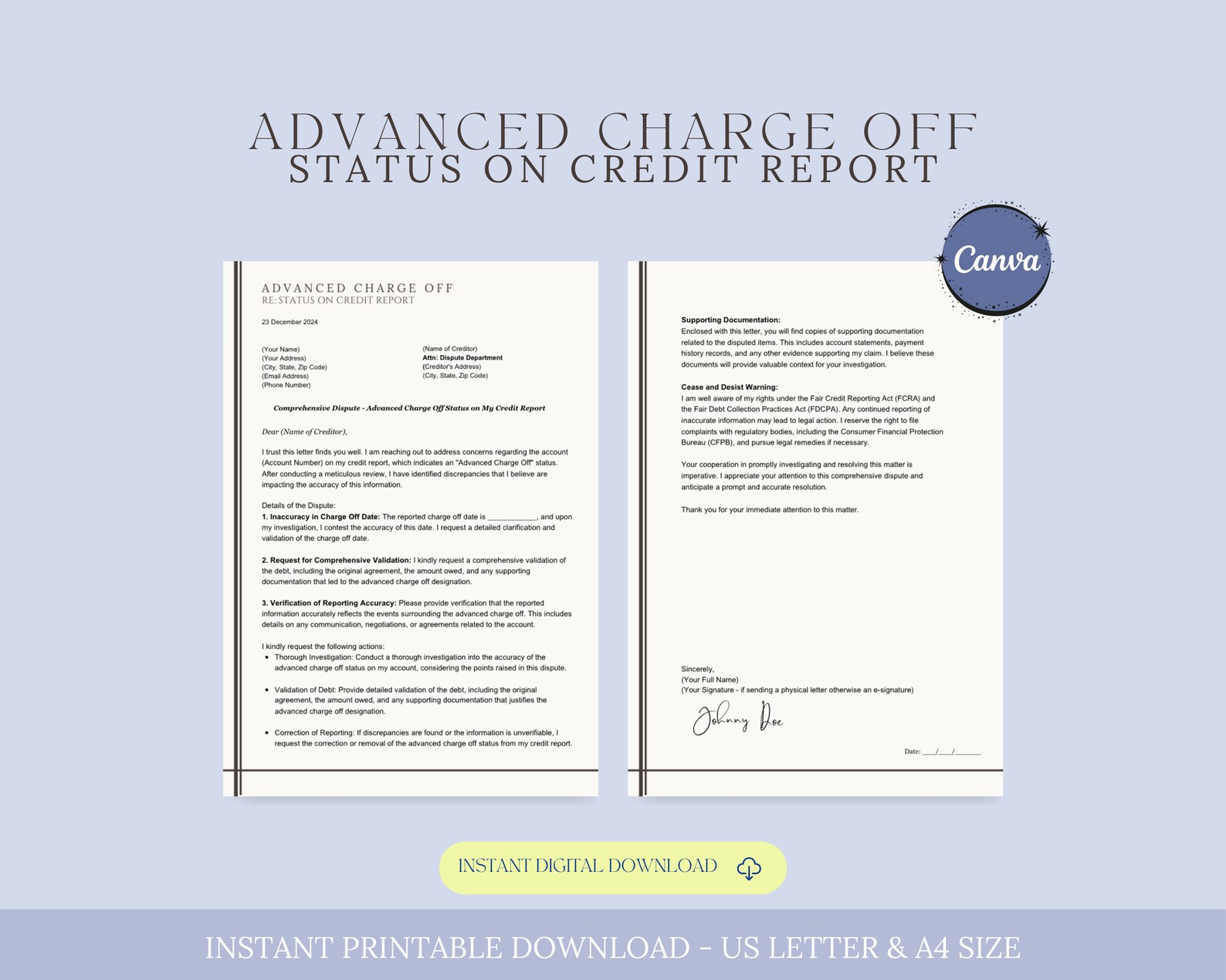
1. Inaccuracy and Disputes
The FCRA requires that all information on your credit report be 100% accurate, complete, and verifiable. If any detail regarding the charge-off—such as the date, the balance, or the account number—is incorrect, you have the right to dispute it. If the creditor cannot verify the accuracy of the reported data within 30 days, the credit bureau must remove the entry.
2. Pay for Delete
This is a controversial negotiation tactic where a consumer offers to pay the debt in full in exchange for the creditor removing the negative entry from their credit report. While some smaller collection agencies might agree to this, most major banks and large creditors in 2026 refuse "pay for delete" requests because their contracts with the credit bureaus require them to report accurate information.
3. Goodwill Letters
If the charge-off was a one-time lapse in an otherwise spotless credit history, you could send a "goodwill letter." In this letter, you explain the hardship that led to the default (e.g., medical emergency, job loss) and ask the creditor to remove the entry as a gesture of professional courtesy. This is rarely successful for charge-offs but is worth the effort if the debt has already been paid.
Comparison: Duration of Negative Credit Items
Understanding how a charge-off compares to other negative marks can help you prioritize your credit repair strategy.
| Negative Item | Duration on Credit Report | Impact Severity |
|---|---|---|
| Late Payment (30-180 days) | 7 years from date of late payment | Moderate to High |
| Charge-Off | 7 years from Date of First Delinquency | High |
| Collection Account | 7 years from Date of First Delinquency (Original Debt) | High |
| Chapter 7 Bankruptcy | 10 years from filing date | Very High |
| Chapter 13 Bankruptcy | 7 years from filing date | High |
| Hard Inquiry | 2 years (Impact lasts only 12 months) | Low |
| Foreclosure | 7 years from filing date | Very High |
Rebuilding Your Credit While Waiting for a Charge-Off to Drop Off
You do not have to wait seven years to have a good credit score again. The impact of a charge-off diminishes over time, a process known as "weighting." A charge-off from six years ago hurts your score much less than one from six months ago.
To rebuild your profile in 2026:
- Open a Secured Credit Card: These require a cash deposit that serves as your credit limit. They are easier to obtain with a charge-off on your record and help establish a new "paid as agreed" history.
- Become an Authorized User: If a family member has a long-standing credit card with a perfect payment history, being added as an authorized user can "piggyback" their positive data onto your report.
- Credit Builder Loans: These are small loans where the money is held in a blocked account while you make payments. Once the loan is paid off, the funds are released to you, and the history of on-time payments is reported to the bureaus.
- Maintain Low Utilization: Keep the balances on your active cards below 10% of their limits. This shows lenders that you are managing your current credit responsibly despite past mistakes.
Frequently Asked Questions
Does a charge-off mean I no longer owe the money? No. A charge-off is an internal accounting designation. You are still legally responsible for the debt, and the creditor or a debt collector can still pursue you through phone calls, letters, and even lawsuits until the statute of limitations expires.
Can a charge-off be "re-aged" to stay on my report longer? Illegal "re-aging" occurs when a collector changes the Date of First Delinquency to a more recent date to keep the item on your report longer. This is a violation of the FCRA. However, the seven-year reporting window is fixed to the original delinquency and cannot be restarted by selling the debt or making a payment.
Should I pay a charge-off that is about to fall off my report? If the debt is 6.5 years old and you are not planning to apply for a mortgage in the next few months, it may be better to let it fall off naturally. However, if the debt is still within the statute of limitations for your state, you could still be sued regardless of the credit reporting timeline.
Why did my credit score drop after I paid a charge-off? In some rare instances with older scoring models, updating a long-dormant charge-off to "Paid" can cause the "Date of Last Activity" to refresh. Some older algorithms might interpret this as "recent" negative activity. However, in most 2026 scoring scenarios, the long-term benefit of showing a zero balance far outweighs this temporary fluctuation.
Is a charge-off worse than a collection? They are generally viewed with equal severity by lenders. A charge-off represents the original lender's loss, while a collection represents a third party's attempt to recover that loss. Both indicate a significant breach of the original credit agreement.
Practical Recommendation: Next Steps
If you discover a charge-off on your credit report, your first step should be to verify the Date of First Delinquency. Use a service to pull your official reports from AnnualCreditReport.com or a reputable monitoring service. If the item is older than seven years, file a dispute with each bureau reporting it to have it removed immediately.
If the charge-off is recent, focus on the "Two-Pronged Strategy": First, negotiate a settlement or pay the balance to satisfy modern scoring models and future underwriters. Second, immediately begin adding positive lines of credit to "dilute" the impact of the negative entry. Time is your strongest ally, but active management of your current accounts will accelerate your path back to a healthy credit profile.
Image Gallery