The Byford Dolphin Incident: A Technical Analysis of Offshore Diving Decompression Failure
The Byford Dolphin incident occurred on November 5, 1983, when a catastrophic rapid decompression accident struck a diving bell system in the North Sea. The disaster was caused by human error combined with mechanical failure, resulting...
The Byford Dolphin incident occurred on November 5, 1983, when a catastrophic rapid decompression accident struck a diving bell system in the North Sea. The disaster was caused by human error combined with mechanical failure, resulting in the instantaneous death of four divers and one tender, and severe injuries to another tender, permanently changing hyperbaric safety standards.
Contents
Anatomy of Offshore Saturation Diving Systems
Saturation diving is a specialized technique that allows professional divers to live and work at extreme depths for days or weeks at a time. By keeping the tissues of the diver's body fully saturated with inert breathing gases, operators bypass the need for lengthy, repetitive decompression stops after every single working shift. Understanding the Byford Dolphin incident requires an examination of the complex infrastructure that supports this extreme environment.
A typical North Sea saturation system, such as the one installed on the semi-submersible drilling rig Byford Dolphin, consists of several interconnected components:
- Living Quarters (LK): Pressurized habitats where divers sleep, eat, and rest between excursions.
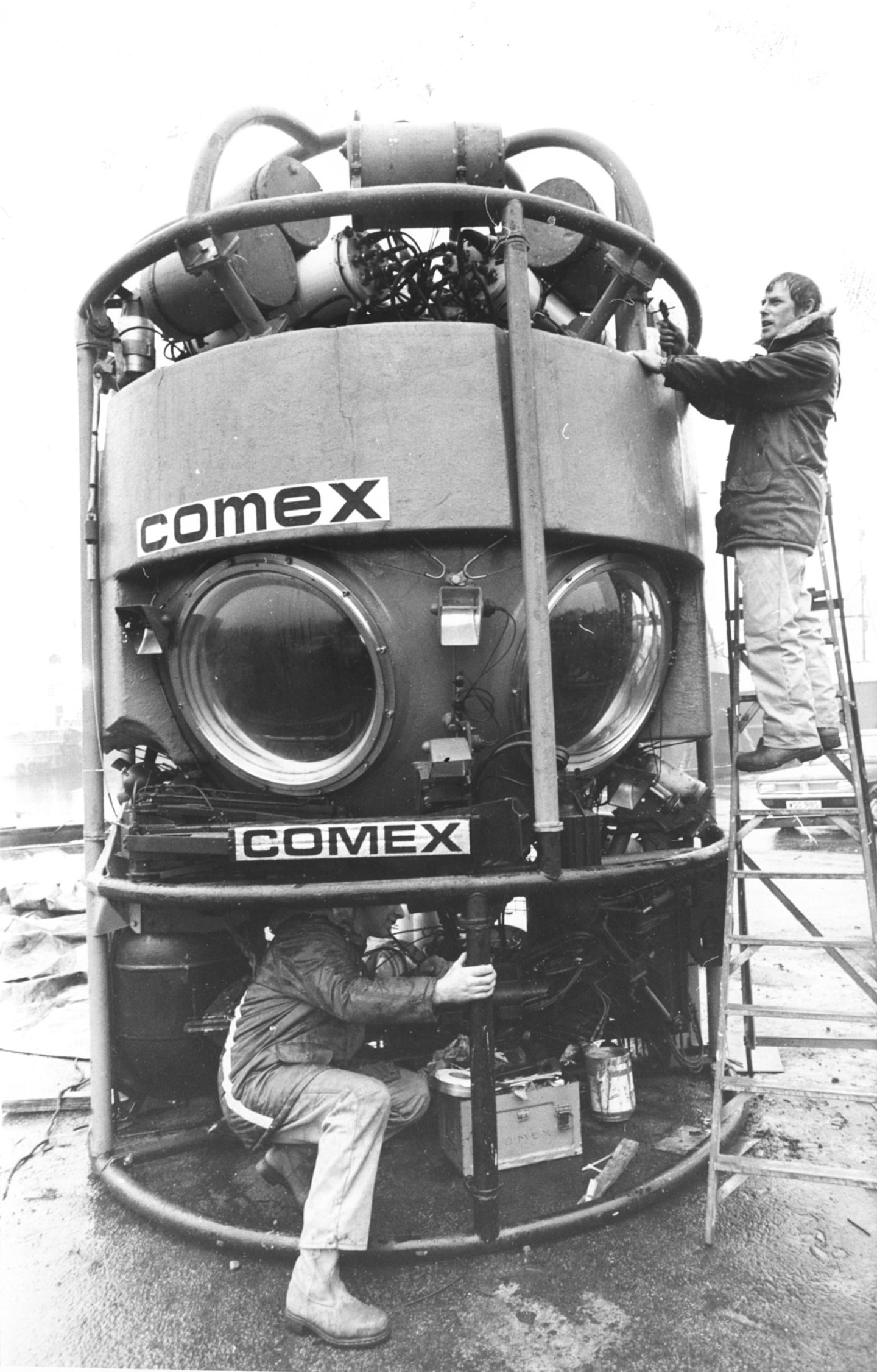
- Diving Bell (SDC - Submersible Decompression Chamber): A heavy steel pressure vessel used to transport divers between the surface deck habitats and the deep-sea work site.
- Trunking and Coamings: Vertical passages fitted with sealing doors that connect the living quarters to the diving bell via a mating flange system.
- Control Room: The nerve center where life support technicians monitor internal pressures, gas mixtures, temperature, and humidity.
In 1983, the Byford Dolphin was operating in the Frigg gas field in the Norwegian sector of the North Sea. The system utilized a complex arrangement of multi-chamber living compartments connected to a central trunk. Divers operated under extreme physiological stress, breathing custom heliox (helium-oxygen) mixtures to avoid nitrogen narcosis and oxygen toxicity at high pressures.
Sequence of Events on November 5, 1983
On the morning of November 5, 1983, diving operations were winding down. Divers William Crammond, Roy Lucas, Bjorn Bergersen, and Truls Hellevik had just returned from a bell run. They were inside the saturation living quarters, while tenders Remi Pettersen and William McCracken were operating the external controls from the deck trunk space.
The standard procedure for decoupling the diving bell from the internal habitat system required a strict sequence of valve operations and mechanical interlocks.
- Divers secured the inner door of the saturation chamber, sealing the habitat atmosphere.
- Tenders adjusted the seal between the bell trunking and the chamber flange, preparing to bleed off pressure in the intermediate trunk space.
- Tender William McCracken released the clamp securing the diving bell to the chamber system prematurely before the internal locking mechanism was fully engaged.
- The pressure differential between the internal habitat and the external environment triggered a violent explosive decompression.
The chamber system, which was pressurized to roughly 9 atmospheres (900 kPa or about 88 meters of seawater equivalent), suffered an uncontrolled blowout. The internal pressure plummeted to 1 atmosphere in a fraction of a second.
Physiological Mechanisms of Rapid Decompression
The immediate drop from 9 atmospheres to 1 atmosphere created a catastrophic internal expansion of gases within the human body and the surrounding environment. This physical trauma surpassed any known survivable limits of hyperbaric accidents.
As external pressure drops instantly, gases dissolved in blood and tissues expand rapidly according to Boyle's Law. In the case of the Byford Dolphin victims, the helium dissolved in their bloodstreams boiled instantly out of solution.
- Gas Embolism: Massive formation of gas bubbles in the vascular system blocked blood flow to the brain, heart, and lungs.
- Thoracic Rupture: The extreme pressure differential forced air from the lungs violently through the trachea and esophagus, tearing soft tissues and causing structural collapse of the chest cavities.
- Body Disarticulation: The pressure gradient across the trunk door was so immense that tender Truls Hellevik, who was positioned near the opening gap, was forced through a 24-inch diameter opening, resulting in complete fragmentation of his body tissues.
The forensic pathology reports indicated that death for the four men inside the chamber was instantaneous, occurring within milliseconds of the seal failure.
Equipment Failure versus Human Error Analysis
An official investigation into the disaster, conducted by forensic pathologists and engineering experts, analyzed the structural integrity of the Byford Dolphin system and the operational protocols of the crew.
| Investigation Metric | Finding | Impact on Safety Standards |
|---|---|---|
| Mechanical Design | Absence of automatic safety interlocks on the trunk door | Mandated installation of secondary mechanical locks |
| Operational Protocol | Reliance on manual clamp release without pressure verification | Implementation of redundant dual-operator verification steps |
| Pressure Gauges | Inadequate or confusing gauge placement in the trunk area | Redesigned control panels with fail-safe visual indicators |
| Communication Systems | High ambient helium noise inside saturation habitats | Upgraded audio and digital monitoring systems |
The investigation concluded that the primary trigger was human error—the premature release of the clamp by the surface tender. However, human factors experts emphasized that the system design lacked fundamental fail-safe engineering controls. If the clamp had been mechanically interlocked with the internal pressure sensors, the release mechanism would have been physically blocked while the chamber remained pressurized.
Long-Term Impact on Commercial Diving Standards
The tragedy aboard the Byford Dolphin served as a watershed moment for the offshore oil and gas industry, leading to sweeping regulatory overhauls across the North Sea and globally.
Regulatory Overhauls
The Norwegian Petroleum Directorate (NPD) and equivalent international bodies introduced rigorous safety codes. Manufacturers retrofitted existing saturation systems with mechanical interlocks that made it physically impossible to unclamp a trunk door while a pressure differential existed.
Training and Certification
Commercial diving schools incorporated hyperbaric physics, human factors engineering, and psychological stress management into mandatory training syllabi. Tenders and life support technicians faced stricter certification pathways.
Legal and Ethical Precedents
The incident highlighted the complex liability framework of multinational offshore operations. Litigation and subsequent advocacy by groups like the North Sea Divers Alliance eventually led to compensation and recognition for the physiological and psychological toll borne by early saturation divers.
Comparative Overview of Hyperbaric Safety Eras
To understand how drastically commercial diving operations evolved after 1983, consider the differences in protocols between the pre-Byford Dolphin era and modern offshore standards.
- Pre-1983 Systems: Relied heavily on manual valves, had minimal automated interlocks, lacked standardized emergency breathing systems inside trunks, and placed immense pressure-handling burdens on individual tenders.
- Post-2000 Modern Systems: Feature computerized life support monitoring, automated pressure-locking pins, closed-circuit television (CCTV) coverage of all trunk spaces, and redundant gas supply manifolds.
Frequently Asked Questions
What caused the Byford Dolphin diving accident?
The accident was caused by the premature opening of a decompression chamber clamp while the system was still pressurized, leading to explosive decompression. This human error was compounded by a lack of mechanical safety interlocks that should have prevented the clamp from opening under pressure.
Did anyone survive the Byford Dolphin incident?
Yes, out of the crew members directly involved in the accident area, tender William McCracken survived with severe injuries, while four divers and one tender were killed instantly.
How fast did the decompression occur?
The decompression from 9 atmospheres to 1 atmosphere took a fraction of a second, causing immediate ebullition of gases in the blood and catastrophic trauma to the victims.
What changes were made to diving safety after the incident?
The disaster prompted the implementation of mandatory mechanical safety interlocks, redesigned control panels, improved training protocols, and stricter regulatory oversight by authorities such as the Norwegian Petroleum Directorate.
Why is the Byford Dolphin incident studied today?
It remains a foundational case study in human factors engineering, system safety design, and forensic pathology, demonstrating the critical importance of fail-safe mechanisms in high-risk industrial environments.
Conclusion
The Byford Dolphin incident remains a profound reminder of the unforgiving nature of high-pressure environments. By transforming tragedy into stringent engineering mandates, the commercial diving industry drastically reduced the likelihood of similar catastrophic failures, establishing a legacy of safety that protects offshore workers to this day.
Image Gallery