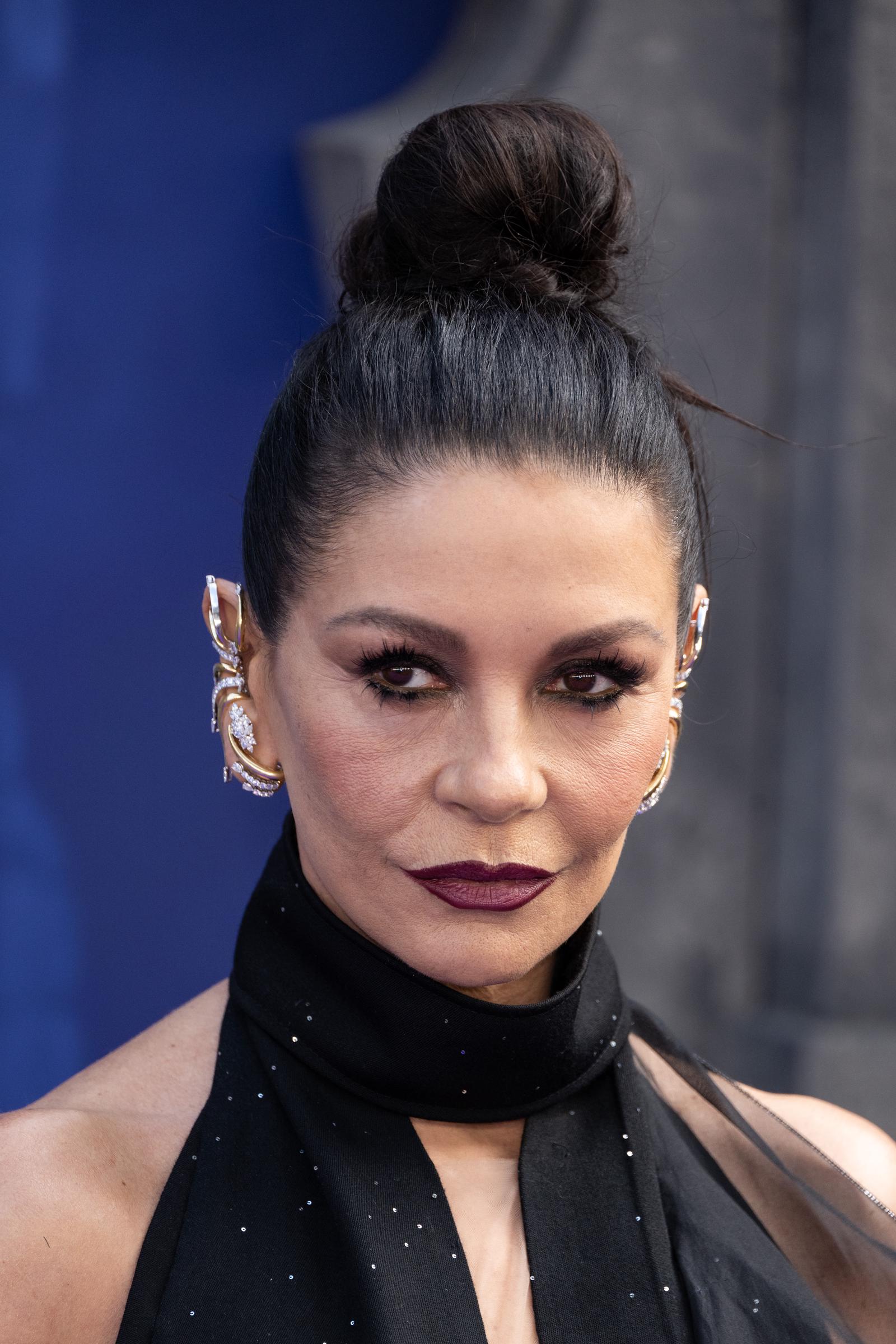
Catherine Zeta-Jones Musicals: Stage and Screen Career Guide
Catherine Zeta-Jones has established a premier legacy across musical theatre and film, highlighted by her Academy Award-winning portrayal of Velma Kelly in Chicago (2002) and her Tony Award-winning performance as Desirée Armfeldt in Br...
Catherine Zeta-Jones has established a premier legacy across musical theatre and film, highlighted by her Academy Award-winning portrayal of Velma Kelly in Chicago (2002) and her Tony Award-winning performance as Desirée Armfeldt in Broadway’s A Little Night Music (2009). Her musical career spans West End productions, Hollywood blockbusters, and classic stage revivals.
Contents
Catherine Zeta-Jones in Chicago (2002): The Oscar-Winning Role
Catherine Zeta-Jones's most famous musical role arrived in 2002 with Miramax’s film adaptation of John Kander, Fred Ebb, and Bob Fosse’s stage musical Chicago. Directed and choreographed by Rob Marshall, the film re-imagined the 1926 jazz-age satire of celebrity crime and tabloid sensationalism for modern audiences. Zeta-Jones was cast as Velma Kelly, a double-murderess and vaudeville star fighting to maintain her public notoriety after being arrested for killing her husband and sister.
Audition, Preparation, and Performance
Although producers initially considered Zeta-Jones for the role of Roxie Hart, she fought specifically to play Velma Kelly because she wanted to perform the show-stopping opening musical number, "All That Jazz." Drawing on her extensive background as a trained dancer, Zeta-Jones spent months in intensive rehearsals preparing for Bob Fosse's signature choreography, which demands high precision, isolated torso movements, turned-in knees, and fluid hip rolls.
Zeta-Jones performed her own singing and dancing throughout the production. She famously insisted on wearing a short bob haircut so that audiences could see her face during complex dance numbers, proving that a stunt double was not being used. Her performance captured Velma's calculating toughness, sharp comedic timing, and commanding stage presence.
Musical Numbers and Legacy
Zeta-Jones performed several of the film's central musical numbers, including:
- "All That Jazz": The film’s opening ensemble piece, establishing Velma Kelly as the queen of Chicago's nightclub scene.
- "Cell Block Tango": A multi-part narrative song where Velma and her fellow female inmates recount their crimes.
- "I Can't Do It Alone": A grueling solo dance and vocal audition routine where Velma attempts to convince Roxie Hart to form a double act.
- "Class": A duet with Queen Latifah (Mama Morton) lamenting the decline of social manners (filmed and included on the soundtrack, though cut from the theatrical release and included in home video releases).
- "Nowadays / Hot Honey Rag": The duet and synchronized dance finale featuring Zeta-Jones alongside Renée Zellweger.
Industry Recognition and Awards
According to the official Academy of Motion Picture Arts and Sciences database, Zeta-Jones won the Academy Award for Best Supporting Actress at the 75th Academy Awards for her performance in Chicago. Her work was also recognized by the British Academy of Film and Television Arts, where she earned the BAFTA Award for Best Actress in a Supporting Role. Additionally, she won the Screen Actors Guild Award for Outstanding Performance by a Female Actor in a Supporting Role. Chicago won six Academy Awards in total, including Best Picture, marking a major commercial and critical revival for the movie musical genre.
Broadway Debut and Tony Win: A Little Night Music (2009–2010)
In 2009, Catherine Zeta-Jones made her Broadway debut in the Trevor Nunn-directed revival of Stephen Sondheim and Hugh Wheeler’s A Little Night Music. Staged at the Walter Kerr Theatre, the production featured Zeta-Jones in the lead role of Desirée Armfeldt, an elegant yet world-weary touring actress involved in a complex romantic web opposite co-star Dame Angela Lansbury, who played her mother, Madame Armfeldt.
Critical Reception and Vocal Interpretation
A Little Night Music presented a different artistic challenge compared to Chicago. Sondheim’s complex, waltz-heavy score required a rich lyrical sensibility and subtle theatrical nuance rather than high-energy jazz dance. Zeta-Jones played Desirée with warmth, vulnerability, and self-deprecating wit, balancing the character's theatrical glamour with genuine emotional exhaustion.
Her rendition of Sondheim's iconic song "Send in the Clowns" served as the emotional climax of the show. Theater critics praised her restrained vocal delivery and dramatic depth, highlighting how her screen experience brought an intimate, cinema-style delicacy to the live Broadway stage.
Tony Award Victory
As recorded by the Internet Broadway Database, the revival ran for a successful engagement, with Zeta-Jones performing from December 2009 through June 2010. For her performance, she was honored by the Tony Awards with the 2010 Tony Award for Best Performance by a Leading Actress in a Musical. She also received the Drama Desk Award for Outstanding Actress in a Musical and the Outer Critics Circle Award.
Movie Musical Performance: Rock of Ages (2012)
Zeta-Jones returned to the musical film genre in 2012 with New Line Cinema’s Rock of Ages, directed by Adam Shankman and adapted from the smash Broadway jukebox musical. Set in 1987 along Los Angeles's Sunset Strip, the story parodies and celebrates the 1980s hair metal era.
The Character of Patricia Whitmore
Zeta-Jones played Patricia Whitmore, an original character created specifically for the film adaptation. Whitmore is the conservative wife of the Los Angeles mayor who leads a moral crusade aimed at shutting down the famous rock venue "The Bourbon Room" and banning rock 'n' roll music. The character serves as the primary antagonist of the movie's civic storyline, hiding her own secret past as a former fan of the very rock bands she seeks to ban.
Musical Numbers and Style
In Rock of Ages, Zeta-Jones brought her classic musical theatre belt and comedic skill to 1980s pop-rock anthems, including:
- "Hit Me with Your Best Shot": Originally performed by Pat Benatar, this high-energy dance sequence takes place inside a church, featuring aggressive church-pew choreography designed by Mia Michaels.
- "Listen to Your Heart": A duet mashup with Bryan Cranston (playing Mayor Mike Whitmore) incorporating the Roxette pop ballad during a political press rally.
Her role in Rock of Ages demonstrated her capacity for satirical comedy, combining vocal belting with tight, athletic ensemble dance arrangements.
West End Beginnings: 42nd Street and Early Stage Roots
Before becoming an international film star, Catherine Zeta-Jones received formal theatrical training in Great Britain. Raised in Swansea, Wales, she began performing at a young age with local theatre groups, winning national tap dancing championships as a child.
Early Professional Stage Work
Her professional career started in her early teens:
- Child Stage Roles: She appeared as the title character in a local production of Annie at the Swansea Grand Theatre and played Tallulah in a stage production of Bugsy Malone.
- West End Chorus Work: At age 15, she moved to London to pursue full-time theatrical work, securing a spot in the chorus of the West End production of David Merrick’s 42nd Street at the Theatre Royal, Drury Lane.
The 42nd Street Breakthrough (1987)
Zeta-Jones’s major theatrical breakthrough mirrors a classic backstage showbiz story. While serving as the second understudy for the lead role of Peggy Sawyer in 42nd Street, both the lead actress and the first understudy fell ill prior to a performance. The 17-year-old Zeta-Jones stepped into the lead role of Peggy Sawyer—a small-town girl who becomes a Broadway star overnight.
Her performance impressed producer David Merrick so much that he formally cast her as the lead for the remainder of the West End run, where she performed the show's tap-heavy title track and numbers like "Lullaby of Broadway" for nearly two years.
Comparison of Catherine Zeta-Jones’s Major Musical Roles
The following table summarizes Catherine Zeta-Jones’s key performances across stage and film musicals throughout her career.
| Title | Release / Run Year | Medium | Role | Key Musical Numbers | Major Awards & Recognition |
|---|---|---|---|---|---|
| 42nd Street | 1987–1989 | Stage (West End) | Peggy Sawyer | "42nd Street", "Go Into Your Dance", "Lullaby of Broadway" | West End Lead Debut |
| Chicago | 2002 | Film | Velma Kelly | "All That Jazz", "Cell Block Tango", "I Can't Do It Alone", "Nowadays" | Academy Award (Best Supporting Actress), BAFTA Award, SAG Award |
| A Little Night Music | 2009–2010 | Stage (Broadway) | Desirée Armfeldt | "Send in the Clowns", "You Must Meet My Wife", "The Glamorous Life" | Tony Award (Best Leading Actress in a Musical), Drama Desk Award |
| Rock of Ages | 2012 | Film | Patricia Whitmore | "Hit Me with Your Best Shot", "Listen to Your Heart" | Supporting Ensemble Performance |
Key Musical Features and Vocal Technique
Catherine Zeta-Jones possesses an adaptable musical profile shaped by rigorous physical and vocal training. Understanding her technical foundation explains how she successfully bridged the gap between West End stage choreography and film acting.
- EARLY STAGE TRAINING (Tap/Jazz)
- WEST END BREAKTHROUGH (42nd Street)
- HOLLYWOOD FILM: Chicago (2002) - Fosse Jazz & Belting
- BROADWAY STAGE: A Little Night Music - Sondheim Legit/Alto
Vocal Range and Timbre
- Vocal Type: Mezzo-soprano / Alto.
- Style Adaptability: Zeta-Jones transitions between a warm, spoken-sung theatrical delivery (ideal for Sondheim's character work) and a focused, brassy belt suited for Fosse jazz and 1980s pop-rock.
- Enunciation and Control: Trained in traditional British musical theatre, she exhibits crisp diction, allowing complex lyrics—such as Sondheim's intricate internal rhymes—to carry clearly over full theatrical orchestration.
Dance Proficiency
- Tap Dance Background: Winning tap championships as a child gave her precise rhythm and ankle articulation, essential for her early run in 42nd Street.
- Fosse Style Execution: Her training allowed her to master the isolations, sharp angles, and subtle balance required for Chicago, performing intensive routines while maintaining vocal breath control.
Frequently Asked Questions About Catherine Zeta-Jones Musicals
Did Catherine Zeta-Jones do her own singing and dancing in Chicago?
Yes. Catherine Zeta-Jones performed all of her own vocals and dance sequences in the 2002 film adaptation of Chicago. Her extensive background in tap and jazz dance, combined with her West End stage experience, enabled her to execute Bob Fosse's demanding choreography without using a dance double.
What Oscar did Catherine Zeta-Jones win for a musical?
She won the Academy Award for Best Supporting Actress at the 75th Academy Awards in 2003 for her role as Velma Kelly in Chicago.
Did Catherine Zeta-Jones win a Tony Award for her Broadway work?
Yes. Zeta-Jones won the 2010 Tony Award for Best Performance by a Leading Actress in a Musical for her Broadway debut as Desirée Armfeldt in the revival of Stephen Sondheim's A Little Night Music.
What West End musical launched Catherine Zeta-Jones's professional career?
Her major breakthrough occurred in 1987 in the London West End production of 42nd Street at the Theatre Royal, Drury Lane. Originally an ensemble member and second understudy, she took over the lead role of Peggy Sawyer at age 17 after the star and first understudy became unavailable.
What songs does Catherine Zeta-Jones sing in Rock of Ages?
In the 2012 film Rock of Ages, Zeta-Jones performs a hard-rock cover of Pat Benatar's "Hit Me with Your Best Shot" and contributes to a duet mashup of Roxette's "Listen to Your Heart."
How to Experience Catherine Zeta-Jones’s Musical Works Today
To explore Catherine Zeta-Jones’s musical catalog across stage and screen, consider the following avenues:
- Watch Film Musicals on Digital Streaming: Chicago (2002) and Rock of Ages (2012) are widely available on major digital purchase and rental platforms, as well as subscription streaming services. Chicago is also available in high-definition Blu-ray and 4K UHD physical releases containing behind-the-scenes rehearsal footage of her dance training.
- Listen to Original Cast Recordings and Soundtracks:
- Chicago: Music from the Miramax Motion Picture features her studio vocals on "All That Jazz," "Cell Block Tango," and "Hot Honey Rag."
- A Little Night Music (2009 Broadway Revival Cast Recording) captures her vocal performance of Stephen Sondheim's "Send in the Clowns."
- Rock of Ages (Original Motion Picture Soundtrack) includes her rock vocal performances.
- Explore Archival Performances: Official clips of her award show performances—including her live song-and-dance rendition of "All That Jazz" at the Academy Awards—are archived on official media channels, offering a direct look at her live stage capabilities.
Image Gallery