What the Panda Species Name Reveals
The scientific name of the Giant Panda, Ailuropoda melanoleuca, reveals a fascinating history of taxonomic confusion, physical description, and evolutionary mystery. It literally translates to "black and white cat-foot," highlighting t...
The scientific name of the Giant Panda, Ailuropoda melanoleuca, reveals a fascinating history of taxonomic confusion, physical description, and evolutionary mystery. It literally translates to "black and white cat-foot," highlighting the animal's unique coloration and its anatomical similarities to felids and raccoons that once puzzled the world’s leading biologists.
Contents
For centuries, the Giant Panda remained a biological enigma. When Western scientists first encountered the species in the 19th century, they struggled to categorize it. Was it a bear? Was it a giant raccoon? Or was it a relative of the Red Panda? By examining the etymology and history of the names assigned to these animals, we can uncover the scientific journey from initial discovery to our modern understanding of their genetic lineage as of 2026.
The Etymology of Ailuropoda Melanoleuca
The scientific name of the Giant Panda is derived from Ancient Greek, reflecting the standard practice of binomial nomenclature established by Carl Linnaeus. The name is divided into two distinct parts: the genus (Ailuropoda) and the species epithet (melanoleuca).
The Meaning of "Cat-Foot"
The genus name Ailuropoda is a compound of two Greek words: ailouros, meaning "cat," and pous (or podos), meaning "foot." This designation was bestowed by the French zoologist Alphonse Milne-Edwards in 1870.
At first glance, calling a 250-pound bear "cat-footed" seems counterintuitive. However, the name reveals a specific anatomical observation. Unlike most bears, which have a very distinct "ursine" skeletal structure in their paws, the Giant Panda possesses certain characteristics that reminded early taxonomists of felids or procyonids (raccoons). Specifically, the padding on their feet and the way they manipulate objects suggested a more dexterous, almost feline agility compared to the heavy-set paws of a Grizzly or Polar bear.
The Significance of "Black and White"
The species name melanoleuca is more straightforward but no less important. It combines melas (black) and leukos (white). While it serves as a literal description of the animal’s famous coat, this naming choice was critical for distinguishing it from the "Original Panda"—the Red Panda.
In the mid-19th century, the term "Panda" was already in use for the smaller, rust-colored Himalayan mammal. When the larger, monochromatic animal was discovered by Father Armand David in 1869, scientists needed a way to link the two species (which they believed were closely related) while highlighting the Giant Panda's most striking visual trait.
The Red Panda: The "Original" Panda Species
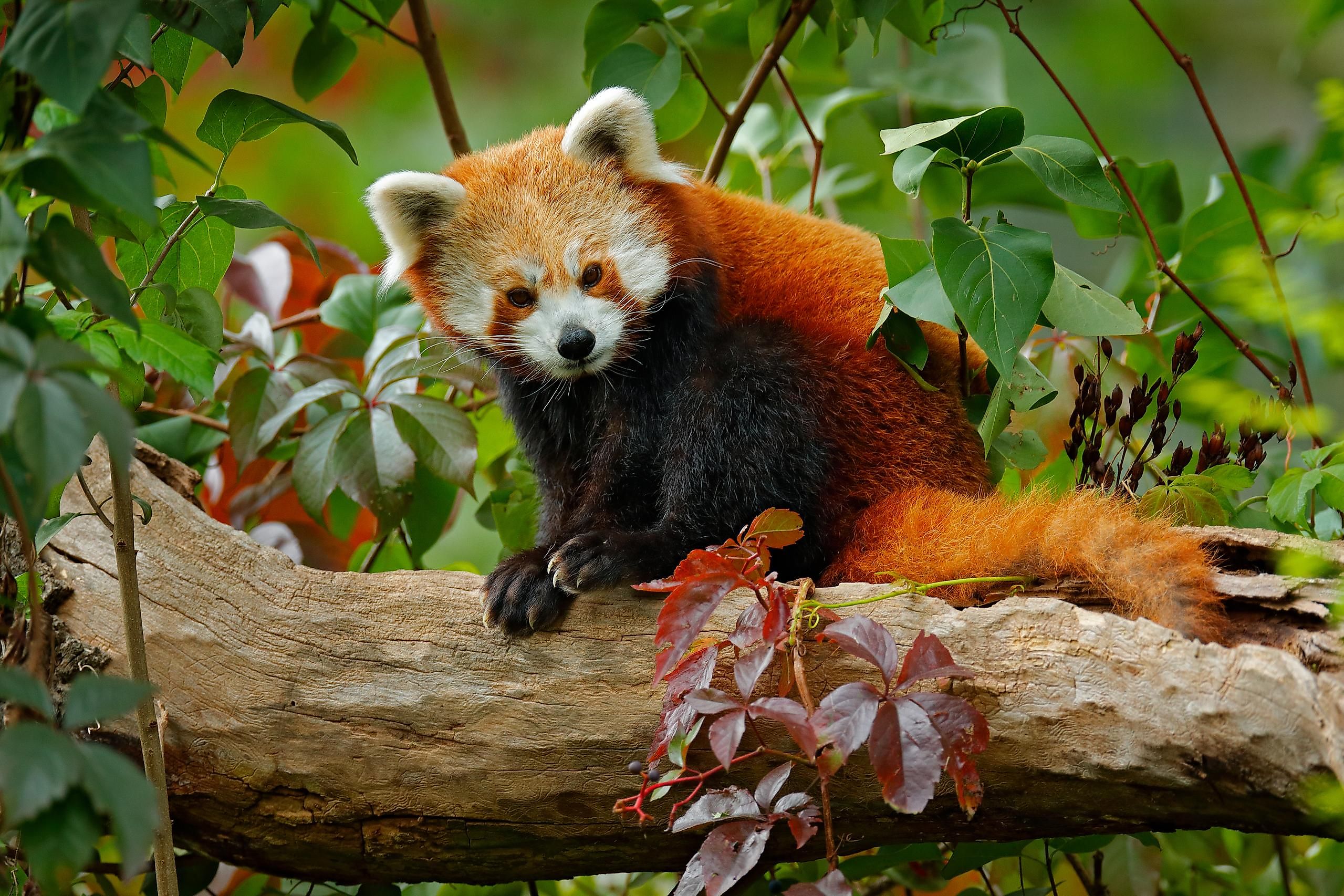
To understand what the Giant Panda’s name reveals, one must first look at the Red Panda (Ailurus fulgens). The Red Panda was described by Frédéric Cuvier in 1825, nearly half a century before the Giant Panda was known to Western science.
Ailurus Fulgens: The Shining Cat
The Red Panda’s name, Ailurus fulgens, translates to "shining cat" or "glistening cat." Cuvier chose fulgens to describe the animal's bright, fire-colored fur. Because the Red Panda was the first to carry the name "Panda," it set the taxonomic precedent.
The word "Panda" itself is believed to be derived from the Nepali words nigalya ponya, which means "bamboo eater." This reveals that the name is not actually a description of the animal's ancestry, but rather its ecological niche. When the Giant Panda was later discovered and found to also subsist almost entirely on bamboo, the name "Panda" was applied to it as well, leading to a century of scientific debate regarding their shared heritage.
What Taxonomy Reveals About Evolutionary Confusion
The naming of these two species reveals a "taxonomic tug-of-war" that lasted over 100 years. Because both animals have a "pseudo-thumb" (an enlarged radial sesamoid bone) used to grip bamboo, and because both share the name "Panda," many scientists assumed they were close relatives.
The Bear vs. Raccoon Debate
For a significant portion of the 20th century, the Giant Panda's name was often associated with the raccoon family (Procyonidae). This was due to several factors revealed by its morphology:
- Dentition: Panda teeth are broad and flat, adapted for grinding vegetation, much like the teeth of raccoons rather than the sharper teeth of many bears.
- Behavior: Like the Red Panda and raccoons, Giant Pandas are skilled climbers and have a more solitary nature than some social bear species.
It wasn't until the late 1980s and early 1990s, through advanced DNA-DNA hybridization and molecular phylogenetic studies, that the Giant Panda was firmly placed within the family Ursidae (bears). The Red Panda, conversely, was found to belong to its own unique family, Ailuridae, which is more closely related to weasels, skunks, and raccoons.
The name Ailuropoda therefore stands as a historical monument to this confusion—it captures the moment in history when scientists thought they were looking at a "cat-footed" relative of the Red Panda, rather than a highly specialized bear.
Subspecies and Geographical Revelations
As we look at the species names in 2026, we also recognize subspecies that reveal even more about the animal's adaptation and isolation.
Ailuropoda melanoleuca qinlingensis
In 2005, a subspecies of the Giant Panda was officially recognized: the Qinling Panda. Its scientific name, Ailuropoda melanoleuca qinlingensis, reveals its specific geographic location in the Qinling Mountains of Shaanxi Province.
What this name reveals biologically is a distinct variation in color and size. The Qinling Panda often possesses brown and white fur rather than black and white. It also has a smaller skull and larger molars. The addition of qinlingensis to the species name highlights the importance of genetic isolation; these pandas have been separated from the Sichuan populations for approximately 10,000 to 50,000 years, leading to divergent evolution.
Comparative Taxonomy of Panda Species
The following table summarizes the key taxonomic details revealed by the scientific naming of the two "panda" species.
| Feature | Giant Panda | Red Panda |
|---|---|---|
| Scientific Name | Ailuropoda melanoleuca | Ailurus fulgens |
| Common Name Meaning | Bamboo Eater (Large) | Bamboo Eater (Red) |
| Etymology | Black and White Cat-Foot | Shining Cat |
| Family | Ursidae (Bears) | Ailuridae (Unique) |
| Naming Year | 1870 | 1825 |
| Key Anatomical Reveal | Felid-like paw dexterity | Feline-like appearance/claws |
| Primary Diet Reveal | Specialized herbivory (Bamboo) | Specialized herbivory (Bamboo) |
Behavioral and Biological Clues in the Name
The name Ailuropoda doesn't just describe what the panda looks like; it hints at how it moves. The "cat-foot" description refers to the fact that pandas are plantigrade, meaning they walk with their entire foot (heel to toe) touching the ground, similar to humans and other bears. However, the flexibility of their wrist and the structure of their "thumb" give them a range of motion more common in smaller arboreal (tree-dwelling) mammals like cats or raccoons.
The Pseudo-Thumb
While not explicitly in the scientific name, the "cat-foot" designation indirectly points toward the panda's unique hand structure. The radial sesamoid bone—the pseudo-thumb—is an extension of the wrist bone. This adaptation is a prime example of convergent evolution. The Giant Panda and the Red Panda both evolved this "thumb" independently to solve the same problem: how to hold onto slippery, cylindrical bamboo stalks efficiently.
The Conservation Importance of Naming
In 2026, the scientific names of these species carry heavy weight in international law and conservation efforts. Because Ailuropoda melanoleuca is recognized as a distinct and highly specialized member of the bear family, it receives specific protections under the Convention on International Trade in Endangered Species of Wild Fauna and Flora (CITES).
The naming of subspecies like the Qinling panda (A. m. qinlingensis) is also vital for conservation. By recognizing these animals as taxonomically distinct, governments can implement targeted habitat protection plans that preserve the unique genetic diversity revealed by their names. If they were seen as "just another panda," the brown-and-white variants might not receive the specialized attention required to prevent their localized extinction.
Common Misconceptions Revealed by Names
One of the most persistent myths is that the Giant Panda is a "living fossil" that has stopped evolving. However, its species name and its placement in the Ailuropoda genus reveal a highly evolved specialist.
- Misconception: "Panda" means bear.
- Reality: The name "Panda" is a linguistic loanword from Nepal related to diet. The scientific name Ailuropoda is what actually links it (morphologically) to cats and (genetically) to bears.
- Misconception: Giant Pandas and Red Pandas are siblings.
- Reality: Their names reveal a shared diet, but their families (Ursidae vs. Ailuridae) reveal they are distant cousins at best, having split from a common ancestor over 40 million years ago.
Frequently Asked Questions
Why is the Giant Panda called "cat-foot" if it’s a bear?
Early 19th-century zoologists, including Alphonse Milne-Edwards, noted that the Giant Panda's skeletal structure, particularly the paws and teeth, shared more similarities with raccoons and red pandas (which were thought to be cat-like) than with typical bears. The name Ailuropoda was chosen to reflect these feline-like anatomical nuances before DNA testing confirmed their true bear ancestry.
Did the Red Panda get its name after the Giant Panda?
No, the Red Panda (Ailurus fulgens) was named and described in 1825, while the Giant Panda (Ailuropoda melanoleuca) was not described by Western science until 1869-1870. The Red Panda is the "original" panda; the Giant Panda was named afterward because it shared the Red Panda's specialized bamboo diet.
Does the scientific name tell us what pandas eat?
The scientific name Ailuropoda melanoleuca focuses on appearance and anatomy. However, the common name "Panda" is widely accepted by linguists to come from the Nepali word ponya, referring to the bamboo-eating habit. Thus, the common name reveals the diet, while the scientific name reveals the physical form.
Are there other species in the Ailuropoda genus?
Currently, Ailuropoda melanoleuca is the only living species in its genus. However, the fossil record reveals extinct ancestors such as Ailuropoda microta (the pygmy giant panda) and Ailuropoda baconi. These names reveal a lineage of bears that have been specializing in bamboo consumption for millions of years.
What does the "shining" part of the Red Panda's name mean?
The species epithet fulgens in Ailurus fulgens means "shining," "bright," or "glistening." This refers to the vibrant, thick, reddish-orange fur of the Red Panda, which provides excellent camouflage among the red-moss-covered trees and white lichens of its Himalayan habitat.
Final Recommendation for Wildlife Enthusiasts
When studying or supporting panda conservation, always distinguish between the two species by their scientific names to ensure you are accessing the correct data. If you are interested in evolutionary biology, the Giant Panda (Ailuropoda melanoleuca) offers a masterclass in how physical traits can sometimes mask true genetic identity. For those focusing on unique, relict lineages, the Red Panda (Ailurus fulgens) represents a singular branch of life that has no close living relatives. Supporting organizations like the World Wildlife Fund (WWF) or the Red Panda Network helps preserve the habitats that these uniquely named creatures require to survive through 2026 and beyond.
Image Gallery