Understanding the Missing Thumb Condition: Causes, Classifications, and Modern Treatments
The missing thumb condition, medically categorized as thumb hypoplasia or thumb aplasia, is a congenital anomaly where a child is born with an underdeveloped or completely absent thumb. This condition significantly impacts hand functio...
The missing thumb condition, medically categorized as thumb hypoplasia or thumb aplasia, is a congenital anomaly where a child is born with an underdeveloped or completely absent thumb. This condition significantly impacts hand function, as the thumb is responsible for approximately 40% to 50% of the hand's total capability, particularly regarding grip and fine motor precision.
Contents
Understanding this condition requires a multi-faceted look at embryonic development, genetic factors, and the sophisticated surgical interventions available in 2026. Because the thumb is the primary tool for "opposition"—the ability to touch the tips of the other fingers—its absence or significant underdevelopment necessitates early diagnosis and a tailored treatment plan to ensure the patient can perform daily tasks independently.
Defining Thumb Hypoplasia and Aplasia
The medical community distinguishes between "hypoplasia" (underdevelopment) and "aplasia" (complete absence). In cases of thumb hypoplasia, the thumb may be smaller than normal, lack certain muscles or tendons, or have an unstable connection to the hand. In thumb aplasia, there is no skeletal or soft tissue structure for the thumb at all.
These conditions are often part of a broader spectrum called radial longitudinal deficiency (RLD). RLD involves the malformation of the radial (thumb-side) part of the forearm and hand. When a child is born with a missing thumb, healthcare providers immediately look for corresponding issues in the radius bone of the forearm, as these structures develop simultaneously during the fifth through eighth weeks of gestation.
The Blauth Classification System
To standardize treatment, orthopedic surgeons use the Blauth Classification system. This five-tier scale assesses the severity of the condition and dictates whether the existing thumb can be saved or if a surgical replacement (pollicization) is required.
| Blauth Type | Clinical Characteristics | Recommended Treatment Approach |
|---|---|---|
| Type I | Minor shortening and thinning; all structures present. | Observation and occupational therapy; no surgery usually required. |
| Type II | Narrow web space between thumb and index; unstable joints; lack of "thenar" muscles. | Surgical reconstruction of the web space and tendon transfers. |
| Type III | Significant skeletal deficiency; absence of certain extrinsic tendons. | Divided into III-A (stable base) and III-B (unstable base). III-B often requires pollicization. |
| Type IV | "Pouce flottant" or floating thumb; connected only by a narrow skin bridge. | Removal of the non-functional thumb followed by pollicization. |
| Type V | Complete absence (aplasia) of the thumb. | Pollicization of the index finger to create a new thumb. |
Root Causes and Associated Syndromes
As of 2026, research into the molecular causes of the missing thumb condition has highlighted specific genetic pathways, though many cases remain sporadic (occurring without a family history). It is rarely caused by anything a mother did or did not do during pregnancy. Instead, it is typically a result of a disruption in the apical ectodermal ridge—the part of the embryo that signals how the limb should grow.
Genetic and Environmental Factors
While most cases are idiopathic, some are linked to genetic mutations in genes like SALL1 or TBX5. In rare historical contexts, environmental factors like the drug thalidomide were known causes, but in modern medicine, the focus is on identifying systemic syndromes. Because the thumb develops at the same time as the heart, kidneys, and hematological system, a missing thumb is often a clinical indicator for other internal health issues.
Common Associated Syndromes
- VACTERL Association: A cluster of birth defects including Vertebral defects, Anal atresia, Cardiac defects, Tracheo-Esophageal fistula, Renal anomalies, and Limb defects.
- Holt-Oram Syndrome: Characterized by skeletal abnormalities of the hands and arms and congenital heart defects.
- Fanconi Anemia: A serious blood disorder that can lead to bone marrow failure and a predisposition to cancer. Children with radial limb defects are frequently screened for this condition early in life.
- TAR Syndrome: Thrombocytopenia-absent radius syndrome, where the patient has low platelet counts and missing radius bones, though the thumbs are often present but affected.
Diagnostic Procedures and Screening
When a missing or underdeveloped thumb is identified at birth (or via high-resolution ultrasound before birth), a comprehensive diagnostic protocol is initiated. The goal is not just to assess the hand, but to ensure the child’s overall systemic health.
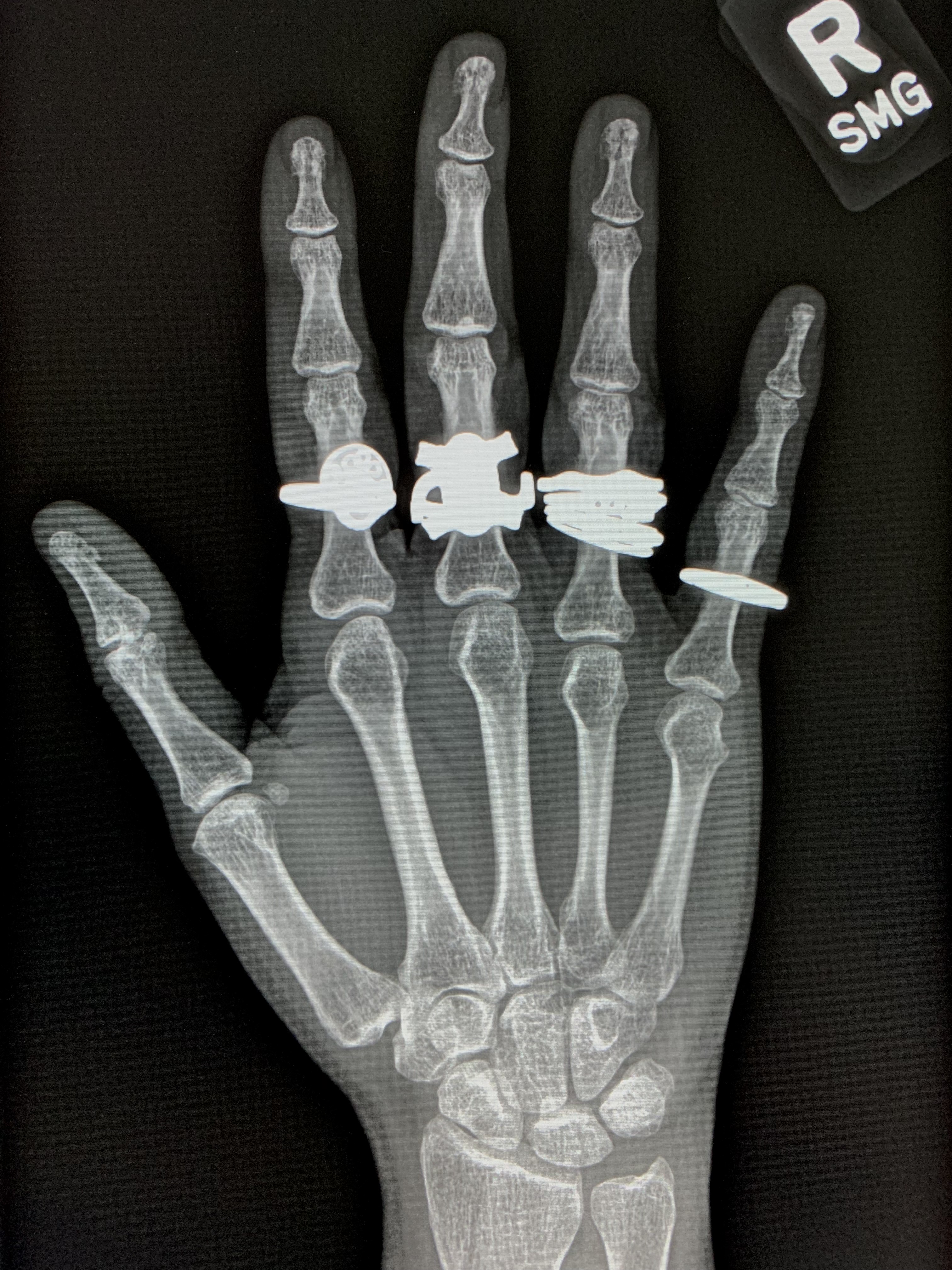
- Radiographic Imaging: X-rays of the hand, wrist, and forearm are essential to determine the presence of bones and the stability of the joints. In Type III hypoplasia, the stability of the carpometacarpal joint is the deciding factor for surgery.
- Hematological Testing: A "chromosomal breakage test" is often performed to rule out Fanconi Anemia, as this diagnosis changes the safety profile for future surgeries.
- Organ Screening: Renal ultrasounds and echocardiograms (heart ultrasounds) are standard to check for the internal anomalies associated with VACTERL or Holt-Oram syndromes.
Surgical Solutions: Pollicization and Reconstruction
For Blauth Types II and III-A, reconstructive surgery is the primary goal. Surgeons may deepen the "web space" between the thumb and index finger using a Z-plasty (a skin-shifting technique) and transfer tendons from other fingers to give the thumb the ability to oppose.
For Blauth Types III-B, IV, and V, the thumb is either non-functional or entirely absent. In these cases, the gold standard of care in 2026 remains pollicization.
The Pollicization Process
Pollicization is a sophisticated micro-surgical procedure where the index finger is moved to the thumb position. It is not a simple "finger transplant" but a repositioning of the existing finger, including its nerves, blood vessels, tendons, and bone.
- Shortening and Rotation: The index finger is shortened and rotated about 120 degrees to mimic the natural position of a thumb.
- Muscle Reattachment: The muscles that previously moved the index finger are rebalanced to function as the new thumb's muscles.
- Neurological Integrity: Because the original nerves and blood vessels are preserved, the child retains full sensation and blood flow in the "new" thumb.
The ideal age for this surgery is typically between 6 months and 2 years. This timeframe takes advantage of the brain's neuroplasticity, allowing the child to "wire" the index finger as a thumb during the critical period of motor skill development.
Non-Surgical Management and 2026 Prosthetic Advancements
Not all families choose surgery, and not all patients are candidates for pollicization. In 2026, advancements in medical technology have expanded the options for non-surgical management.
Occupational Therapy (OT)
Regardless of whether surgery is performed, OT is the cornerstone of treatment. Therapists work with children to develop "compensatory strategies." Children are remarkably adaptable; many born with a missing thumb learn to use their index and middle fingers in a "scissor grip" to pick up objects. Therapy focuses on strengthening the remaining digits and improving fine motor coordination.
Bionic and 3D-Printed Prosthetics
By 2026, 3D-printing technology has matured to allow for highly customized, lightweight prosthetic thumbs. For older children and adults who did not undergo pollicization, myoelectric "partial hand" prosthetics can detect muscle signals in the wrist to trigger a mechanical thumb grip. These devices are increasingly accessible and can be adjusted as the child grows, though they generally lack the sensory feedback provided by a surgical pollicization.
Managing the Psychological and Social Impact
A missing thumb is a visible difference that can lead to social anxiety or questions from peers as a child enters school. Psychological support for both the child and the parents is recommended. Parents often feel a sense of grief or guilt, which specialized counseling can help address. For the child, early intervention and fostering a sense of "adaptive capability" are key. Most children with a missing thumb or a pollicized finger lead completely normal lives, participating in sports, playing musical instruments, and excelling in technical fields.
Professional Advice Limitation: This article is for informational purposes only and does not constitute medical advice, diagnosis, or treatment. Congenital hand conditions require evaluation by qualified pediatric orthopedic surgeons or hand specialists. Specific surgical outcomes and risks vary by patient.
Frequently Asked Questions
Can a child lead a normal life with a missing thumb?
Yes. Children are highly adaptable and often develop unique ways to grip objects using their remaining fingers. With early intervention—whether through occupational therapy or surgical pollicization—most individuals perform all daily tasks, including writing, driving, and typing, without significant impairment.
At what age is surgery usually performed?
Most surgeons recommend performing pollicization or thumb reconstruction between the ages of 6 months and 18 months. Operating before the age of two allows the child’s developing brain to integrate the new thumb naturally into their motor patterns.
Is the missing thumb condition always hereditary?
No. In many cases, it is a sporadic occurrence during fetal development. However, because it can be associated with specific genetic syndromes like Holt-Oram, genetic counseling is often recommended to understand the risks for future pregnancies.
What is the difference between a floating thumb and a missing thumb?
A "floating thumb" (Blauth Type IV) is a small, non-functional digit attached to the hand only by skin and soft tissue, lacking bone or tendon support. A "missing thumb" (Blauth Type V) is the total absence of any external or internal thumb structures. Both are typically treated with pollicization.
Will the index finger look like a thumb after pollicization?
After surgery, the index finger will be shorter and positioned differently, resembling a thumb. While it will have three joints instead of the thumb's two, it functions remarkably well as a thumb, and most people do not notice the difference at a casual glance once the surgical scars heal.
Practical Recommendations for Parents
If your child is born with a missing or underdeveloped thumb, your first step should be a referral to a pediatric hand surgeon. Request a comprehensive screening that includes an echocardiogram and a renal ultrasound to rule out associated systemic conditions. Early consultation (within the first three months of life) ensures you have the widest range of treatment options and can begin occupational therapy to support your child’s developmental milestones.
Image Gallery