Workers Compensation Policy for Independent Contractors in Massachusetts
Navigating the rules surrounding a workers compensation policy for independent contractors in Massachusetts requires a careful understanding of the state’s stringent misclassification laws, the statutory employee test, and the mandator...
Navigating the rules surrounding a workers compensation policy for independent contractors in Massachusetts requires a careful understanding of the state’s stringent misclassification laws, the statutory employee test, and the mandatory requirements enforced by the Department of Industrial Accidents.
Contents
Understanding how Massachusetts regulates workers' compensation for independent contractors is essential for business owners, hiring entities, and self-employed professionals alike. The Commonwealth of Massachusetts enforces some of the strictest labor and insurance regulations in the United States, particularly regarding the distinction between legitimate independent contractors and traditional employees. Misclassifying an employee as an independent contractor can lead to severe financial penalties, stop-work orders, and potential criminal liabilities.
This comprehensive guide explores the legal frameworks, statutory exemption tests, policy requirements, and risk mitigation strategies surrounding workers' compensation insurance for independent contractors in Massachusetts.
The Legal Framework of Workers' Compensation in Massachusetts
In Massachusetts, the Department of Industrial Accidents (DIA) administers the state’s workers' compensation system, which is governed primarily by Massachusetts General Laws Chapter 152. The baseline rule is straightforward: virtually every employer operating within the Commonwealth must secure a workers' compensation policy for all covered individuals who perform services for wages or remuneration.
However, distinguishing who qualifies as a covered individual is where friction occurs. Unlike some jurisdictions that allow businesses broad latitude to contractually designate workers as independent contractors, Massachusetts law utilizes a strict three-prong test to determine employment status for insurance and wage purposes. If a worker does not pass all three prongs of this statutory test, the state considers them an employee, regardless of what the underlying contract states, whether they signed a Form 1099 agreement, or whether they possess a Federal Employer Identification Number (FEIN).
Consequently, hiring entities often find that workers they treat as independent contractors must still be covered under their commercial workers' compensation policy, or the hiring entity must verify that the contractor maintains their own independent coverage where legally permitted.
The Massachusetts Independent Contractor Three-Prong Test
To properly classify a worker as an independent contractor rather than an employee under Massachusetts law (specifically G.L. c. 149, § 148B, which heavily influences DIA enforcement), the hiring entity must establish satisfaction of all three of the following conditions:
- Freedom from Control: The worker is free from control and direction in connection with the performance of the service, both under the contract for the performance of service and in fact.
- Service Outside the Usual Course: The service is performed outside the usual course of the business of the employer.
- Independent Trade or Business: The individual is customarily engaged in an independently established trade, occupation, profession, or business of the same nature as that involved in the service performed.
Failing even one of these prongs means the worker is legally classified as an employee. For example, if a residential remodeling company hires a framing contractor to perform daily carpentry work on its job sites, the second prong is frequently violated because carpentry is the core business of the remodeling company. As a result, the framing contractor—and any of their uninsured subcontractors or helpers—may be deemed statutory employees of the hiring company for workers' compensation purposes.
| Prong | Statutory Requirement | Common Compliance Pitfall |
|---|---|---|
| Prong A: Control | Worker performs services free from the employer's direct supervision and control in fact. | Dictating specific work hours, mandatory training, or step-by-step methodology. |
| Prong B: Usual Course | Service is performed outside the hiring entity's core business operations. | Hiring specialized workers who perform tasks central to the company's primary revenue stream. |
| Prong C: Independent Trade | Worker operates an independent, established business offering similar services to the public. | Worker relies exclusively on the hiring company for income and lacks a separate business identity. |
When Independent Contractors Must Carry Their Own Policy
Independent contractors who genuinely operate as sole proprietors, partnerships, or limited liability companies (LLCs) often ask whether they are legally required to purchase a workers' compensation policy for themselves.
In Massachusetts, a sole proprietor or independent contractor with no employees is generally not required by law to purchase a workers' compensation policy for themselves, though they may choose to do so voluntarily. However, the operational reality is frequently dictated by upstream hiring entities and general contractors.
Certificate of Insurance (COI) Requirements
Most prudent businesses will not hire an independent contractor unless the contractor provides a valid Certificate of Insurance demonstrating active general liability and, where applicable, workers' compensation coverage. If an independent contractor hires employees or brings subcontractors onto a Massachusetts job site, Massachusetts law immediately mandates that the contractor secure a workers' compensation policy covering those workers, regardless of how small the crew is.
Sole Proprietor Waivers and Corporate Officers
Under Massachusetts insurance rules, corporate officers, members of LLCs, and sole proprietors may sometimes elect to exempt themselves from workers' compensation coverage under specific policy endorsements. However, if they perform physical labor on commercial or residential construction projects, general contractors and property owners will often demand proof of coverage because Massachusetts general contractors can be held secondarily liable for injuries sustained by uninsured subcontractors and their workers.
Financial Risks of Misclassification and Uninsured Subcontractors
Failure to properly secure workers' compensation insurance for workers who fail the independent contractor test exposes businesses to substantial legal and financial risks in Massachusetts.
Stop-Work Orders
The DIA’s Office of Investigations takes uninsured operations very seriously. If an investigator inspects a job site and discovers workers performing services without proper workers' compensation coverage—or determines that independent contractors are actually misclassified employees lacking coverage—the DIA can issue an immediate Stop-Work Order. This halts all business operations across the entire entity, and businesses face steep daily fines until proof of compliance is established.
Section 18 Statutory Employee Liability
Under Section 18 of Massachusetts General Laws Chapter 152, if a contractor enters into a contract with a sub-contractor to perform work that is part of or process in the contractor's trade or business, the primary contractor can be held liable for workers' compensation benefits if a worker employed by the subcontractor is injured on the job. This provision makes comprehensive insurance verification a critical risk management step for general contractors, construction managers, and service providers across the Commonwealth.
Civil and Criminal Penalties
Willful failure to insure employees in Massachusetts is a criminal offense punishable by fines, imprisonment, or both. Additionally, corporate officers can be held personally liable for unpaid premiums, penalties, and assessments levied by the Workers' Compensation Rating and Inspection Bureau of Massachusetts (WCRIBMA).
How Insurance Carriers Audit Independent Contractor Expenses
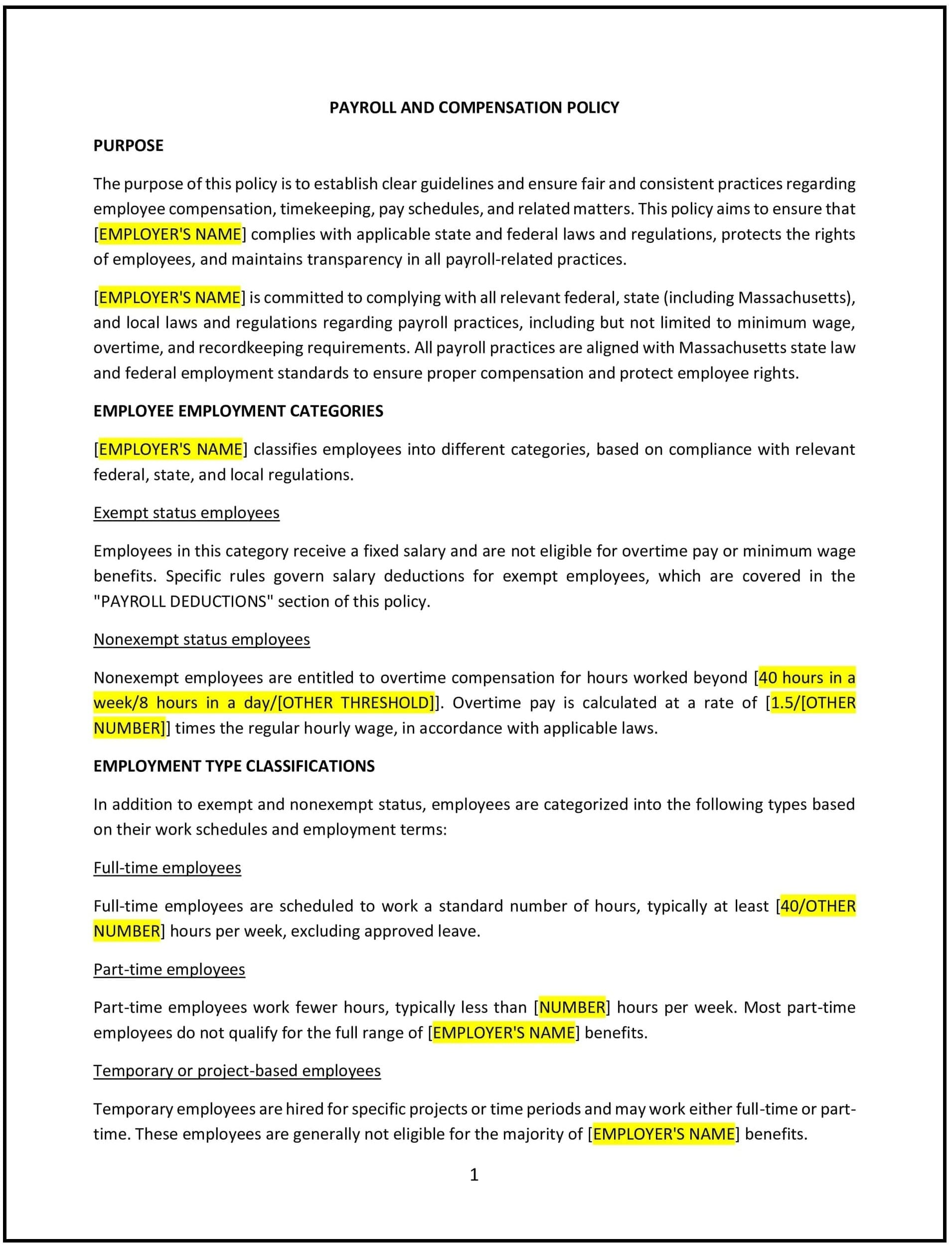
When business owners purchase a workers' compensation policy in Massachusetts, the initial premium is estimated based on projected payroll and gross contractor expenditures. At the end of the policy term, the insurance carrier conducts an annual payroll audit.
During this audit, the carrier will scrutinize payments made to 1099 independent contractors. If the business cannot substantiate that a paid contractor meets the legal independent contractor definition—typically verified through Form 1099-NEC documentation paired with proof that the contractor carried their own active workers' compensation policy during the service period—the insurance carrier will include those payments as part of the employer's "remuneration."
When contractor payments are reclassified as remuneration, the insurance carrier recalculates the policy premium, often resulting in a substantial surprise premium audit bill for the employer.
Best Practices for Hiring Entities and Contractors
Navigating Massachusetts workers' compensation rules requires proactive administrative steps to mitigate liability and maintain full compliance with state regulations.
- Audit Independent Contractor Relationships Regularly: Review existing 1099 relationships against the three-prong statutory test (G.L. c. 149, § 148B) to ensure operational compliance.
- Require Certificates of Insurance (COIs): Always obtain a current Certificate of Insurance directly from the contractor's insurance agency before work begins, ensuring workers' compensation coverage is active and lists the correct entity.
- Consult with Licensed Insurance Professionals: Partner with an experienced commercial insurance broker or agent licensed in Massachusetts who understands classification codes governed by the WCRIBMA.
- Maintain Detailed Paper Trails: Keep meticulous records of independent business operations, including business licenses, separate advertising, distinct equipment ownership, and tax documentation.
Frequently Asked Questions
Can an independent contractor in Massachusetts sign a waiver declining workers' compensation?
While individuals can sometimes exclude themselves from coverage on their own business policies, a private contract or waiver signed by an independent contractor stating they waive workers' compensation does not override Massachusetts labor laws. If the state determines the worker is legally an employee under the three-prong test, the hiring entity remains liable for coverage and audit assessments.
Are single-member LLCs considered independent contractors or employees?
A single-member LLC without employees is treated similarly to a sole proprietor under Massachusetts law. While they may not be forced to buy insurance for themselves, hiring entities frequently require them to provide proof of general liability and, where applicable, workers' compensation or a valid corporate officer exclusion form to mitigate upstream liability.
What happens if an uninsured independent contractor is injured on a job site?
If an injured worker is deemed a statutory employee of the hiring entity due to misclassification or failure of the independent contractor test, the hiring entity's workers' compensation policy may be forced to cover the claim. This can trigger catastrophic insurance premium spikes, experience modification rate (EMR) increases, and potential regulatory investigations by the DIA.
Does purchasing occupational accident insurance replace workers' compensation?
No. Occupational accident insurance or general commercial liability policies do not substitute for statutory workers' compensation insurance in Massachusetts. The DIA and state courts do not recognize occupational accident policies as compliant alternatives for fulfilling mandatory workers' compensation obligations.
Conclusion
Securing or verifying a workers' compensation policy for independent contractors in Massachusetts demands strict adherence to state statutes and careful operational oversight. Because Massachusetts utilizes a rigid three-prong test for employment classification, business owners must look beyond labels and contractual agreements to evaluate actual working relationships. By maintaining active verification protocols, requiring certificates of insurance, and consulting qualified insurance professionals, organizations can protect their operations from unexpected premium audits, stop-work orders, and severe statutory liabilities.
Image Gallery