Can Menopause Cause Pubic Hair Loss? Causes, What to Expect, and When to See a Doctor
Yes, menopause can cause pubic hair loss. As women transition through perimenopause and postmenopause, declining levels of estrogen and circulating androgens lead to hair follicle miniaturization, slower growth cycles, and widespread t...
Yes, menopause can cause pubic hair loss. As women transition through perimenopause and postmenopause, declining levels of estrogen and circulating androgens lead to hair follicle miniaturization, slower growth cycles, and widespread thinning of body hair, including in the pubic and underarm regions. While gradual thinning is normal, sudden or complete hair loss may signal an underlying health condition.
Contents
Disclaimer: This article is for informational purposes only and does not substitute for professional medical advice, diagnosis, or treatment. Always consult a qualified healthcare provider regarding any dermatological or hormonal concerns.
The Biological Link Between Menopause and Pubic Hair Loss
Pubic hair development is primarily driven by sex hormones, specifically circulating androgens such as testosterone, dihydrotestosterone (DHT), and dehydroepiandrosterone (DHEA). During puberty, rising androgen levels trigger the transformation of fine vellus hair into coarse, pigmented terminal hair in the pubic and axillary (underarm) regions.
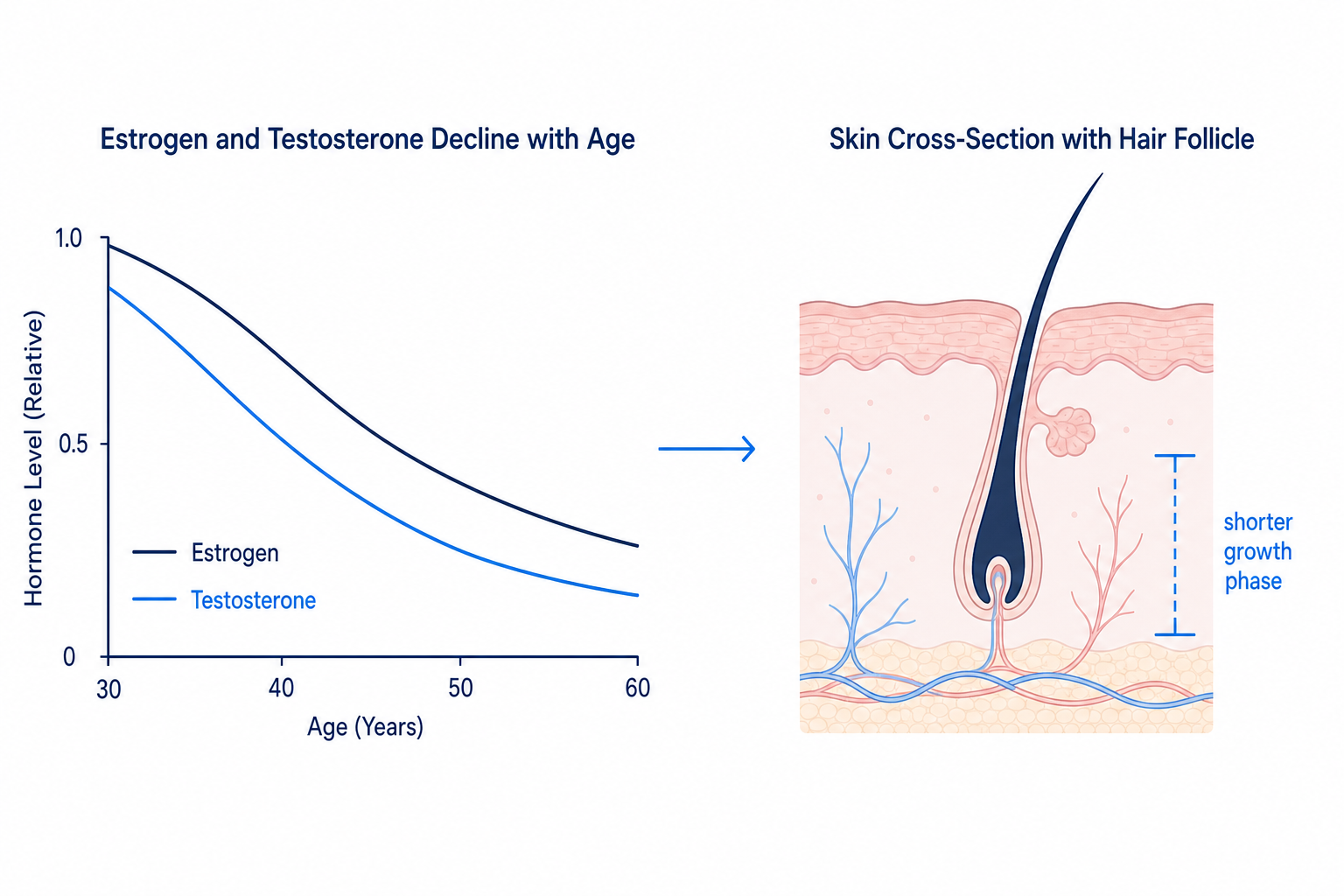
As a woman enters perimenopause and transitions into menopause, her body undergoes dramatic endocrine shifts. Ovarian function declines, causing a sharp drop in circulating estrogen levels along with a gradual, continuous decrease in ovarian and adrenal androgen production.
- Pubertal Phase:
- Rising Androgens
- Fine Vellus Hair
- Coarse Terminal Hair Growth
- Menopausal Phase:
- Declining Estrogen & Androgens
- Follicle Miniaturization
- Hair Thinning & Sparse Growth
This hormonal decline impacts the hair growth cycle in several distinct ways:
- Hair Follicle Miniaturization: Reduced androgen stimulation causes pubic hair follicles to shrink over time. Shrunken follicles produce finer, shorter, and less pigmented strands.
- Shortened Anagen (Growth) Phase: Declining hormone levels shorten the active growth phase of the hair cycle while prolonging the telogen (resting) phase. As a result, pubic hair sheds faster than it can replace itself.
- Reduced Skin Vascularity and Collagen: Estrogen plays a major role in maintaining skin thickness, hydration, and blood flow to the dermis. As estrogen levels plummet, reduced microcirculation to pubic hair follicles deprives them of essential nutrients, weakening the hair shaft.
For most women, pubic hair loss is not abrupt. It typically begins during perimenopause as subtle thinning or slower regrowth after shaving or waxing, becoming more noticeable in the years following the final menstrual period.
Is Pubic Hair Thinning Normal During Menopause?
Gradual thinning of pubic hair is a standard, expected part of the natural aging and menopausal process. Research indicates that a majority of postmenopausal women experience some degree of body hair loss, including reduction in pubic density, lighter hair color, and a change in texture from coarse to fine.
Normal Age-Related Thinning vs. Abnormal Loss
Understanding what is physiologically normal helps distinguish typical age-related shifts from clinical conditions requiring medical care:
Normal Menopausal Changes:
- Gradual decrease in pubic hair density over several years.
- Hair shafts becoming noticeably finer, softer, or brittle.
- Loss of natural pigmentation, resulting in gray, silver, or white pubic strands.
- Slower regrowth after grooming.
- Symmetrical thinning spread evenly across the mons pubis and labia majora.
Signs of Abnormal Hair Loss:
- Rapid, sudden, or patchy loss of pubic hair over a period of weeks or months.
- Complete, total disappearance of all pubic and underarm hair (madarosis/alopecia universalis).
- Associated skin changes, such as severe itching, burning, white patches, pain, or scarring on the vulvar skin.
- Simultaneous patchy hair loss on the scalp, eyebrows, or eyelashes.
- Systemic symptoms such as extreme fatigue, unexpected weight changes, or severe skin dryness.
Underneath Causes: When Pubic Hair Loss Is Not Just Menopause
While hormone reduction explains age-related hair thinning, dramatic or symptomatic pubic hair loss during postmenopause can stem from specific medical conditions. A physician or dermatologist can perform differential diagnosis to rule out non-hormonal causes.
1. Lichen Sclerosus
Vulvar lichen sclerosus is a chronic inflammatory skin condition that predominantly affects postmenopausal women. It causes the skin around the vulva and anus to become thin, white, wrinkled, and fragile. As the disease progresses, chronic scarring can destroy hair follicles, leading to localized or patchy pubic hair loss. Key symptoms include severe itching (pruritus), skin tearing during friction, dyspareunia (painful intercourse), and loss of normal vulvar architecture.
2. Frontal Fibrosing Alopecia (FFA)
Frontal Fibrosing Alopecia is a primary scarring alopecia that primarily affects postmenopausal women. While best known for causing a receding hairline at the front of the scalp and eyebrow thinning, studies published in dermatological journals note that up to 50% of women with FFA also experience significant loss of body hair, including pubic and axillary hair. FFA causes irreversible destruction of hair follicles replaced by scar tissue.
3. Thyroid Dysfunction
Both hypothyroidism (underactive thyroid) and hyperthyroidism (overactive thyroid) interrupt the body's metabolic baseline and disrupt normal hair follicle cycling. Postmenopausal women have a higher baseline incidence of autoimmune thyroiditis (Hashimoto's disease). Thyroid hormone imbalances frequently cause diffuse body hair shedding, dry skin, brittleness, and thin pubic hair alongside scalp hair loss.
4. Adrenal Insufficiency (Addison's Disease)
Because the adrenal glands produce a substantial portion of a woman's postmenopausal androgens (specifically DHEA and DHEA-S), adrenal failure can cause near-complete loss of body hair. In conditions like Addison's disease, diminished adrenal androgen production deprives androgen-dependent follicles of necessary signals, leading to marked pubic and axillary hair drop-out.
5. Alopecia Areata
Alopecia Areata is an autoimmune disease where the immune system mistakenly attacks hair follicles. While it commonly targets scalp hair, it can affect any hair-bearing area on the body. It presents as smooth, round, patchy areas of pubic hair loss without scarring or skin inflammation.
Comparing Causes of Pubic Hair Loss in Menopause
The following table summarizes the key distinctions between normal menopausal thinning and pathological causes of pubic hair loss:
| Cause / Condition | Primary Mechanism | Characteristic Symptoms | Typical Distribution | Medical Action Required |
|---|---|---|---|---|
| Normal Menopause | Age-related drop in estrogen & circulating androgens | Fine texture, slow growth, graying hair, no pain or itching | Even, symmetrical thinning across mons pubis | None; routine monitoring during wellness exams |
| Lichen Sclerosus | Autoimmune vulvar inflammation & structural scarring | Severe itching, white porcelain patches, skin fragility, scarring | Patchy loss concentrated on labia and perianal region | Prescription topical corticosteroids; specialist care |
| Frontal Fibrosing Alopecia | Autoimmune lymphocytic scarring of follicles | Loss of scalp hairline, eyebrows, smooth skin where follicles vanished | Pubic, underarm, and facial hairline involvement | Early intervention by a dermatologist to halt progression |
| Hypothyroidism | Deficient thyroid hormone disrupting hair cycles | Fatigue, weight gain, cold intolerance, dry skin, coarse hair | Diffuse thinning of scalp, body, and pubic hair | Thyroid blood panel (TSH, Free T4) & hormone therapy |
| Adrenal Insufficiency | Primary or secondary drop in adrenal DHEA/androgens | Low blood pressure, hyperpigmentation, profound exhaustion | Complete or severe loss of pubic and underarm hair | Endocrine evaluation (morning cortisol, ACTH test) |
| Alopecia Areata | Autoimmune destruction of hair follicle bulbs | Sudden drop-out leaving smooth skin, non-scarring | Discrete, round patches on pubic area or whole body | Dermatological assessment; immunomodulatory therapy |
Diagnostic Evaluation: What to Expect at the Doctor
When presenting with unusual pubic hair loss, a healthcare provider will conduct a structured evaluation to determine whether the issue is natural hormonal decline or a condition requiring treatment.
Initial Symptom Assessment
- Physical & Vulvar Examination (Check for scarring, atrophy, inflammation)
- Comprehensive Blood Panel (TSH, Free T4, DHEA-S, Testosterone, Ferritin)
- Biopsy (If lichen sclerosus or scarring alopecia is suspected)
Clinical History: Your doctor will ask about the onset speed (gradual vs. rapid), associated symptoms (itching, pain, skin color changes), medical history, medications, and family history of hair loss or autoimmune disorders.
Physical and Dermatological Examination: The provider will visually examine the vulvar and pubic region under high illumination to look for signs of skin atrophy, inflammation, scarring, loss of follicular ostia (indents where hair emerges), or white patches.
Laboratory Blood Tests:
- Thyroid Panel: Thyroid Stimulating Hormone (TSH) and Free T4 to rule out thyroid dysfunction.
- Androgen Panel: Total/Free Testosterone and DHEA-S to measure adrenal and ovarian androgen activity.
- Iron & Nutritional Status: Serum Ferritin, Vitamin D, and Vitamin B12 to check for metabolic deficiencies affecting follicle function.
Skin Biopsy: If scarring conditions such as Lichen Sclerosus or Frontal Fibrosing Alopecia are suspected, a small punch biopsy may be performed under local anesthesia to confirm tissue architecture under a microscope.
Management and Care Strategies
If your pubic hair loss is confirmed to be a typical result of menopausal changes, medical treatment is generally unnecessary unless the cosmetic or physical change causes personal distress. However, if hair loss is driven by an underlying inflammatory or endocrine issue, targeted management is crucial.
Medical and Hormonal Options
- Hormone Replacement Therapy (HRT): Systemic estrogen and progesterone replacement used for managing hot flashes and bone density can improve overall skin elasticity and microcirculation. However, systemic HRT is generally not prescribed solely to reverse pubic hair loss.
- Topical Steroids: For conditions like vulvar lichen sclerosus, high-potency topical corticosteroids (such as clobetasol propionate) are the gold-standard medical treatment. While they do not always regrow lost hair follicles, they control inflammation, prevent severe skin scarring, and stop further hair loss.
- Targeted Hormone Therapies: In rare cases where low androgen levels cause systemic symptoms, low-dose androgen therapy may be considered by an endocrinologist, though its use for isolated pubic hair loss is limited due to potential virilizing side effects (e.g., acne, unwanted facial hair growth).
Vulvar Skin Hygiene and Comfort
As estrogen declines, vulvar tissue grows thinner and drier (vulvovaginal atrophy), making the pubic region more sensitive to irritation, friction, and chafing, especially when pubic hair density decreases.
- Avoid Harsh Soaps: Wash the external genital area with plain warm water or non-soap, fragrance-free gentle cleansers. Avoid scented body washes, bubble baths, and feminine hygiene sprays.
- Use Emollients: Apply plain petrolatum, coconut oil, or fragrance-free vulvar moisturizers to protect fragile skin from friction and moisture loss.
- Wear Breathable Clothing: Choose loose-fitting, 100% cotton underwear to prevent friction and moisture buildup.
- Modify Hair Removal Habits: Avoid harsh waxing or close shaving, which can cause micro-trauma, folliculitis, or skin tears in estrogen-deficient tissue.
Frequently Asked Questions
Does pubic hair grow back after menopause?
Pubic hair loss caused purely by natural menopausal hormone decline is generally permanent, as hair follicles undergo age-related miniaturization. However, if hair loss is caused by a treatable systemic issue, such as hypothyroidism or nutritional deficiency, correcting the underlying imbalance can restore normal follicle cycling and stimulate regrowth.
Does Hormone Replacement Therapy (HRT) restore pubic hair?
Standard HRT (estrogen and progestin) improves skin hydration, collagen density, and scalp hair retention, but it rarely restores lost pubic hair to pre-menopausal levels. Because pubic hair growth depends heavily on circulating androgens rather than estrogen alone, standard HRT does not trigger significant pubic hair regrowth.
Is pubic hair loss a sign of vulvar lichen sclerosus?
Pubic hair loss can be a secondary feature of vulvar lichen sclerosus if chronic inflammation damages the skin architecture and scars the hair follicles. However, lichen sclerosus is distinctively characterized by intense itching, pain, and white, thin, crinkled skin patches. Hair loss without skin changes or discomfort is rarely due to lichen sclerosus.
Can low testosterone cause pubic hair loss in women?
Yes. Testosterone and DHEA-S stimulate pubic and underarm hair growth. As adrenal and ovarian production of these hormones decreases with age, low circulating testosterone levels contribute directly to thinning pubic hair and slower hair growth across the body.
Should I be concerned if my pubic hair turns gray or white?
No, graying or whitening of pubic hair is a completely harmless, normal aspect of aging. Melanocytes (the cells that produce hair pigment) gradually lose functionality over time, leading to color loss in pubic hair just as they do on the scalp.
Next Steps for Managing Menopausal Body Hair Changes
If you notice your pubic hair is thinning during perimenopause or postmenopause, start by assessing whether you have any accompanying symptoms:
- Monitor Your Symptoms: Note if the hair loss is gradual or sudden, and check for signs of skin redness, white patches, itching, or pain.
- Schedule a Gynecological or Dermatological Exam: Mention changes in body hair during your annual exam, especially if you experience vulvar discomfort or hair loss elsewhere on your body.
- Optimize Vulvar Care: Switch to fragrance-free cleansers, wear soft cotton clothing, and keep skin hydrated to protect thin postmenopausal skin.
Through open communication with a physician, postmenopausal women can accurately identify the cause of pubic hair loss, manage skin changes comfortably, and ensure underlying hormonal or autoimmune conditions are promptly treated.
Image Gallery