Choosing Pre-Selected vs. Pre-Approved Credit Offers: A Consumer Guide
Navigating credit offers requires understanding key legal distinctions. A pre-approved offer relies on a preliminary soft credit check and constitutes a legally regulated "firm offer of credit" under federal law. In contrast, a pre-sel...
Navigating credit offers requires understanding key legal distinctions. A pre-approved offer relies on a preliminary soft credit check and constitutes a legally regulated "firm offer of credit" under federal law. In contrast, a pre-selected offer is typically a broad promotional invitation based on demographic or marketing data, carrying lower certainty of approval and unverified terms.
Contents
Understanding the Core Definitions: Pre-Approved vs. Pre-Selected
Unsolicited mail, emails, and online portal notifications frequently inform consumers that they have been "chosen" for a new credit card, personal loan, or mortgage product. While marketing materials often use these terms interchangeably, federal regulations and financial underwriting standards establish clear differences between pre-approved and pre-selected solicitations.
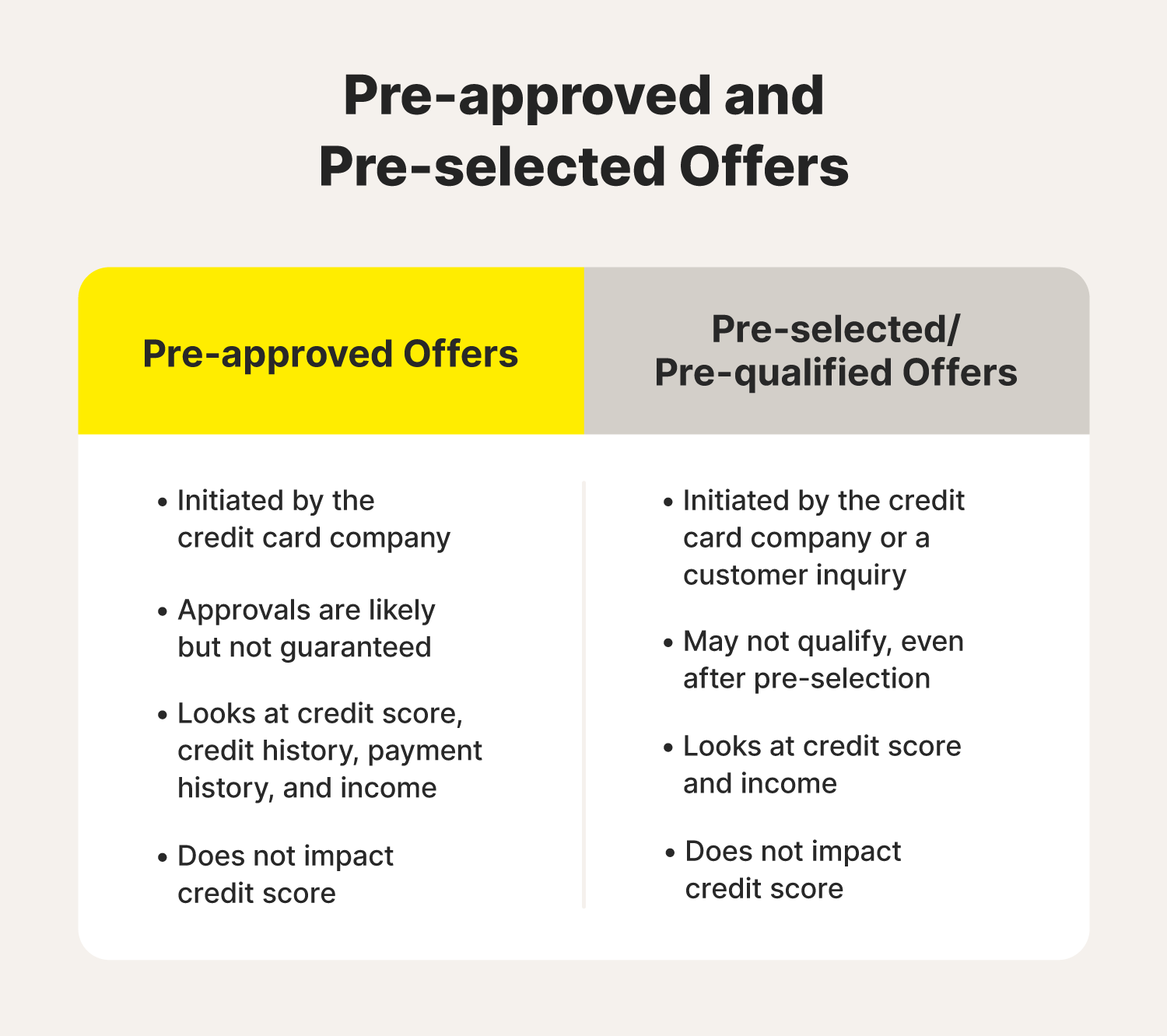
| Pre-Approved / Pre-Screened Offer | Pre-Selected / Marketing Offer |
|---|---|
| Uses Credit Bureau Data (Soft Pull) | Uses Demographic / Marketing Data |
| Regulated by FCRA (15 U.S.C. § 1681b) | No FCRA "Firm Offer" Mandate |
| Must include mandatory Opt-Out Notice | Generic "Invitation to Apply" |
| Higher approval probability | Subject to standard underwriting |
What Is a Pre-Approved Credit Offer?
A pre-approved offer (also referred to in federal statutes as a pre-screened offer) occurs when a creditor establishes specific criteria—such as a minimum credit score, clean payment history, or maximum debt-to-income ratio—and asks a major credit reporting agency (Experian, Equifax, or TransUnion) for a list of consumers who meet those exact specifications.
When the credit bureau performs this screening, it conducts a soft credit inquiry. Soft inquiries do not affect your credit scores and are not visible to third-party lenders evaluating your creditworthiness.
Because the lender obtained your consumer report under strict legal frameworks, federal law obligates them to make a firm offer of credit. This means that as long as your financial situation has not deteriorated significantly since the pre-screening list was generated, the lender must extend credit under the terms offered once you submit a formal application.
What Is a Pre-Selected Credit Offer?
A pre-selected offer is primarily a marketing device. Creditors compile mailing and targeting lists using broad consumer attributes obtained from commercial data brokers, retail purchase histories, public records, magazine subscriber databases, or basic geographic and demographic criteria.
In a pre-selected scenario, the lender has generally not pulled your official credit report from a consumer reporting agency prior to mailing the offer. The term "pre-selected" simply means your address or profile matched a audience segment target for a financial institution's advertising campaign.
Because no credit-based screening occurred under federal credit reporting laws, a pre-selected offer is merely an invitation to apply. When you respond to a pre-selected offer, your application enters the lender's standard underwriting queue from scratch, carrying no guaranteed interest rates, credit limits, or approval assurances.
Legal Framework and Rights Under the Fair Credit Reporting Act
The distinction between these two offer types is governed primarily by the Fair Credit Reporting Act (FCRA), 15 U.S.C. § 1681b(c). Understanding the legal mechanisms behind consumer solicitations helps you identify your rights and evaluate credit offers safely.
The "Firm Offer of Credit" Mandate
Under 15 U.S.C. § 1681b(c)(1)(B), a consumer reporting agency may furnish a credit report in connection with a credit or insurance transaction that is not initiated by the consumer only if the transaction consists of a "firm offer of credit or insurance."
This federal mandate creates several consumer protections:
- Mandatory Opt-Out Disclosure: Every pre-approved or pre-screened offer sent under the FCRA must include a clear and conspicuous notice detailing your right to opt out of future pre-screened lists, alongside the toll-free phone number and website address to exercise that right.
- Conditional Binding Terms: A lender cannot arbitrarily rescind a firm offer of credit once you apply. They can only deny the application if full underwriting reveals that you no longer meet the original criteria established before pre-screening, if you cannot verify your income, or if you fail to provide required collateral.
- Limited Data Disclosure: When credit bureaus provide pre-screening lists to lenders, they disclose limited information—typically only your name, address, and demographic markers—without releasing your full credit report history to the lender prior to your explicit application.
By contrast, pre-selected promotional offers fall outside these specific FCRA prescreening provisions because the lender did not access credit bureau data to build the contact list. Consequently, pre-selected mailers lack the legally mandated opt-out disclosures tied to credit bureau screening.
Key Differences: Pre-Approved vs. Pre-Selected Offers
To quickly assess what type of offer arrived in your inbox or mailbox, refer to the operational, legal, and credit-impact differences summarized below.
| Feature / Criteria | Pre-Approved / Pre-Screened Offer | Pre-Selected / Marketing Offer |
|---|---|---|
| Primary Data Source | Credit bureau records (Equifax, Experian, TransUnion) | Commercial data brokers, marketing lists, public records |
| Legal Basis | Governed by FCRA (15 U.S.C. § 1681b(c)) | Standard promotional advertising regulations |
| Legal Status of Offer | Constitutes a Firm Offer of Credit | Non-binding Invitation to Apply |
| Initial Credit Inquiry | Soft credit pull (no credit score impact) | No initial credit pull performed |
| Mandatory Disclosures | Must include long & short form FCRA opt-out notices | Standard marketing terms and disclosures |
| Approval Probability | High (subject to verification of criteria) | Uncertain (evaluated during full underwriting) |
| Final Term Certainty | High alignment with stated promotional APR/limits | Subject to significant change based on credit score |
| Impact of Formal Application | Hard credit pull required during final application | Hard credit pull required during final application |
How Each Offer Type Impacts Your Credit Profile
A common area of confusion for consumers is how receiving and responding to these offers affects credit scores calculated by models such as FICO and VantageScore.
The Initial Inquiry Stage: Soft Pulls vs. No Pulls
Receiving pre-approved solicitations does not lower your credit score. When credit bureaus process pre-screening requests for financial institutions, these transactions are recorded as soft inquiries.
Soft inquiries serve as administrative audit trails for your eyes only. They do not appear to prospective lenders when they pull your report, nor do they factor into FICO or VantageScore credit scoring algorithms.
Receiving a pre-selected marketing offer also has zero effect on your credit score, as the marketer did not access your credit bureau file to generate the mailing list.
The Application Stage: The Hard Inquiry Mandate
The moment you accept either a pre-approved or a pre-selected offer and submit a formal credit application, the lender must perform full underwriting. At this stage, the lender initiates a hard credit inquiry (or "hard pull") with one or more consumer reporting agencies.
- Pre-Approved Flow:
- Soft Pull by Lender
- Firm Offer Sent
- Consumer Applies
- Hard Pull
- High Approval Rate
- Pre-Selected Flow:
- Marketing Segment
- Invitation Sent
- Consumer Applies
- Hard Pull
- Standard Underwriting
A hard inquiry allows the lender to view your complete credit profile, including public records, detailed account payment histories, recent credit applications, and total revolving balance usage.
Key aspects of hard inquiries include:
- Temporary Score Drop: A single hard inquiry typically reduces a FICO score by fewer than five points for most consumers.
- Duration on File: Hard inquiries remain on your credit report for up to 24 months, though FICO models generally only factor them into scoring calculations for the first 12 months.
- Underwriting Verification: During full underwriting, the lender verifies details that were not visible during initial soft-pull pre-screening, such as debt-to-income ratio, current employment status, and housing costs. If your credit profile changed substantially between the pre-screening date and your application date, a pre-approved offer can still be declined.
How to Evaluate and Choose the Right Offer
When you receive a credit offer promising low APRs, balance transfer incentives, or generous cash-back rewards, follow this systematic evaluation process before sharing personal information or submitting an application.
- Receive Solicitation Mail
- Does it contain an FCRA Opt-Out Notice & legal "Firm Offer" language?
- YES: Pre-Approved Offer
- High approval probability
- Based on soft credit pull
- Validate rates, annual fees, and expiration dates.
- Submit Formal Application (Triggers Hard Credit Pull)
- NO: Pre-Selected Offer
- Invitation to apply only
- No initial credit review
- Check baseline eligibility & compare with marketplace rates
- Submit Formal Application (Triggers Hard Credit Pull)
- YES: Pre-Approved Offer
Step 1: Inspect the Offer Disclosures for FCRA Language
Look for mandatory legal text on the mailer or digital communication. Under federal law, pre-approved offers based on consumer report prescreening must display two disclosures:
- Short-Form Notice: Typically placed on the front page or main offer screen, stating that you have received the offer because you met certain credit criteria, and that you have the right to opt out of prescreened offers.
- Long-Form Notice: Placed on the back or within the fine print, providing explicit instructions on how to opt out via OptOutPrescreen.com or by calling 1-888-5-OPTOUT (1-888-567-8688).
If the mailer lacks this standardized opt-out statement and uses phrases like "Invitation to Apply," "You're Invited to Request an Account," or "Notice of Eligibility," it is a pre-selected marketing offer, not an FCRA pre-approved firm offer of credit.
Step 2: Compare Terms, APR Structures, and Fees
Evaluate the offered terms against competitive products available across the broader financial marketplace:
- Annual Percentage Rate (APR): Check whether the advertised APR is fixed or variable, and whether it applies equally to purchases, balance transfers, and cash advances. Look for tiered rates (e.g., 15.99%, 21.99%, or 28.99%) and note that final rate assignment often depends on full credit underwriting.
- Promotional Introductory Periods: If an offer features a 0% introductory APR on balance transfers or purchases, note the exact duration (e.g., 12, 15, or 21 months) and the standard variable APR that takes effect after the promotional window closes.
- Fee Structures: Identify annual fees, balance transfer fees (typically 3% to 5% of the transferred amount), foreign transaction fees, and late payment penalties.
Step 3: Assess Your Current Credit Standing
Before responding to any offer, check your credit reports directly. You can access free weekly credit reports from all three national credit reporting agencies through AnnualCreditReport.com, an official platform authorized under federal law.
- If your credit score has dropped since a pre-approved list was compiled (due to missed payments, increased credit utilization, or new debt), the lender may revoke the firm offer or assign less favorable terms during final underwriting.
- If you are considering a pre-selected offer, evaluate whether your current credit score falls within the typical approval range for that credit tier. Submitting an application without meeting the lender's implicit credit score expectations risks incurring a hard inquiry without securing approval.
Step 4: Choose the Path Matching Your Goal
- Choose a Pre-Approved Offer if you need high confidence of approval for an upcoming financial goal (such as consolidating existing credit card debt via a balance transfer) and the offered terms match or beat competitive marketplace options.
- Choose a Pre-Selected Offer only after conducting market research to confirm that the underlying product offers competitive rewards, interest rates, or signing bonuses compared to publicly available cards. Treat pre-selected offers with the same skepticism you would apply to standard advertising campaigns.
Managing Unsolicited Offers and Protecting Credit Privacy
Receiving frequent credit solicitations presents both financial clutter and security risks, such as mail theft or unauthorized account opening. Federal law provides mechanisms to control how your credit data is used for marketing purposes.
Opting Out of Pre-Approved Credit Solicitations
Consumers can opt out of receiving prescreened, pre-approved credit and insurance offers derived from consumer reporting agency files.
The credit reporting industry operates a central, legally recognized opt-out processing system governed by the major credit bureaus:
- Website: OptOutPrescreen.com
- Toll-Free Phone: 1-888-5-OPTOUT (1-888-567-8688)
When submitting an opt-out request, consumers can choose between two duration options:
- Five-Year Opt-Out: Completed electronically online or over the telephone.
- Permanent Opt-Out: Initiated online but requiring a signed physical Permanent Opt-Out Election form returned by mail.
Opting out stops credit bureaus from providing your credit file details for prescreened offer lists. It does not prevent financial institutions with whom you have an existing business relationship from sending marketing materials, nor does it block pre-selected marketing offers compiled from non-credit-bureau public databases.
Protecting Against Mail Fraud and Identity Theft
Physical credit offers stolen from residential mailboxes can be exploited by identity thieves to open fraudulent accounts. To safeguard your financial profile:
- Shred Solicitations: Destroy pre-approved and pre-selected physical mail containing pre-filled personal information before disposal.
- Place a Credit Freeze: If you do not plan to apply for new credit lines in the near future, consider placing a security freeze on your credit reports directly with Equifax, Experian, and TransUnion. Under federal law, placing and lifting credit freezes is entirely free. A security freeze prevents prospective lenders from accessing your credit report to open new accounts, providing robust protection against identity theft.
Frequently Asked Questions
Does accepting a pre-approved offer guarantee 100% approval?
No. While approval rates for pre-approved offers are high, approval is not guaranteed. Under the Fair Credit Reporting Act, a lender can deny credit if full underwriting reveals that you no longer meet the original criteria used during pre-screening, if your income cannot verify debt service obligations, or if you have incurred major negative credit events since the prescreening list was generated.
Will applying for a pre-selected credit card hurt my credit score?
The pre-selected solicitation itself will not impact your credit score. However, when you complete and submit the actual application, the creditor performs a hard inquiry on your credit report. This hard inquiry typically reduces your credit score by a few points temporarily.
Why do I receive pre-approved offers for credit cards I don't want?
Credit card issuers regularly purchase prescreened list criteria from consumer reporting agencies to acquire new cardholders. If your credit profile matches basic parameters (such as maintaining a credit score above a certain threshold), your name and address are included on mailing lists distributed to lenders.
What is the main difference between pre-qualified and pre-approved?
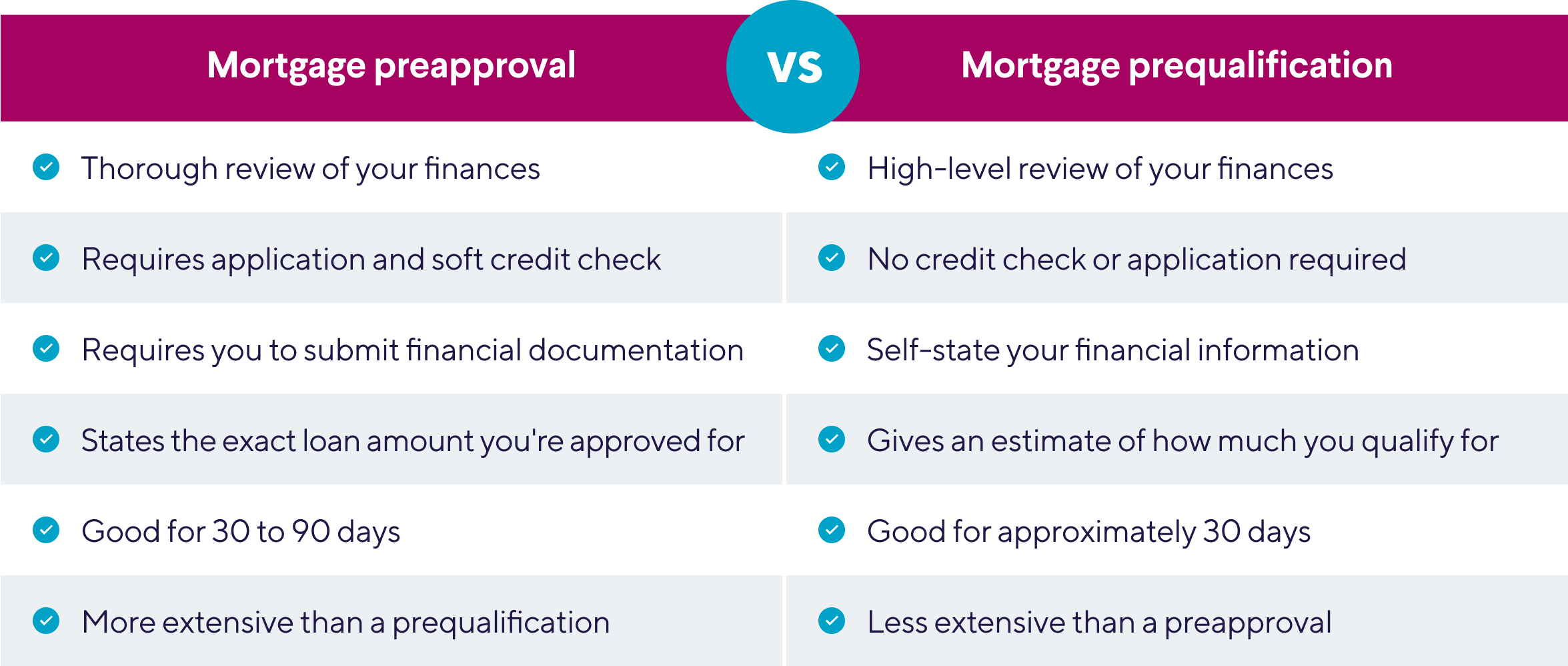
In consumer credit, terms are sometimes used fluidly by marketers, but legally: pre-approval/pre-screening under the FCRA involves credit bureau data pulls and requires a firm offer of credit. Pre-qualification often relies on self-reported financial data supplied by the consumer on a lender's website, providing an estimate of borrowing capacity without creating a legally binding firm offer.
How long does it take for an OptOutPrescreen request to take effect?
Under federal regulations, credit reporting agencies must process your opt-out request within five business days. However, because financial institutions prepare consumer mailing campaigns weeks or months in advance, you may continue to receive prescreened mailers for up to 60 days following your submission.
Summary and Recommended Next Actions
Disambiguating pre-approved and pre-selected credit offers helps you avoid unexpected credit denials and unnecessary hard credit inquiries.
- Check for FCRA Disclosures: Prioritize pre-approved offers that feature mandatory opt-out disclosures over pre-selected marketing mailers when seeking high approval odds.
- Compare Marketplace Rates: Never accept an offer based solely on marketing claims. Compare the offer's APR, annual fees, and balance transfer costs against top market competitors using independent comparison tools.
- Review Your Credit Profile: Verify your credit reports at AnnualCreditReport.com prior to applying to ensure your score and debt levels align with the lender's underwriting standards.
- Control Solicitations: Visit OptOutPrescreen.com to stop receiving prescreened credit mailers if you prefer to reduce mail clutter and manage identity theft risks.
Image Gallery