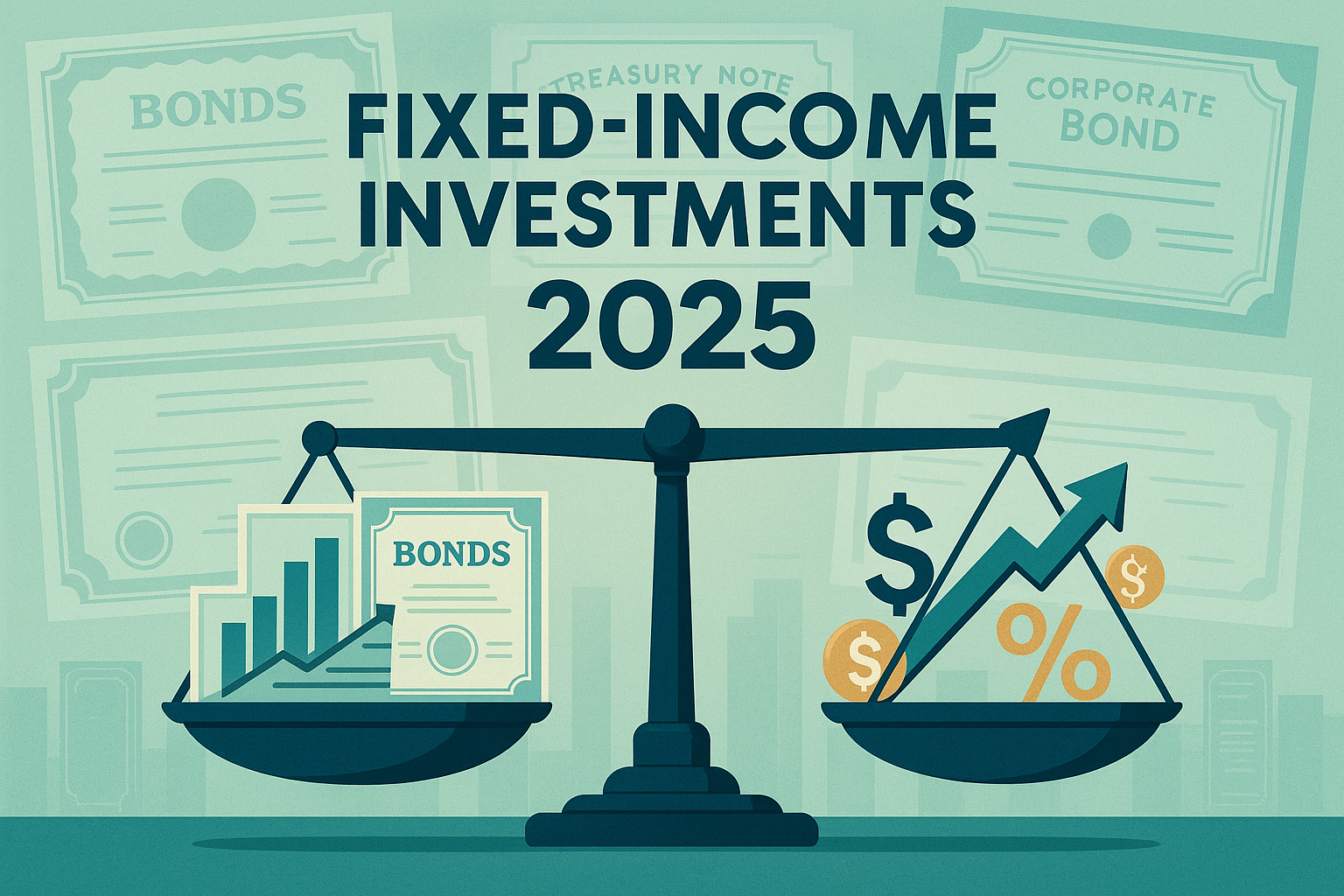
Fixed Income Investment Types: A 2026 Guide to Strategies and Considerations
Fixed income investments are debt instruments issued by governments, municipalities, or corporations that pay investors a set rate of interest until a predetermined maturity date. These assets provide predictable cash flow and capital...
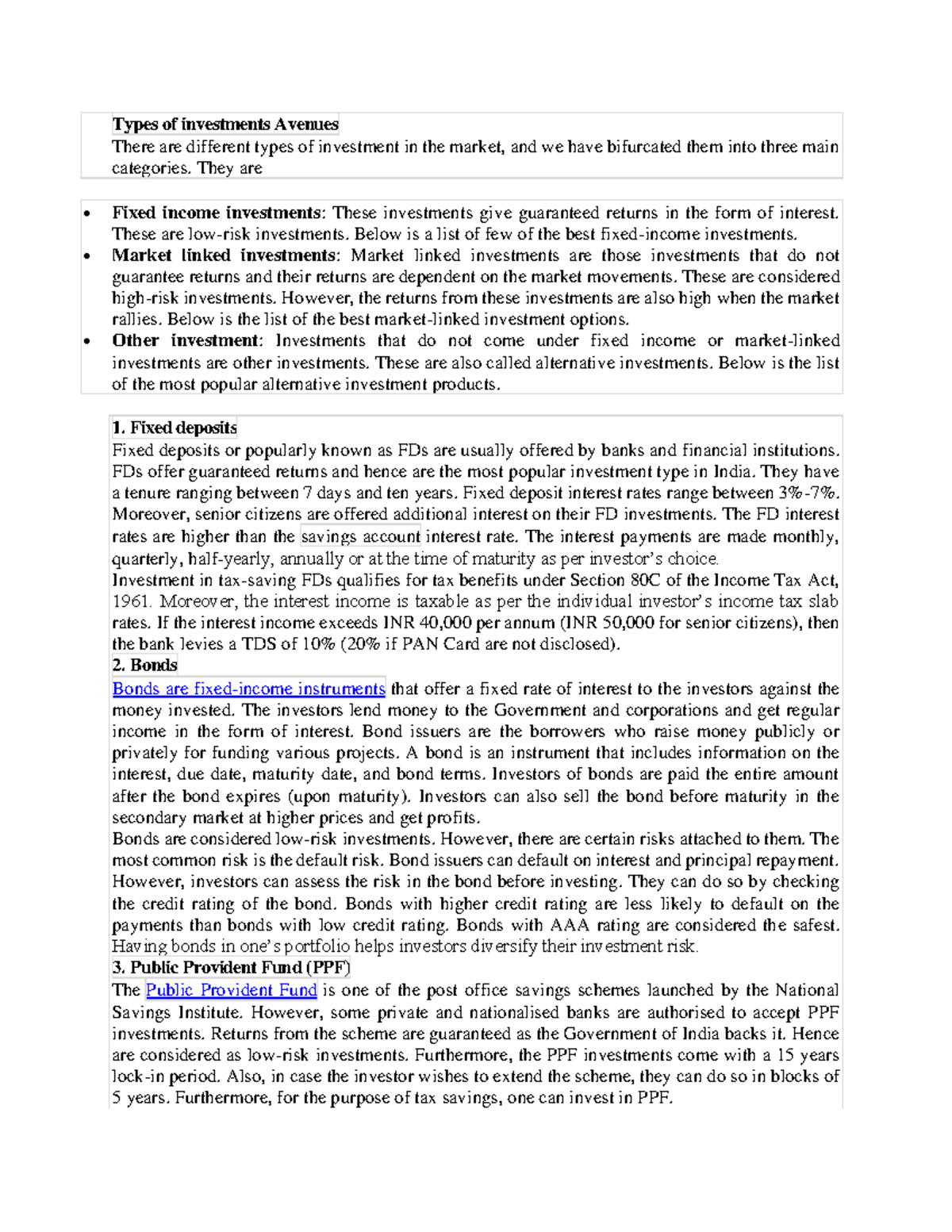
Fixed income investments are debt instruments issued by governments, municipalities, or corporations that pay investors a set rate of interest until a predetermined maturity date. These assets provide predictable cash flow and capital preservation, making them essential components of a diversified portfolio aimed at balancing the volatility of equity markets.
Contents
The global financial landscape of 2026 has transitioned into a "higher-for-longer" interest rate environment compared to the previous decade. For investors, this shift has revitalized the fixed income sector, transforming it from a mere hedging tool into a primary driver of portfolio returns. Whether you are an individual seeking retirement income or an institutional treasurer managing liquidity, understanding the nuances of various debt instruments is critical for optimizing risk-adjusted returns.
Understanding the Core Mechanism of Fixed Income
At its fundamental level, a fixed income security is a loan made by an investor to a borrower. In exchange for this capital, the borrower agrees to pay a specific interest rate—the coupon—at regular intervals. Upon the bond's maturity, the borrower returns the original principal, or par value, to the investor.
Unlike stocks, which represent ownership and offer no guarantee of return, fixed income provides a contractual obligation for payment. This seniority in the capital structure means that in the event of a liquidation, bondholders are generally paid before stockholders. However, this safety comes with a trade-off: fixed income typically offers lower long-term growth potential than equities.
Primary Types of Fixed Income Investments
The fixed income market is vast, categorized primarily by the type of issuer and the underlying security of the debt.
1. Sovereign and Government Debt
Government bonds are issued by national governments to fund public spending and manage national debt. In 2026, these remain the benchmark for "risk-free" rates in their respective currencies.
- U.S. Treasury Securities: These are backed by the "full faith and credit" of the U.S. government. They include Treasury Bills (T-Bills) with maturities under one year, Treasury Notes (2–10 years), and Treasury Bonds (20–30 years).
- Treasury Inflation-Protected Securities (TIPS): These are specifically designed to protect purchasing power. The principal of a TIPS bond increases with inflation (measured by the Consumer Price Index) and decreases with deflation.
- Foreign Sovereign Bonds: For investors seeking currency diversification, bonds issued by governments like Germany (Bunds) or the UK (Gilts) provide exposure to different interest rate cycles.
2. Corporate Bonds
Corporations issue debt to finance operations, expansions, or acquisitions. These are generally divided into two tiers based on their credit quality:
- Investment-Grade Bonds: Issued by financially stable companies with high credit ratings (AAA to BBB-). These offer lower yields but higher security.
- High-Yield Bonds (Junk Bonds): Issued by companies with lower credit ratings (BB+ and below). To attract investors, these issuers must offer significantly higher interest rates to compensate for the increased risk of default. In 2026, the spread between investment-grade and high-yield bonds remains a key indicator of economic health.
3. Municipal Bonds ("Munis")
Issued by states, cities, or counties to fund public projects like schools, highways, and water systems. The primary draw of municipal bonds is their tax-exempt status. In the United States, interest income is typically exempt from federal income tax and, in many cases, state and local taxes if the investor resides in the issuing municipality.
- General Obligation (GO) Bonds: Backed by the taxing power of the issuer.
- Revenue Bonds: Backed by the income generated by the specific project the bond funded (e.g., tolls from a bridge).
4. Asset-Backed and Mortgage-Backed Securities (ABS/MBS)
These are pools of individual loans—such as mortgages, auto loans, or credit card debt—bundled together and sold as a single security. Mortgage-Backed Securities, particularly those issued by government-sponsored enterprises like Fannie Mae or Freddie Mac, offer yields slightly higher than Treasuries with relatively low credit risk, though they carry unique "prepayment risk" if homeowners refinance their loans.
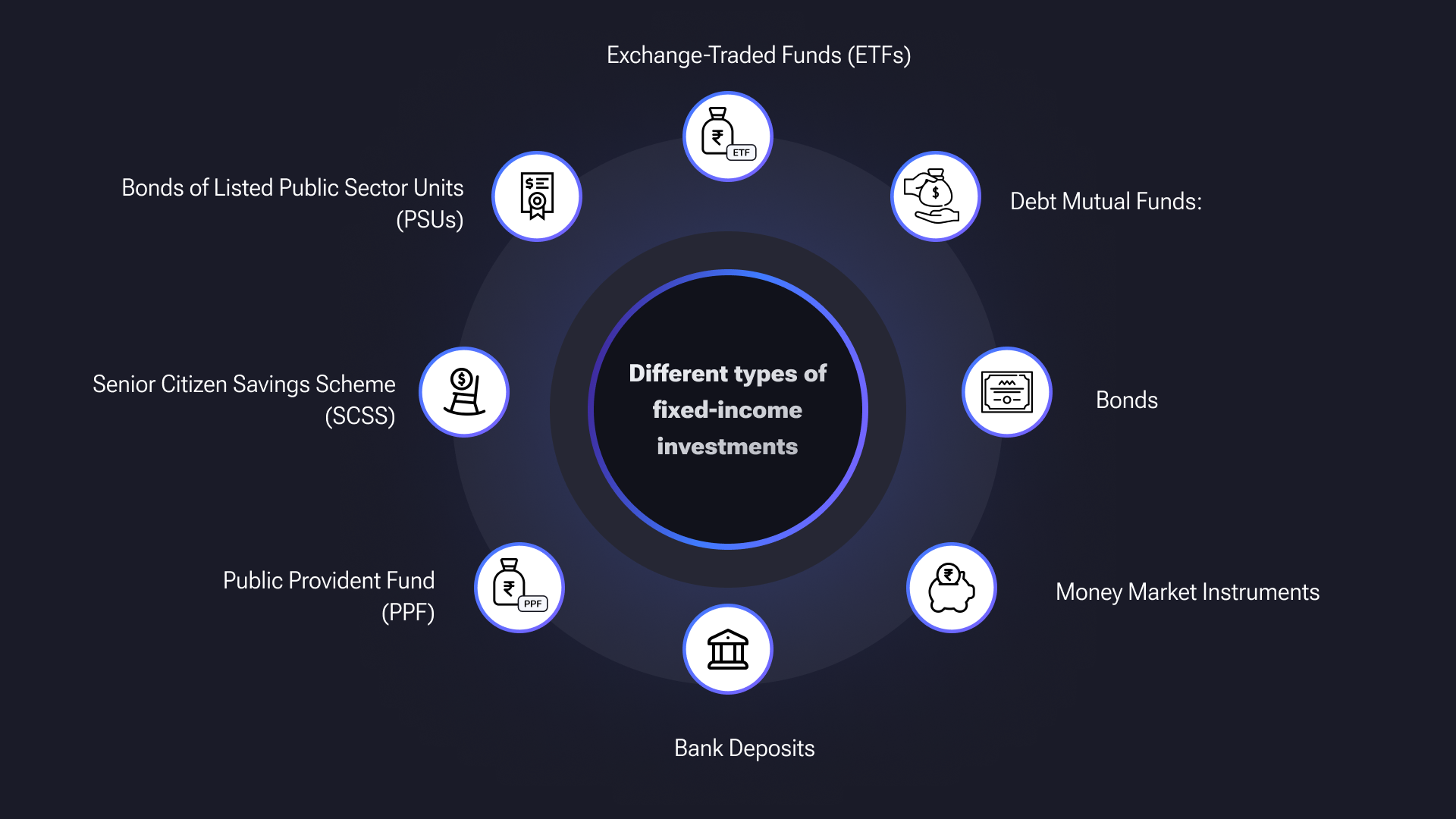
5. Certificates of Deposit (CDs) and Money Market Funds
For short-term needs, these cash-equivalent fixed income types provide high liquidity. As of 2026, high-yield CDs have become competitive again, offering fixed rates for terms ranging from three months to five years, often with FDIC insurance up to $250,000.
Key Considerations for Fixed Income Investors
Investing in bonds requires a shift in mindset from growth to "yield and protection." Several technical factors dictate how these assets perform in a live portfolio.
Interest Rate Risk and Duration
There is an inverse relationship between bond prices and interest rates. When market interest rates rise, existing bonds with lower coupons become less attractive, and their market price falls.
Duration is the technical measurement used to quantify this risk. It expresses the sensitivity of a bond's price to a 1% change in interest rates. For example, a bond with a duration of 7 years will lose approximately 7% of its value if interest rates rise by 1%. In the 2026 environment, managing duration is the most critical task for protecting principal.
Credit Risk and Default
Credit risk is the possibility that the issuer will be unable to make interest payments or return the principal. Investors should rely on credit rating agencies such as Standard & Poor’s or Moody’s to assess an issuer's financial health. A "downgrade" in credit rating can cause the bond's price to drop instantly, even if a default has not yet occurred.
Inflation Risk
Inflation is the silent predator of fixed income. Because bonds pay a fixed amount, if the cost of living rises by 4% while your bond pays 3%, you are losing 1% in real purchasing power every year. This is why TIPS and other floating-rate notes are often used as hedges within a broader fixed income strategy.
Reinvestment Risk
This is the risk that when a bond matures, the investor will be forced to reinvest the principal at a lower interest rate than the original bond. This is common in a "falling rate" environment. To mitigate this, many investors use a bond laddering strategy, which involves buying bonds that mature at staggered intervals.
Comparing Fixed Income Asset Classes
The following table summarizes the primary characteristics of the major fixed income types available in 2026.
| Investment Type | Risk Level | Primary Benefit | Tax Treatment | Liquidity |
|---|---|---|---|---|
| U.S. Treasuries | Lowest | Maximum Safety | Federal Taxable; State Exempt | Very High |
| Municipal Bonds | Low to Moderate | Tax-Free Income | Often Triple-Tax Exempt | Moderate |
| Investment-Grade Corp | Moderate | Higher Yield than Govs | Fully Taxable | High |
| High-Yield (Junk) Bonds | High | Maximum Yield Potential | Fully Taxable | Moderate to Low |
| MBS (Mortgage-Backed) | Moderate | Monthly Cash Flow | Fully Taxable | High |
| CDs | Lowest | Capital Preservation | Fully Taxable | Low (Early Exit Penalty) |
Strategic Implementation: Individual Bonds vs. Funds
Investors must decide whether to purchase individual bonds or use pooled vehicles like Mutual Funds and Exchange-Traded Funds (ETFs).
- Individual Bonds: Buying an individual bond allows you to know exactly when you will get your money back (at maturity). This eliminates market price risk if you hold the bond to the end. However, it requires a larger capital outlay to achieve diversification.
- Bond ETFs/Funds: These provide instant diversification across hundreds of issuers for a small management fee. They are highly liquid and can be traded throughout the day. The downside is that they do not have a "maturity date," meaning your principal value will fluctuate indefinitely based on market interest rates.
For most retail investors in 2026, a "core-satellite" approach is recommended: using a low-cost total bond market ETF for the core of the portfolio, and individual Treasuries or Munis for specific future cash flow needs (such as college tuition or a home down payment).
Frequently Asked Questions
What happens to my fixed income if the issuer goes bankrupt?
In a corporate bankruptcy, bondholders are "creditors." You are higher in the priority list than stockholders but lower than some "secured" creditors (like banks with liens on specific assets). You may receive a "recovery value"—a percentage of your original investment—or new shares in the reorganized company. Government bonds are generally considered to have no default risk in developed markets, though this is not true for all emerging market debt.
How do I calculate the "Yield to Maturity" (YTM)?
Yield to Maturity is more comprehensive than the coupon rate. It accounts for the current market price, the coupon payments, and the difference between the price you paid and the par value you receive at the end. If you buy a bond at a "discount" (less than $1,000 par), your YTM will be higher than the coupon rate. Most brokerage platforms provide the YTM automatically before you execute a trade.
Are international bonds worth the risk in 2026?
International bonds offer diversification and exposure to different economic cycles. However, they introduce currency risk. If the foreign currency weakens against your home currency, your returns could be wiped out even if the bond itself performs well. Many investors prefer "currency-hedged" international bond funds to mitigate this specific volatility.
Why would someone buy a bond with a negative real yield?
A "real yield" is the nominal interest rate minus the inflation rate. Investors might buy these during extreme market panics as a flight to safety, or if they expect significant deflation, which would make the fixed payments more valuable over time. In 2026, this is less common than in the early 2020s, but it remains a possibility in certain European or Asian markets.
Practical Recommendation for 2026
As you evaluate your fixed income needs for the current year, the first step is to define your liquidity timeline. Funds needed within the next 12 months should remain in ultra-short-term instruments like Treasury Bills or Money Market Funds to avoid price volatility. For long-term capital, consider a diversified mix of investment-grade corporate bonds and municipal debt to maximize after-tax yield.
Always consult with a financial advisor to ensure your fixed income allocation aligns with your specific tax bracket and overall risk tolerance. For more detailed data on current rates, visit the official U.S. Department of the Treasury website for daily yield curve updates.
Image Gallery