How to Use a Coping Skills Kids PDF: A Guide for Parents and Educators
Using a coping skills kids PDF involves selecting age-appropriate activities, printing visual aids, and introducing emotional regulation tools during calm moments rather than during active meltdowns. Parents, teachers, and therapists c...
Using a coping skills kids PDF involves selecting age-appropriate activities, printing visual aids, and introducing emotional regulation tools during calm moments rather than during active meltdowns. Parents, teachers, and therapists can guide children through five core coping categories—sensory, deep breathing, physical movement, processing, and distraction—to help them identify triggers, choose strategies, and build long-term emotional resilience.
Contents
Disclaimer: Printable coping tools and educational worksheets support social-emotional development and self-regulation. They are not a substitute for professional mental health evaluation, counseling, or clinical therapy.
Understanding Coping Skills PDFs for Children
A coping skills kids PDF is a printable digital resource designed to help children identify, understand, and manage difficult emotions such as anger, anxiety, frustration, and sadness. These resources typically take the form of visual coping wheels, daily mood trackers, deep-breathing cue cards, emotion identification charts, and step-by-step calming worksheets.
Child development specialists and pediatric occupational therapists frequently utilize printable PDFs because physical, visual materials make abstract psychological concepts concrete. Children, particularly those under the age of twelve, often lack the verbal vocabulary required to express internal distress. A visual PDF bridge allows them to point to an emotion or select a pre-identified physical action when words feel inaccessible.
The Psychological Framework Behind Coping Tools
Most printable coping resources draw from evidence-based therapeutic frameworks:
Cognitive Behavioral Therapy (CBT): Helps children connect their thoughts, physical feelings, and subsequent behaviors. CBT-focused worksheets guide children to challenge negative thought loops.
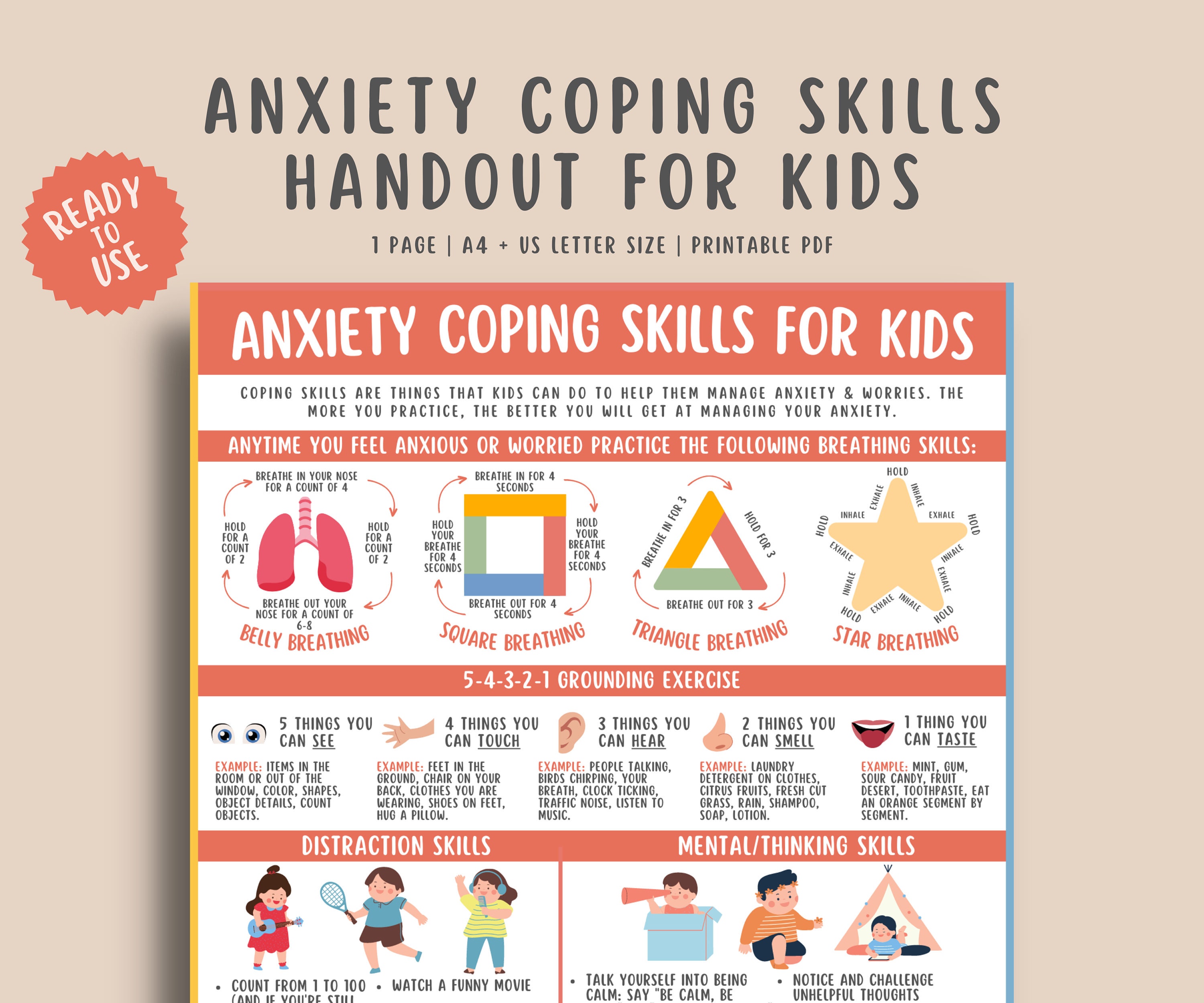
Dialectical Behavior Therapy (DBT) Skills: Focuses on distress tolerance and mindfulness. Printable groundings (such as the 5-4-3-2-1 sensory technique) help pull a child out of emotional overwhelm.
Sensory Processing Support: Incorporates proprioceptive and tactile strategies—such as heavy work or muscle relaxation exercises—to regulate the central nervous system.
The Brain in Distress
- Emotional Trigger
- Amygdala Hijack (Flight/Fight)
- Cannot Process Text/Lecture
- Logical Thinking Offline
The Visual PDF Solution
- Pre-Practiced Visual PDF
- Simple Body/Mind Action
- Nervous System Calms
- Prefrontal Cortex Online
Understanding this neurological progression explains why handing a complex text worksheet to an escalating child fails. The goal of a coping PDF is pre-building a accessible menu of actions before distress occurs.
Step-by-Step Preparation: Setting Up Your Coping PDF Tools
To maximize the effectiveness of any printable coping resource, adult preparation is essential. Downloading and printing the file is only the initial step; how you organize and position the physical document dictates whether a child will engage with it.
Step 1: Filter and Select Age-Appropriate Pages
Printable coping skill bundles often range from 5 to 50 pages. Do not hand an entire printed packet to a child. Filter the document based on developmental readiness:
- Preschool & Kindergarten (Ages 3–5): Select pages with large illustrations, color-coded emotion faces, and minimal text. Focus on basic physical actions (e.g., "Blow out the birthday candle" breathing).
- Early Elementary (Ages 6–8): Choose visual checklists, simple coping wheels, and guided breathing mazes.
- Late Elementary & Middle School (Ages 9–12): Utilize reflection journals, scaled distress thermometers (rating anger from 1 to 10), and written problem-solving prompts.
Step 2: Prepare Durable Physical Formats
Paper worksheets can easily tear or get misplaced during emotional episodes. Transform temporary printouts into permanent regulation tools:
- Laminate Key Visuals: Laminate single-page coping wheels or emotion charts so children can use dry-erase markers to circle feelings or mark off completed skills.
- Create a Calm-Down Binder: Place worksheets inside clear plastic sheet protectors in a dedicated three-ring binder.
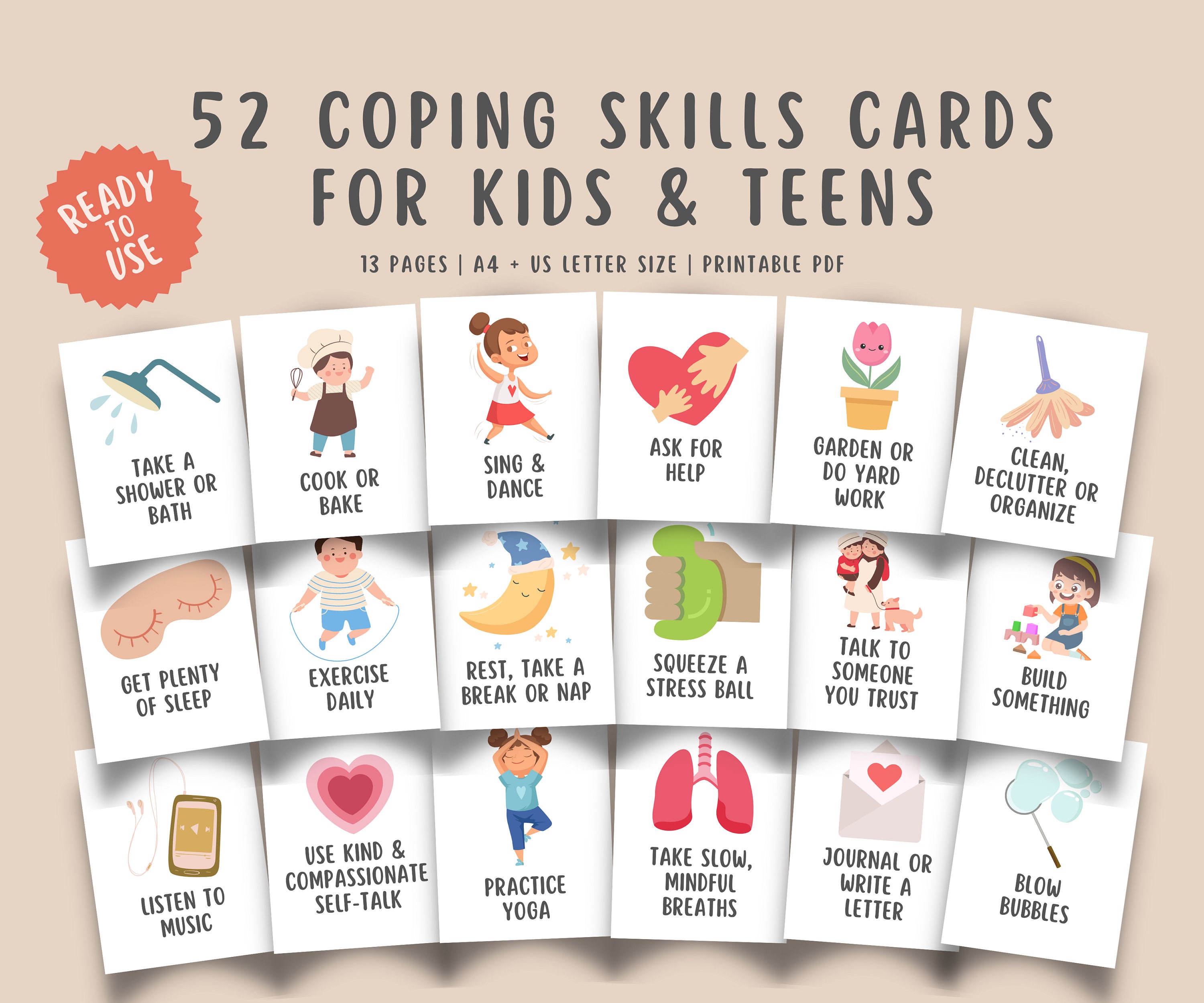
- Cut Out Coping Cards: If the PDF includes printable skill cards, cut them out, punch a hole in the corner, and secure them on a binder ring for portable access in backpacks or car seats.
Step 3: Establish a Designated "Calming Zone"
Position the printed tools where emotional regulation naturally occurs. Create a calm-down corner (also known as a quiet space or peace corner) in the home or classroom equipped with:
- The laminated coping skills PDF placed at eye level.
- Sensory items (fidgets, weighted blankets, stress balls).
- Comfortable seating (beanbag chair or floor cushion).
Teaching the Five Core Coping Categories
Effective coping skill PDFs divide strategies into distinct categories based on sensory and psychological needs. When guiding a child through a printable menu, introduce strategies across all five major categories so they develop a versatile toolkit.
5 Core Coping Categories:
- Deep Breathing
- Physical Movement
- Sensory Grounding
- Processing & Cognitive
- Creative Distraction
1. Deep Breathing & Somatic Regulation
Breathing worksheets use visual paths to guide respiration rate. For example, a "Lazy 8 Breathing" or "Square Breathing" PDF page requires the child to trace their finger along a printed line while inhaling, holding, and exhaling. Tracing physically slows the heart rate and provides visual and tactile focus simultaneously.
2. Physical & Movement Strategies
High-energy emotions like frustration and rage generate excess adrenaline. Worksheets covering physical coping skills prompt children to perform heavy-work activities. Common PDF prompts include wall push-ups, squeezing a ball, taking a brisk walk, stretching like a star, or stomping out tension.
3. Sensory & Grounding Techniques
Sensory coping pages encourage children to reconnect with their physical environment when feeling disassociated or anxious. The most common tool is the 5-4-3-2-1 Grounding Worksheet, which prompts the child to notice:
- 5 things they can see
- 4 things they can physically feel
- 3 things they can hear
- 2 things they can smell
- 1 thing they can taste
4. Processing & Cognitive Reflection
Designed for use after acute distress subsides, processing worksheets help children analyze what happened. Prompts guide them to answer: What triggered me? Where did I feel it in my body? What choice did I make? What can I try next time?
5. Creative Distraction
Distraction tools break obsessive thought loops during mild anxiety. PDF activities include mindfulness coloring pages, maze completions, spot-the-difference visual puzzles, and printable dot-to-dot sheets.
Implementation Framework: Pre-Teaching, Cueing, and Reflection
The primary reason printable coping materials fail in practice is poor timing. Adults often present a new PDF worksheet when a child is already in a full fight-or-flight state. When a child's brain is flooded with stress hormones, the prefrontal cortex—the center for reading, logic, and planning—temporarily shuts down.
Follow this three-phase framework to introduce and implement coping PDFs successfully.
Three-Phase Implementation:
- GREEN ZONE (Calm State)
- Print, laminate, and role-play strategies.
- Establish base line vocabulary and familiarization.
- YELLOW ZONE (Early Warning Signs)
- Non-verbal pointing to the visual PDF chart.
- Offer a choice between 2 pre-practiced tools.
- RED ZONE (Full Escalation)
- NO WORKSHEETS OR TALKING. Focus entirely on safety and co-regulation.
- RETURN TO GREEN ZONE (Post-Calm)
- Complete reflection sheets and review what worked.
Phase 1: Pre-Teaching in the "Green Zone" (Calm State)
Introduce the PDF when the child is rested, happy, and calm.
- Sit down together and review the printable sheets like a game or menu.
- Practice each skill physically. If the PDF features a "Dragon Breathing" page, practice roaring and breathing out together.
- Have the child select their top 3 to 5 preferred strategies and highlight or star them on their personal printout.
Phase 2: Cueing in the "Yellow Zone" (Early Escalation)
Watch for early signs of distress, such as clenched fists, whining, muscle tension, or pacing.
- Avoid lengthy verbal lectures. Instead, walk over to the laminated coping PDF, point to the visual choices, and say calmly: * "I notice your body looks tight. Let's pick one tool from your chart."*
- Offer a constrained choice: * "Do you want to trace the breathing star or squeeze the stress ball first?"*
Phase 3: Post-Calm Reflection in the "Green Zone"
Never force a child to complete a written reflection during an active meltdown. Wait 20 to 30 minutes after the child has fully regulated. Once calm, bring out the reflection worksheet to talk through the event neutrally, focusing on self-discovery rather than shame or punishment.
Strategy Comparison Matrix
The table below outlines how to match specific PDF worksheets and visual tools to child behaviors and target age groups.
| Emotion / Trigger | Best PDF Tool Format | Core Strategy Focus | Ideal Age Range | Primary Objective |
|---|---|---|---|---|
| Acute Anger / Tantrums | Visual Choice Board / Coping Wheel | Heavy work, wall pushes, deep breathing | Ages 3–8 | Release excess physical adrenaline safely |
| Generalized Anxiety | 5-4-3-2-1 Grounding Sheet | Sensory awareness & environment scanning | Ages 6–12 | Shift focus away from internal anxious loops |
| Overwhelm / Sensory Overload | Minimalist Breathing Mazes (Lazy 8) | Tactile finger tracing & rhythmic respiration | Ages 4–10 | Slow down heart rate and lower nervous arousal |
| Frustration with Academic Work | Break Tracker / Choice Checklist | Timed distraction & micro-task breakdown | Ages 7–12 | Prevent avoidance while allowing structured rest |
| Sadness / Social Conflict | Emotion Reflection Journal Prompt | CBT thought-identifying & emotion labeling | Ages 8–12+ | Develop emotional vocabulary and perspective |
Common Mistakes to Avoid
Even high-quality, clinical-grade coping PDFs will prove ineffective if implemented incorrectly. Avoid these four common operational errors:
1. Using PDF Worksheets as Punishments
If a child breaks a rule during anger, directing them to "Go sit down and complete your coping packet" turns self-regulation into a penalty. Coping skills are supportive strategies, not punitive consequences. Keep skill practice distinct from discipline.
2. Overwhelming the Child with Choices
Handing a child a poster listing 50 coping skills creates decision fatigue. When distressed, a child cannot evaluate dozens of options. Limit your active printed choice board to 3–6 pre-selected options that the child has already mastered.
3. Expecting Instant Independence
A printable PDF is a reference tool, not an automated supervisor. Young children require co-regulation—an adult modeling the breathing exercise or doing the wall push-ups alongside them—before they can achieve self-regulation.
4. Ignoring Sensory Preferences
Not all coping strategies work for all children. An anxious child with low muscle tone may find heavy push-ups exhausting, while an hyperactive child may find quiet meditation infuriating. Use the PDF as an experimental menu; discard strategies that elevate stress and retain those that restore calm.
Frequently Asked Questions
What is the ideal age to start using a coping skills kids PDF?
Children as young as 3 years old can use simple visual coping PDFs that feature large illustrations, color-coded emotion faces, and physical actions. As children reach ages 6 to 12, adults can introduce text-based worksheets, cognitive reflection sheets, and structured distress trackers.
Can coping skill PDFs be used for children with ADHD or Autism (AUDHD)?
Yes. Visual schedules, clear choices, and tangible cue sheets are effective for neurodivergent children who experience executive function challenges or sensory processing differences. For children with Autism or ADHD, focus heavily on sensory and movement-based PDF strategies rather than abstract cognitive journal prompts.
How do I get my child interested in using the PDF worksheets?
Involve the child directly in the setup process. Let them select which pages to print, color the visual cards, laminate the sheets, or choose where to hang the posters. Gamifying the practice during calm moments—such as trying one new "coping skill of the day"—builds familiarity without pressure.
What should I do if my child refuses to look at the PDF when upset?
Do not force visual engagement during severe distress. Step back, maintain safety, and model the coping strategy yourself using the PDF visually within their line of sight. Seeing an adult trace a breathing maze while remaining calm provides passive co-regulation.
Are printable coping skills PDFs suitable for classroom settings?
Yes. Teachers frequently laminate coping PDFs to build "Quiet Corners" or place small visual skill rings on student desks. They serve as non-verbal communication tools, allowing students to signal when they need a break or a sensory tool without interrupting classroom instruction.
Next Steps for Parents and Educators
To successfully integrate a coping skills kids PDF into your daily routine, start small rather than attempting a complete behavioral overhaul:
- Audit Your Resource: Review your downloaded PDF bundle and select 2 to 3 pages maximum that address your child's current primary challenge (e.g., anger outbursts or nighttime anxiety).
- Print and Protect: Print double-sided copies on heavy cardstock or place the pages inside clear plastic sleeves inside a flexible binder.
- Schedule a Calm Practice Session: Set aside 10 minutes during a low-stress period (such as after breakfast or post-school snack time) to introduce the visual layout and practice the physical actions together.
- Evaluate and Rotate: After two weeks of practice, review which strategies effectively restored calm and replace unused PDF pages with new techniques from your digital file.
Image Gallery