Victoria Starmer: Biography, Career, and Life in Her Early Fifties
As of 2026, Victoria Starmer is in her early fifties, having been born in 1973. She continues to balance her professional career within the National Health Service (NHS) with the public-facing responsibilities associated with being the...
As of 2026, Victoria Starmer is in her early fifties, having been born in 1973. She continues to balance her professional career within the National Health Service (NHS) with the public-facing responsibilities associated with being the spouse of the British Prime Minister, Sir Keir Starmer. Her life is characterized by a commitment to privacy, her Jewish heritage, and a long-standing career in occupational health.
Contents
The Formative Years and Educational Background
Victoria Starmer, née Alexander, was born in 1973 and raised in the affluent yet community-focused neighborhood of Gospel Oak, North London. Her upbringing was rooted in a blend of academic rigor and public service values. Her father was an economics lecturer, and her mother was a doctor, a domestic environment that likely influenced her later career choices in both law and healthcare.
She attended Channing School in Highgate before moving on to Cardiff University to study law and politics. Her time at university was not merely academic; she was deeply involved in student politics, serving as the President of the Student Union. Those who knew her during this period describe her as a formidable presence—someone who was articulate, principled, and unafraid of debate. This foundation in student leadership provided her with an early understanding of the British political landscape, though she would later choose to navigate it from the periphery rather than the center.
After graduating, she completed her legal training and began practicing as a solicitor. Her legal career focused on specialized areas of law, which eventually led her to transition into the field of occupational health. This move was significant, as it allowed her to merge her legal expertise with a practical application within the healthcare sector, specifically within the NHS.
Career Path: From Law to the National Health Service
While many spouses of high-ranking political figures choose to pause their careers or shift into charitable roles, Victoria Starmer has remained steadfast in her professional path. In 2026, she remains a dedicated member of the NHS workforce, working in occupational health at a major London hospital.
Occupational health is a specialized branch of medicine and law that focuses on the physical and mental wellbeing of employees in the workplace. In her role, Victoria is responsible for ensuring that staff are fit for their specific duties, managing workplace safety, and supporting employees returning to work after illness or injury. Her background as a solicitor provides a unique advantage in this field, as she understands the complex regulatory frameworks and employment laws that govern workplace health.
There are several reasons why she has chosen to maintain her career despite the pressures of life at 10 Downing Street:
- Personal Autonomy: Continuing to work provides a sense of identity independent of her husband’s political office.
- Grounded Perspective: Working within the NHS allows her to stay connected to the day-to-day realities of public service and the challenges facing the healthcare system.
- Professional Contribution: Her expertise in occupational health is a vital component of hospital management, particularly in a post-pandemic era where staff retention and wellbeing are paramount.
Her decision to remain in her post is often cited by observers as a modern approach to the role of a political spouse, emphasizing that a woman’s professional life need not be eclipsed by her partner’s success.
Life at Number 10: Navigating the Public Eye
In 2026, Victoria Starmer has been a resident of Downing Street for two years, following the general election of 2024. Unlike many of her predecessors, she has intentionally kept a low profile. She rarely grants interviews and is seldom seen at purely political events unless her presence is a matter of official protocol.
This "low-key" approach is a deliberate strategy to protect her family’s privacy. Victoria and Keir Starmer have two children—a son and a daughter—whose privacy has been fiercely guarded. Throughout her husband’s rise from Director of Public Prosecutions to Prime Minister, Victoria has maintained that their children should lead as normal a life as possible, away from the glare of the media.
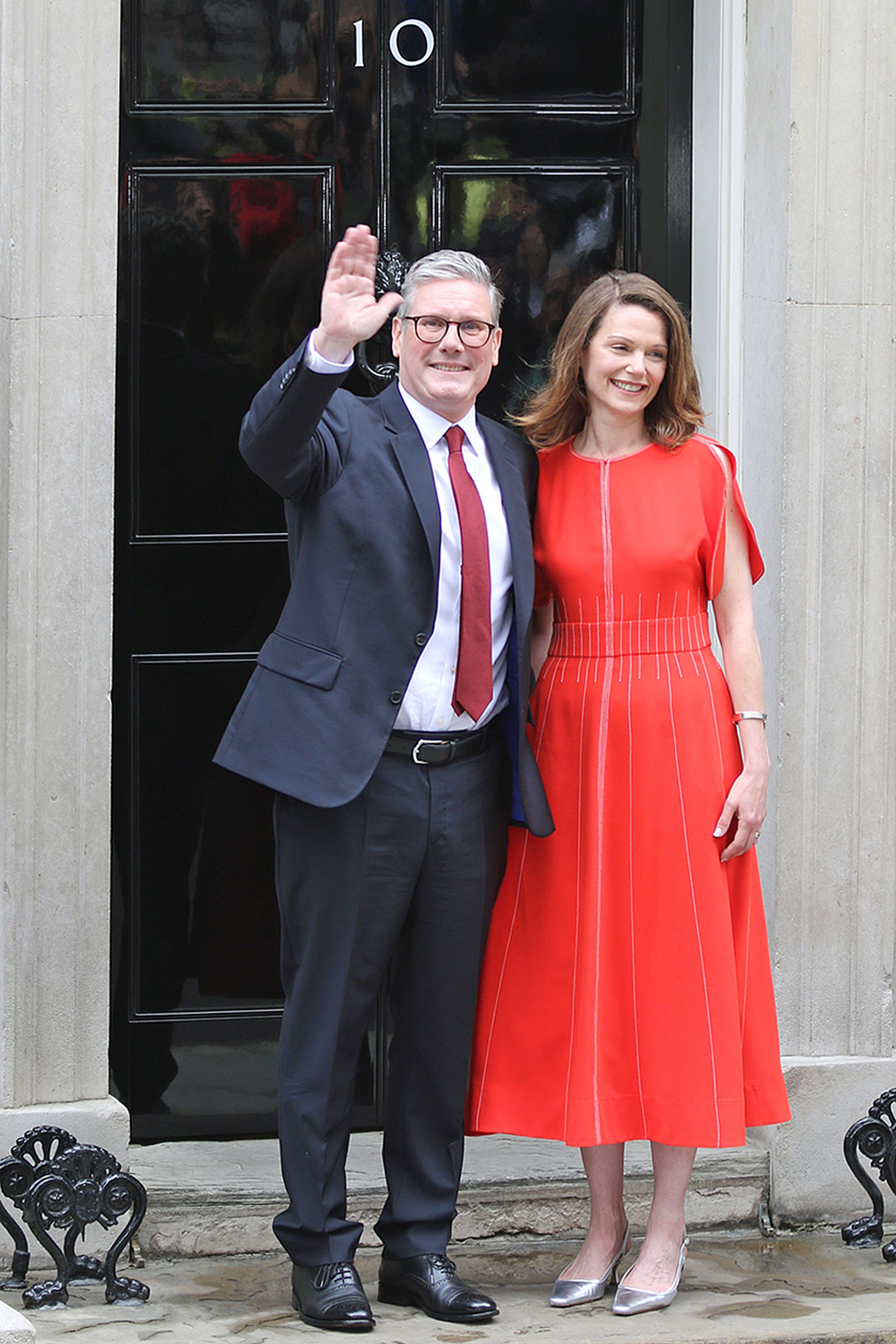
Despite her preference for privacy, she has become a subtle style icon. Often seen in British brands, her fashion choices are described by commentators as "relatable yet elegant." She frequently chooses outfits that reflect a professional and practical sensibility, mirroring her dual role as an NHS professional and a high-profile public figure.
Cultural Heritage and Family Values
A central pillar of Victoria Starmer’s life is her Jewish heritage. Her father’s family has deep roots in the Jewish community, and she has integrated these traditions into her family life with Keir Starmer. The Prime Minister has spoken publicly about the importance of their "Friday night dinners," a tradition they maintain regardless of the pressures of political life.
These dinners serve as a weekly anchor, a time for the family to disconnect from work and politics and reconnect with each other. This practice is not just a religious observance but a cultural one, emphasizing the importance of family stability. In her early fifties, Victoria is seen as the primary architect of this domestic stability, providing a "haven" for her husband amidst the volatility of Westminster.
The couple’s marriage, which began in 2007, is often described as a partnership of equals. They famously met when Keir, then a barrister, questioned a brief she had written. Her initial reaction to him—famously asking, "Who the hell does he think he is?"—has become a well-known anecdote that highlights her independent spirit.
Chronological Milestones and Professional Data
The following table outlines the key milestones in Victoria Starmer's life and career leading up to 2026.
| Period | Milestone | Context/Significance |
|---|---|---|
| 1973 | Birth | Born in London to an academic and medical family. |
| Early 1990s | Cardiff University | Served as Student Union President; studied Law and Politics. |
| Late 1990s | Legal Qualification | Qualified as a solicitor and began practicing law. |
| 2007 | Marriage | Married Keir Starmer; the couple subsequently had two children. |
| 2010s | Transition to NHS | Moved from private legal practice to occupational health in the NHS. |
| 2024 | Move to Downing Street | Keir Starmer becomes PM; Victoria maintains her NHS role. |
| 2026 | Current Status | Continuing professional work while supporting the PM in his third year. |
The Impact of a Working Spouse on Modern Politics
Victoria Starmer’s presence in her early fifties represents a shift in the traditional expectations of a Prime Minister’s spouse. Historically, the "First Lady" equivalent in the UK was expected to champion specific charities or act as a social hostess. While Victoria does participate in charity work—particularly those related to healthcare and local London initiatives—her primary focus remains her career.
This has several implications for the perception of the Starmer administration:
- Relatability: A working spouse resonates with the millions of double-income households across the United Kingdom.
- Integrity: Her commitment to the NHS is seen as an authentic endorsement of one of the country's most vital institutions.
- Modernity: It reinforces the image of the Starmers as a modern, progressive family that values individual professional achievement.
Frequently Asked Questions
Does Victoria Starmer have an official role in the government?
No. There is no official "First Lady" role in the United Kingdom. While she accompanies the Prime Minister on certain state visits and official functions, she holds no government office and receives no taxpayer-funded salary for her role as a spouse.
What hospital does Victoria Starmer work at?
For security and privacy reasons, the specific hospital where she works is not publicly disclosed, though it is widely known to be a major NHS trust within London. Her role involves supporting the health and wellbeing of thousands of medical and administrative staff.
How does she balance her NHS job with public duties?
Victoria Starmer typically works her NHS hours during the week and reserves official public duties for evenings or weekends. She is known to be highly selective about the events she attends, prioritizing those with significant national or diplomatic importance.
Does she participate in political campaigning?
While she supports her husband during general elections, she does not usually give political speeches or engage in policy debates. Her support is generally seen as personal and supportive rather than tactical or political.
What are her primary charitable interests?
Her charitable work often aligns with her professional background, focusing on healthcare, mental health in the workplace, and community projects in North London. She is also involved in organizations that support the Jewish community.
Is she involved in the management of 10 Downing Street?
Like most spouses of Prime Ministers, she oversees the private living quarters at Downing Street (or the flat at 11 Downing Street, which is often preferred by families). However, the administrative management of the building is handled by civil servants.
Practical Recommendation: Understanding the Role of the Modern Political Spouse
For those interested in the evolving nature of political leadership and the role of family in public life, Victoria Starmer provides a compelling case study. Her tenure suggests that it is possible to navigate the highest levels of public life without sacrificing professional identity or family privacy.
Researchers and observers of British politics should note that the "Starmer Model" of a spouse—one who maintains a separate, non-political career—is likely to become the new standard for future generations. To stay updated on her public appearances or specific charitable endorsements, one should refer to official Downing Street press releases rather than tabloid speculation, as she remains one of the most private figures in contemporary British history.
Image Gallery