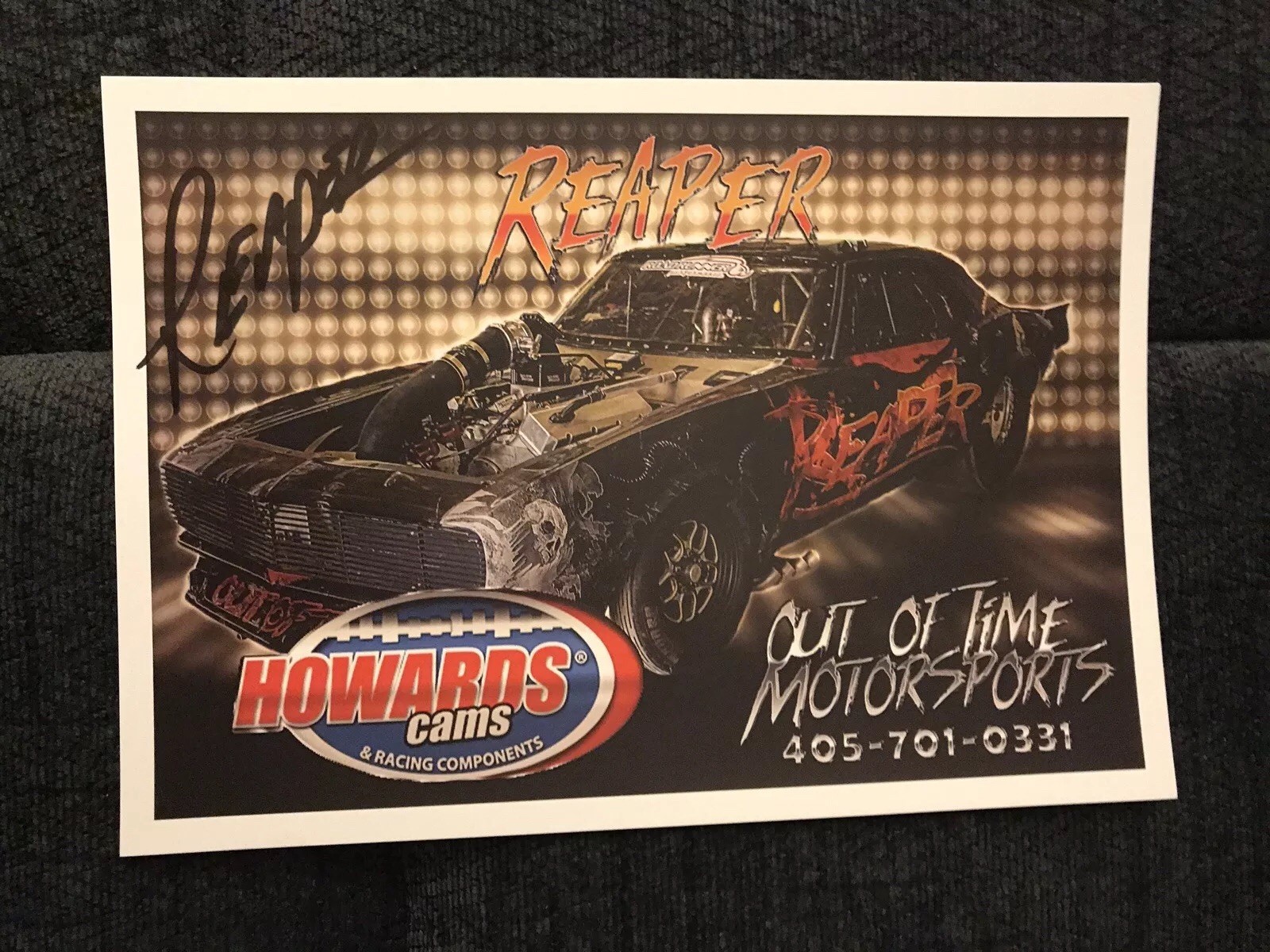
The Reaper from Street Outlaws: Technical Evolution and Legacy in 2026
James "Reaper" Goad remains one of the most recognizable figures in the world of high-stakes, small-tire, and big-tire street racing, largely defined by his aggressive "Reaper" branding and his relentless pursuit of performance parity...
James "Reaper" Goad remains one of the most recognizable figures in the world of high-stakes, small-tire, and big-tire street racing, largely defined by his aggressive "Reaper" branding and his relentless pursuit of performance parity on the Street Outlaws circuit. As of 2026, the Reaper moniker is synonymous with the specialized build philosophy that emphasizes modular chassis tuning and high-boost forced induction, serving as a benchmark for what is possible within the constraints of no-prep and street-legal racing series.
Contents
Defining the Reaper Build Philosophy
The "Reaper" brand is not merely a driver; it is a collaborative engineering effort focused on pushing the limits of Pro Mod-style street cars. Throughout his career on the Discovery series, Goad transitioned from heavy-hitting small-tire setups to the more complex big-tire configurations required to compete against the fastest machines in the country. The technical core of a "Reaper" machine involves a custom tube chassis, sophisticated engine management systems, and a specific gear-ratio strategy designed for surfaces that lack traditional track preparation.
- Chassis Architecture: Utilization of full-frame SFI-certified tube chassis designed to handle immense torque loads without excessive frame flex.
- Forced Induction Mastery: Deep integration of large-frame turbocharger systems and, periodically, roots-style blowers, requiring advanced intercooler and intake manifold mapping.
- Suspension Geometry: A commitment to a four-link rear suspension setup that favors immediate weight transfer while maintaining tire contact patch integrity on asphalt.
Technical Specifications and Performance Metrics
Performance in the street racing environment is measured by ET (Elapsed Time) and trap speed, but for a "Reaper" build, the metrics are broader. In 2026, the competitive landscape has shifted toward data-driven tuning where teams rely on logging thousands of data points per run.
| Component | Technical Requirement | Performance Impact |
|---|---|---|
| Engine Block | Billet Aluminum / Aftermarket | Essential for surviving 3,000+ HP levels |
| Induction | Twin Turbo / Roots Blower | Defines power delivery curve and boost lag |
| Transmission | Lenco or Liberty Gearbox | Rapid gear change precision for consistency |
| Data Logging | MoTeC or FuelTech Systems | Real-time monitoring of air-fuel ratios and timing |
When evaluating these vehicles, one must understand that "street-legal" in the Street Outlaws context is a relative term. The hardware remains largely identical to top-tier NHRA Pro Mod vehicles, differing primarily in the tire compound and the suspension tuning required to navigate the varying surfaces of public roads versus prepped drag strips.
The Evolution of the Street Outlaws Competitive Landscape
The Street Outlaws franchise has evolved significantly, moving from "street" roots to highly professionalized, closed-course no-prep events. For the Reaper, this shift necessitated a move away from "junk-yard" style improvisation toward the precision-engineered parts found in professional drag racing. In 2026, the barrier to entry for the top-tier list is higher than ever, requiring a blend of mechanical aptitude and significant financial backing to maintain competitive engine life cycles.
Operational Reality of Modern Street Racing
Predictive Maintenance High-performance engines in this category operate at the edge of failure. Regular tear-downs and inspections of connecting rods, bearings, and valve springs are not optional but are mandatory requirements for the 2026 season. Teams that fail to adhere to these strict maintenance intervals consistently experience catastrophic engine failure during launch phase.
Pros and Cons of High-Performance Street Builds
For enthusiasts looking to replicate the performance of a Reaper-style build, it is vital to understand the trade-offs between street viability and raw drag strip performance.
Advantages
- Unmatched power-to-weight ratio in a controlled environment.
- High degree of adjustability, allowing the driver to change the car’s personality for specific road conditions.
- Extensive aftermarket support for components like fuel injectors, ignition coils, and ECU mapping software.
Challenges
- Extreme maintenance costs associated with race-grade engine components.
- Difficulty in achieving road-legal registration in many states due to emissions and safety equipment requirements.
- High risk of mechanical failure when pushing the limits of the vehicle's structural integrity.
Troubleshooting Common Performance Issues
Mechanical troubleshooting in this niche involves a systematic approach to identifying bottlenecks in power delivery. Most issues reported in the 2026 community center on traction management and fueling efficiency.
- Boost Creep: If boost pressures exceed the map target, the first step is to check the wastegate actuator and the integrity of the vacuum lines. Ensuring that the internal spring matches the boost solenoid capability is critical.
- Timing Retard: Modern ECUs will pull timing if they detect knock or erratic sensor data. Always verify that the knock sensors are calibrated correctly for the specific engine vibration signature to avoid false positives.
- Transmission Slippage: If the vehicle loses ET at the top end, it is rarely the engine. Inspect the clutch or torque converter health, as these are the most common points of failure for high-horsepower street cars.
Frequently Asked Questions
What kind of engine does the Reaper use in his current builds? The Reaper generally utilizes high-displacement, big-block V8 powerplants often paired with custom turbocharger configurations. These engines are specifically built for forced induction and feature high-strength internal components to handle the massive boost levels required to keep up with the Street Outlaws competition.
Is the Reaper car still considered street-legal in 2026? The vehicle is designed to maintain the appearance and essential components of a street car, but legality varies by state. Most competitive street racers are "street-legal" in that they possess working lights and license plates, but they are generally not intended for daily driving or commuting due to extreme cooling and noise requirements.
How does a no-prep racing setup differ from a standard drag race? No-prep racing removes the sticky traction compound (VHT/PJ1) usually sprayed on drag strips. This forces drivers to rely on chassis setup and throttle control rather than brute-force traction, making the "Reaper" style of precise suspension tuning the deciding factor between a win and a loss.
What is the role of an ECU in a high-performance build? The ECU (Engine Control Unit) acts as the brain of the car, managing fuel injection timing, ignition spark, and boost pressure. In 2026, systems like FuelTech are industry standards because they allow for granular adjustments that can compensate for changing road temperatures and tire grip levels in real-time.
Are these builds safe for amateur mechanics? High-performance street builds are inherently dangerous and require professional-grade welding, electrical, and engine assembly skills. Amateurs should focus on entry-level drag builds before attempting the highly modified, tube-chassis platform exemplified by the Reaper series of cars.
Final Recommendations for Aspiring Racers
Success in the caliber of racing seen on Street Outlaws requires more than just a powerful engine; it requires a deep understanding of data acquisition. If you are entering the high-performance building space in 2026, invest your initial budget into a high-end data logging system before upgrading your turbo or blower. Understanding why a car failed—be it a mid-run lean condition or a suspension geometry issue—is the difference between a long-term competitive career and a short-lived one. Always prioritize safety equipment, including SFI-rated harnesses and fire suppression systems, regardless of how "street" the car appears.
Image Gallery