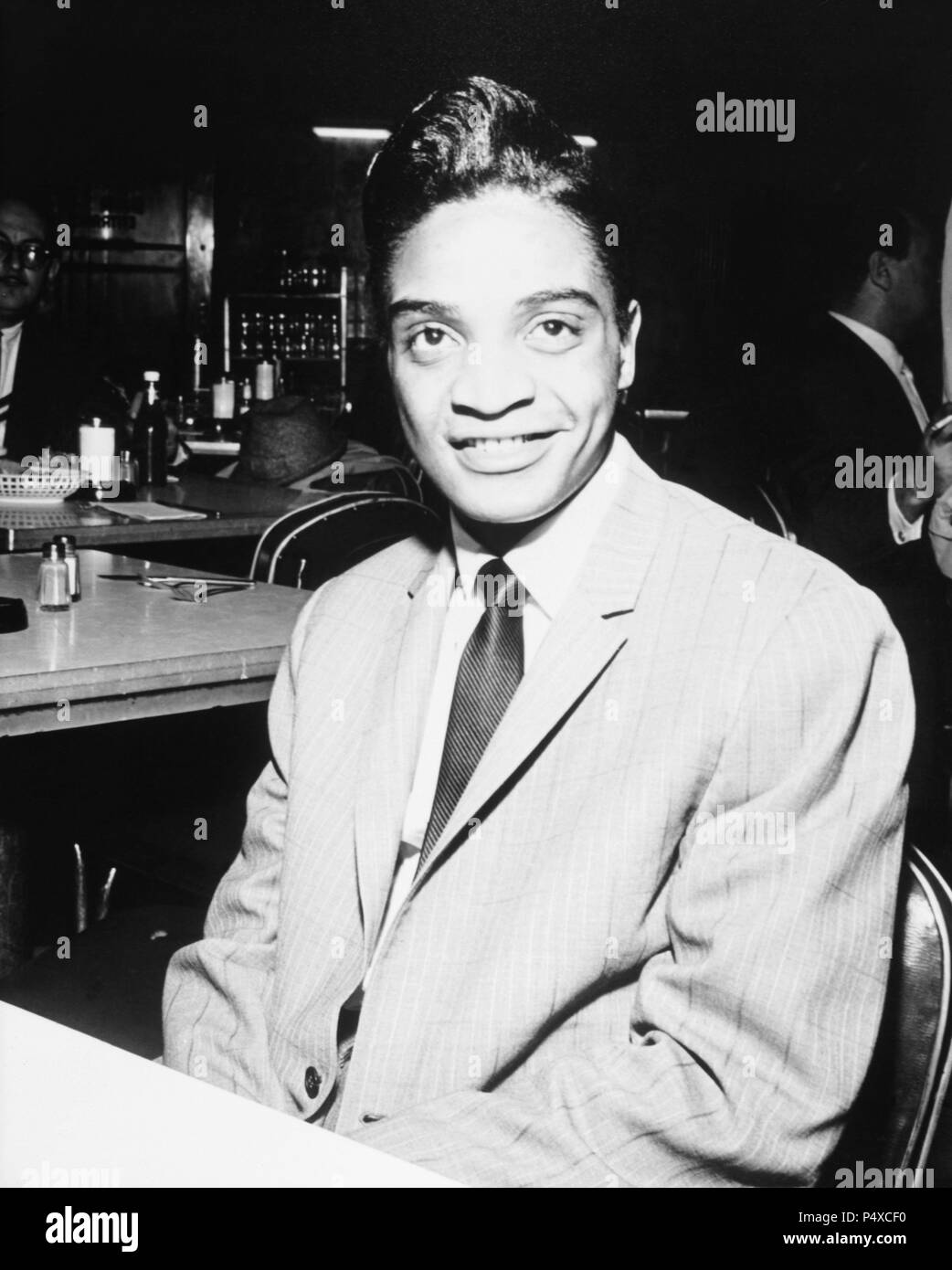
Jackie Wilson: The Definitive Legacy of "Mr. Excitement" in the History of Soul
Jackie Wilson was a transformative American singer and performer who served as a vital bridge between rhythm and blues and soul music. Known as "Mr. Excitement," his four-octave vocal range and legendary stage presence directly influen...
Jackie Wilson was a transformative American singer and performer who served as a vital bridge between rhythm and blues and soul music. Known as "Mr. Excitement," his four-octave vocal range and legendary stage presence directly influenced icons like Elvis Presley and Michael Jackson, cementing his place as one of the most influential entertainers of the 20th century. While several individuals share the name, this analysis focuses exclusively on the legendary vocalist and Rock and Roll Hall of Fame inductee whose work continues to define the standards of vocal performance in 2026.
Contents
The Architect of Modern Performance: From Detroit to Global Stardom
Born Jack Leroy Wilson Jr. in Detroit, Michigan, in 1934, Jackie Wilson’s trajectory was defined by the intersection of gospel fervor and operatic precision. His early years in the North End of Detroit provided the cultural bedrock for what would eventually become the "Motown Sound," though Wilson’s own career predated and ran parallel to the rise of Berry Gordy’s empire.
Wilson’s professional breakthrough occurred in 1953 when he replaced the legendary Clyde McPhatter in Billy Ward and His Dominoes. It was during this tenure that Wilson’s technical prowess became undeniable. He wasn't merely a singer; he was a vocal gymnast capable of transitioning from a gritty R&B growl to a crystalline operatic tenor within a single phrase. This versatility allowed him to navigate the racial and generic boundaries of 1950s radio, appealing to both R&B and pop audiences—a feat that was rare and dangerous during the era of segregation.
By 1957, Wilson embarked on a solo career that would yield over 50 charted singles. His collaboration with a young Berry Gordy Jr., who co-wrote hits like "Reet Petite" and "Lonely Teardrops," provided the financial seed money that Gordy eventually used to found Motown Records. In 2026, musicologists view Wilson not just as a performer, but as the silent catalyst for the most successful independent record label in American history.
Technical Analysis of the "Wilsonian" Vocal Style
To understand Jackie Wilson’s enduring relevance in 2026, one must analyze the technical specifications of his vocal delivery. Unlike many of his contemporaries who relied on either pure gospel shouting or smooth crooning, Wilson utilized a hybrid approach that remains a benchmark for vocal pedagogy today.
- Vocal Range and Register Shifts: Wilson possessed a dramatic tenor range, frequently reaching into the fifth and sixth octaves using a powerful head voice and falsetto. His ability to maintain tonal thickness in the upper register influenced the "Power Soul" movement.
- Melismatic Control: His use of melisma—stretching a single syllable across multiple notes—was precise rather than decorative. This technique was later adopted by Whitney Houston and Mariah Carey.
- Dynamic Articulation: Wilson’s recordings are noted for "explosive" consonants and a rapid-fire delivery that mirrored his physical movements on stage.
- Operatic Infusion: Tracks like "Danny Boy" and "Night" showcased his training and interest in classical vocal forms, bringing a level of sophistication to R&B that forced the industry to view "race music" with greater technical respect.
Key Career Milestones and Chart Dominance
The statistical impact of Jackie Wilson’s career is best understood through his chart performance and industry accolades. The following table outlines the pivotal moments and recordings that defined his professional standing.
| Era | Milestone/Recording | Billboard Peak (R&B/Pop) | Historical Significance |
|---|---|---|---|
| 1953-1956 | Lead singer for Billy Ward and His Dominoes | Multiple Top 10 R&B | Established Wilson as a premier vocal replacement for McPhatter. |
| 1957 | "Reet Petite" | #10 R&B / #62 Pop | His solo debut; funded the eventual creation of Motown. |
| 1958 | "Lonely Teardrops" | #1 R&B / #7 Pop | Inducted into the Grammy Hall of Fame; a definitive soul blueprint. |
| 1960 | "Night" | #3 R&B / #4 Pop | Demonstrated his "Operatic Soul" crossover appeal. |
| 1967 | "(Your Love Keeps Lifting Me) Higher and Higher" | #1 R&B / #6 Pop | Regarded as one of the greatest songs of all time by Rolling Stone. |
| 1987 | Rock and Roll Hall of Fame Induction | Posthumous | Formal recognition of his foundational role in the genre. |
| 2026 | Digital Legacy Preservation | N/A | High-resolution spatial audio remasters released for global streaming. |
The "Mr. Excitement" Stage Presence and Physical Influence
Jackie Wilson’s nickname was not a marketing gimmick; it was a description of a physical phenomenon. Before James Brown was the "Hardest Working Man in Show Business," Jackie Wilson was performing backflips, knee drops, and intricate footwork that mesmerized audiences.
The Elvis Connection
Elvis Presley, often cited as the King of Rock and Roll, was a devoted fan of Wilson. Presley famously remarked that Jackie Wilson was the finest singer he had ever heard and frequently visited Wilson’s sets at the Las Vegas lounges to study his movements. The "Presley" style of leg shaking and stage charisma owes a direct debt to Wilson’s athleticism.
The Michael Jackson Lineage
Michael Jackson explicitly credited Jackie Wilson as his primary inspiration for stage performance. The precision of Jackson’s spins and his "show-stopping" mentality were modern iterations of Wilson’s 1960s television appearances. In 2026, the lineage of the "Triple Threat" (singer, dancer, stylist) is still traced back to the standards Wilson set on the "Ed Sullivan Show."
Challenges, Exploitation, and the Latin Casino Tragedy
Despite his immense talent and commercial success, Wilson’s life was marred by systemic industry issues and personal tragedies. His relationship with Brunswick Records and manager Nat Tarnopol has been the subject of decades of scrutiny. Like many Black artists of his era, Wilson saw only a fraction of the wealth his hits generated, often remaining in debt to the label despite having million-selling records.
The most tragic chapter of his life began on September 29, 1975. While performing "Lonely Teardrops" at the Latin Casino in Cherry Hill, New Jersey, during a Dick Clark "Good Ol' Rock and Roll Revue," Wilson suffered a massive heart attack. As he sang the line "My heart is crying," he collapsed and struck his head.
The lack of immediate medical intervention led to oxygen deprivation to the brain. Wilson slipped into a semi-comatose state that lasted for nearly nine years. He remained hospitalized or in nursing care facilities until his death on January 21, 1984, at the age of 49. This long period of incapacity was further complicated by legal battles over his estate and care, highlighting the vulnerability of artists during that period of the music industry.
Evaluating the Impact of Jackie Wilson in 2026
As of 2026, Jackie Wilson’s influence is experiencing a resurgence driven by new technology and a cultural shift toward "Authentic Soul" preservation.
- Spatial Audio Remastering: Modern audio engineering in 2026 has allowed for the isolation of Wilson’s vocal tracks from his 1950s and 60s sessions, revealing nuances in his vibrato and breath control that were previously obscured by monophonic recording limitations.
- Cultural Reclamation: Documentary projects and academic studies in 2026 have shifted the focus from his tragic end to his role as a sophisticated musical architect. He is now analyzed alongside figures like Sam Cooke and Ray Charles as a pioneer of "Black Excellence" in the pre-Civil Rights era.
- Streaming Metrics: Data from 2026 indicates that "(Your Love Keeps Lifting Me) Higher and Higher" remains one of the top 1% of most-streamed legacy tracks globally, frequently used in film, television, and advertising to evoke themes of resilience and joy.
Comparison: Jackie Wilson vs. Contemporary Peers
To understand Wilson's unique position, it is helpful to compare his attributes with other "Big Three" soul pioneers of the time.
- Sam Cooke: While Cooke was the "Prince of Soul" with a smooth, effortless delivery aimed at crossover pop, Wilson was "Mr. Excitement," focusing on high-energy, athletic vocal displays and theatricality.
- James Brown: Brown focused on the "One" and the rhythmic percussive nature of the voice. Wilson, conversely, maintained a melodic, operatic structure even during high-tempo performances.
- Ray Charles: Charles fused country and blues with soul through a raspy, emotive lens. Wilson brought a polished, technical "bel canto" style to the same genre.
Frequently Asked Questions
What was Jackie Wilson's most famous song? While he had many hits, "(Your Love Keeps Lifting Me) Higher and Higher" (1967) is his most enduring global anthem. "Lonely Teardrops" (1958) is also considered a foundational track that defined the transition from R&B to Soul.
Is Jackie Wilson in the Rock and Roll Hall of Fame? Yes, Jackie Wilson was posthumously inducted into the Rock and Roll Hall of Fame in 1987. His induction cited his immense vocal range and his role as one of the most dynamic performers in the history of the medium.
How did Jackie Wilson die? Jackie Wilson died on January 21, 1984, due to complications from a massive heart attack and subsequent brain damage suffered in 1975. He had lived in a semi-comatose state in various care facilities for over eight years following his collapse on stage.
Who did Jackie Wilson influence the most? His primary "disciples" in terms of performance style were Elvis Presley and Michael Jackson. Elvis studied his stage movements and vocal delivery, while Jackson adopted his athletic dance style and vocal "hiccups" and ad-libs.
What was Jackie Wilson's vocal range? Wilson was a dramatic tenor with a range spanning approximately four octaves. He was noted for his ability to sing in the bass-baritone register and soar into the soprano range using a highly controlled falsetto and head voice.
Conclusion and Final Recommendations
Jackie Wilson remains a towering figure in the landscape of American music. In 2026, his work serves as a masterclass for any aspiring vocalist or performer seeking to blend technical precision with raw emotional power. To truly appreciate his legacy, listeners should look beyond the hits and explore his late 1960s soul output, where his voice matured into a tool of unparalleled expressive capability.
For educators and music historians, the study of Wilson is essential for understanding the roots of the modern pop star. His life serves as both an inspiration for artistic excellence and a cautionary tale regarding the importance of artist rights and financial literacy in the entertainment industry.
Image Gallery