Dog in Pool Video Sparks Safety Debate: Essential Canine Water Safety Guide
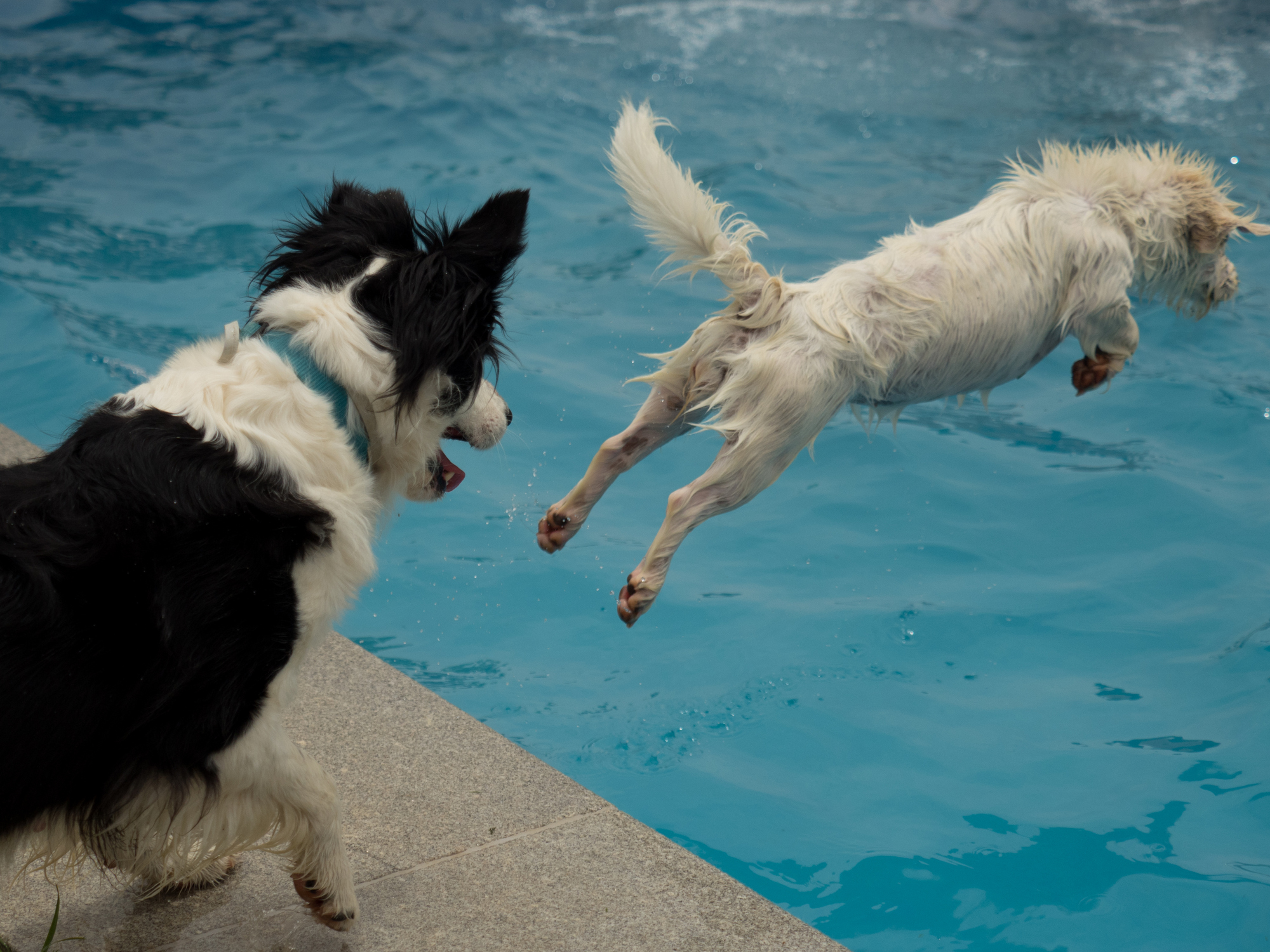
A viral video depicting a dog falling into or swimming in a residential pool recently triggered an intense online debate regarding canine water safety. While water play offers excellent low-impact exercise for dogs, unmonitored swimmin...
A viral video depicting a dog falling into or swimming in a residential pool recently triggered an intense online debate regarding canine water safety. While water play offers excellent low-impact exercise for dogs, unmonitored swimming pools present severe drowning risks without dedicated pool ramps, perimeter safety fencing, canine flotation devices, and proper exit training.
Contents
Why Viral Swimming Pool Videos Trigger Online Safety Debates
Short-form social media platforms frequently host trending videos of domestic dogs swimming, jumping, or accidentally slipping into home swimming pools. While these clips are often shared as lighthearted entertainment, veterinary professionals, animal behaviorists, and pet safety advocates frequently raise alarms in comment sections.
The controversy typically centers on three primary issues seen in viral footage:
- Delayed Human Intervention: In many viral videos, bystanders film a struggling or panicked dog for several seconds before offering assistance.
- Misinterpretation of Canine Distress: Viewers often mistake frantic splashing or high-pitched barking for joyful play, when the dog is actually experiencing extreme exhaustion or panic due to an inability to exit the pool.
- Lack of Physical Pool Safety Measures: The videos frequently show un-fenced in-ground pools with vertical coping tiles and no visible ramps or submerged exit steps suitable for four-legged animals.
Veterinary organizations emphasize that drowning is a leading cause of accidental death in domestic pets. A dog that appears to be tread-water effortlessly can experience acute fatigue within minutes, particularly if water temperature, panic, or physical anatomical limitations impair its movement.
Key Pool Hazards Specific to Canine Anatomy and Breeds
Not all dogs are natural swimmers. A dog’s anatomical structure, coat density, and respiratory mechanics dictate its flotation abilities and exhaustion thresholds in deep water.
| Physical & Anatomical Factors | Environmental & Exit Barriers |
|---|---|
| • Brachycephalic airway limitation | • Vertical coping tiles |
| • Dense bone mass / short limbs | • Lack of low-profile exit steps |
| • Water intake & hyponatremia | • Solar pool covers & entanglements |
Anatomical Limitations Across Breeds
- Brachycephalic Breeds: Dogs with shortened snouts, such as French Bulldogs, English Bulldogs, Pugs, and Boston Terriers, struggle significantly in open water. Their high body density, short legs, and restricted airways make natural floating nearly impossible, causing their back ends to sink while their tilt angles obstruct breathing.
- Heavy-Muscled and Short-Legged Breeds: Breeds such as Dachshunds, Basset Hounds, and Bull Terriers carry weight distributions that hinder buoyant paddling. Without immediate human assistance or flotation gear, these breeds sink quickly.
- Coat Weight and Water Retention: Double-coated or dense-furred breeds (such as Newfoundlands or Bernese Mountain Dogs) carry substantial extra weight when their undercoats become waterlogged, increasing physical strain during extended swimming sessions.
Structural Pool Hazards
Residential pools are engineered for human ergonomics, featuring high vertical walls, narrow ladders, and slick tile edges.
When a dog falls into a pool unexpectedly, its instinct is to attempt an exit at the exact point of entry. If that boundary consists of smooth pool coping or elevated decking, the dog will continually scratch at the edge, exhausting itself while failing to lift its body weight out of the water.
Chemical Ingestion and Water Intoxication
- Chlorine and Chemical Exposure: Ingesting concentrated pool chemicals or swallowing large volumes of chlorinated water can cause gastric irritation, esophageal inflammation, and chemical burn to oral mucosa.
- Hyponatremia (Water Intoxication): Dogs that repeatedly bite at water jets or fetch toys from pool surfaces may ingest excessive water. This causes hyponatremia—a critical dilution of serum sodium levels that leads to brain swelling, lethargy, loss of coordination, seizures, and potential coma.
Essential Pool Safety Equipment for Dog Owners
Preventing backyard pool accidents requires a multi-layered defense strategy. Relying on a dog’s natural instincts or human vigilance alone leaves dangerous safety gaps.
- Layer 1: Perimeter Fencing & Self-Latching Access Gates
- Layer 2: Pool Alarms (Surface Wave Sensors & Immersion Collars)
- Layer 3: Physical Exit Ramps & Submerged Dog Steps
- Layer 4: Canine Personal Flotation Devices (PFCs / Life Vests)
1. Dedicated Pool Exit Ramps and Submerged Steps
Submerged ramps (such as heavy-duty plastic or rubberized mesh inclines) provide an accessible incline for dogs to walk out of the water without needing to hoist their body weight. These ramps should be fixed securely to the pool deck and feature high-traction grip matting.
2. Perimeter Safety Fencing and Self-Latching Gates
The most reliable protection against accidental pool falls is a four-sided isolation fence measuring at least 48 inches in height. The fence must completely separate the home’s exit doors from the pool deck, utilizing self-closing and self-latching gates with latches mounted out of reach of curious animals.
3. Pool Surface Alarms and Immersion Collars
- Surface Wave Sensors: Mounted on the pool deck, these alarms detect sudden displacement of water caused by an animal weighing 10 to 15 pounds or more falling into the pool.
- Immersion Collar Badges: Secured to a dog’s collar, these electronic sensors trigger an interior base station alarm instantly upon contact with water, alerting occupants before physical fatigue sets in.
4. Canine Life Jackets (Personal Flotation Devices)
For breeds with low buoyancy or during extended pool activities, a fitted canine life jacket is essential. Quality life vests include:
- A sturdy top-mounted rescue handle for immediate manual retrieval.
- Under-chin flap supports to keep the head and snout elevated above water level.
- Bright high-visibility color schemes with reflective piping for enhanced visual identification.
Step-by-Step Canine Pool Exit Training
Equipment alone cannot save an animal if the dog does not know how to navigate to the exit point during a moment of panic. Exit training must be systematically taught through positive reinforcement.
- Step 1: Controlled Water Introduction
- Step 2: "Find the Steps" Orientation
- Step 3: Panic Control & Multi-Angle Reorientation
- Step 4: Supervised Free Access & Verification
Step 1: Controlled Water Introduction
Begin with the dog on a secure leash near the shallow end or step entry. Allow the dog to enter at its own pace using praise and high-value treats. Never throw a dog into a pool, as acute trauma increases panic behaviors during accidental falls.
Step 2: "Find the Steps" Orientation
Guide the dog into shallow water, walk a few feet into the deeper area while supporting the torso, and gently turn the dog back toward the pool steps or ramp. Reward the dog immediately upon stepping out onto dry land. Repeat this exercise from increasing distances within the pool.
Step 3: Panic Control and Multi-Angle Reorientation
Guide the dog to various corners of the pool away from the exit. Release the dog while maintaining leash control, walk to the ramp/step location, and use enthusiastic verbal cues to attract the dog to the correct exit point. This teaches the animal to scan for the ramp rather than trying to claw up the nearest wall.
Step 4: Supervised Free Access & Verification
Test the dog’s entry and exit capabilities under strict human supervision without leash assistance. Verify that the dog consistently returns to the ramp regardless of where it enters the water.
Comparison of Dog Pool Safety Measures
| Safety Measure | Primary Purpose | Protection Level | Ideal For | Maintenance & Installation |
|---|---|---|---|---|
| Isolation Fencing | Prevents unsupervised entry | Highest (Primary) | All dog breeds & households | Requires permanent installation; minimal ongoing upkeep |
| Submerged Ramps | Facilitates self-rescue | High (Secondary) | Active pool users, old/arthritic dogs | Must be anchored securely; periodic cleaning required |
| Canine Life Vests | Prevents sinking & fatigue | High (Active Play) | Non-swimming breeds, brachycephalic dogs | Needs precise fitting; wash after chemical exposure |
| Immersion Alarms | Rapid distress notification | Moderate (Alert System) | Unattended yards, high-risk areas | Battery replacement & monthly functional testing |
| Solid Pool Covers | Covers pool during off-season | High (Static) | Winterized pools | Must remain fully tensioned; eliminate standing water |
Responding to Near-Drowning and Water Emergencies
If a dog is involved in a pool immersion incident, immediate and organized action is required to minimize mortality and neurological injury.
- IMMERSION INCIDENT
- Safe Manual Retrieval
- Dog Conscious
- Drain airway water
- Wrap in warm towels
- Emergency Vet Evaluation
- Dog Unconscious
- Clear mouth/airway
- Check pulse & chest motion
- Administer Rescue Breathing / CPR
- Urgent Transport to Vet
- Dog Conscious
- Safe Manual Retrieval
Immediate Rescue Action
- Safety First: Clear the pool area of obstacles. Use a pool hook, net, or flotation device if the dog is frantic to prevent injury to the handler.
- Clear the Airway: Once retrieved, position small dogs head-down to allow gravity to drain water from the oral cavity. For large dogs, lift the hindquarters slightly above the shoulders while supporting the chest.
- Evaluate Breathing and Pulse: Check for chest movement and feel for a femoral pulse along the inside of the rear leg near the groin.
Canine CPR Protocol (If Pulse and Breathing Are Absent)
- Chest Compressions: Lay the dog on its right side on a firm surface. Compress the widest part of the chest (for round-chested dogs) or directly over the heart (for narrow-chested dogs) at a rate of 100 to 120 compressions per minute.
- Rescue Breathing: Close the dog’s mouth securely, place your mouth over the dog’s nose, and deliver two full gentle breaths, watching for chest expansion. Maintain a compression-to-ventilation ratio of 30:2.
Recognizing Secondary (Dry) Drowning
Even if a dog appears fully recovered after an accidental pool fall, it remains at risk for secondary drowning (pulmonary edema). Swallowing small amounts of chlorinated pool water can damage pulmonary tissue, causing fluid accumulation in the lungs hours or days after the incident.
Watch for these warning signs up to 72 hours post-immersion:
- Lethargy, weakness, or collapse
- Persistent coughing, wheezing, or crackling breath sounds
- Pale or blue-tinted (cyanotic) gums
- Difficulty catching breath or rapid, shallow abdominal breathing
Disclaimer: This article is for informational purposes only and does not replace professional advice from a licensed veterinarian. If your pet experiences near-drowning, pool chemical ingestion, or respiratory distress, contact an emergency veterinary clinic immediately.
Frequently Asked Questions
Do all dogs naturally know how to swim?
No. While many dogs exhibit an instinctive "doggy paddle" reflex when suspended in water, this movement does not equate to effective swimming ability. Heavy-boned, low-buoyancy, and short-muzzled breeds lack the physical mechanics to maintain head elevation without flotation assistance.
What is the most effective safety barrier to keep a dog out of a pool?
A continuous 4-foot physical isolation fence equipped with a self-closing, self-latching gate is the single most effective barrier. Netting and solar covers should not be used as primary safety barriers because dogs can become trapped underneath them if they attempt to walk across the surface.
How dangerous is chlorine to dogs swimming in pools?
Properly balanced pool chlorine levels are generally non-toxic for casual swimming, but swallowing pool water can cause stomach upset, nausea, and esophageal distress. Additionally, undiluted pool chemicals can dry out a dog's skin, strip natural oils from their coat, and cause ocular inflammation.
What is secondary drowning in dogs and how quickly can it happen?
Secondary drowning occurs when inhaled water causes inflammation and fluid buildup inside the lungs, impairing oxygen exchange. Symptoms can manifest anywhere from 1 to 72 hours after the dog is removed from the water, making professional veterinary evaluation essential after any submerged fall.
Can solar pool covers prevent a dog from drowning?
No. In fact, solar pool covers can significantly increase drowning hazards. If a dog steps onto a solar cover, the material can give way under its weight, causing the animal to sink while the cover collapses over it, disorienting the dog and hindering rescue efforts.
Practical Next Steps for Pet Owners
To safeguard pets against residential pool hazards, pet owners should immediately inspect their backyard setup. Ensure that physical fencing completely isolates the pool area from house doors.
If your dog has regular access to the pool area, install a high-visibility, submerged canine ramp near the shallow end today and conduct structured exit training sessions over several consecutive days. Keep emergency veterinary contact numbers and a basic canine CPR guide accessible near the pool deck at all times.
EDITORIAL CATEGORY METADATA:
Image Gallery