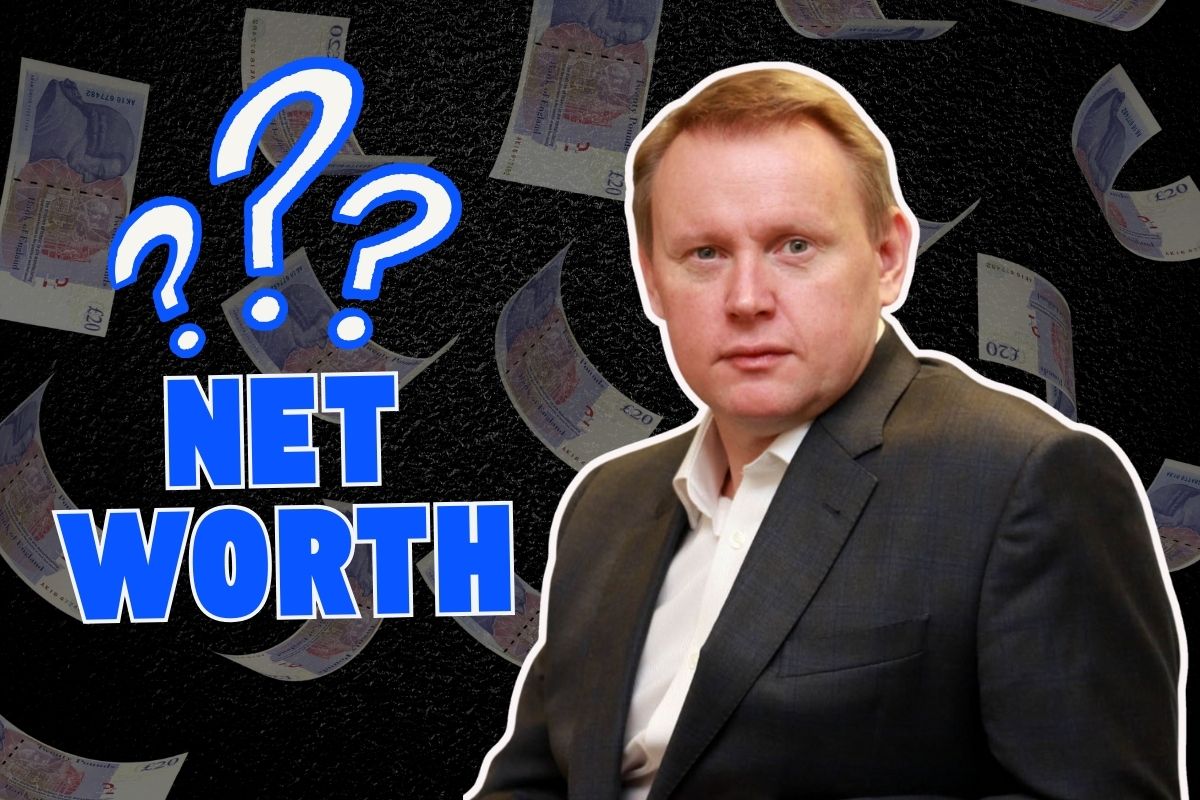
Andrew Rettig Net Worth Explained: Inside the R.Corporation Portfolio
Andrew Rettig’s net worth is primarily derived from his role as the founder and Managing Director of R.Corporation, a premier Australian property development firm. While specific private financial records are not public, his control ov...
Andrew Rettig’s net worth is primarily derived from his role as the founder and Managing Director of R.Corporation, a premier Australian property development firm. While specific private financial records are not public, his control over a multi-billion dollar project pipeline and a vast portfolio of completed residential and commercial developments places his estimated personal wealth well into the high nine-figure range.
Contents
Understanding the financial standing of Andrew Rettig requires a deep dive into the mechanics of the Australian real estate market, specifically the high-density residential sector in Melbourne. Rettig is not a traditional "buy and hold" investor in the sense of a passive landlord; rather, his wealth is generated through the "vertical integration" of property development—overseeing everything from land acquisition and architectural design to construction and final sales. As of 2026, his influence on the Melbourne skyline remains a cornerstone of his financial identity.
The Genesis of R.Corporation and Early Wealth Accumulation
Andrew Rettig founded R.Corporation in the early 1990s, a period when the Australian property landscape was undergoing significant structural shifts. Unlike many developers who focused on suburban sprawl, Rettig identified a "missing middle" in the market: high-quality, design-led residential apartments located on the fringes of the Melbourne Central Business District (CBD).
His initial wealth was built on the success of niche developments in suburbs like Richmond, Hawthorn, and South Melbourne. By maintaining a strict "design-first" philosophy, R.Corporation was able to command price premiums even during periods of market volatility. This strategy allowed Rettig to reinvest profits into larger, more ambitious land holdings. The transition from boutique apartment blocks to master-planned precincts was the primary catalyst for his wealth scaling from a successful business owner to a titan of industry.
The Philosophy of "The R.Experience"
A significant portion of Rettig’s net worth is tied to the brand equity of R.Corporation. He introduced the concept of "The R.Experience," which emphasizes the lifestyle and post-purchase support of residents. By focusing on the end-user rather than just the investor, his projects historically achieved higher sell-through rates and lower vacancy levels. In financial terms, this brand loyalty reduces the cost of capital and marketing for subsequent projects, directly inflating the company's—and by extension, Rettig's—bottom line.
Flagship Projects Driving Valuation
To explain Andrew Rettig's net worth, one must look at the sheer scale of the projects R.Corporation has delivered. By 2026, the company has completed over 30 major projects, housing thousands of residents.
R.Iconic: The Jewel in the Crown
The most significant contributor to the current valuation of Rettig’s enterprise is the R.Iconic development in South Melbourne. This project represents a multi-billion dollar investment and serves as a benchmark for mixed-use precincts in Australia.
- Valuation Impact: With over 900 apartments and a dedicated hotel component, the gross realization value (GRV) of R.Iconic alone is estimated to exceed $850 million.
- Strategic Location: Positioned within the Fishermans Bend urban renewal area—Australia's largest urban renewal project—the land value appreciation has been a significant driver of equity for Rettig.
- Revenue Streams: Beyond apartment sales, the inclusion of retail spaces and hotel operations provides R.Corporation with recurring "passive" income, which stabilizes the net worth against the cyclical nature of construction sales.
Residential and Commercial Diversification
Rettig’s wealth is not concentrated in a single asset class. His portfolio includes:
- High-End Residential: Luxury apartments that cater to owner-occupiers.
- Commercial Real Estate: Integrated office spaces within residential precincts.
- Retail Holdings: Ground-floor retail assets in R.Corporation buildings that are often retained for long-term lease income.
Estimating the Figures: Private Wealth vs. Public Assets
As Andrew Rettig is the sole or primary owner of a private company, his exact net worth is not a matter of public record like that of a CEO of a listed ASX company. However, industry analysts often calculate wealth based on Net Asset Value (NAV) and Project Pipeline Value.
| Asset Component | Estimated Value/Contribution | Impact on Net Worth |
|---|---|---|
| R.Iconic Precinct | $850M - $1.1B (GRV) | Primary wealth driver; high equity stake. |
| Retained Commercial Portfolio | $150M - $250M | Provides consistent liquidity and cash flow. |
| Future Development Pipeline | $2B+ | Represents potential future equity and growth. |
| Brand Equity & IP | Significant | Lowers borrowing costs and increases project margins. |
Note: These figures represent the valuation of the projects and entities managed by Rettig. Personal net worth is a calculation of total assets minus total liabilities (debt).
The Economics of Development Debt and Equity
A common mistake when analyzing the net worth of a developer like Andrew Rettig is ignoring the role of debt. Property development is a capital-intensive industry. Large projects like those undertaken by R.Corporation are typically funded through a combination of:
- Senior Debt: Provided by major banks.
- Mezzanine Finance: Provided by private equity or specialized lenders.
- Founder Equity: Rettig’s personal and company capital.
Because R.Corporation has a long-standing track record (over 30 years as of 2026), Rettig likely enjoys more favorable borrowing terms than newer developers. This "spread" between the cost of borrowing and the yield of the completed development is where the majority of his personal wealth is generated. When a project is "de-risked" (i.e., a high percentage of pre-sales is achieved), the equity value for the developer increases exponentially.
Market Factors Influencing Wealth in 2026
The landscape of 2026 presents unique challenges and opportunities that affect Rettig’s valuation.
- Interest Rate Environment: After the fluctuations of the early 2020s, the stabilization of rates in 2026 has benefited developers with large land banks.
- Sustainability Mandates: R.Corporation’s early adoption of green building standards and "wellness" features in buildings like R.Iconic has protected the portfolio from "brown discounting"—the loss of value in buildings that don't meet modern environmental standards.
- Melbourne’s Growth: Melbourne is on track to become Australia’s largest city. As land near the CBD becomes scarcer, the value of Rettig’s existing holdings and his ability to navigate complex zoning laws become more valuable.
Comparison with Peer Developers
To provide context to Andrew Rettig’s financial standing, it is helpful to compare him to other prominent Australian developers. While he may not always appear on the "Rich List" top 10—which is often dominated by mining magnates or tech founders—within the specialized world of Victorian property development, he is a top-tier figure.
Unlike developers who focus on volume and "cookie-cutter" builds, Rettig’s wealth is characterized by quality-adjusted returns. He manages fewer projects simultaneously than a giant like Mirvac, but the margins on his design-focused developments are typically higher per square meter. This suggests a net worth that is highly resilient to market downturns because the target demographic (luxury owner-occupiers) is less sensitive to economic shifts than the first-home-buyer market.
Frequently Asked Questions
Is Andrew Rettig a billionaire?
While R.Corporation manages billions of dollars in project value, Andrew Rettig's personal net worth is likely in the high hundreds of millions. In the world of property, "billionaire" status is often used to describe the total value of assets under management rather than liquid personal cash. However, depending on the debt-to-equity ratio of his current pipeline in 2026, he could certainly border on that threshold.
How does Andrew Rettig make most of his money?
His primary income and wealth growth come from the development margin. This is the difference between the cost of land and construction versus the final sale price of the apartments and commercial units. Additionally, he benefits from the long-term appreciation of retained retail and commercial assets within his developments.
What is Andrew Rettig's most successful project?
Financially, R.Iconic is his most significant undertaking. Due to its scale, location, and mixed-use nature, it represents a massive leap in his company's valuation. Historically, his early developments in South Melbourne and Richmond established the capital base that made larger projects possible.
Does Andrew Rettig own R.Corporation?
Yes, Andrew Rettig is the founder and Managing Director. As a private company, he maintains significant control over the direction and profits of the firm, which is a major factor in his concentrated wealth.
How has the 2026 economy affected his net worth?
The 2026 economy has favored developers who hold high-quality, sustainable assets. As the "flight to quality" continues in the residential market, Rettig’s portfolio—which has always emphasized premium design—has likely seen higher capital growth compared to more generic residential developments.
Final Perspective and Actionable Insights
For those looking to understand the financial trajectory of a developer like Andrew Rettig, the key takeaway is the value of strategic land banking and vertical integration. Rettig’s net worth is a testament to the power of controlling the entire lifecycle of a project.
If you are an investor or student of real estate, observing Rettig’s move into the Fishermans Bend precinct offers a masterclass in "early-mover advantage." His wealth is not just a result of building apartments; it is a result of predicting where urban populations will want to live a decade before the infrastructure is even fully realized. To track his ongoing net worth, one should monitor R.Corporation’s future land acquisitions and the successful settlement rates of their current high-density projects.
Image Gallery