Comprehensive Guide to the Requirements to Get Into Yale University
Securing admission to Yale University requires a combination of exceptional academic performance, rigorous standardized testing, compelling extracurricular engagement, and deeply personal letters of recommendation. Because Yale practic...
Securing admission to Yale University requires a combination of exceptional academic performance, rigorous standardized testing, compelling extracurricular engagement, and deeply personal letters of recommendation. Because Yale practices a holistic admissions process, no single high GPA or perfect test score guarantees acceptance, making a well-rounded and authentic application essential for prospective students.
Contents
Understanding Yale University's Holistic Admissions Approach
Yale University evaluates every application through a comprehensive lens, assessing not only academic capability but also personal character, community contribution, and intellectual curiosity. The admissions committee seeks to build a diverse campus community composed of individuals who will actively contribute to the intellectual and social fabric of the university.
Rather than relying on a strict numerical formula or cutoff threshold, admissions officers read every component of an application. They look for evidence of leadership, resilience, unique perspectives, and a genuine passion for learning that extends beyond the standard high school curriculum. This means that a student with slightly lower standardized test scores who demonstrates extraordinary community leadership or creative output may find success alongside a student with top-tier academic metrics.
Academic Prerequisites and High School Rigor
The foundation of any successful application to Yale University is a stellar academic record. Admissions officers expect applicants to challenge themselves by taking the most rigorous courses available within their high schools, which typically include Advanced Placement (AP), International Baccalaureate (IB), Honors, or dual-enrollment college courses.
- Transcript Quality: Your high school transcript is the single most important document in your application file. Officers evaluate your grades in the context of what your school offers, looking for an upward trend or sustained excellence.
- Core Curriculum: Strong preparation in core academic areas—English, mathematics, science, foreign language, and social studies—is heavily favored.
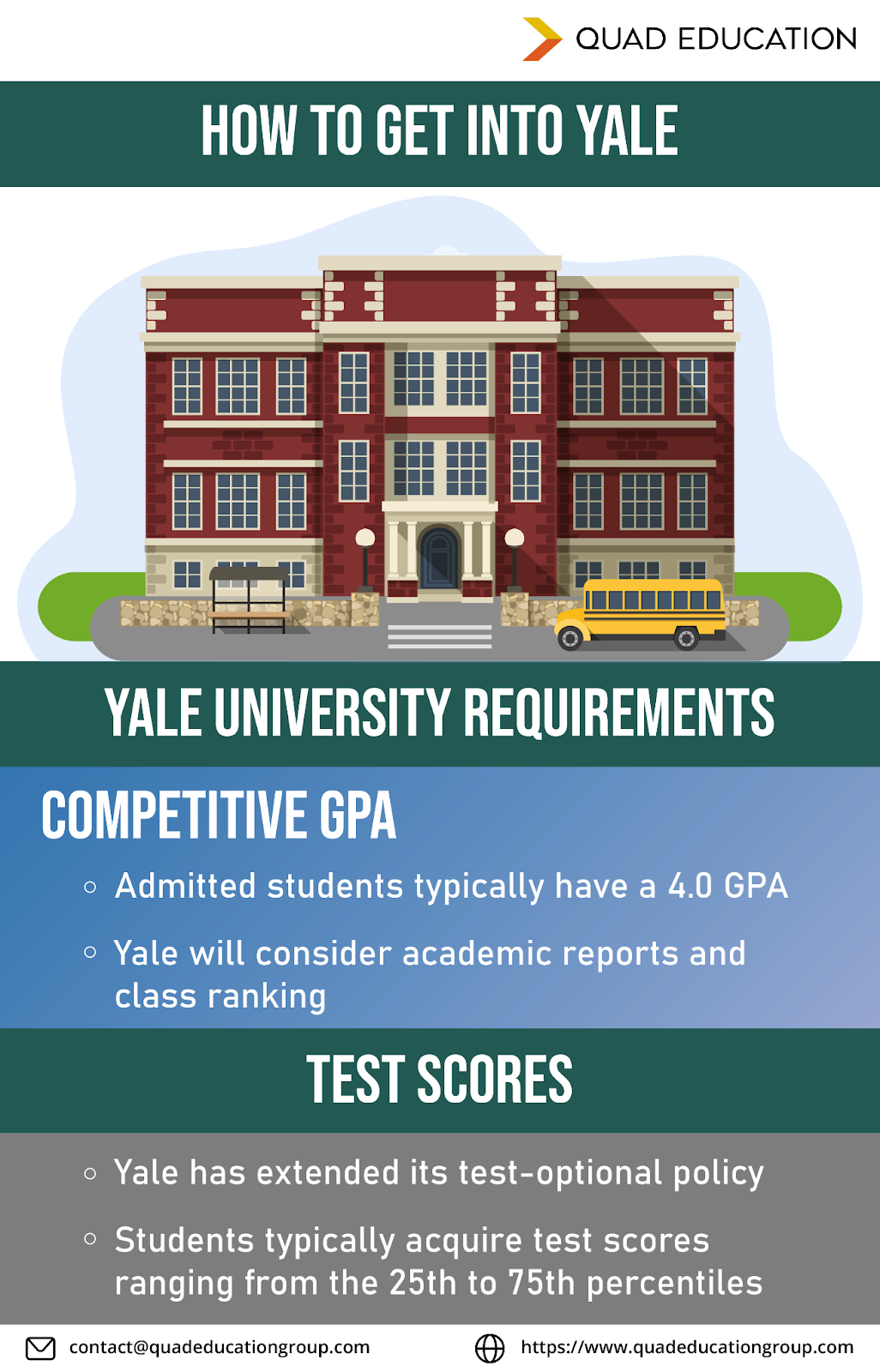
- Class Rank: While many high schools have eliminated ranking, if your school ranks students, performing near the top of your graduating class demonstrates competitive academic capability.
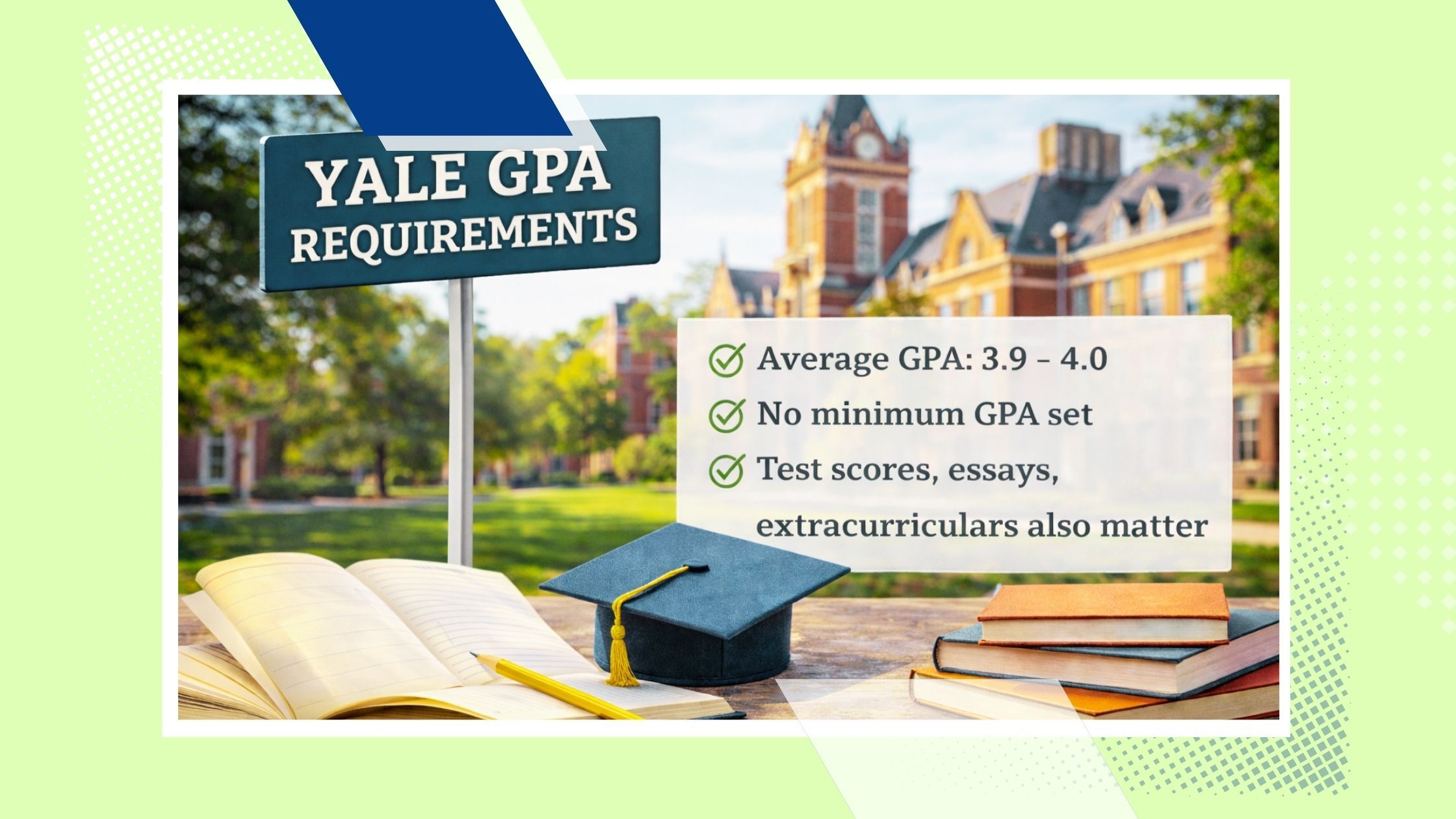
While there is no minimum GPA requirement to apply, successful applicants typically possess unweighted GPAs hovering near the top of their classes, often straight A's across rigorous course loads.
Standardized Testing Policies
Yale University utilizes a test-flexible policy regarding standardized examinations, giving applicants options regarding how they submit their scores. Understanding these testing parameters ensures you present your academic abilities in the best possible light.
Applicants may submit scores from the SAT or the ACT. Additionally, Yale accepts results from AP exams or IB higher-level exams to fulfill testing requirements under specific policy guidelines. When reporting scores, Yale participates in score choice policies for some tests, but it is critical to consult the Yale Undergraduate Admissions website for the most current, exact submission rules for each application cycle. Preparing early for these exams allows students adequate time to retake tests if their initial scores do not reflect their true academic potential.
| Component | Standard Expectation | Strategic Focus |
|---|---|---|
| High School Transcript | Most rigorous courses available (AP/IB/Honors) | Show steady excellence or an upward grade trend |
| Standardized Tests | SAT or ACT scores (test-flexible options apply) | Submit competitive scores that validate transcript rigor |
| Letters of Recommendation | Two teacher evaluations, one counselor evaluation | Choose recommenders who know you well and highlight character |
| Personal Essays | Yale-specific supplemental questions + main essay | Convey authentic voice, values, and intellectual vitality |
Extracurricular Distinction and Leadership
Beyond the classroom, Yale looks for depth rather than breadth in extracurricular activities. Admissions officers prefer students who demonstrate a sustained, meaningful commitment to a few passions rather than those who join numerous clubs superficially.
Whether your passion lies in scientific research, competitive athletics, visual or performing arts, community activism, or entrepreneurial ventures, your involvement should showcase initiative, impact, and leadership. Documenting tangible achievements—such as founding an organization, organizing a community drive, or conducting publishable research—helps your profile stand out among tens of thousands of applicants.
The Application Components and Deadlines
Applying to Yale requires careful coordination of multiple distinct documents, forms, and essays submitted through either the Common Application or the Coalition Application powered by Scoir.
- Application Form: Complete the Common Application or Coalition Application, including personal background information and activities lists.
- Application Fee or Fee Waiver: Pay the required application fee or request a fee waiver if meeting financial hardship criteria.
- Transcripts and School Report: Submitted directly by your high school counselor along with a school profile.
- Letters of Recommendation: Two letters from core academic teachers who taught you in eleventh or twelfth grade, plus one letter from your school counselor.
- Standardized Test Scores: Official score reports sent directly from testing agencies if choosing to include them.
- Yale Supplemental Essays: Short answers and longer essays specifically tailored to Yale's prompts, designed to reveal your personality and intellectual curiosity.
Key Deadlines to Keep in Mind
Timing is crucial when navigating elite college admissions. Yale offers two primary application tracks: Single-Choice Early Action (EA) and Regular Decision (RD).
- Early Action: Applications are typically due by November 1, with decisions released in mid-December. Early Action at Yale is restrictive, meaning you generally cannot apply early to other private colleges.
- Regular Decision: Applications are typically due by January 2, with decisions released in late March. Regular Decision allows students more time to refine their senior year grades and test scores before submission.
Crafting Compelling Essays and Personal Statements
The essay components provide the admissions committee with a direct window into your personality, voice, and writing ability. Because academic metrics among Yale applicants are uniformly high, essays often serve as the deciding factor in admission.
Your personal statement should tell a story that cannot be found elsewhere in your application. Avoid cliché narratives and focus on moments of introspection, growth, or intellectual discovery. Furthermore, Yale's supplemental essays require specific, thoughtful answers regarding why you want to attend Yale and how you plan to engage with its academic and residential communities. Researching Yale's specific residential colleges, student organizations, and academic resources will help you craft authentic, targeted responses.
Financial Aid and Affordability Considerations
A common misconception is that elite institutions like Yale are financially out of reach for middle- and low-income families. In reality, Yale maintains a robust, need-blind admissions policy for both domestic and international undergraduate applicants.
Yale meets 100% of demonstrated financial need for all admitted students, regardless of citizenship or country of origin. Financial aid awards are calculated entirely through grants rather than loans, meaning students graduate debt-free or with minimal financial burden. Families must submit the Free Application for Federal Student Aid (FAFSA), the CSS Profile, and tax documentation annually to determine eligibility. Utilizing Yale's online net price calculator can provide prospective families with an accurate estimate of expected costs before applying.
Common Mistakes to Avoid During the Process
Navigating the Yale admissions process can be stressful, and avoidable errors can weaken an otherwise strong application.
- Rushing the Supplementals: Reusing essays from other universities without tailoring them to Yale is immediately noticeable to admissions readers. Answer Yale's specific prompts thoughtfully.
- Spread-Thin Extracurriculars: Listing ten unrelated clubs shows a lack of focused commitment. Highlight deep engagement in two or three key areas instead.
- Procrastinating on Recommendations: Asking teachers for recommendations at the last minute often results in rushed, generic letters. Request letters well in advance—ideally at the end of your junior year.
- Ignoring Deadlines: Missing Early Action or Regular Decision deadlines results in an immediate disqualification from consideration for that application cycle.
Frequently Asked Questions
What is the minimum GPA required to get into Yale University?
Yale does not have a minimum GPA requirement. However, competitive applicants generally earn straight A's in the most demanding honors, AP, or IB courses available at their high schools.
Does Yale require SAT or ACT scores?
Yale employs a test-flexible policy. While submitting scores from the SAT or ACT is encouraged if they reflect your academic capability, applicants may also utilize alternative testing options such as AP or IB exam results according to current university guidelines.
Is Yale need-blind for international students?
Yes. Yale University is need-blind for all undergraduate applicants, including international students, and meets 100% of demonstrated financial need for every admitted student with need-based grants.
How many recommendation letters do I need?
You are required to submit two letters of recommendation from core academic teachers who taught you in junior or senior year, along with one counselor recommendation from your high school.
Should I apply Early Action or Regular Decision?
Applying Single-Choice Early Action is beneficial if you have a polished application ready by November 1 and are certain Yale is your top choice. Regular Decision is better if you want to showcase strong senior-year first-semester grades or additional standardized test scores.
Next Steps for Prospective Applicants
Begin your preparation by focusing heavily on maintaining academic excellence in rigorous courses and deepening your involvement in meaningful extracurricular pursuits. Visit the official Yale Undergraduate Admissions portal to review up-to-date testing policies, read student blogs, and explore academic majors. Map out your testing schedule and build strong relationships with teachers who can write insightful letters of recommendation on your behalf.
Image Gallery