Why the Apple Card’s Cash Back Wins Over Travel Miles in 2026
In the evolving landscape of 2026 consumer finance, the debate between earning travel miles and receiving immediate cash back has reached a turning point. For the average consumer, the Apple Card’s "Daily Cash" model consistently outpe...
In the evolving landscape of 2026 consumer finance, the debate between earning travel miles and receiving immediate cash back has reached a turning point. For the average consumer, the Apple Card’s "Daily Cash" model consistently outperforms traditional travel-based rewards programs due to its lack of fees, instant liquidity, and the elimination of complex redemption hurdles that have plagued airline loyalty programs over the last several years.
Contents
The Fundamental Shift: Cash vs. Miles in 2026
The credit card industry has undergone a significant transformation leading into 2026. For decades, "miles" were the gold standard for high-spending consumers. However, the systematic devaluation of frequent flyer programs—often referred to as "dynamic pricing"—has made it increasingly difficult to calculate the true value of a point. In contrast, the Apple Card operates on a transparent, dollar-for-dollar basis.
When you earn 2% cash back on an Apple Card purchase, that value is fixed. One dollar of Daily Cash is exactly one dollar of purchasing power. In the travel world, 10,000 miles might have been enough for a domestic flight in 2019, but by 2026, those same miles often cover only a fraction of the cost, or are subject to "blackout dates" and limited "award seat" inventory. This unpredictability has driven a mass migration toward cash-back cards, with the Apple Card leading the charge for users within the iOS ecosystem.
Furthermore, the psychology of rewards has shifted. Consumers in 2026 prioritize flexibility. While a travel card locks your earned value into a specific ecosystem (like an airline alliance or a hotel chain), cash back can be used for anything—from a mortgage payment to a local cup of coffee. This "liquid loyalty" is the primary reason the Apple Card is winning the battle for the modern wallet.
How Apple Card Rewards Work: The Daily Cash Model
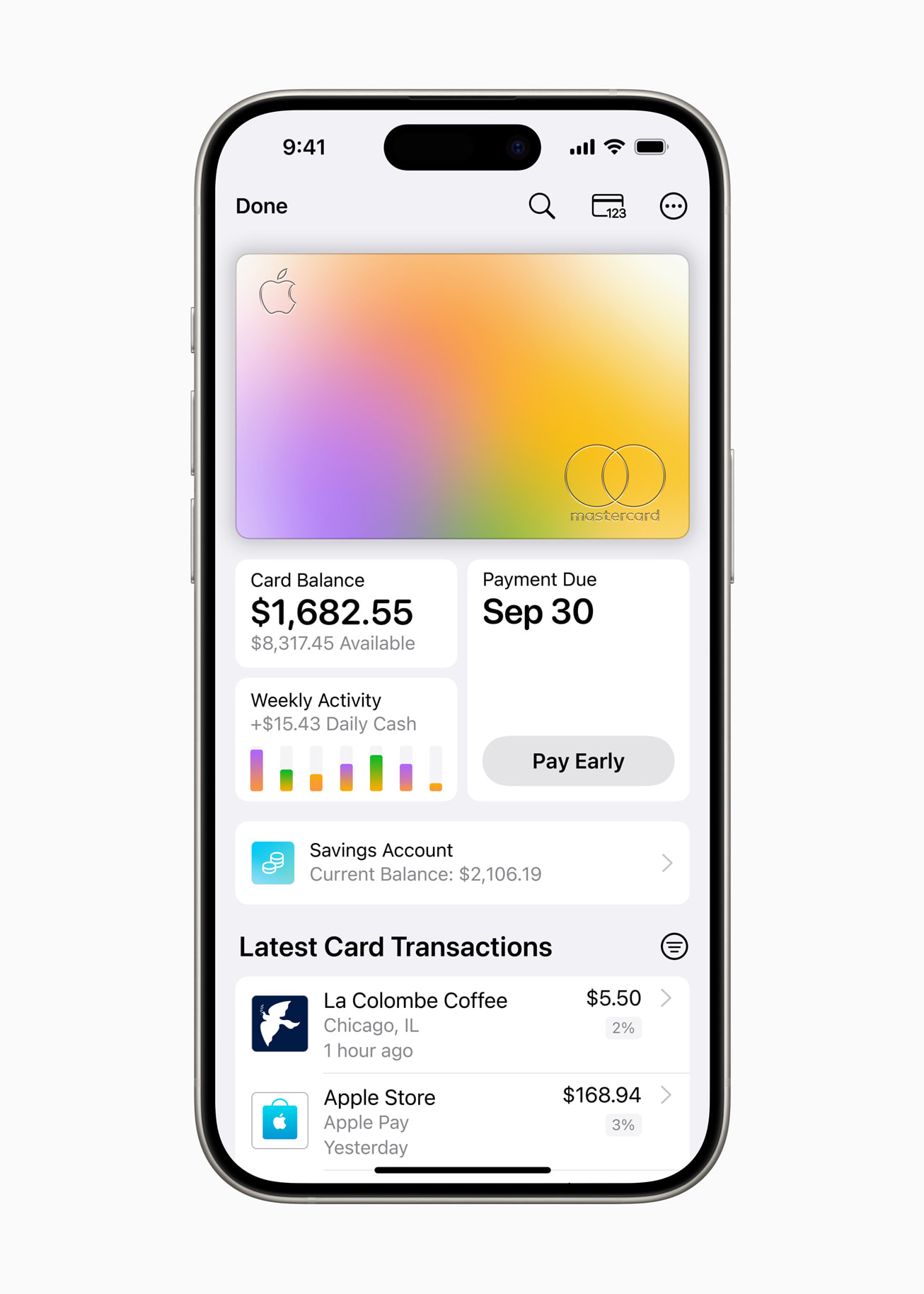
The Apple Card’s reward structure is built on simplicity, categorized into three distinct tiers. Unlike traditional cards where you might wait 30 to 60 days for a statement cycle to close before seeing your rewards, Apple Card deposits "Daily Cash" into your account as soon as the transaction clears.
- 3% Daily Cash: This tier is reserved for purchases made directly with Apple (including the App Store, hardware, and services like iCloud+ or Apple TV+) and a rotating selection of partner merchants. As of 2026, this list includes established partners like Uber, Uber Eats, Walgreens, Nike, and Panera Bread.
- 2% Daily Cash: This is the "sweet spot" for most users. Every purchase made using Apple Pay via an iPhone or Apple Watch earns a flat 2% back. Given the near-universal adoption of contactless payments by 2026, this effectively makes the Apple Card a 2% "everything" card for the majority of urban and suburban transactions.
- 1% Daily Cash: This is the baseline for purchases made with the physical titanium card. While the card itself is a design icon, the lower reward rate serves as a nudge for users to utilize the more secure Apple Pay interface.
The "Daily" aspect cannot be overstated. In a high-inflation or high-interest environment, the time value of money is critical. Receiving $5.00 today is mathematically superior to receiving $5.00 two months from now.
The Hidden Value: Apple Savings and Compound Interest
One of the most compelling arguments for the Apple Card winning over travel miles in 2026 is its integration with the Apple Savings account. Traditional travel miles sit in an account, stagnant, and often losing value as airlines inflate their award charts. They do not grow; they only depreciate.
Apple Card users can opt to have their Daily Cash automatically deposited into a high-yield Savings account (provided through Goldman Sachs or its 2026 partner institutions). In the current financial climate, where high-yield accounts offer competitive annual percentage yields (APY), your rewards actually grow over time.
The Opportunity Cost Comparison
Consider a user who earns $500 in rewards over a year.
- With Travel Miles: That "value" stays at roughly $500 (or less, if the airline devalues its points). It can only be spent on travel-related expenses.
- With Apple Card + Savings: The $500 is deposited daily. By the end of the year, with compound interest, that reward might be worth $525. Furthermore, that $525 can be spent on a flight, a car repair, or invested further.
This synergy transforms a simple cash-back card into a passive wealth-building tool, a feat that no airline "mile" can replicate.
Comparing Redemptions: Simplicity vs. Complexity
The primary frustration with travel miles in 2026 is the "redemption friction." To get the advertised "high value" (often cited as 2 cents per mile or more), a user must spend hours searching for specific award slots, often flying at inconvenient times or through multiple layovers.
| Feature | Apple Card (Daily Cash) | Traditional Travel Cards (Miles) |
|---|---|---|
| Value Transparency | 100% (1 cent = 1 cent) | Variable (0.5 to 2.0 cents) |
| Redemption Limits | None; use anywhere | Blackout dates, limited seats |
| Expiration | Never (as long as account is open) | Often expire after 12-24 months of inactivity |
| Annual Fees | $0 | Often $95 to $695 |
| Ease of Use | Instant, automatic | Requires manual searching and booking |
| Transferability | High (it is cash) | Low (restricted to partners) |
As the table demonstrates, the "cost" of a travel card isn't just the annual fee; it is the cognitive load required to manage the points. In 2026, time is a premium commodity. The Apple Card wins by removing the "work" from the reward.
Cost Analysis: No Fees vs. High Annual Fees
A significant hurdle for travel mile enthusiasts is the steep annual fee associated with premium cards. In 2026, many flagship travel cards have increased their fees to account for lounge access and "lifestyle credits." If a card has a $550 annual fee, a user must earn $550 worth of extra value just to break even.
The Apple Card has zero fees. No annual fee, no late fees, no over-limit fees, and—crucially for travelers—no foreign transaction fees.
When you compare a 2% cash-back card with no fee to a travel card with a $500 fee, the math often favors the cash-back option for everyone except the most frequent of "road warriors." For a travel card to "win," the user would need to spend significantly more or derive massive value from niche benefits (like airport lounge access) that many consumers find increasingly crowded and less valuable in 2026.
When Miles Still Make Sense (The Exceptions)
While cash back is the superior choice for the general population, travel miles still hold a specific niche in 2026. If you are a business traveler who spends six figures annually on credit cards, the ability to "transfer" points to international airlines for first-class or business-class suites can yield a value of 4 to 5 cents per mile.
However, this requires a massive spend and a specific desire for luxury travel. For the individual paying for groceries, gas, and the occasional vacation, the Apple Card’s 2% cash back provides a guaranteed "discount" on life that miles simply cannot match. The Apple Card doesn't require you to be a "travel hacker" to get the full value of the product.
Maximizing Your Apple Card in 2026
To ensure the Apple Card truly "wins" over a miles-based card, users should follow a specific strategy:
- Primary Use of Apple Pay: Always prioritize merchants that accept Apple Pay to secure the 2% rate. If a merchant only accepts physical cards and offers no Apple Pay, consider if another card in your wallet offers a higher "flat rate" than the Apple Card's 1% physical rate.
- Enable Auto-Savings: Ensure your Daily Cash is directed to the Apple Savings account immediately. This ensures your rewards are shielded from impulsive spending and are instead earning interest.
- Utilize Apple Card Monthly Installments: For Apple hardware, use the 0% APR financing feature. You still earn 3% Daily Cash on the total purchase price upfront, while paying the balance over 12-24 months. This is a massive "win" for cash flow management.
- Review Partner Merchants: Periodically check the Wallet app for new 3% partners. Using the Apple Card at a 3% partner is almost always superior to using a travel card, as the 3% "guaranteed return" is hard to beat even with optimized miles.
Common Pitfalls to Avoid
Despite its advantages, the Apple Card is most effective when used disciplined. Because it is so integrated into the iPhone, it can be easy to lose track of spending.
- The 1% Physical Card Trap: If you find yourself frequently using the physical titanium card, you are likely losing money compared to a standard 1.5% or 2% flat-rate cash-back card. The Apple Card is designed for a digital-first world; use it that way.
- Interest Charges: Like any credit card, the benefits of rewards are instantly negated if you carry a balance. The Apple Card’s transparency tools (which show exactly how much interest you will pay based on your payment amount) are excellent, but they only work if you heed their warnings.
FAQ
Does Apple Card Daily Cash ever expire?
No, Daily Cash does not expire as long as your account remains open. This is a significant advantage over airline miles, which often require "qualifying activity" every 12 to 24 months to prevent the balance from being forfeited. Even if you stop using the card for a period, your earned Daily Cash stays in your Apple Cash digital card or Savings account.
Can I use Apple Card for international travel?
Yes. The Apple Card is an excellent travel companion because it charges zero foreign transaction fees. While it may not earn "miles," the 1% or 2% cash back you earn abroad is often more valuable than the points earned on travel cards that may have high annual fees. However, ensure the country you are visiting has high Apple Pay/contactless adoption to maintain the 2% earn rate.
How do I redeem Daily Cash for a flight?
Redemption is simpler than using miles. Since Daily Cash is just money in your Apple Cash account, you can use it to pay for a flight directly if the airline or booking site accepts Apple Pay. Alternatively, you can transfer the cash to your linked bank account and use it to pay off your credit card statement after buying a ticket with any payment method you choose.
Is the Apple Card harder to get than travel cards?
Generally, the Apple Card is more accessible. Apple and its partner bank use a "soft pull" for the initial application, meaning you can see your approved limit and interest rate without affecting your credit score. Many premium travel cards require "Excellent" credit and have much stricter debt-to-income requirements.
Does the Apple Card offer lounge access or travel insurance?
No. This is the primary trade-off. Premium travel cards often include Priority Pass lounge access, trip cancellation insurance, and lost luggage protection. If those specific "concierge" features are worth more than the ~$500 annual fee to you, a travel card may still have a place in your wallet. However, for the majority of travelers, buying a one-off lounge pass or independent travel insurance is more cost-effective.
A Practical Recommendation
For the vast majority of consumers in 2026, the Apple Card wins the rewards war through its sheer lack of friction. If you use an iPhone and value your time, the move away from travel miles is a logical financial decision.
Next Action: Open your Apple Wallet app and check your "Effective Reward Rate" for the last three months. If your average reward rate is near 2% and you aren't paying an annual fee, you are likely outperforming the net value of a mid-tier travel card. If you haven't already, enable the Apple Savings feature to ensure your rewards are working for you through compound interest rather than sitting idle.
Image Gallery