Comprehensive Guide to No Smoking Signs for Schools
No smoking signs for schools serve as critical visual communication tools to enforce local tobacco-free and vape-free campus ordinances, protect student health, and maintain a safe, compliant educational environment. Selecting, placing...
No smoking signs for schools serve as critical visual communication tools to enforce local tobacco-free and vape-free campus ordinances, protect student health, and maintain a safe, compliant educational environment. Selecting, placing, and maintaining these markers requires an understanding of legal mandates, material durability, and strategic visibility.
Contents
Educational institutions operate under strict regional and federal guidelines regarding tobacco and nicotine use on school grounds. Installing clear, durable, and legally compliant no smoking signs for schools is a fundamental requirement for administrators, facility managers, and safety officers. These markers do more than simply display a prohibition; they establish institutional boundaries, support disciplinary frameworks, and communicate a commitment to public health. Navigating the requirements for these markers involves evaluating legal obligations, material specifications, mounting locations, and long-term maintenance protocols to ensure total campus compliance.
Understanding the Legal and Regulatory Framework
The mandate for no smoking signs for schools stems from a combination of federal guidelines, state statutes, and local ordinances. Most jurisdictions enforce comprehensive smoke-free and tobacco-free school policies that extend to all indoor and outdoor areas, including athletic fields, parking lots, and school buses.
Educational administrators must review specific state education codes and municipal laws to determine exact signage mandates. These regulations often dictate precise specifications, such as:
- Minimum sign dimensions (e.g., 6x6 inches or 9x12 inches).
- Mandatory inclusion of specific text, such as references to specific state health codes or ordinances.
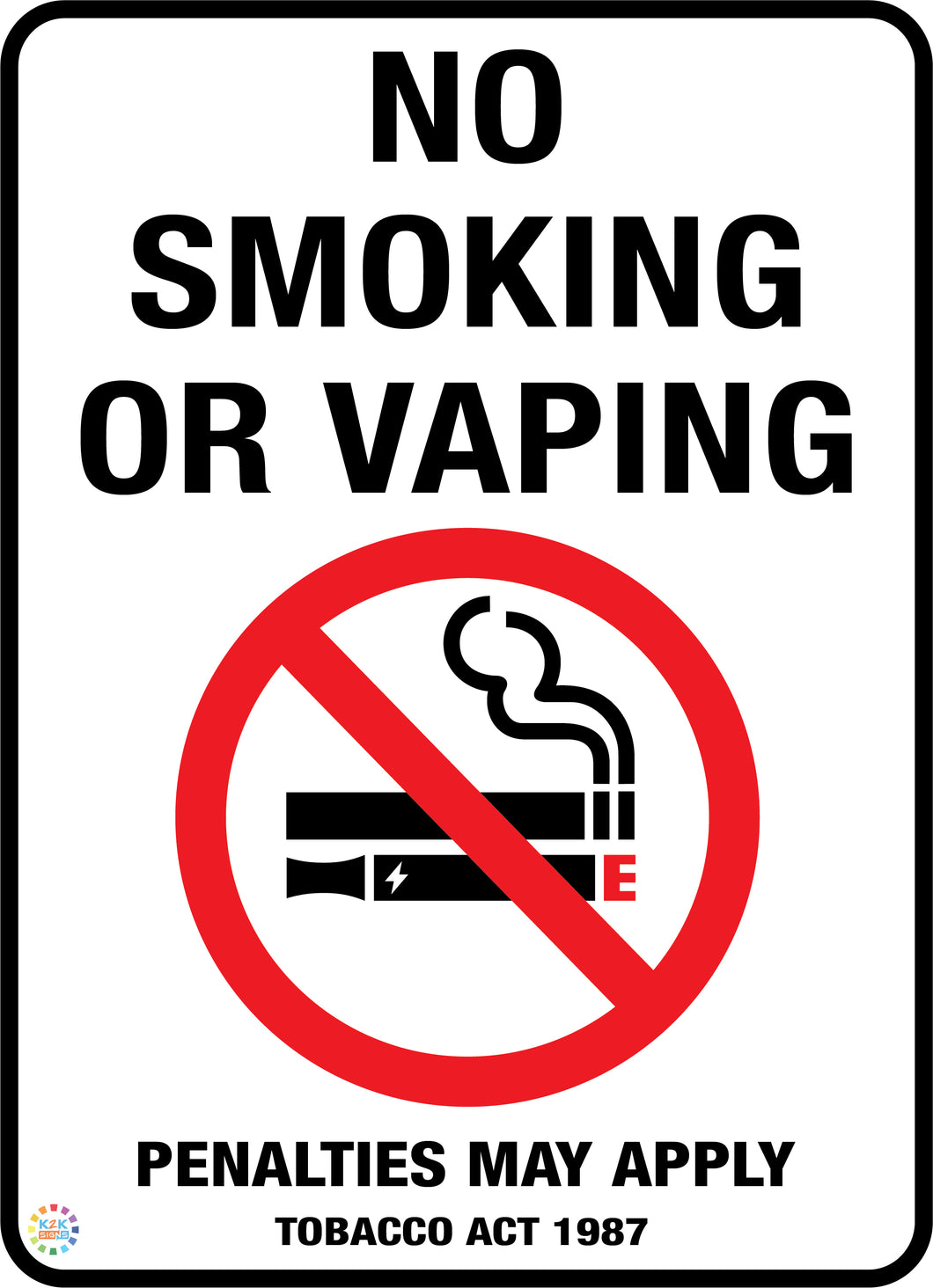
- Graphic requirements, including the international no-smoking symbol with a red circle and slash.
- Specific locations where signs must be posted, such as primary building entrances, gymnasiums, and vehicle gateways.
Failure to post required signage can result in compliance citations, administrative warnings, or potential funding penalties for public districts. Furthermore, clear signage protects the institution by establishing notice in the event of disciplinary hearings or enforcement actions against violators.
Key Material Specifications and Durability Factors
School environments subject physical infrastructure to heavy wear, weather exposure, and occasional vandalism. Choosing the correct material for no smoking signs for schools ensures longevity and minimizes replacement costs over time.
Material Comparisons for School Signage
| Material Type | Durability & Weather Resistance | Best Application | Cost Tier | Maintenance Requirements |
|---|---|---|---|---|
| Aluminum (.040" to .063") | Excellent; rust-proof, UV-resistant, withstands extreme weather. | Exterior perimeters, gates, fence lines, and building exteriors. | Moderate to High | Low; occasional washing with mild detergent. |
| Rigid Plastic (High-Impact Styrene) | Good for indoor use; moderate outdoor fade resistance. | Indoor hallways, cafeterias, gymnasiums, and administrative offices. | Low to Moderate | Low; wipe clean with standard disinfectants. |
| Vinyl Decals / Adhesive Stickers | Moderate; susceptible to peeling and picking if unlaminated. | Glass doors, windows, and smooth painted metal surfaces. | Low | Medium; prone to replacement if picked or scratched. |
| Composite (Aluminum Composite) | Superior rigidity and impact resistance; does not warp. | High-traffic outdoor zones, sports complexes, and parking areas. | High | Low; requires minimal upkeep. |
Beyond the core substrate, surface coatings play a vital role in maintaining legibility. UV-resistant laminates prevent sun bleaching, while anti-graffiti coatings allow maintenance crews to wipe away marker or spray paint without damaging the underlying graphics.
Strategic Placement and Visibility Requirements
Even the most durable sign is ineffective if it fails to capture attention. Strategic placement ensures that students, staff, visitors, and contractors receive clear notice of the policy before entering restricted zones.
Administrators should conduct a campus walkthrough to map out high-traffic entry points and logical zones for placement:
- Primary Public Entrances: Main administrative doors, visitor reception areas, and front office corridors.
- Student Access Points: Bus drop-off zones, student parking lots, and side entry gates used heavily during morning arrival and afternoon dismissal.
- Recreational and Athletic Facilities: Bleachers, gymnasiums, outdoor track fences, and concession stand perimeters.
- Perimeter Boundaries: Fencelines bordering public sidewalks or streets where pedestrians approach campus grounds.
Signs should be mounted at eye level—typically between 60 and 66 inches from the floor to the center of the sign—in accordance with general accessibility guidelines. For outdoor fences, secure industrial ties or stainless steel fasteners should be used to prevent rattling or removal.
Addressing Modern Challenges: Vaping and E-Cigarettes
The proliferation of electronic nicotine delivery systems (ENDS), commonly known as vapes or e-cigarettes, has transformed campus enforcement challenges. Traditional cigarette signs that display only a burning cigarette with a slash may be misinterpreted by students who believe electronic devices are exempt.
Modern no smoking signs for schools must explicitly address all nicotine delivery methods. Facility managers should look for signs featuring unified messaging or dedicated icons that explicitly prohibit:
- Traditional cigarettes, cigars, and pipes.
- Electronic cigarettes, vape pens, and personal vaporizers.
- Smokeless tobacco products, including dip, chew, and snus.
Additionally, many modern campuses integrate discrete vape sensors in restrooms and locker rooms. Pairing these electronic detection systems with bold, explicit signage reinforces the absolute prohibition of all smoking and vaping materials on school property.
Procurement, Customization, and Budgeting
Purchasing school safety signage requires balancing institutional branding, bulk pricing, and compliance verification. While stock templates are readily available from safety supply distributors, many schools opt for customized solutions.
Customization options allow districts to:
- Incorporate school mascot logos, district colors, or specific fonts to maintain visual consistency across campus.
- Add specific state statute citations (e.g., "Per State Health Code Section XXX") to provide legal weight to enforcement efforts.
- Include bilingual text (such as English and Spanish) to ensure clear communication with diverse parent and community populations.
When budgeting for a campus-wide signage update, procurement officers should calculate the total inventory needed across all buildings, athletic fields, and vehicle fleets. Buying in bulk from established institutional suppliers typically reduces per-unit costs and ensures material uniformity.
Common Mistakes in School Signage Deployment
Avoiding operational missteps ensures that an investment in campus signage yields long-term compliance and clarity.
- Ignoring Outdoor Zones: Posting signs exclusively inside main hallways while neglecting parking lots, athletic fields, and perimeter gates leaves legal blind spots where violations frequently occur.
- Using Outdated Imagery: Relying solely on older iconography that fails to depict e-cigarettes and vaping devices, leading to enforcement loopholes.
- Poor Placement Height: Mounting signs too high, too low, or behind foliage and architectural overhangs where they are obscured from view.
- Neglecting Maintenance: Allowing signs to fade, rust, or become covered in graffiti, which diminishes the perceived seriousness of the policy.
Frequently Asked Questions
Are schools legally required to post no smoking signs?
Yes, the vast majority of state and local jurisdictions mandate that educational facilities display clear, visible no smoking and tobacco-free signage at all public entrances and perimeter boundaries to maintain institutional compliance.
Do no smoking signs need to mention vaping explicitly?
While baseline tobacco laws often group electronic cigarettes under the definition of smoking products, modern best practice strongly recommends using signs that explicitly depict or mention vapes to eliminate ambiguity for students.
What is the most durable material for outdoor school signs?
Heavy-duty aluminum (.063" thickness) combined with a UV-resistant laminate is widely considered the industry standard for outdoor school signs due to its resistance to rust, fading, and weathering.
Where should signs be placed on large sports complexes?
Signs should be positioned at all entry gates, ticket booths, concession areas, and along bleacher perimeters to ensure spectators and visiting teams are aware of campus policies upon arrival.
How often should campus no smoking signs be inspected?
Facility management teams should conduct a comprehensive visual audit of all campus signage at least once per year, replacing any markers that show signs of severe fading, vandalism, or physical damage.
Conclusion and Next Actions
Maintaining a healthy, compliant educational environment requires deliberate planning around campus safety communications. Facility managers and school administrators should begin by auditing existing signage across all buildings, athletic fields, and parking areas to identify coverage gaps or outdated messaging. Next, consult local health department guidelines and state education codes to verify exact legal requirements for wording and placement. Procuring durable, weather-resistant aluminum or high-impact plastic signs that explicitly prohibit both smoking and vaping will establish clear boundaries and protect student well-being for years to come.
Image Gallery