Understanding Direct Auto Insurance Acquisition Expense: A Comprehensive Guide for 2026
Direct auto insurance acquisition expense represents the total cost an insurance carrier incurs to attract, vet, and enroll a new policyholder through direct-to-consumer channels. These costs primarily encompass digital marketing, adve...
Direct auto insurance acquisition expense represents the total cost an insurance carrier incurs to attract, vet, and enroll a new policyholder through direct-to-consumer channels. These costs primarily encompass digital marketing, advertising, internal sales team salaries, and technology infrastructure, distinguishing them from the commission-heavy expenses found in traditional agency-based distribution models.
Contents
In the competitive landscape of 2026, the efficiency of these expenditures determines an insurer's ability to offer competitive premiums while maintaining healthy profit margins. As the industry shifts further toward digital-first interactions, understanding the nuances of acquisition expenses is essential for financial analysts, insurance executives, and savvy consumers alike.
Defining the Scope of Acquisition Expenses
In the insurance sector, "acquisition expenses" are the costs related to the "acquisition" of new insurance contracts or the renewal of existing ones. When we specify direct auto insurance, we are looking at companies—often referred to as direct writers—that sell policies directly to the public without the mediation of independent agents or brokers.
Historically, insurance was sold via a "middleman" who earned a commission on every policy sold. In the direct model, the insurer bypasses this commission. However, the cost does not simply disappear; it is instead reallocated into the "direct acquisition" category. Instead of paying an agent, the company pays for Google search ads, television commercials during sporting events, and the upkeep of sophisticated mobile apps.
Primary Components of Direct Acquisition Costs
- Marketing and Advertising: This is typically the largest segment. It includes spend on search engine marketing (SEM), social media campaigns, brand-building television ads, and sponsorship deals. In 2026, this also includes significant investment in influencer partnerships and hyper-targeted programmatic advertising.
- Internal Sales and Customer Support: While there are no external agents, direct insurers employ large teams of salaried sales representatives and licensed professionals who handle inquiries over the phone or via live chat.
- Underwriting Expenses: Before a policy is issued, the insurer must assess the risk. Costs include pulling motor vehicle records (MVRs), credit scores (where legally permitted), and utilizing third-party data providers to verify vehicle history and driver behavior.
- Technology and Infrastructure: The digital storefront is the direct insurer's primary asset. The costs associated with maintaining a high-speed, secure, and user-friendly website or app are categorized here. This includes the integration of AI-driven chatbots and automated quoting engines.
- Policy Issuance and Administration: The clerical and technical costs of actually generating the policy documents and setting up the billing account.
The Financial Mechanics: GAAP vs. SAP Accounting
A critical aspect of understanding acquisition expenses is how they are treated on an insurer's balance sheet and income statement. There are two primary accounting frameworks used in the United States: Generally Accepted Accounting Principles (GAAP) and Statutory Accounting Principles (SAP).
Statutory Accounting Principles (SAP)
Under SAP, which is the framework required by state insurance regulators to ensure solvency, all acquisition costs must be expensed immediately. This creates a "strain" on the insurer's surplus when they grow quickly. Because the premium is earned over the life of the policy (usually six or twelve months) but the cost to get that customer is recognized on day one, a rapidly growing company might appear less profitable than it actually is in the short term.
Generally Accepted Accounting Principles (GAAP)
GAAP, used for reporting to investors and the SEC, allows for the Deferral of Acquisition Costs (DAC). This means the insurer can capitalize the costs associated with acquiring a policy and amortize them over the term of the policy. This "matching principle" ensures that the timing of the expense aligns with the timing of the premium revenue, providing a more accurate picture of ongoing operational profitability.
Direct vs. Agency Model: A Comparative Analysis
The shift toward direct acquisition is driven by the desire for lower "expense ratios." The expense ratio is calculated by dividing an insurer's operating expenses (including acquisition costs) by its earned premiums.
| Feature | Direct Distribution Model | Independent Agency Model |
|---|---|---|
| Primary Cost Driver | Advertising & Tech Infrastructure | Agent Commissions |
| Customer Interaction | Self-service / Call Center | Face-to-face / Personalized |
| Scalability | High; digital reach is vast | Moderate; relies on agent headcount |
| Data Control | Insurer owns 100% of lead data | Agent often owns the relationship |
| Upfront Cost | High (Massive ad spend required) | Low (Commission paid after sale) |
| Target Audience | Tech-savvy, price-conscious | Complex needs, relationship-driven |
In 2026, the gap between these models is narrowing as traditional carriers adopt direct-to-consumer technology, and direct carriers experiment with "embedded" insurance—selling policies through car dealerships or auto-manufacturer apps.
Strategic Optimization of Acquisition Expenses in 2026
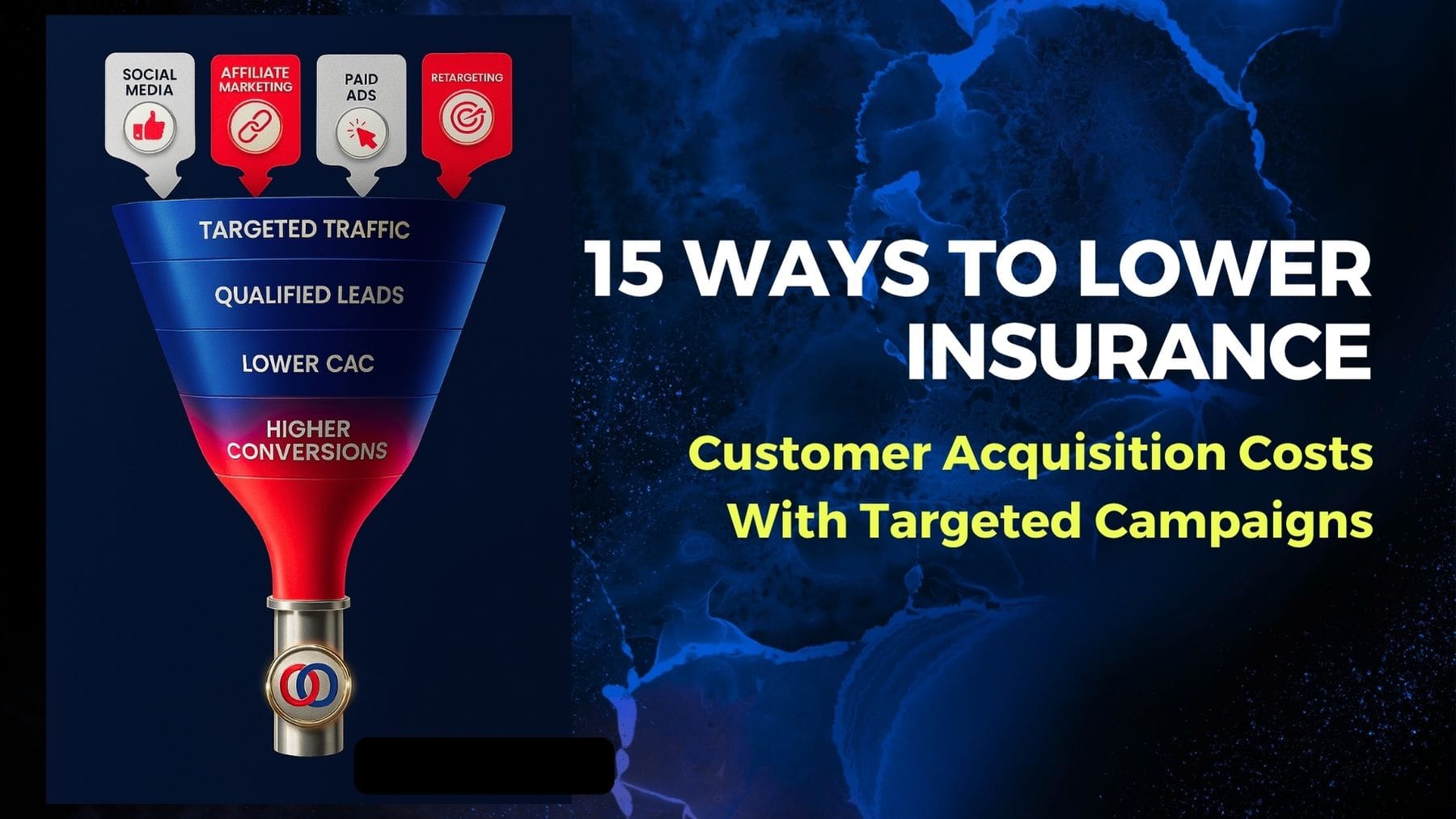
As of 2026, the "brute force" method of spending billions on television ads is seeing diminishing returns. Leading insurers are now focusing on optimization to lower their Customer Acquisition Cost (CAC).
1. The Role of Artificial Intelligence and Machine Learning
Insurers are using AI to predict which leads are most likely to convert and which will have the highest "Lifetime Value" (LTV). By focusing marketing spend on high-intent individuals who are likely to remain customers for many years, companies can justify higher initial acquisition expenses.
2. Telematics and Behavioral Data
Telematics—tracking driving habits via mobile apps or OBD-II devices—has become a cornerstone of acquisition. By offering "Pay-How-You-Drive" (PHYD) programs, insurers can attract low-risk drivers with lower initial rates. This reduces the "hidden" acquisition cost of bad risk, as the data allows for more precise pricing from the first day.
3. Embedded Insurance and Partnerships
To bypass the high costs of open-market advertising, direct insurers are increasingly embedding their products directly into the vehicle purchase process. When a consumer buys an electric vehicle (EV) in 2026, the insurance quote is often integrated into the car’s digital dashboard. This dramatically reduces the acquisition expense by meeting the customer at the "point of need" without competing in expensive Google Ad auctions.
Challenges Impacting Acquisition Costs
Despite technological advancements, several factors continue to put upward pressure on direct auto insurance acquisition expenses:
- Ad Platform Inflation: As more industries move to digital-only marketing, the cost per click (CPC) on major platforms continues to rise, often exceeding the inflation rate of the general economy.
- Privacy Regulations: Evolving data privacy laws (such as updates to the CCPA and various state-level acts) make it more difficult for insurers to track and target potential customers with precision, leading to "waste" in advertising spend.
- Consumer Churn: In a digital world, it is incredibly easy for a consumer to switch insurers. If a customer leaves after only one six-month term, the insurer may not have recovered the initial acquisition expense, leading to a net loss on that account.
The Relationship Between Acquisition Expense and Premiums
Policyholders often wonder why their premiums fluctuate. A significant portion of every dollar paid in premiums goes toward covering the carrier's acquisition costs. If an insurer manages to lower its acquisition expense through better technology or higher retention rates, it can theoretically pass those savings to the consumer through lower rates or "loyalty discounts."
However, if an insurer's acquisition costs spike—perhaps due to a failed marketing campaign or a highly competitive market—they may be forced to raise premiums across the board to maintain their combined ratio. The combined ratio is the sum of the loss ratio and the expense ratio; a ratio below 100% indicates an underwriting profit.
Frequently Asked Questions
What is a "good" acquisition expense ratio for an auto insurer?
While it varies by the company's age and growth stage, established direct insurers typically aim for an acquisition expense ratio between 10% and 15% of written premiums. Newer "Insurtech" companies may have much higher ratios as they prioritize rapid market share growth over immediate profitability.
Does a higher acquisition expense mean a better insurance product?
Not necessarily. A higher acquisition expense usually indicates that the company is spending heavily on marketing or has an inefficient sales process. It does not correlate directly with the quality of claims handling or the breadth of coverage. In many cases, companies with the lowest acquisition costs are the most efficient and can offer the best value.
Why do some direct insurers have "membership fees"?
Some direct insurers, particularly those with a mutual or reciprocal structure, use membership fees to offset initial acquisition and administrative costs. This allows them to keep the base premium lower while ensuring that the cost of "onboarding" a new member is covered.
How does the 2026 economic environment affect these costs?
In 2026, the insurance industry is dealing with the tail-end of inflationary pressures on vehicle repairs. To compensate for higher claims payouts (the loss ratio), many carriers are being forced to tighten their marketing budgets (the acquisition expense) to keep their total combined ratio stable.
Can I lower an insurer's acquisition expense as a consumer?
Indirectly, yes. Consumers who use comparison tools or go directly to an insurer's website without clicking on a paid advertisement represent a lower acquisition cost for the company. While you won't see an immediate discount for this, "organic" customers are often viewed more favorably in an insurer's lifetime value models.
Practical Recommendation for 2026
For those analyzing the financial health of an insurance carrier, it is vital to look beyond the top-line revenue and examine the efficiency of the acquisition spend. Look for companies that are successfully leveraging telematics and embedded partnerships, as these channels typically offer a more sustainable and lower-cost path to growth than traditional digital advertising.
For consumers, the best strategy remains to shop for coverage at least once every two years. The direct insurance market is highly volatile, and as companies shift their acquisition strategies, the "new customer" discounts available can vary significantly from month to month. Always ensure you are comparing "apples to apples" regarding coverage limits and deductibles when switching to a direct provider.
Image Gallery