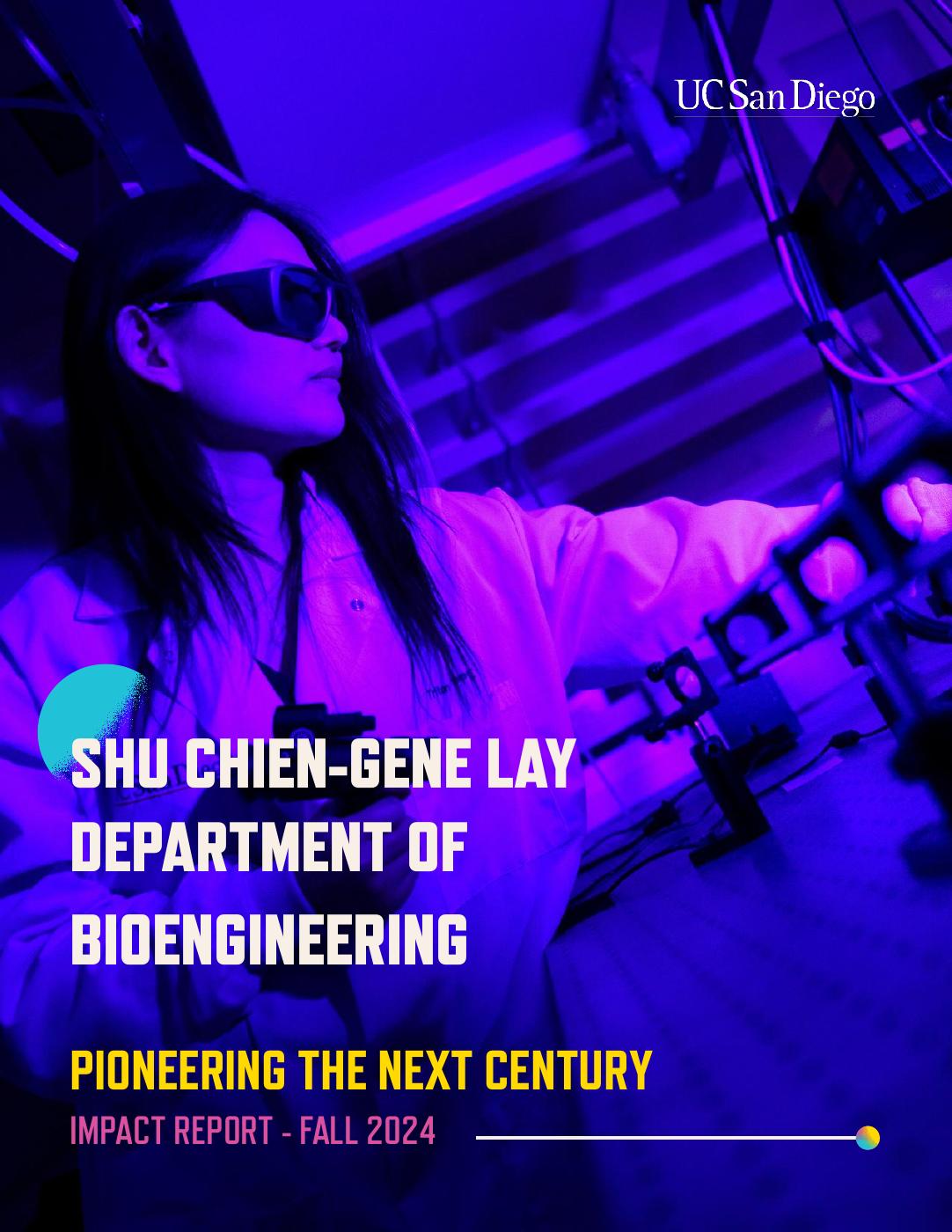
UC San Diego Bioengineering PhD Application Deadline and Admissions Guide
The UC San Diego Shu Chien-Gene Lay Department of Bioengineering maintains a strict annual Ph.D. application deadline in early December—typically December 3 at 11:59 PM Pacific Standard Time—for admission to the subsequent Fall quarter...
The UC San Diego Shu Chien-Gene Lay Department of Bioengineering maintains a strict annual Ph.D. application deadline in early December—typically December 3 at 11:59 PM Pacific Standard Time—for admission to the subsequent Fall quarter. Prospective doctoral students must submit the online application, official transcripts, candidate statements, and three letters of recommendation before this cutoff to receive full consideration for departmental funding.
Contents
Navigating the UC San Diego Bioengineering PhD Admissions Timeline
Applying to the Shu Chien-Gene Lay Department of Bioengineering at the UC San Diego Jacobs School of Engineering requires careful strategic planning. As one of the top-ranked bioengineering graduate programs globally, UC San Diego receives hundreds of competitive applications each year for a limited cohort size. The department operates strictly on a Fall-quarter entry system, meaning there are no admissions for Winter or Spring terms.
The application portal opens annually in early September. Applicants targeting entry for the Fall term must complete all requirements by early December of the preceding academic cycle. For example, applicants seeking entry for Fall must submit all components by the early December deadline of the previous year.
Admissions Review Philosophy The Bioengineering Graduate Admissions Committee evaluates applications using a holistic framework. While quantitative metrics such as grade point averages and course rigor are thoroughly evaluated, significant weight is placed on prior research experience, demonstrated problem-solving abilities, faculty alignment, and the candidate's personal statements.
After the early December deadline closes, the admissions committee conducts an initial screening of all complete files throughout December and early January. Top-tier candidates are invited to participate in the department's Graduate Recruitment Event, typically hosted on campus in February. Final admission decisions and formal funding offers are extended on a rolling basis between late February and mid-March, with the national graduate acceptance response deadline fixed at April 15.
Essential Application Requirements and Document Checklist
A complete application to the UC San Diego Bioengineering Ph.D. program requires the electronic submission of several vital components through the UC San Diego Graduate Admissions Portal. Incomplete files will not be reviewed by the admissions committee.
Academic Transcripts and Educational Prerequisites
Applicants must upload unofficial transcripts from every post-secondary institution attended. Official transcripts are only required upon acceptance and matriculation. Candidates are expected to hold a Bachelor’s or Master’s degree in bioengineering, biomedical engineering, or a closely related STEM discipline such as chemical engineering, mechanical engineering, electrical engineering, computer science, physics, or molecular biology.
A minimum cumulative Grade Point Average (GPA) of 3.0 on a 4.0 scale is required by the UC San Diego Graduate Division, though successful applicants to the Bioengineering Ph.D. program typically hold a GPA of 3.5 or higher. Prerequisites include strong foundational coursework in calculus, differential equations, linear algebra, calculus-based physics, general chemistry, organic chemistry, and fundamentals of biology or physiology.
Statement of Purpose and Personal History Statement
Candidates must submit two distinct essays:
- Statement of Purpose (SoP): This document should focus primarily on academic preparedness, research background, intellectual interests, and career objectives. Candidates must clearly delineate past research contributions, technical methodologies mastered, publications or presentations achieved, and specific faculty members within the Shu Chien-Gene Lay Department of Bioengineering whose research aligns with their goals.
- Personal History Statement: This essay allows the admissions committee to understand the applicant's personal background, unique experiences, leadership potential, and challenges overcome. Candidates should highlight how their background contributes to the academic diversity of the UC San Diego community.
Letters of Recommendation
Three letters of recommendation are required. These letters should be authored by faculty members, research mentors, or industry supervisors who can directly attest to the candidate's research capability, quantitative aptitude, intellectual curiosity, and potential for success in an intensive doctoral program. Recommendations from research advisors carrying weight in academic settings are strongly emphasized.
Standardized Testing Policies
- GRE (Graduate Record Examination): The GRE General Test is not required for admission into the UC San Diego Bioengineering Ph.D. program. Submitting GRE scores is optional and will not negatively impact an applicant's candidacy if omitted.
- English Language Proficiency: International applicants whose primary language is not English and who have not earned a degree from a university in an English-speaking country must submit official scores from either the TOEFL (Test of English as a Foreign Language) or IELTS (International English Language Testing System). The minimum required score for the TOEFL iBT is 85; for IELTS, the minimum overall band score is 7.0.
Comprehensive Deadlines and Key Academic Milestones
| Milestone / Requirement | Target Date / Window | Responsible Party | Essential Action & Details |
|---|---|---|---|
| Application Portal Opens | Early September | Applicant | Register account on UC San Diego Graduate Application portal. |
| Primary PhD Deadline | Early December (Dec 3, 11:59 PM PST) | Applicant | Final deadline for all transcripts, statements, fee payments, and initial application submission. |
| Letters of Recommendation Cutoff | Early December | Recommenders | Refined deadline for referees to upload recommendation letters. |
| Application File Review | Mid-December to January | Admissions Committee | Faculty review of research experiences, publications, and academic metrics. |
| Recruitment Day Invitations | Mid-January | Admissions Committee | Formal invitations dispatched for on-campus interview visits. |
| Bioengineering Recruitment Event | February | Shortlisted Applicants | On-campus lab tours, faculty interviews, and interactions with current Ph.D. students. |
| Formal Offers of Admission | Late February – Mid-March | Graduate Division | Rolling distribution of admission letters and guaranteed funding packages. |
| National Acceptance Deadline | April 15 | Applicant | Final deadline to accept or decline admission offers (CGS Resolution standard). |
Specialized Tracks and Interdisciplinary PhD Programs
The Shu Chien-Gene Lay Department of Bioengineering offers several specialized doctoral tracks and interdisciplinary training pathways. Applicants must select their primary specialization during the online application process.
Bioengineering (Core Track)
The core doctoral program emphasizes advanced engineering principles applied to biological systems. Research domains include:
- Biomechanics, Mechanobiology, and Tissue Engineering
- Biomaterials and Regenerative Medicine
- Cellular and Molecular Bioengineering
- Biosensors, Bioelectronics, and Microfluidics
- Systems Biology and Synthetic Biology
Bioengineering with Specialization in Bioinformatics
This specialized track integrates quantitative computational methods with modern molecular biology. Students take rigorous coursework across bioengineering, computer science, and biological sciences. Research focuses on high-throughput genomic data analysis, structural bioinformatics, metabolic network modeling, and computational systems biology.
Bioengineering with Specialization in Multi-Scale Biology
Designed for researchers seeking to bridge molecular-scale mechanics with organ-level physiological function, this specialization provides cross-disciplinary training in advanced imaging, multi-scale computational modeling, and quantitative physiology.
Med-Into-Grad (MIG) Specialization
Supported by specialized institutional training opportunities, the Med-Into-Grad track incorporates clinical exposure directly into the Ph.D. curriculum. Bioengineering doctoral students shadow physicians at UC San Diego Health facilities, identifying unmet clinical needs to drive translational medical innovation.
Funding Structure, Fellowships, and Graduate Student Assistantships
All students admitted to the Ph.D. program in Bioengineering at UC San Diego receive full financial support, provided they maintain satisfactory academic and research progress. Guaranteed financial support covers tuition, non-resident supplemental tuition (where applicable), mandatory university fees, student health insurance (GSHIP), and a competitive monthly living stipend.
Graduate Student Researcher (GSR) Appointments
The primary source of graduate funding in the department is through Graduate Student Researcher appointments. Funded via principal investigators' federal research grants (NIH, NSF, DoD, DARPA) or industry partnerships, GSR appointments provide full tuition coverage and monthly stipends in exchange for dedicated laboratory research.
Teaching Assistantships (TA)
Doctoral students typically serve as Teaching Assistants for undergraduate bioengineering courses for a minimum of two to three quarters during their tenure. TA positions provide partial fee offsets, health insurance coverage, and direct instructional compensation.
External Fellowships and Institutional Grants
Applicants are strongly encouraged to apply for competitive external fellowships, such as the National Science Foundation Graduate Research Fellowship Program (NSF GRFP), the National Defense Science and Engineering Graduate (NDSEG) Fellowship, or the Hertz Foundation Fellowship.
Students who secure external awards are frequently awarded supplemental departmental top-off stipends. Additionally, UC San Diego houses several NIH T32 Institutional Training Grants (e.g., in Tissue Engineering and Regenerative Medicine, Computational Biology, and Cancer Nanotechnology) that fund eligible doctoral students in their second year and beyond.
Strategic Guidelines for Building a Competitive Application
Gaining admission to UC San Diego's Bioengineering Ph.D. program requires a clear strategy that showcases relevant expertise and research focus.
Aligning Research Interests with Departmental Faculty
Generic applications rarely succeed. Candidates should investigate the research labs within the Shu Chien-Gene Lay Department of Bioengineering and explicitly name 2 to 4 faculty members whose active research aligns with their background.
Faculty Selection Strategy In your Statement of Purpose, do not merely list faculty names. Detail how your previous research skills directly translate to ongoing projects in those specific laboratories. Explain the precise scientific questions you hope to investigate under their mentorship.
Demonstrating Technical and Quantitative Rigor
Highlight all hands-on exposure to quantitative analytical techniques, experimental lab protocols, computational modeling tools (e.g., MATLAB, Python, R, COMSOL), or microfabrication procedures. Publications in peer-reviewed journals, abstract submissions, conference presentations, and patents should be emphasized on your curriculum vitae and within the Statement of Purpose.
Crafting a Purposeful Personal History Statement
The Personal History Statement should not duplicate the Statement of Purpose. Use this section to explain your academic trajectory, personal motivations, resilience in overcoming research or personal obstacles, and commitment to fostering inclusive environment in engineering disciplines.
Frequently Asked Questions
What is the exact application deadline for the UC San Diego Bioengineering PhD program?
The application deadline is annually set for early December (typically December 3 at 11:59 PM PST) for entry in the Fall quarter of the following academic year. Late applications are generally not accepted.
Is the GRE General Test required for admission?
No, the GRE General Test is not required for the Bioengineering Ph.D. program at UC San Diego. Submitting GRE scores is completely optional and omitting them will not lower your evaluation score.
Are international students eligible for full financial funding?
Yes, international applicants accepted into the UC San Diego Bioengineering Ph.D. program receive full financial support, including tuition, mandatory fees, health insurance, and a living stipend, under the same terms as domestic candidates.
Does the department accept applications for Winter or Spring quarter entry?
No. The Bioengineering Ph.D. program admits students exclusively for the Fall quarter to ensure proper curriculum sequencing and orientation cohort integration.
What should I do if my recommender cannot upload their letter before the December deadline?
While applicants must submit their portion of the application by the deadline, recommendation letters are granted a grace period of a few days. However, early submission ensures that your application file moves to faculty review without delay.
Can I contact faculty members directly before submitting my application?
Yes, prospective students may reach out to faculty members via email to express interest in their research and inquire if they are accepting new graduate students. Emails should be concise, professional, and include a attached CV detailing your research background.
For applicants preparing to submit their documentation, early planning ensures all materials, references, and transcripts align with departmental standards before the early December cutoff. Review the official UC San Diego Shu Chien-Gene Lay Department of Bioengineering portal to verify current-year fee structures, track options, and application system access.
Image Gallery