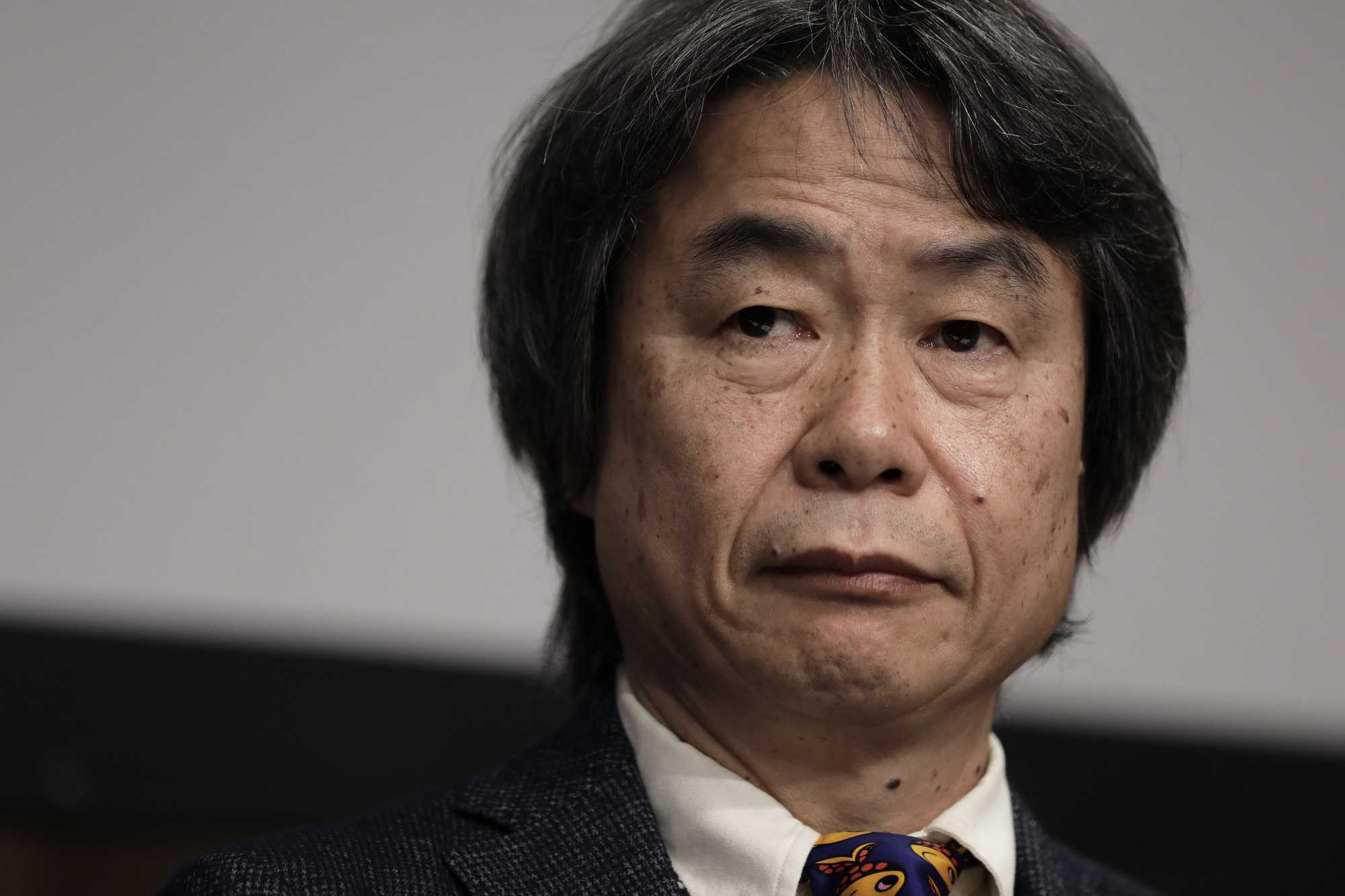
Shigeru Miyamoto Net Worth and Career Highlights
As of 2026, Shigeru Miyamoto’s net worth is estimated to be between $40 million and $60 million. Unlike many Western technology executives who amass multi-billion dollar fortunes through massive equity stakes, Miyamoto’s wealth is prim...
As of 2026, Shigeru Miyamoto’s net worth is estimated to be between $40 million and $60 million. Unlike many Western technology executives who amass multi-billion dollar fortunes through massive equity stakes, Miyamoto’s wealth is primarily derived from his decades-long tenure as a high-ranking executive and Representative Director at Nintendo, supplemented by performance bonuses and modest stock holdings.
Contents
Shigeru Miyamoto is widely regarded as the "Father of Modern Video Games." His career at Nintendo spans nearly half a century, during which he created some of the most enduring franchises in entertainment history, including Super Mario, The Legend of Zelda, and Donkey Kong. In 2026, he continues to serve as a Creative Fellow at Nintendo, focusing on the brand’s expansion into theme parks and motion pictures while providing high-level guidance on game development.
The Financial Landscape of a Gaming Legend
Understanding Shigeru Miyamoto’s net worth requires a look at the specific corporate culture of Japan and Nintendo. In the United States, founders and CEOs like Mark Zuckerberg or the late Steve Jobs often held significant percentages of their company's stock. Shigeru Miyamoto, however, joined Nintendo in 1977 as a staff artist, not a founder. The company was owned and controlled by the Yamauchi family for generations.
Consequently, Miyamoto's wealth has been built through a steady, prestigious career as an employee and eventually a senior executive. Japanese executive compensation is notoriously conservative compared to American standards. According to Nintendo’s annual financial reports and proxy statements leading into the mid-2020s, top directors typically earn between 100 million and 250 million yen annually (approximately $1 million to $2 million USD), consisting of a base salary and performance-based bonuses.
Why Miyamoto is Not a Billionaire
Despite the billions of dollars in revenue generated by his creations, Miyamoto does not own the intellectual property (IP) of Mario or Zelda; Nintendo does. His financial status reflects a high-net-worth individual rather than a tech mogul. His primary assets include:
- Executive Compensation: Decades of seven-figure salaries as a Representative Director.
- Nintendo Stock: Shares accumulated through employee stock programs and executive grants.
- Consulting and Royalties: While not publicly detailed, senior Japanese creatives often have specific bonus structures tied to the commercial success of their directed projects.
Early Career and the Birth of Donkey Kong (1977–1981)
Shigeru Miyamoto’s journey began when he was hired by Nintendo’s third president, Hiroshi Yamauchi, as an industrial designer. At the time, Nintendo was transitioning from a playing-card company into an electronic toy and arcade manufacturer.
In 1980, Nintendo’s American division was struggling with a surplus of unsold arcade cabinets for a game called Radar Scope. Yamauchi tasked Miyamoto with creating a new game to "re-skin" these cabinets. Eschewing the popular space-shooter tropes of the era, Miyamoto focused on character and narrative. He created a love triangle between a stubborn ape, a carpenter named "Jumpman," and a lady in distress.
The resulting game, Donkey Kong (1981), became a global phenomenon. It introduced the concept of the "platformer" and established Miyamoto’s philosophy of gameplay: that a game should be intuitive, fun, and driven by the character's physical movement.
Defining the Golden Age: Mario and Zelda (1985–1991)
After the success of Donkey Kong, Miyamoto was given his own department, Entertainment Analysis & Development (EAD). During this period, he produced two titles that would define the industry for the next 40 years.
Super Mario Bros. (1985)
Released for the Nintendo Entertainment System (NES), Super Mario Bros. is credited with single-handedly reviving the North American video game market after the 1983 crash. Miyamoto’s design focused on "shokunin" (craftsmanship), ensuring that the feel of Mario’s jump was pixel-perfect. The game sold over 40 million copies and made Mario the face of the brand.
The Legend of Zelda (1986)
In contrast to the linear progression of Mario, Miyamoto drew on his childhood memories of exploring the woods and caves of Sonobe, Japan, to create The Legend of Zelda. It was one of the first games to feature a "save" function, allowing for non-linear exploration and a focus on puzzle-solving. This established the "action-adventure" genre and remains a cornerstone of Nintendo’s software lineup in 2026.
The 3D Revolution and Hardware Influence (1996–2006)
As technology advanced, Miyamoto played a pivotal role in transitioning the industry from 2D sprites to 3D polygons. He wasn't just a software designer; he heavily influenced Nintendo’s hardware design, including the addition of the analog stick to the Nintendo 64 controller.
- Super Mario 64 (1996): This title established the "camera" system in 3D gaming, a mechanic that every modern 3D game still utilizes.
- The Legend of Zelda: Ocarina of Time (1998): Frequently cited as one of the greatest games ever made, it introduced "Z-targeting," solving the problem of how to engage in combat within a 3D space.
During the early 2000s, Miyamoto oversaw the development of new IPs such as Pikmin and Luigi’s Mansion, while also serving as a producer for the Metroid Prime series.
Transition to Management and Creative Fellow Status
In 2015, following the passing of Nintendo President Satoru Iwata, Miyamoto served as a temporary acting representative director alongside Genyo Takeda. Shortly after, he was appointed to the newly created role of Creative Fellow.
In this capacity, Miyamoto moved away from the day-to-day coding and level design of individual games. Instead, he became a high-level consultant for the entire company, ensuring that the "Nintendo DNA"—a focus on surprise, polish, and family-friendly fun—was maintained across all departments. By 2026, his role has evolved even further into the realm of brand stewardship and transmedia.
Key Career Milestones and Impact
| Period | Major Project / Role | Key Impact |
|---|---|---|
| 1981 | Donkey Kong | Established the platformer genre and saved Nintendo of America. |
| 1985 | Super Mario Bros. | Revitalized the global gaming industry after the 1983 market crash. |
| 1986 | The Legend of Zelda | Introduced non-linear exploration and save-battery technology. |
| 1996 | Super Mario 64 | Pioneered 3D movement and camera control systems. |
| 2006 | Wii Series | Led the "Blue Ocean" strategy, bringing gaming to non-traditional audiences. |
| 2015-Present | Creative Fellow | Oversees theme parks, movies, and high-level brand strategy. |
| 2023 | The Super Mario Bros. Movie | Produced the record-breaking film, expanding Nintendo into a major film studio. |
Beyond Pixels: Movies and Theme Parks (2020–2026)
The most significant shift in Miyamoto’s later career—and a major contributor to his continued value to Nintendo—is his work in the "physical" and "cinematic" worlds. Recognizing that Nintendo’s characters were as valuable as Disney’s, Miyamoto spearheaded the creation of Super Nintendo World.
Working closely with Universal Creative, Miyamoto personally oversaw the design of the theme parks in Osaka, Hollywood, and Orlando. His insistence on "interactive" experiences, such as the Power-Up Bands, brought his game design philosophy into the real world.
Furthermore, Miyamoto’s partnership with Chris Meledandri of Illumination led to the 2023 release of The Super Mario Bros. Movie. As a producer, Miyamoto ensured the film remained faithful to the source material. The film's $1.3 billion box office success led to the announcement of sequels and spin-offs (such as the Legend of Zelda live-action film), all of which Miyamoto continues to oversee as of 2026.
Legacy and Influence on the Industry
Shigeru Miyamoto’s influence cannot be overstated. He pioneered the concept of "game design" as a formal discipline. Before Miyamoto, games were often designed by programmers; he proved that artists and storytellers were equally essential.
His "Up-Down-Left-Right" philosophy—ensuring that a player understands the mechanics of a game without a tutorial—remains a gold standard in the industry. Furthermore, he is famous for "upending the tea table" (chabudai gaeshi), a term used at Nintendo when Miyamoto insists on a radical redesign of a project late in development to ensure it meets his quality standards.
Frequently Asked Questions
Does Shigeru Miyamoto own Nintendo?
No, Shigeru Miyamoto does not own Nintendo. He is a high-ranking employee and an officer of the company. Historically, the company was controlled by the Yamauchi family, and it is now a publicly traded corporation on the Tokyo Stock Exchange.
What is Shigeru Miyamoto's salary in 2026?
While exact figures for 2026 are private until annual reports are filed, Nintendo’s senior directors typically receive an annual compensation package (salary plus bonuses) ranging from $1.5 million to $2.5 million USD. This is significantly lower than the compensation of CEOs at American gaming giants like Activision Blizzard or Electronic Arts.
Is Miyamoto still designing games?
In 2026, Miyamoto acts more as a supervisor and mentor than a hands-on designer. He reviews the progress of major titles and provides "feedback from the perspective of a player," but the day-to-day design work is handled by the next generation of directors like Hidemaro Fujibayashi (Zelda) and Takashi Tezuka (Mario).
What is Miyamoto’s most successful game?
In terms of pure units sold, Wii Sports and Super Mario Bros. are his most successful projects. However, in terms of industry-wide influence, Super Mario 64 and The Legend of Zelda: Ocarina of Time are considered his most significant contributions to the medium of interactive entertainment.
How has the Mario Movie affected his net worth?
As a producer on the film, Miyamoto likely received specific production bonuses and royalties. However, most of the film's $1.3+ billion revenue goes to Nintendo’s corporate accounts and its partner, Universal/Illumination. Miyamoto’s wealth remains tied to his executive standing rather than a direct percentage of the box office.
Practical Recommendation: Understanding the "Miyamoto Method"
For those looking to apply Shigeru Miyamoto’s success to their own careers—whether in game design, management, or creative arts—the takeaway is his focus on user-centric design. Miyamoto’s net worth and career longevity are products of his ability to prioritize the consumer's "smile" over technical gimmicks.
If you are a creator, focus on the "first 30 seconds" of your user experience. Miyamoto famously spent months perfecting the feel of Mario’s jump before a single level was built. In any industry, mastering the fundamental "feel" of your product is the most reliable path to long-term success and legacy.
Image Gallery