Maximize Savings with Coupons for Walgreens Pharmacy: 2026 Prescription and OTC Savings Guide
Walgreens pharmacy coupons allow patients to reduce out-of-pocket expenses on prescriptions, over-the-counter (OTC) medications, and everyday health supplies. By understanding how to combine myWalgreens digital rewards, drug manufactur...
Walgreens pharmacy coupons allow patients to reduce out-of-pocket expenses on prescriptions, over-the-counter (OTC) medications, and everyday health supplies. By understanding how to combine myWalgreens digital rewards, drug manufacturer copay cards, and third-party prescription discount programs, consumers can lower healthcare costs. Federal regulations strictly govern how savings mechanisms apply alongside commercial insurance versus government programs like Medicare.
Contents
Types of Pharmacy Coupons and Discount Mechanisms at Walgreens
Navigating savings options at retail pharmacies requires understanding the distinction between store rewards, prescription savings programs, manufacturer copay cards, and third-party discount options. Each program operates under unique rules regarding eligibility, billing, and eligibility for stacking with primary insurance.
Walgreens Pharmacy Discount & Savings Channels:
- Drug Manufacturer Copay Cards: Commercial Insurance Copay Reductions
- myWalgreens Digital Rewards: OTC Medications & Storewide Health Items
- Third-Party Discount Cards: Uninsured / Out-of-Pocket Cash Price Fills
- OTC Benefit / Flex Cards: Eligible OTC Health Supplies & Devices
(Conceptual overview of pharmacy discount channels)
Key Takeaway on Savings Channels
Prescriptions billed through commercial insurance can often be paired with drug manufacturer copay cards to reduce out-of-pocket costs. Over-the-counter purchases rely primarily on store loyalty rewards and paperless digital coupons clipped within the myWalgreens mobile platform. Cash-paying or underinsured patients can use third-party discount codes when insurance pricing is unavailable or unfavorable.
1. Drug Manufacturer Copay Assistance Cards
Pharmaceutical manufacturers issue manufacturer copay cards (also known as copay savings coupons) to offset out-of-pocket copayment or coinsurance costs for brand-name prescription drugs.
- Target Medications: High-cost specialty medications, brand-name insulin, biological therapies, and brand maintenance drugs without direct generic equivalents.
- Billing Integration: Processed as secondary insurance by the pharmacy staff using specific electronic routing data, including a Bank Identification Number (BIN), Processor Control Number (PCN), Group Number, and Member ID.
- Financial Impact: Can reduce copays to a fixed low amount (e.g., $0, $5, or $10 per month), subject to annual benefit maximums set by the manufacturer.
2. myWalgreens Digital Coupons and Store Loyalty Rewards
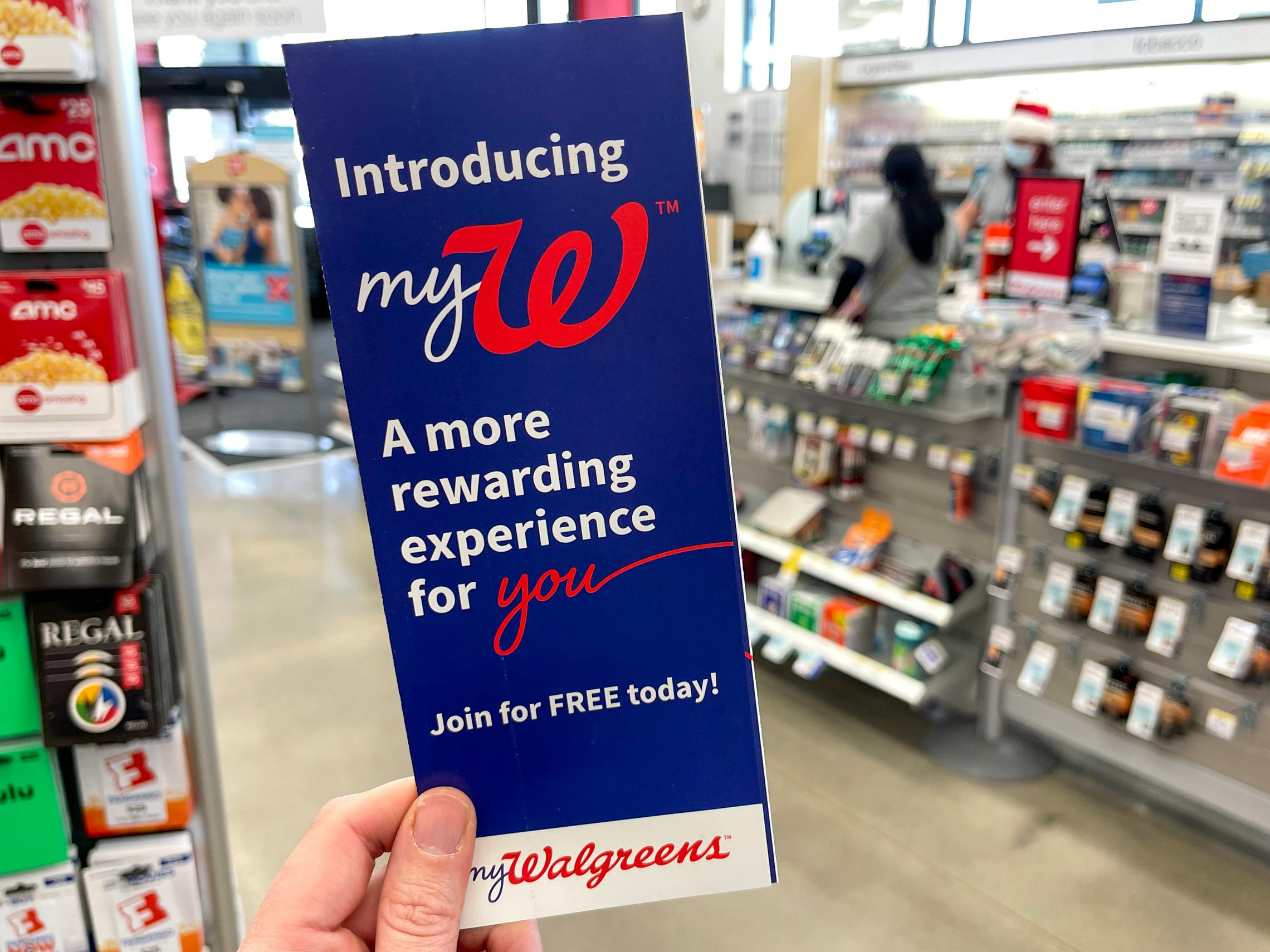
The myWalgreens program is the store’s proprietary customer loyalty system. While direct prescription copays are heavily regulated regarding reward points, the platform offers coupons for over-the-counter health items.
- Digital Clipping: Customers browse and clip paperless coupons directly to their member account via the app or website.
- Store Cash Rewards: Members earn 1% myWalgreens Cash on eligible store purchases and 3% on Walgreens branded health and wellness products.
- OTC Health Promotions: Manufacturer coupons for pain relievers, allergy products, vitamins, and first-aid kits can be saved digitally and automatically applied at checkout when scanning the loyalty barcode or entering a registered phone number.
3. Third-Party Prescription Discount Cards
Third-party discount cards—such as GoodRx, SingleCare, and RxSaver—negotiate contracted pharmacy rates directly with pharmacy benefit managers (PBMs).
- How They Work: These cards bypass insurance completely. The pharmacy adjudicates the claim using the discount card’s billing numbers rather than submitting it to the patient's health insurance carrier.
- Best Use Cases: Ideal for uninsured individuals, patients whose insurance excludes a specific drug from its formulary, or individuals with high-deductible health plans (HDHPs) when the discounted cash rate is lower than the insurance copay.
- Important Caveat: Payments made using third-party discount cards generally do not count toward a health plan’s annual deductible or out-of-pocket maximum.
Federal Regulations and Insurance Restrictions
Understanding statutory limits prevents claim rejections at the pharmacy counter. Federal and state laws strictly control how retail pharmacies process promotional discounts and financial assistance.
Federal & Commercial Insurance Processing Pathways:
- Commercial Health Insurance: Eligible for Manufacturer Copay Cards
- Government Insurance Plans (Medicare Part D, Medicaid, TRICARE): Prohibited from Copay Coupons by Law
The Federal Anti-Kickback Statute
Under the Federal Anti-Kickback Statute (42 U.S.C. § 1320a-7b(b)), pharmaceutical manufacturers are legally prohibited from offering copay reduction coupons or financial incentives to beneficiaries of government-funded healthcare programs.
Program exclusions apply to:
- Medicare Part D (Prescription Drug Coverage)
- Medicare Advantage (Part C) plans with drug coverage
- Medicaid and Managed Medicaid programs
- TRICARE and CHAMPVA military health systems
Why This Restriction Exists: Federal authorities view manufacturer copay cards on government plans as potential financial inducements that encourage patients to choose expensive, brand-name medications over equally effective, lower-cost generic alternatives. This dynamic increases overall program costs borne by taxpayers.
Alternatives for Patients Under Government Coverage
Patients enrolled in Medicare Part D or Medicaid who face high out-of-pocket prescription costs cannot use commercial manufacturer coupons, but they can explore approved alternative relief channels:
- Medicare Part D Extra Help (Low Income Subsidy - LIS): A federal program designed to assist low-income seniors and individuals with disabilities by subsidizing premiums, deductibles, and prescription copayments. Detailed guidance is available at Medicare.gov.
- Independent Patient Assistance Foundations: Non-profit 501(c)(3) organizations—such as the Patient Access Network (PAN) Foundation or the HealthWell Foundation—provide disease-specific grant assistance to government-insured patients meeting income criteria.
- Generic Substitution & Therapeutic Alternatives: Working directly with prescribing physicians to select drugs listed on lower copay tiers within the plan's official formulary.
Comprehensive Savings Comparison Matrix
The following matrix outlines how common pharmacy discount mechanisms operate at Walgreens, including target users, insurance compatibility, and regulatory limits.
| Discount Mechanism | Target User / Coverage Type | Primary Insurance Compatible? | Average Savings Range | Key Operational Restrictions & Rules |
|---|---|---|---|---|
| Manufacturer Copay Card | Commercially insured patients taking brand medications | Yes (Billed as secondary payer) | Saves $50 – $500+ per month | Strictly prohibited for Medicare, Medicaid, and TRICARE beneficiaries. Subject to annual cap limits. |
| myWalgreens Digital Coupons | General shoppers & OTC medication buyers | N/A (Applies to retail/OTC products) | $1.00 – $10.00 off OTC items | Requires active myWalgreens account; must clip coupons prior to checkout transaction. |
| Third-Party Discount Cards (e.g., GoodRx) | Uninsured patients or drugs excluded from formulary | No (Replaces primary insurance for the fill) | 10% – 80% off retail cash price | Cannot be combined with insurance; payments do not accrue toward insurance deductible goals. |
| myWalgreens Cash Rewards | Everyday store & wellness product shoppers | N/A (Applies to retail items) | 1% – 3% cash back in store rewards | State regulations prohibit earning/redeeming rewards on prescriptions in select states (e.g., NY, NJ, MA). |
| OTC Medicare Advantage Flex Cards | Eligible Medicare Advantage plan members | Yes (Billed via specialized supplemental card) | Covers up to monthly/quarterly allowance | Restricted strictly to CMS-approved health items (e.g., first aid, diagnostics, specific OTC items). |
Step-by-Step Strategy to Apply and Stack Pharmacy Coupons
Maximizing cost reductions at the pharmacy counter requires a systematic approach to order submission, billing adjudication, and checkout.
Step-by-Step Coupon Application & Billing Flow:
- Step 1: Verify Plan Coverage: Compare Insurance Copay vs. Cash Rates
- Step 2: Obtain Billing Codes: Get BIN, PCN, Group & ID from Savings Card
- Step 3: Submit to Pharmacy: Request Dual-Billing Adjudication at Counter
- Step 4: Apply Store Rewards: Scan myWalgreens App for OTC & Store Items
Step 1: Compare Plan Coverage Against Cash Discount Rates
Before filling a prescription at Walgreens Pharmacy, determine whether primary commercial insurance, a drug manufacturer copay card, or a third-party discount card offers the lowest out-of-pocket cost.
- Request the insurance copay rate from the pharmacy staff or check your insurer's online benefit portal.
- Look up the drug cash price using a third-party discount card tool.
- If the drug is a brand-name medication, visit the manufacturer’s official product website to check for an active copay card.
Step 2: Acquire Official Billing Credentials
If using a manufacturer copay card or discount program, obtain the necessary secondary billing identifiers. Valid coupons must provide four routing codes:
- BIN (Bank Identification Number): A 6-digit number routing the claim electronically.
- PCN (Processor Control Number): A secondary routing code used by the pharmacy clearinghouse.
- Group Number: Identifies the specific copay benefit structure.
- Member ID / Subscriber ID: The unique individual identifier assigned to the patient.
Step 3: Request Secondary Adjudication at the Pharmacy Counter
Present your primary insurance card along with your copay assistance card credentials to the pharmacy technician prior to prescription processing.
Operational Tip for Secondary Billing
Explicitly request that the pharmacy team bill the manufacturer card as secondary coverage (coordination of benefits). The primary insurance claim processes first to pay the main benefit, after which the secondary claim submits the remaining copay balance to the manufacturer card to lower out-of-pocket costs.
Step 4: Clip Digital myWalgreens Offers for Over-the-Counter Purchases
If purchasing OTC health products (such as blood pressure monitors, allergy relief, or vitamins) alongside your prescription:
- Open the myWalgreens App on your mobile device.
- Navigate to the Coupons & Deals section.
- Search for the brand or health category of interest.
- Tap Clip to Card to link the coupon to your account.
- Scan your member barcode or enter your registered phone number at the store checkout keypad.
High-Deductible Health Plans and Accumulator Programs
Patients enrolled in High-Deductible Health Plans (HDHPs) should understand how health insurance carriers handle financial assistance from drug manufacturer copay cards.
Copay Accumulator vs. Standard Deductible Processing:
- Standard Processing:
- Manufacturer Card Payment: Applied Directly Toward Patient Deductible
- Copay Accumulator Program:
- Manufacturer Card Payment: Reduces Out-of-Pocket Cost ONLY (Does NOT Count Toward Deductible Balance)
Copay Accumulator Adjustment Programs (CAAPs)
In recent years, many commercial health insurance plans have implemented Copay Accumulator Adjustment Programs (CAAPs). Under these policies, financial contributions made by manufacturer copay cards lower the patient's immediate out-of-pocket cost at the pharmacy counter, but do not apply toward their annual insurance deductible or maximum out-of-pocket limit.
Financial Scenario Example
- Drug Retail Cost: $1,000 per month
- Patient Plan Deductible: $3,000
- Manufacturer Copay Card Benefit: Pays $990 per month (Patient pays $10)
Under Standard Processing: After 3 months, the manufacturer card has paid $2,970, and the patient has paid $30, satisfying the $3,000 deductible. The insurance plan then transitions to full or coinsurance coverage.
Under a Copay Accumulator Program: The $2,970 paid by the manufacturer card is excluded from the deductible calculation. Once the manufacturer card reaches its maximum annual benefit limit (e.g., $5,000), the patient must pay the full remaining deductible out-of-pocket.
Copay Maximizer Programs
Copay maximizers distribute the total value of a manufacturer's copay assistance evenly across all twelve months of the plan year. Under maximizer structures:
- Out-of-pocket copays are reduced to $0.
- The payments made by the manufacturer program do not count toward the patient's annual medical deductible.
- Patients face predictable monthly costs, but must remain enrolled in the specific maximizer structure mandated by their plan manager.
Troubleshooting Common Coupon Rejections at Walgreens
When a pharmacy coupon fails to process electronically, the pharmacy management system generates specific rejection codes. The following table identifies common causes and resolution protocols.
| Rejection Code / System Error | Primary Root Cause | Actionable Resolution Protocol |
|---|---|---|
| "Third-Party Reject: Coverage Expired" | The copay card or discount program reached its annual expiration date or maximum dollar cap. | Visit the drug manufacturer's official website to re-enroll in the program and generate an updated Member ID and Group Number. |
| "Primary Insurance Required" | The pharmacy system attempted to process a secondary manufacturer card without a primary insurance claim on file. | Verify that primary commercial insurance is on file and adjudicated first before secondary processing. |
| "Patient Ineligible: Government Plan" | The system detected an active Medicare Part D, Medicaid, or TRICARE primary billing code linked to the profile. | Remove the manufacturer card. Use standard primary insurance coverage, or explore non-profit patient assistance grants. |
| "Prior Authorization Required" | The underlying health plan requires medical necessity documentation before approving coverage for the brand drug. | Contact the prescribing physician to submit clinical notes and justification to the health plan's medical review department. |
| "Invalid BIN / PCN Combination" | Billing numbers were entered incorrectly into the pharmacy database system. | Double-check the physical or digital card credentials and verify the exact numbers with the pharmacy staff. |
State-Specific Regulatory Rules on Loyalty Rewards
State statutes regulate whether retail pharmacies can offer customer loyalty rewards, store credit, or points on prescription purchases.
- Prohibited States: Laws in states such as New York, New Jersey, Massachusetts, and Arkansas strictly limit or ban the issuance of store reward points (such as myWalgreens Cash) on prescription medications and copayments. These laws aim to prevent financial incentives from improperly influencing patient healthcare choices.
- Permitted States: In jurisdictions without these specific restrictions, myWalgreens members may earn rewards on eligible out-of-pocket prescription costs, subject to store guidelines and program terms. Always consult your local Walgreens pharmacy team for state-specific rules.
Frequently Asked Questions
Can you use digital coupons on Walgreens prescription copays?
Digital manufacturer copay cards can be applied to commercial insurance prescription copays for eligible brand-name medications. However, storewide retail coupons clipped in the myWalgreens app apply primarily to over-the-counter health items, vitamins, and retail merchandise rather than direct prescription copayments.
Why does Walgreens reject manufacturer coupons for Medicare Part D beneficiaries?
Federal law under the Anti-Kickback Statute prohibits drug manufacturers from offering financial incentives or copay assistance cards to beneficiaries of government health programs, including Medicare Part D and Medicaid. Doing so can be deemed an illegal inducement to steer patients toward higher-cost brand medications.
How do I add a prescription discount card to my Walgreens account?
You can present the discount card details—specifically the BIN, PCN, Group, and Member ID numbers—to the pharmacy technician in person, or update your insurance and secondary payment details through the pharmacy profile section of the official Walgreens mobile app.
Can I stack a manufacturer coupon with a third-party discount card like GoodRx?
No. Third-Party discount cards replace health insurance entirely and act as a cash-rate processing mechanism. Manufacturer copay cards require an active primary commercial insurance claim and cannot be combined with third-party discount cards.
What should I do if my manufacturer copay card reaches its annual maximum limit?
If your copay card hits its annual financial ceiling, contact the drug manufacturer’s patient support program to inquire about annual benefit extensions or patient assistance program (PAP) eligibility based on financial hardship. Alternatively, discuss formulary generic alternatives with your prescribing doctor.
Are Walgreens paper coupons from the store register usable at the pharmacy counter?
Store register coupons (often referred to as "Catalina" coupons) that offer dollars off store purchases or myWalgreens cash rewards are generally restricted to over-the-counter products, personal care items, and front-of-store merchandise. They cannot be applied directly to lower state or federally regulated prescription copays.
Strategic Recommendations for Maximizing Savings
To maintain low out-of-pocket healthcare expenses while utilizing Walgreens pharmacy services, follow these standard practices:
- Audit Monthly Medication Expenses: Compare your commercial insurance copay against official manufacturer copay cards for brand-name drugs, or evaluate generic alternatives using cash discount platforms.
- Utilize Digital Account Features: Maintain an active myWalgreens profile and clip relevant OTC health and wellness coupons before purchasing everyday medical supplies, allergy treatments, and first-aid goods.
- Review Health Plan Formulary Changes Annually: Review your health insurance plan's updated drug formulary during open enrollment to anticipate tier shifts, prior authorization requirements, or copay accumulator policy changes.
- Consult Pharmacy Staff Directly: Speak with your Walgreens pharmacist or certified technician to verify that secondary billing codes (BIN/PCN) are correctly loaded into your profile for seamless billing on maintenance medications.
Image Gallery