America's Most Inbred Family Tree: The Genealogical and Genetic Reality of the Whittakers
The term "America's most inbred family tree" almost universally refers to the Whittaker family of Odd, West Virginia, whose multi-generational pedigree was brought to global prominence through documentary coverage. Genealogically, the...
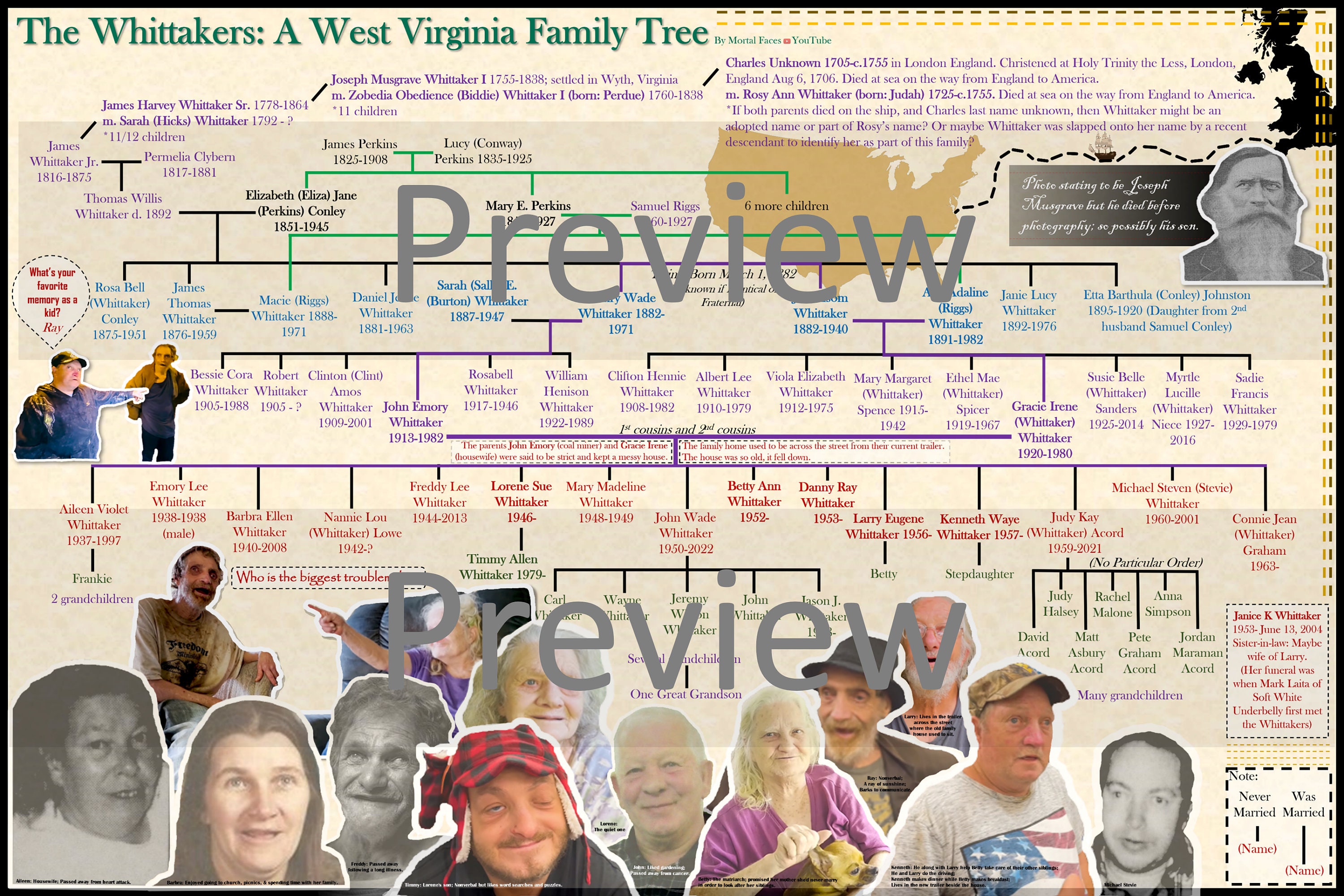
The term "America's most inbred family tree" almost universally refers to the Whittaker family of Odd, West Virginia, whose multi-generational pedigree was brought to global prominence through documentary coverage. Genealogically, the family’s severe developmental, communicative, and physical abnormalities stem from successive generations of first-cousin and double-cousin unions, concentrating rare autosomal recessive alleles within an isolated pedigree.
Contents
Understanding the Whittaker lineage requires examining both the precise genealogical pairings that shaped their genome and the underlying medical mechanics of human consanguinity. Far from being a sensationalized urban legend, the family tree of the Whittakers presents a documented case study in human population genetics, highlighting what occurs when geographic isolation, social marginalization, and repeated inbreeding intersect over several decades.
The Whittaker Family Genealogy: Tracing the Pedigree
To trace the Whittaker lineage accurately, genealogists and researchers had to cut through layers of local folklore and initial media confusion. Early reports suggested sibling-parent incest, but extensive archival research through West Virginia vital statistics, U.S. Census data, and historical marriage records revealed a more complex pattern of cousin consanguinity occurring across consecutive generations.
The documented lineage traces back to the late nineteenth and early twentieth centuries in rural Raleigh County, West Virginia. The foundational bottleneck occurred with the union of twin brothers, John and Henry Whittaker, born in the late 1880s:
- The Twin Ancestors: Identical or fraternal twin brothers John and Henry Whittaker established the two primary parental branches.
- First-Cousin Cross-Marriage: John married Augusta and had several children, including a son named John Emory Whittaker (born 1913). Henry married Sally and had children, including a daughter named Gracie Irene Whittaker (born 1920).
- The Intercross: In 1935, first cousins John Emory Whittaker and Gracie Irene Whittaker married. Because their fathers were brothers, this union carried a high baseline coefficient of inbreeding.
- The Next Generation: John Emory and Gracie had 15 children between the late 1930s and 1960s, including Lorraine, Freddie, Ray, Timmy, Betty, and Kenneth. Many of these siblings were born with profound physical deformities, non-verbal communication patterns (often using grunts, barks, or high-pitched vocalizations), and severe intellectual disabilities.
Compounding this genetic load was the fact that prior generations within this Appalachian coal-mining corridor had already engaged in repeated localized endogamy due to extreme geographic isolation, steep hollow topography, and restricted marriage pools.
The Genetics of Consanguinity: Why the Whittaker Pedigree Collapsed
Human genomes carry dozens of deleterious recessive mutations. Under normal demographic outbreeding, these recessive mutations rarely cause disease because an individual receives a healthy, dominant allele from an unrelated partner to mask the defective copy. When closely related individuals reproduce, the probability of inheriting the identical ancestral mutant gene from both sides increases dramatically.
The Coefficient of Relationship and Inbreeding
Geneticists measure inbreeding using two standard benchmarks:
- Coefficient of Relationship ($r$): The proportion of genes shared between two individuals due to direct descent from common ancestors.
- Coefficient of Inbreeding ($F$): The probability that an individual receives two identical-by-descent alleles at any given locus from their parents.
In typical first-cousin marriages, the children experience an inbreeding coefficient of $F = 0.0625$ (6.25%). However, in pedigrees like the Whittakers—where the grandparents were brothers and subsequent branches intermarried repeatedly across isolated generations—the cumulative inbreeding coefficient often exceeds 12.5% to 25%, approaching or matching levels typically observed only in parent-offspring or full-sibling matings.
Genetic Risks Across Degrees of Consanguineous Unions
The biological consequences of inbreeding vary drastically depending on the closeness of genetic relation and whether the inbreeding is an isolated event or multi-generational.
| Relationship Type | Degree of Relationship | Shared DNA ($r$) | Inbreeding Coefficient of Offspring ($F$) | Baseline Congenital Risk Assessment | Clinical Status in Modern Medicine |
|---|---|---|---|---|---|
| Unrelated Individuals | N/A | < 0.1% | ~0% | 2.0% – 3.0% (Standard population baseline) | Standard baseline genetics |
| Second Cousins | Fifth-degree | 3.125% | 0.0156 (1.56%) | 3.5% – 4.5% (Slightly elevated) | Minimal excess clinical risk |
| First Cousins | Third-degree | 12.5% | 0.0625 (6.25%) | 5.0% – 7.0% (Moderately elevated) | Requires targeted carrier screening |
| Double First Cousins | Second-degree | 25.0% | 0.125 (12.5%) | 10.0% – 16.0% (Substantially elevated) | High genetic counseling priority |
| Whittaker Pedigree (Cumulative) | Multi-tier Consanguinity | Cumulative | Estimated > 15.0% – 25.0% | Extremely High (> 35% severe clinical morbidity) | Complex multi-system autosomal syndromes |
| Sibling or Parent-Offspring | First-degree | 50.0% | 0.250 (25.0%) | 30.0% – 50.0% (Extreme risk of lethal abnormalities) | Universally prohibited; severe medical pathology |
Medical and Phenotypic Manifestations in the Whittaker Lineage
The offspring produced within the Whittaker household display varied and severe physical, neurological, and communicative limitations. Medical geneticists studying published documentation and family histories note distinct phenotypes characteristic of combined recessive disorders.
Neurological and Craniofacial Abnormalities
Several Whittaker siblings, most notably Ray and Freddie (prior to his death), display distinct facial dysmorphisms, including microcephaly, pronounced mandibular prognathism, asymmetric facial bone structure, and severe ocular strabismus. Neurologically, these manifestations point to disrupted embryological neural crest cell migration caused by homozygous deleterious mutations.
Non-Verbal Communication and Vocal Pathology
Ray Whittaker is famous for communicating entirely through visceral, guttural vocalizations, barks, and physical gestures. While early observers mistook this for animalistic behavior, clinical speech-language pathologists identify it as a profound motor speech disorder coupled with severe receptive-expressive language impairment, common in untreated syndromic intellectual disabilities such as severe congenital speech apraxia or Angelman-like genetic variants.
Orthopedic and Locomotor Impairments
Members of the family suffer from debilitating joint contractures, skeletal dysplasia, spinal kyphosis, and an abnormal gait. Decades of inadequate pediatric medical intervention and nonexistent physical therapy transformed genetic skeletal weaknesses into permanent, debilitating physical handicaps.
Clinical Genetic Assessment Note
In multi-generational inbred pedigrees, the phenotypic outcome is rarely attributable to a single known syndrome like Down syndrome or Fragile X. Instead, it represents the simultaneous unmasking of multiple, distinct recessive loci across the genome, creating an idiosyncratic multi-system syndrome unique to that family lineage.
Historical Context: Isolation and Endogamy in Appalachia
To understand how the Whittaker family tree formed, one must separate historical fact from cultural stereotyping. Appalachia was historically plagued by predatory economic exploitation, geographic seclusion, and severe resource deprivation, which collectively fostered isolated pockets of high endogamy.
Geographic Barrier Isolation
The southern coalfields of West Virginia, particularly in Raleigh and Wyoming counties, feature steep, rugged ridges and narrow valleys (hollows). Before the development of modern highway infrastructure in the mid-to-late twentieth century, travel between neighboring hollows was physically arduous. Rural families lived in extreme isolation, where social circles rarely extended beyond a handful of nearby homesteads.
Economic Entrapment and the Company Town System
During the peak of Appalachian coal extraction, coal operators organized company towns that controlled housing, commerce, and movement. Families who owned marginal subsistence land outside company holdings, like early generations of the Whittakers, survived through agricultural subsistence on unproductive ground. Intermarrying with nearby kin preserved small land parcels within the family, preventing the fragmentation of property across unfamiliar lineages.
The Blue Fugates: A Comparative Appalachian Genetic Bottleneck
The Whittakers are not the first Appalachian lineage to undergo intense genetic scrutiny. The Fugate family of Troublesome Creek, Kentucky, famously carried hereditary methemoglobinemia, a recessive blood disorder that caused their skin to appear distinctly blue.
Unlike the Whittakers, whose inbreeding produced broad cognitive and neuromuscular degeneration, the Fugates suffered primarily from a localized enzyme deficiency (cytochrome b5 reductase deficiency). Their pedigree became similarly concentrated when Martin Fugate married an unrelated carrier, Elizabeth Smith, and subsequent descendants married cousins across four generations within an isolated valley. The condition was quickly resolved when transportation improved and outbreeding introduced diverse genetic material.
Modern Living Conditions, Media Exposure, and Ethical Controversy
The Whittaker family lives in Odd, West Virginia, a tiny unincorporated community outside Beckley. The modern era transformed their lives through intense digital media attention, creating significant ethical questions surrounding consent, exploitation, and rural poverty.
The Impact of Modern Media
Photographer and filmmaker Mark Laita first photographed the family in 2004 for his book Created Equal, later returning to document them via long-form video interviews for his YouTube platform, Soft White Underbelly. The initial video, released in 2020, generated tens of millions of views, introducing the family to international scrutiny.
The media coverage produced conflicting outcomes:
- Direct Philanthropic Support: Viewers established crowd-funded campaigns that provided hundreds of thousands of dollars to replace the family's dilapidated shack with a modern home, install indoor plumbing, purchase appliances, and fund ongoing food and healthcare expenses.
- Loss of Privacy and Harassment: The family faced an influx of tourists, curiosity-seekers, and internet creators driving past their home, leading local law enforcement to issue protective warnings to trespassers.
- Exploitation Debates: Sociologists, disability advocates, and ethicists argued over whether individuals with severe intellectual disabilities, who lack standard legal capacity, could meaningfully consent to being broadcast to a global audience.
Frequently Asked Questions
Did the parents of the Whittaker family share the same parents?
No, the parents of the modern Whittaker siblings were not brother and sister. Official historical vital records establish that John Emory Whittaker and Gracie Irene Whittaker were first cousins through their fathers, who were brothers (John and Henry Whittaker).
What genetic disorder does the Whittaker family have?
The Whittaker family does not suffer from a single named disease like Down syndrome. Instead, their physical and mental conditions are the result of cumulative consanguinity, which caused multiple recessive genetic mutations to express simultaneously, leading to severe intellectual disabilities, speech apraxia, and orthopedic malformations.
Why do some members of the family bark instead of speak?
Ray Whittaker's barking vocalizations are not an imitation of animals, but a severe motor speech pathology and expressive language disorder. Unable to coordinate the complex neuromuscular movements required for speech, he relies on high-amplitude, guttural vocalizations to convey emotion, alarm, or basic communicative intent.
Are consanguineous marriages still legal in West Virginia?
No. Under West Virginia Code § 48-2-301, marriages between individuals closer than second cousins—including first cousins and direct descendants—are legally void. Laws prohibiting consanguineous marriage were established long before the modern generation of Whittakers, though historical enforcement in remote unincorporated areas was historically irregular.
How does inbreeding directly damage the human immune system?
Inbreeding severely reduces the diversity of the Major Histocompatibility Complex (MHC), a critical cluster of genes that helps the immune system recognize and combat pathogens. Reduced heterozygosity at these loci leaves an individual's immune defenses unable to identify a wide spectrum of bacteria and viruses, resulting in higher historical rates of early childhood mortality.
The legacy of the Whittaker pedigree serves as an enduring reminder of how physical geography and social isolation can shape the human genome. For clinical geneticists, the lineage illustrates the biological cost of high inbreeding coefficients. For society, it underscores the critical necessity of rural healthcare access, education, and social safety nets to protect vulnerable, isolated populations from systemic decline.
Image Gallery