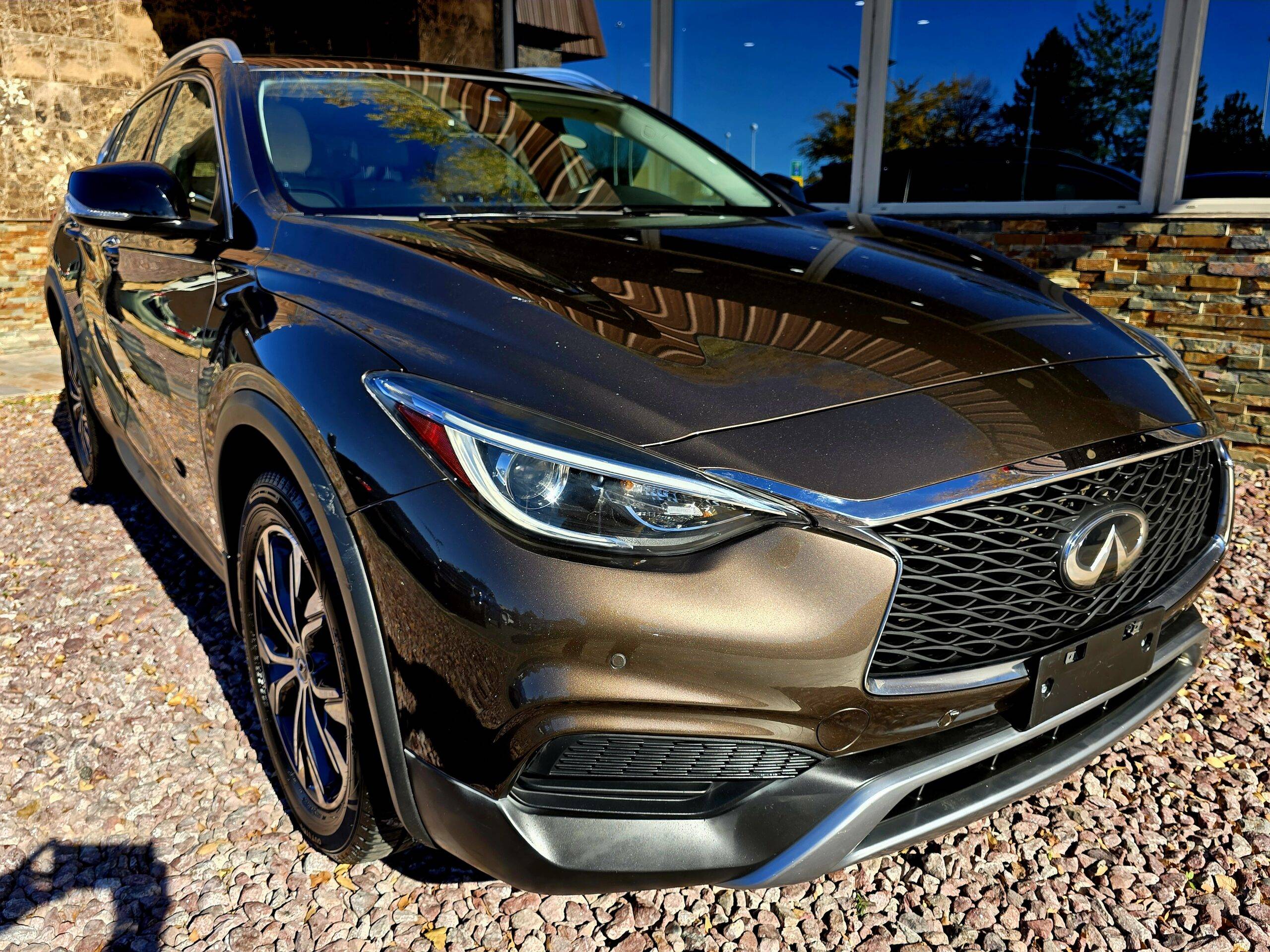
Auto Insurance for the Infiniti QX30: Costs, Coverage Options, and Saving Strategies
Insuring an Infiniti QX30 costs an average of $1,650 to $2,100 per year for full coverage, translating to roughly $138 to $175 per month. Because the QX30 shares key mechanical architecture with the Mercedes-Benz GLA, repair costs and...
Insuring an Infiniti QX30 costs an average of $1,650 to $2,100 per year for full coverage, translating to roughly $138 to $175 per month. Because the QX30 shares key mechanical architecture with the Mercedes-Benz GLA, repair costs and replacement component prices are higher than typical Japanese crossovers, directly influencing collision and comprehensive insurance rates.
Contents
Overview of Infiniti QX30 Insurance Costs
The Infiniti QX30—produced for model years 2017 through 2019—occupies a unique space in the luxury subcompact crossover segment. Co-developed as part of a strategic partnership between Nissan/Infiniti and Daimler AG (the parent company of Mercedes-Benz), the QX30 is built on the Mercedes MFA platform and powered by a Mercedes-Benz 2.0-liter turbocharged engine mated to a 7-speed dual-clutch transmission.
For policyholders, this engineering heritage creates a distinct insurance profile. While the vehicle carries an Infiniti badge, insurance underwriters classify repair risk based on actual component costs and labor requirements. OEM replacement parts for European luxury platforms are consistently priced higher than standard Nissan or Infiniti components. Consequently, physical damage coverages—specifically Collision and Comprehensive—represent a larger portion of the total premium than on non-luxury subcompacts like the Nissan Rogue Sport or Honda HR-V.
Insurance costs fluctuate based on the vehicle's Actual Cash Value (ACV), the driver's geographic location, age, claims history, annual mileage, and policy deductibles.
Key Factors Influencing Infiniti QX30 Insurance Premiums
Insurance companies rely on actuarial data to measure risk. When evaluating an Infiniti QX30, insurers analyze vehicle-specific risk characteristics alongside driver demographics.
Infiniti QX30 Risk & Premium Drivers:
- Shared Mercedes-Benz Platform: Higher OEM Part & Labor Costs
- Integrated ADAS Sensors: Windshield & Bumper Calibration
- Trim & Drivetrain Profile: AWD vs. FWD / Sport Styling Costs
- Depreciation & Vehicle ACV: Declining Theft/Total Loss Caps
1. European Shared Platform & Repair Costs
The QX30 utilizes Mercedes-Benz mechanical assemblies, including electronics, powertrain modules, and suspension linkages. Specialty European mechanics or certified technicians are often required to complete complex mechanical repairs following a collision. Higher hourly labor rates and premium OEM component costs push up insurance claim payouts, which carriers offset by increasing Collision coverage premiums.
2. Advanced Driver Assistance Systems (ADAS)
Higher trim levels, such as the Premium, Sport, and Essential packages, include safety technologies like Forward Emergency Braking, Blind Spot Warning, Lane Departure Warning, and the Around View Monitor (a 360-degree camera system).
While these features reduce the probability of low-speed accidents—lowering bodily injury and property damage liability risk—they increase repair expense when an accident does occur. Sensors mounted in the front grille, side mirrors, and behind the windshield require expensive re-calibration or replacement after minor front-end or side impacts.
3. Drivetrain Configuration (FWD vs. Intelligent AWD)
The QX30 was offered in Front-Wheel Drive (FWD) and Intelligent All-Wheel Drive (AWD) configurations:
- FWD Models (including Sport): Feature lower ride heights and standard mechanical layouts, making powertrain maintenance slightly simpler. However, the Sport trim features lowered suspension, unique front and rear lower fascias, and 19-inch alloy wheels, which elevate body repair expenses.
- AWD Models: Possess a raised ride height (approx. 8 inches) and additional drivetrain components (rear differential, transfer unit). AWD models carry slightly higher premiums due to the complexity of all-wheel-drive repairs and higher replacement values.
4. Vehicle Age and Depreciation Status
As model year 2017–2019 vehicles mature, their market value (Actual Cash Value) stabilizes. Lower overall vehicle value places a structural cap on the maximum payout an insurer must make in the event of a total loss. While this helps lower the cost of Comprehensive and Collision insurance over time, high labor and parts costs mean that older QX30 vehicles are categorized as a total loss at lower repair thresholds than lower-tier crossovers.
Recommended Coverage Options for the Infiniti QX30
Selecting the right coverage balance ensures total protection without overpaying for unnecessary add-ons.
Infiniti QX30 Auto Policy:
- Liability (State Required)
- Bodily Injury
- Property Damage
- First-Party Auto (Asset Loss)
- Collision
- Comprehensive
- UM / UIM
- Optional Coverage (Convenience)
- Glass & Sensor
- Roadside Assist
- Rental Car
Liability Insurance (Bodily Injury & Property Damage)
State minimum limits rarely provide adequate financial protection in multi-vehicle accidents. Because the QX30 is a compact luxury crossover, accidents involving newer or higher-value vehicles can quickly exhaust low state thresholds.
- Recommended Limit: At least $100,000/$300,000 for Bodily Injury Liability (per person/per accident) and $100,000 for Property Damage Liability.
Collision Coverage
Collision coverage pays to repair or replace your QX30 if it is damaged in an accident with another vehicle or stationary object, regardless of fault. Given the Mercedes-Benz suspension and body parts used on the QX30, carrying Collision coverage with a $500 to $1,000 deductible is recommended for vehicles valued above $10,000.
Comprehensive Coverage
Comprehensive protects against non-collision losses, including theft, vandalism, hail, fire, animal impacts, and windshield damage. QX30 models equipped with fixed glass panoramic moonroofs benefit significantly from comprehensive protection, as replacement glass for large roof panels can cost upwards of $1,200 out-of-pocket.
Full Glass Replacement Endorsement
Because the front windshield houses cameras and sensors for lane tracking and emergency braking, replacing a damaged windshield involves both glass replacement and recalibration of the ADAS hardware. Adding a zero-deductible glass rider ensures windscreen chips and cracks are repaired without invoking your primary comprehensive deductible.
Uninsured/Underinsured Motorist (UM/UIM)
If an uninsured or under-insured driver strikes your QX30, UM/UIM coverage covers medical expenses and vehicle repairs. This coverage is essential in regions with high rates of uninsured drivers.
Infiniti QX30 Insurance Cost Comparison Matrix
The table below outlines estimated annual insurance premiums, repair complexity levels, and coverage strategies across different QX30 model configurations.
| Model Year & Trim Level | Drivetrain | Est. Annual Full Coverage | Repair Complexity | Primary Premium Driver | Recommended Deductible |
|---|---|---|---|---|---|
| 2017 QX30 Base / Pure | FWD | $1,550 – $1,750 | Moderate | Platform age, entry repair costs | $500 Comprehensive / $1,000 Collision |
| 2017 QX30 Luxury / Premium | FWD / AWD | $1,650 – $1,850 | Moderate–High | AWD complexity, leather interior trim | $500 Comprehensive / $500 Collision |
| 2018 QX30 Sport | FWD | $1,750 – $2,000 | High | Sport fascias, 19" wheels, lowered trim | $500 Comprehensive / $500 Collision |
| 2018 QX30 Luxury / AWD | AWD | $1,700 – $1,950 | High | AWD system, elevated chassis components | $500 Comprehensive / $1,000 Collision |
| 2019 QX30 Essential | FWD | $1,750 – $2,050 | High | Advanced ADAS sensor calibration | $250 Glass / $500 Collision |
| 2019 QX30 Essential AWD | AWD | $1,850 – $2,150 | Very High | Full driver-assist suite + AWD repairs | $250 Glass / $500 Collision |
Disclaimer: Estimated rates are based on national averages for a 35-year-old driver with a clean driving record. Actual rates vary significantly by state, zip code, claims history, and credit score.
Infiniti QX30 Rates vs. Competitor Luxury Compact SUVs
When evaluating auto insurance rates, comparing the QX30 to rival luxury subcompact crossovers provides helpful context:
| Vehicle | Average Annual Insurance Cost (Full Coverage) |
|---|---|
| Audi Q3 | $1,600 - $1,850 |
| Infiniti QX30 | $1,650 - $2,100 |
| Lexus NX 300 | $1,550 - $1,780 |
| Mercedes-Benz GLA 250 | $1,700 - $2,150 |
| BMW X1 | $1,650 - $1,950 |
- Lexus NX 300: Generally less expensive to insure than the QX30 due to shared parts availability with Toyota platforms and lower standardized repair labor rates.
- Mercedes-Benz GLA 250: Rates closely mirror the Infiniti QX30 because both vehicles share the same chassis, mechanical assemblies, and transmission configuration.
- Audi Q3 & BMW X1: Fall into a comparable premium tier, with costs driven primarily by European labor rates and body panel costs.
Effective Strategies to Reduce Premiums on an Infiniti QX30
While luxury components elevate base policy costs, several practical adjustments can reduce annual auto insurance expenses.
1. Compare Quotes Across Regional and National Carriers
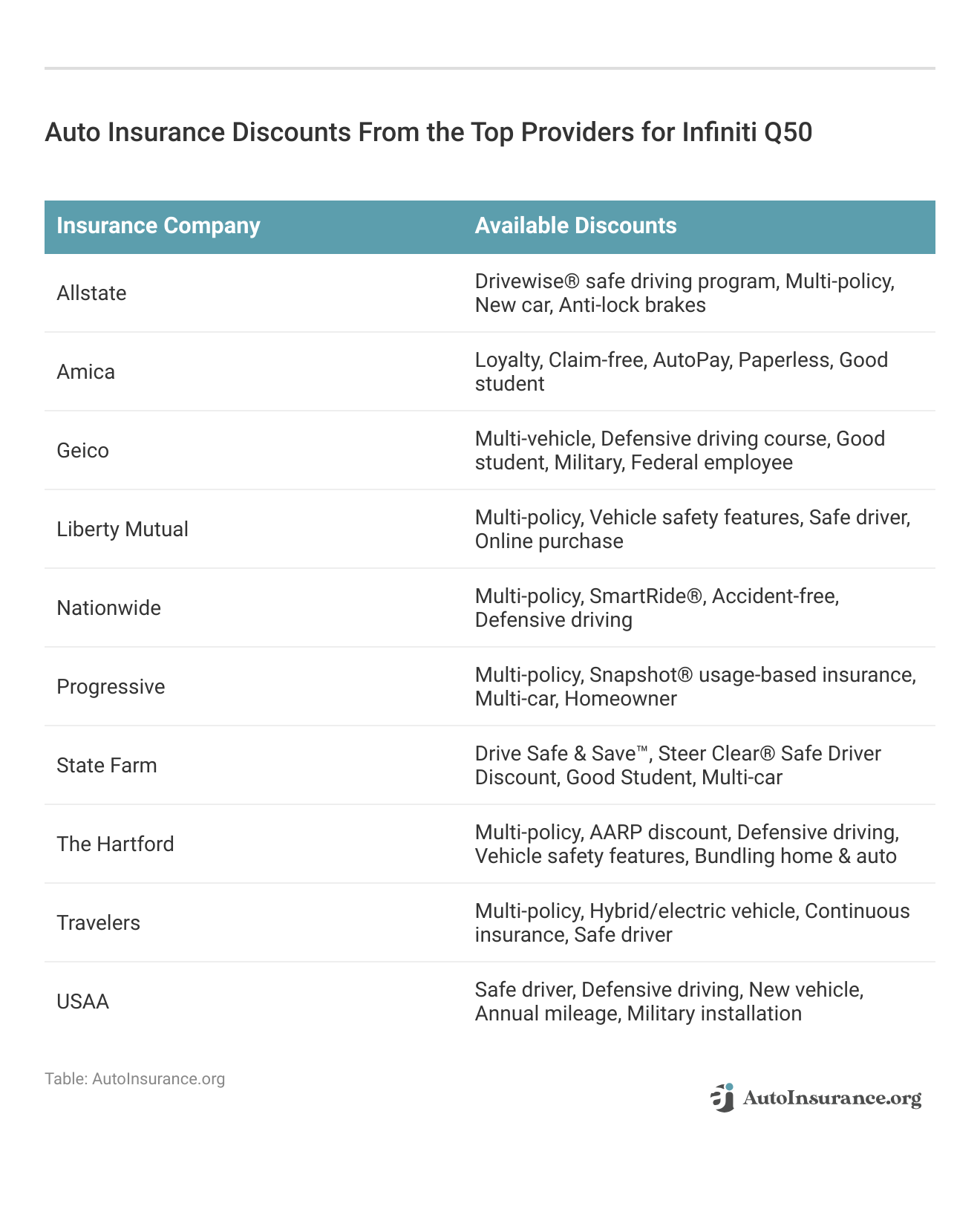
Insurers calculate vehicle platform risks differently. Some national carriers categorize the Infiniti QX30 strictly as a Japanese luxury crossover, assigning lower risk tiers. Others code it using its Mercedes-Benz platform architecture, applying higher damage-ability ratings. Comparing quotes from top insurers—such as Progressive, GEICO, State Farm, Allstate, and Liberty Mutual—allows you to identify carriers offering lower rates for this specific vehicle profile.
2. Adjust Policy Deductibles
Increasing your physical damage deductibles directly lowers your annual premium. Raising your Comprehensive and Collision deductibles from $250 or $500 up to $1,000 can lower annual full coverage premiums by 10% to 20%. Ensure you maintain an emergency fund sufficient to cover the higher out-of-pocket cost if an accident occurs.
3. Take Advantage of Built-in Vehicle Safety Discounts
Ensure your insurer factors all standard and optional safety equipment into your rate calculation. Key features on the QX30 that qualify for carrier discounts include:
- Anti-lock Brakes (ABS) and Electronic Stability Control (ESC)
- Advanced airbag arrays (front, side, curtain, and knee airbags)
- Factory engine immobilizer and anti-theft security system
- Automatic Emergency Braking (AEB) and Forward Collision Warning systems
4. Enroll in Telematics / Usage-Based Insurance (UBI)
If you drive under 10,000 miles annually or maintain conservative driving habits, enrolling in a telematics program (such as Progressive Snapshot, State Farm Drive Safe & Save, or Allstate Drivewise) can provide substantial discounts. Telematics mobile apps and OBD-II devices track mileage, speed, hard braking, and cornering, rewarding low-risk driving profiles with discounts up to 30%.
5. Bundle Auto and Homeowners/Renters Policies
Combining auto insurance for your QX30 with home, condo, or renters insurance under the same insurance company is one of the most consistent ways to achieve savings. Multi-policy discounts typically reduce premiums by 5% to 15% across all linked policies.
Frequently Asked Questions
Is the Infiniti QX30 expensive to insure compared to standard compact SUVs?
Yes, the Infiniti QX30 costs more to insure than non-luxury subcompact crossovers like the Honda HR-V or Mazda CX-30. Higher costs stem from its classification as a luxury vehicle and its shared Mercedes-Benz platform, which increases the price of mechanical parts and collision repairs.
Why do Mercedes-Benz parts affect the Infiniti QX30's insurance rates?
The QX30 was developed under a joint agreement between Nissan and Daimler AG. It uses a Mercedes-Benz chassis, 2.0L turbocharged engine, dual-clutch transmission, and electrical modules. When repairs are necessary, body shops must source specialized OEM components, driving up claim costs for insurance companies.
Should I keep Collision and Comprehensive coverage on a model year 2017–2019 QX30?
In most cases, yes. Unless the vehicle's market value drops low enough that annual insurance premiums approach 10% or more of its total cash value, maintaining Collision and Comprehensive coverage is recommended. The QX30 retains moderate resale value, making physical damage coverage worthwhile—especially if you cannot easily replace the car out-of-pocket.
Does the QX30 Sport trim cost more to insure than the Base or Luxury trims?
The QX30 Sport trim generally carries slightly higher insurance premiums. Its lower ride height, unique front and rear bumpers, aggressive body panels, and 19-inch alloy wheels make cosmetic and body repairs more costly following minor impacts or road hazard damage.
How does driver age impact QX30 insurance rates?
Driver age is one of the single largest pricing factors. Drivers under 25 face higher annual premiums for an Infiniti QX30 due to statistically higher accident rates among younger demographics. Rates generally decline steadily after age 25, provided the driver maintains a clean driving record.
Next Steps for Infiniti QX30 Owners
To secure optimal insurance coverage for your Infiniti QX30 at a competitive rate:
- Gather Vehicle Details: Locate your vehicle identification number (VIN), exact trim level (Base, Luxury, Premium, Sport, or Essential), and current odometer reading.
- Review Existing Policy Limits: Check your current declarations page for coverage levels, ensuring your liability limits are at least $100,000/$300,000/$100,000 and noting your current deductible amounts.
- Obtain Quotes from Multiple Carriers: Request quotes from at least three different auto insurers, ensuring that all safety equipment and ADAS features installed on your QX30 are fully accounted for in the quote process.
- Evaluate Glass and Sensor Add-ons: Consider adding zero-deductible glass coverage to protect against expensive windshield and ADAS sensor replacement costs.
Image Gallery