Least Painful Wax: How to Choose the Right Hair Removal Method
Choosing the least painful wax comes down to selecting a formulation that adheres exclusively to the hair shaft rather than the skin. Polymer-based hard wax and natural sugar paste are widely recognized as the lowest-pain waxing method...
Choosing the least painful wax comes down to selecting a formulation that adheres exclusively to the hair shaft rather than the skin. Polymer-based hard wax and natural sugar paste are widely recognized as the lowest-pain waxing methods. Both options encapsulate hair roots without pulling or stripping epidermal cells, significantly reducing nerve irritation during hair removal.
Contents
The Science of Waxing Pain: Adhesion vs. Follicle Extraction
To understand why certain waxing techniques hurt significantly less than others, it helps to examine how nerve endings in the dermis react to mechanical stress. Pain during hair removal stems from two distinct sources: the friction of stripping living skin cells (epidermal trauma) and the quick extraction of the hair shaft from its follicle root (nociceptor activation).
When wax adheres firmly to the stratum corneum—the outermost layer of dead and living skin cells—pulling the strip yanked skin tissues upward along with the hair. This mechanical tension triggers cutaneous nociceptors (pain receptors) across a wide surface area.
Soft Wax Mechanism: [ Wax ] ---> Adheres to BOTH Skin + Hair ---> High Skin Drag & Pain Hard Wax Mechanism: [ Wax ] ---> Shrink-wraps Hair ONLY ---> Low Skin Drag & Lower Pain Sugaring Mechanism: [ Paste] --> Binds to Hair & Dead Cells ---> Natural Growth Direction Pull
The least painful waxing methods bypass epidermal pulling through targeted adhesion. Modern formulations use synthetic polymers, natural resins, or sugar compounds designed to shrink-wrap or bind directly to the keratinized structure of the hair. By insulating the surrounding skin from direct tension, these methods focus kinetic force almost entirely on removing hair from the follicle, making the process smoother and far more tolerable.
Comprehensive Breakdown of Wax Types by Pain Level
Not all waxes are engineered equal. Waxing formulations differ in chemical composition, application temperature, resting time, and removal direction. Choosing the right option requires evaluating how each technique interacts with your skin and hair type.
1. Hard Wax (Film Wax) — Lowest Overall Pain
Hard wax (often called film wax or strip-less wax) is applied warm using a spatula. As it cools, it hardens into a flexible, plastic-like strip that shrink-wraps around individual hair shafts without sticking to the underlying skin.
- Mechanism: Thermal action opens skin pores slightly while the cooling polymer contracts around hair shafts.
- Removal: Pulled directly by hand without paper or cloth strips.
- Why It Hurts Less: Because hard wax does not adhere to skin moisture or epidermal tissue, removing it creates virtually zero skin drag. Practitioners can also reapply hard wax to the same area during a single session without causing skin tears or irritation.
- Best Suited For: Sensitive skin, coarse hair, bikini and Brazilian treatments, underarms, and facial hair.
2. Sugaring (Sugar Paste) — Lowest Pain for Fine to Medium Hair
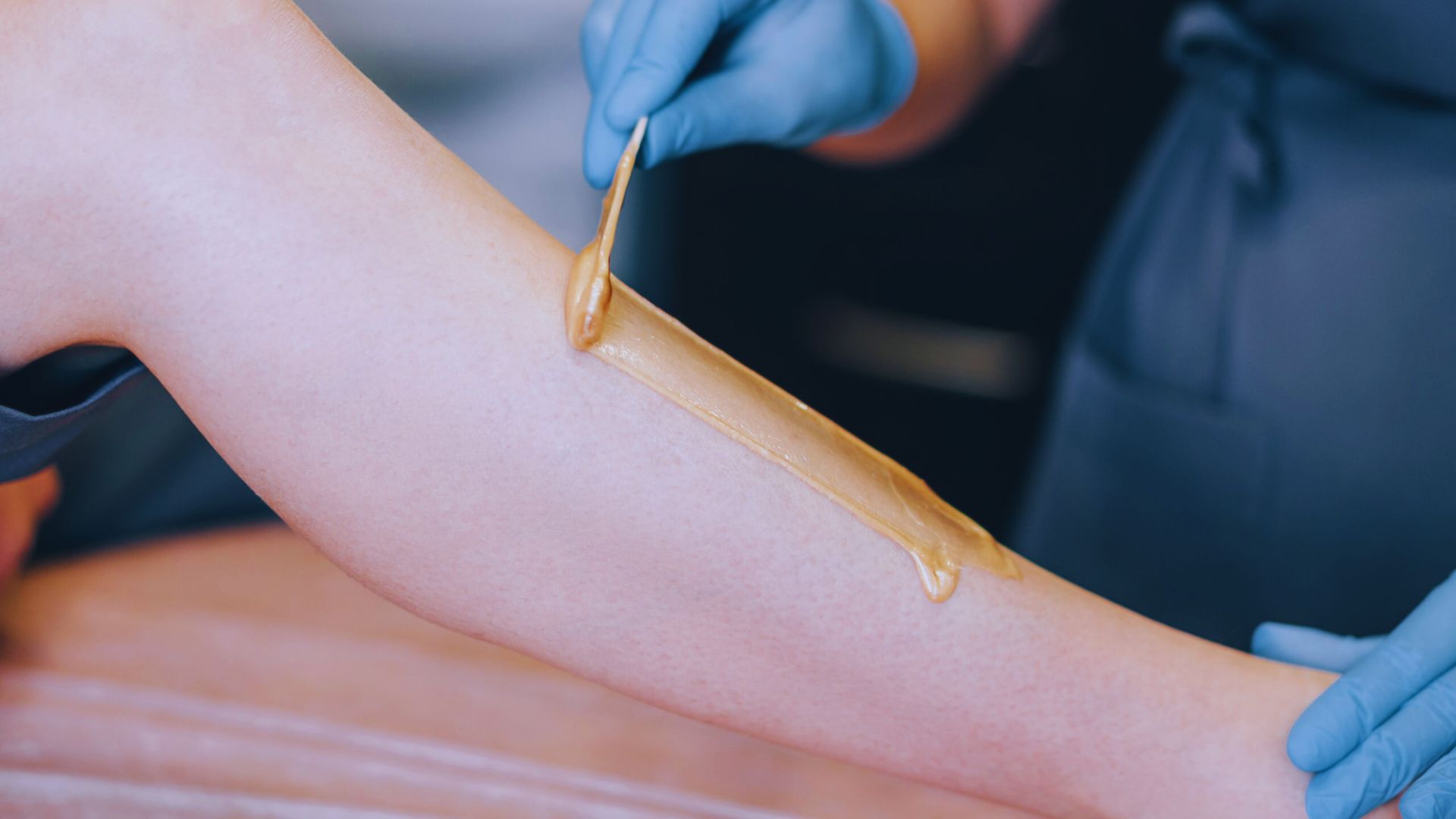
Sugaring is an ancient technique that relies on an all-natural paste made from sugar, water, and lemon juice cooked to a candy-like consistency. Applied at room or body temperature, sugaring paste is molded onto the skin against the direction of hair growth and flicked off in the natural direction of growth.
- Mechanism: Sugar paste seeps into the follicle mouth, lubricating the root before extraction.
- Removal: Hand-flicked parallel to the skin in the direction of natural hair growth.
- Why It Hurts Less: Pulling hair out in its natural growth direction puts far less stress on the follicle wall compared to traditional waxing, which pulls against growth. Furthermore, sugar paste cannot stick to live skin cells because water-soluble sugar dissolves upon contact with moisture in living tissue.
- Best Suited For: Sensitive skin, large body areas, fine to medium hair, and individuals prone to ingrown hairs or allergic reactions to resin.
3. Cream Wax (Zinc Oxide / Fruit Wax) — Moderate Pain
Cream wax is a specialized soft wax infused with titanium dioxide, zinc oxide, or cream bases. It is applied thin with a spatula and removed using paper or fabric strips.
- Mechanism: The added cream additives create a barrier between the resin and the skin.
- Removal: Cloth or paper strip pulled against the direction of hair growth.
- Why It Hurts Less Than Soft Wax: Standard honey or soft waxes grip skin tightly. Cream waxes maintain a lower melting point and cushion the skin layer, reducing redness and immediate stinging.
- Best Suited For: Fine hair across medium-to-large areas like arms, legs, and chest for individuals with sensitive skin who prefer strip wax speed.
4. Honey / Soft Strip Wax — Higher Pain
Traditional soft wax uses pine resin or honey bases applied warm and removed instantly with paper or muslin strips.
- Mechanism: Sticks indiscriminately to both hair and skin cells.
- Removal: Rapid removal using cloth/paper strips against the direction of growth.
- Why It Hurts More: Soft wax lifts top layers of living skin alongside hair, leading to significant epidermal lifting, intense initial shock, and post-wax redness.
- Best Suited For: Fine body hair across large surface areas (such as back and legs) where fast application is prioritized over comfort.
5. Cold Wax Strips — Highest Pain Potential
Pre-coated wax strips require warming between your palms before application and immediate removal.
- Mechanism: Viscous cold wax sticks to skin surface without thermal opening of the pores.
- Removal: Manual pull using pre-attached backing.
- Why It Hurts More: Because cold wax lacks heat to relax follicle openings, hair extraction requires more mechanical force. Cold wax also often pulls unevenly, requiring repeated attempts over the same tender patch of skin.
- Best Suited For: Emergency touch-ups or travel when professional heating equipment is unavailable.
Waxing Method Comparison
The following matrix compares common hair removal methods based on discomfort, operational parameters, and target skin types:
| Method | Relative Pain Level (1–5) | Application Temperature | Adhesion Mechanism | Direction of Removal | Best Body Areas |
|---|---|---|---|---|---|
| Hard Film Wax | 1.5 – 2.0 (Very Low) | Warm (~45°C / 113°F) | Encapsulates hair shaft; no skin adhesion | Against or across hair growth | Bikini, Brazilian, Underarms, Face |
| Sugaring Paste | 1.5 – 2.5 (Very Low) | Body Temperature (~37°C / 98°F) | Binds to hair shaft and dead skin cells only | With natural hair growth | Full Body, Legs, Arms, Sensitive Zones |
| Cream Soft Wax | 3.0 (Moderate) | Warm (~48°C / 118°F) | Barrier-cushioned resin grips hair and skin surface | Against natural hair growth | Legs, Arms, Chest, Back |
| Traditional Soft Wax | 4.0 – 4.5 (High) | Hot (~55°C / 131°F) | Strongly adheres to both hair and epidermal cells | Against natural hair growth | Arms, Legs (Non-sensitive skin) |
| Cold Wax Strips | 4.5 – 5.0 (Very High) | Room Temperature | High surface viscosity; sticks heavily to skin | Against natural hair growth | Small emergency touch-ups only |
Matching the Least Painful Wax to Specific Body Areas
Sensory nerve density varies across the body, meaning a waxing method that works well on the legs might feel painful on the face or bikini line.
[ FACIAL ZONES ] -----------------> Hard Wax / Sugaring Dense Nerves, Sensitive Skin (Zero skin lifting, low heat) [ UNDERARMS & BIKINI ] -----------> Hard Film Wax Coarse Roots, Curved Contours (Shrink-wraps thick roots) [ ARMS & LEGS ] ------------------> Cream Wax / Sugaring Large Surface Area (Fast spreadability, medium grip)
Facial Hair Removal (Lip, Chin, Eyebrows)
Facial skin features thin epidermal layers and a high density of nerve endings. Using soft strip wax here frequently causes skin lifting and localized bruising.
- Recommended Choice: Polymer Hard Wax or Sugaring. Hard wax allows precise shaping without irritating delicate facial tissues, while sugaring prevents upper-lip skin tearing.
Bikini and Brazilian Areas
Pubic hair features deep, thick roots anchored in highly sensitive tissue. Standard soft wax pulls violently on the surrounding tissue, increasing discomfort and skin damage.
- Recommended Choice: Hard Film Wax. Hard wax warms the skin to relax follicle openings while gripping thick roots tightly. Because it does not pull the underlying skin, it dramatically cuts down on sharp pain during intimate waxing.
Underarms
Underarms feature thin skin, multi-directional hair growth patterns, and high moisture levels.
- Recommended Choice: Hard Wax. Hard wax effectively handles hair growing in different directions without relying on paper strips that can pinch soft underarm skin.
Large Areas (Legs, Back, Arms)
While hard wax is comfortable, using it across long legs or broad backs can be slow and expensive.
- Recommended Choice: Sugaring or Zinc Oxide Cream Wax. Sugaring treats large areas comfortably by pulling hair in its natural growth direction. If using wax, cream wax offers a good balance of rapid coverage and skin-cushioning protection.
Clinical and Practical Pain Reduction Protocols
Choosing the right wax formulation is half the battle; proper preparation and technique account for the rest. Following verified prep and post-care routines can reduce discomfort by up to 50%.
Pre-Wax Preparation Steps
- Optimize Hair Length: Hair should measure between 1/4 inch and 1/2 inch (6mm to 12mm). Hair that is too short prevents the wax from grabbing properly, causing painful missed pulls. Hair that is too long creates excess tension on nearby strands, multiplying pain. Trim longer hair before your appointment.
- Gentle Mechanical Exfoliation: Exfoliate the treatment area 24 hours prior using a soft washcloth or a gentle chemical exfoliant (like lactic or mandelic acid). This removes dead skin cells clogging the follicle mouth, allowing hair to slip out with less resistance.
- Hydrate and Avoid Alcohol: Drink plenty of water leading up to treatment. Dehydrated skin compresses hair follicles, making hair harder to remove. Avoid consuming alcohol or heavy caffeine prior to waxing; both act as stimulants that heighten skin sensitivity and dilate blood vessels.
- Topical Numbing Agents: For low pain tolerance, apply an over-the-counter cream containing 4% to 5% Lidocaine approximately 30 to 45 minutes before treatment. Cover the area with plastic wrap to help the numbing cream penetrate the skin, then wipe it off completely right before applying wax so it doesn't interfere with adhesion.
- Cycle Planning: Hormonal fluctuations significantly alter pain thresholds. Avoid booking waxing sessions during the week leading up to or during menstruation, when elevated prostaglandins increase cutaneous sensitivity.
Technical Application Rules
If you are performing hair removal at home, mastering proper technique is essential to minimize pain:
- Skin Tension: Always pull surrounding skin taut with one hand before pulling the wax strip with the other. Pulling taut anchors the tissue, preventing skin movement and reducing pain.
- Pull Angle: Never pull wax outward or upward perpendicular to the skin. Pulling upward creates painful tissue tension and can bruise the skin. Keep your hand close to the body and pull back fast, parallel to the skin surface.
- Immediate Pressure: Apply firm manual pressure with a clean gloved hand or cold compress immediately after removing the wax strip. Rapid tactile stimulation overloads local sensory pathways (gate control theory of pain), instantly cutting down on sharp pain signals.
Post-Wax Care: Preventing Inflammation and Ingrowns
Post-wax discomfort often manifests as lingering burning, histamine bumps, or irritation. Protect exposed follicles with these immediate care steps:
- Cool the Tissue: Apply pure aloe vera gel or a cold compress to soothe overstimulated nerve endings and calm flushed skin.
- Avoid Heat and Sweat: For 24 to 48 hours post-wax, skip hot tubs, saunas, intense gym workouts, and tight synthetic clothing. Open hair follicles are vulnerable to bacterial infection (folliculitis) and friction irritation.
- Soften Re-growth: Apply non-comedogenic oils (such as jojoba or squalane) starting 3 days post-wax to keep skin soft and prevent ingrown hairs as new shafts emerge.
Frequently Asked Questions
Is hard wax really less painful than soft wax?
Yes. Hard wax shrinks around the hair shaft as it cools and does not adhere to living skin cells. Soft wax sticks directly to the skin surface, peeling away epidermal cells alongside hair, which causes significantly more pain and irritation.
Does sugaring hurt less than hard wax?
Pain levels for sugaring and hard wax are very similar, but sugaring can feel more comfortable on fine hair and large areas. Because sugar paste extracts hair in the natural direction of growth rather than against it, it puts less stress on the follicle wall.
Can I take pain relievers before a waxing session?
Taking an over-the-counter pain reliever like ibuprofen about 30 to 45 minutes before your appointment can help reduce pain and lower post-wax inflammation. Avoid aspirin, as it thins the blood and increases the risk of pinpoint bleeding or bruising.
Why does waxing hurt more some days than others?
Skin sensitivity changes based on stress levels, hydration, caffeine intake, and hormonal cycles. Hormonal shifts right before and during menstruation lower pain tolerance, making sessions feel more intense than those scheduled a week after your period.
How long should hair be for the least painful wax?
Hair should be about 1/4 inch long—roughly the length of a grain of rice. If hair is too short, the wax cannot grip it properly, leading to repeated pulls over the same spot. If it is too long, the wax can tangle, pulling on nearby hairs during application.
Verdict and Recommended Actions
To ensure your next hair removal session is as painless as possible, follow this action plan:
- Select Hard Wax or Sugaring: Book an experienced esthetician who uses polymer film hard wax for coarse hair and sensitive areas (bikini, underarms, face), or sugar paste for large areas (legs, arms).
- Prep Your Skin 24 Hours Prior: Trim hair to 1/4 inch and gently exfoliate the area to clear follicle openings.
- Use a Numbing Cream if Needed: Apply a 5% Lidocaine cream 35 minutes before your session for extra sensitive areas like the bikini line.
- Enforce Proper Technique: If waxing at home, pull the skin tight, keep your pull parallel to the body, and apply instant pressure to the skin after every pull to block pain signals.
EDITORIAL CATEGORY METADATA:
Image Gallery