A Maryland Workers’ Compensation Commission Hearing in Baltimore City: A Complete Guide
A workers’ compensation commission hearing in Baltimore City is a formal legal proceeding used to resolve disputes between an injured worker and an employer or insurance carrier. Held at the Maryland Workers’ Compensation Commission (W...
A workers’ compensation commission hearing in Baltimore City is a formal legal proceeding used to resolve disputes between an injured worker and an employer or insurance carrier. Held at the Maryland Workers’ Compensation Commission (WCC) headquarters, these hearings involve a Commissioner who reviews evidence and testimony to issue a binding decision regarding medical benefits, lost wages, or disability ratings.
Contents
For any worker injured on the job in Maryland, the prospect of a legal hearing can be daunting. In Baltimore City, where thousands of claims are processed annually, understanding the specific procedures of the Maryland Workers’ Compensation Commission is essential for securing the benefits guaranteed under state law. As of 2026, the system remains a "no-fault" structure, meaning you do not need to prove your employer was negligent, but you must prove your injury occurred during and in the course of your employment.
The Role of the Maryland Workers’ Compensation Commission (WCC)
The Maryland Workers’ Compensation Commission is an independent administrative agency that oversees the state’s workers' compensation laws. Its primary mission is to ensure that workers who are injured on the job receive the medical care and financial support they are entitled to, while also protecting employers from unpredictable civil litigation.
In Baltimore City, the Commission serves as the central hub for the entire state. Unlike a standard civil trial with a jury, workers' compensation cases are heard by a single Commissioner. There are twelve Commissioners in Maryland, appointed by the Governor, who rotate through different hearing sites. However, the Baltimore City location is the most active, handling a significant volume of cases ranging from construction accidents to repetitive stress injuries in office environments.
The WCC operates under Title 9 of the Labor and Employment Article of the Annotated Code of Maryland. This legal framework dictates everything from how much a worker is paid while they are out of work to how long an employer has to contest a claim.
The Baltimore City Hearing Location and Logistics
If your case is scheduled for a Baltimore City hearing, it will most likely take place at the Commission’s main office.
Address: Maryland Workers’ Compensation Commission 10 East Baltimore Street Baltimore, MD 21202
Arrival and Security
When attending a hearing in 2026, security protocols remain strict. Visitors must pass through a metal detector and have their bags X-rayed. You should arrive at least 30 to 45 minutes before your scheduled "docket" time. Baltimore City traffic and parking can be unpredictable; there are several paid parking garages nearby, but street parking is rarely available.
The Hearing Rooms
The hearing rooms at 10 East Baltimore Street are designed to feel like smaller versions of a courtroom. There is a raised bench for the Commissioner, a witness stand, and tables for the claimant (the injured worker) and the defense (the employer’s attorney). While the atmosphere is professional, it is less formal than a criminal trial. For instance, the rules of evidence are slightly relaxed to allow the Commissioner to get to the heart of the medical issues quickly.
Why a Hearing is Scheduled: Primary Issues
A hearing is rarely scheduled automatically. Usually, one party files an "Issue" or a "Request for Hearing" because a dispute has arisen that cannot be resolved through informal negotiation. The most common reasons for a Baltimore City hearing include:
- Arising Out of and In the Course of Employment (AOE/COE): The employer claims the injury did not happen at work or was not related to the job duties.
- Nature and Extent of Disability: This is often the most contested issue. It occurs when the worker has reached "Maximum Medical Improvement" (MMI), and the parties disagree on the percentage of permanent partial disability (PPD) the worker has sustained.
- Temporary Total Disability (TTD): The insurance company stops paying weekly checks because they believe the worker is capable of returning to light-duty work, while the worker’s doctor disagrees.
- Medical Treatment Authorization: The insurer refuses to pay for a specific surgery, medication, or physical therapy regimen.
- Average Weekly Wage (AWW): A dispute over how much the worker was earning before the injury, which dictates the rate of all future benefits.
Preparing for Your Day in Court
Preparation is the most critical phase of a workers' compensation claim. Because the Commissioner relies heavily on written evidence, your medical records are the foundation of your case.
Gathering Medical Evidence
In Maryland, medical evidence is typically submitted via the "Claimant’s Exhibit 1." This is a compiled packet of all relevant medical reports, surgery notes, and diagnostic tests (like MRIs or CT scans). If you are seeking a permanency award, you will also need a "Permanency Rating" from a qualified physician who has evaluated you and assigned a percentage of loss based on the AMA Guides to the Evaluation of Permanent Impairment.
Witness Preparation
While the injured worker is the primary witness, sometimes vocational experts or eyewitnesses to the accident are required. You should review the facts of your accident thoroughly. Consistency is vital; the Commissioner will compare your live testimony to the statements you gave to doctors and insurance adjusters immediately after the injury.
The Role of Legal Representation
While you are permitted to represent yourself (pro se), it is highly discouraged in the Baltimore City jurisdiction. The insurance company will always have a seasoned attorney who specializes in workers' compensation law. Maryland law limits the fees a lawyer can charge in these cases; they are typically paid on a contingency basis out of the award granted by the Commission, meaning there is no upfront cost to the worker.
The Hearing Process: Step-by-Step
When your case is called, the Commissioner will ask both attorneys to identify the issues. The process generally follows this sequence:
1. The Opening and Stipulations
The attorneys will "stipulate" to certain facts to save time. For example, they might agree that the worker was employed by the company on the date of the accident but disagree on the extent of the injury. This narrows the focus of the hearing to the actual points of contention.
2. Testimony and Cross-Examination
The claimant is sworn in and takes the stand. Your attorney will ask questions to establish how the injury happened and how it currently affects your life and ability to work. Afterward, the defense attorney will cross-examine you. Their goal is often to find inconsistencies or to suggest that your current pain is related to a pre-existing condition rather than the work accident.
3. Presentation of Documentary Evidence
The Commissioner will review the medical exhibits submitted. In 2026, the Commission utilizes a sophisticated electronic filing system (WCC iFile), allowing the Commissioner to view all documents on a screen at the bench.
4. Closing Arguments
Each side provides a brief summary of why the law supports their position. The defense may argue for a lower disability rating based on an Independent Medical Examination (IME) they scheduled, while your attorney will argue for a higher rating based on your treating physician's reports.
Post-Hearing: Decisions and Appeals
The Commissioner rarely issues a decision on the spot. Instead, they take the case "under advisement."
The Award
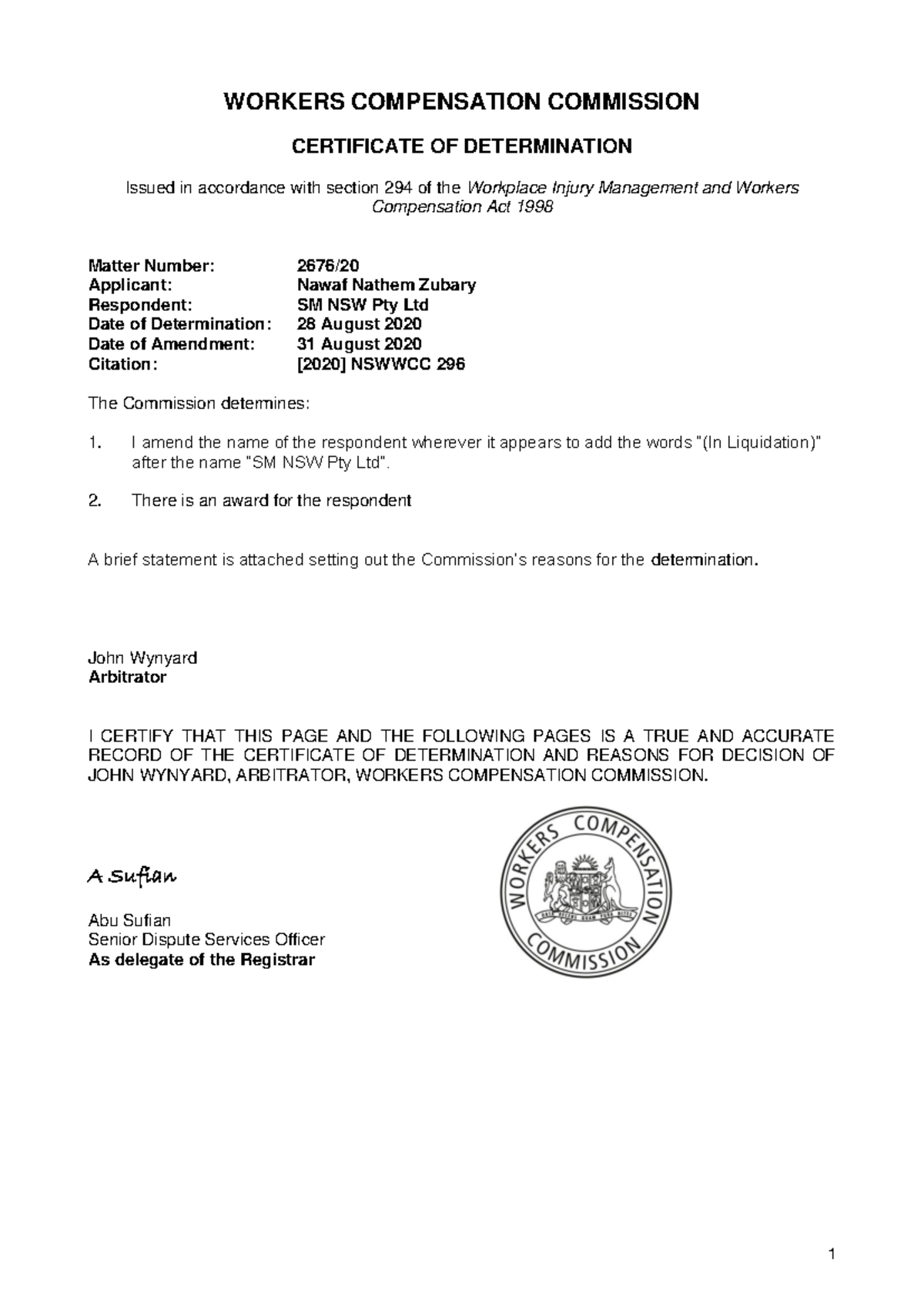
Usually, within two to three weeks, the Commission issues a written "Award" or "Order." This document arrives via mail or through the electronic portal. It will detail exactly what the employer must pay or provide. If the Commissioner finds in favor of the employer, the Order will explain the legal reasoning for the denial.
Appeals to the Circuit Court
If either party is dissatisfied with the Commissioner’s decision, they have 30 days to file an appeal with the Circuit Court for Baltimore City. An appeal can be "on the record" (where a judge reviews what happened at the WCC) or "de novo," which is essentially a brand-new trial, often in front of a jury. It is important to note that even if an appeal is filed, the employer is usually required to continue paying for medical treatment ordered by the Commission during the interim.
Comparison: Hearing vs. Stipulated Settlement
Not every case needs to go to a hearing. Many are resolved through settlements. The following table highlights the key differences:
| Feature | WCC Hearing | Stipulated Settlement (Section 9-722) |
|---|---|---|
| Decision Maker | A WCC Commissioner | Agreed upon by both parties |
| Finality | Can be appealed to Circuit Court | Usually "Full and Final" (cannot be reopened) |
| Speed | Determined by the Commission's docket | Depends on negotiation speed |
| Medical Rights | Usually remain open for future treatment | Often closed in exchange for a lump sum |
| Risk | Commissioner could award $0 or much less than asked | Known dollar amount agreed to beforehand |
Frequently Asked Questions
How long does a Baltimore City WCC hearing last?
Most hearings are relatively brief, lasting between 30 and 90 minutes. However, you may spend several hours in the waiting area if the Commissioner’s docket for that day is crowded. Cases involving complex medical causation or multiple witnesses can take longer and may even be continued to a second date.
Do I need to wear a suit to my hearing?
While a suit is not strictly required, you should dress professionally (business casual). The Commission is a formal legal environment, and your appearance can impact the Commissioner’s perception of your credibility and the seriousness of your claim.
What if I cannot attend the hearing due to my injury?
If your medical condition prevents you from traveling to 10 East Baltimore Street, your attorney can request a "postponement" or ask for a remote hearing. Since 2020, the Commission has maintained robust video conferencing capabilities, though in-person hearings are generally preferred for cases involving witness testimony.
Can I settle my case after a hearing has been scheduled?
Yes. Many cases settle on the "courthouse steps." If the insurance company sees that you are prepared with strong medical evidence, they may offer a settlement just before the case is called to avoid the risk of a Commissioner’s Award.
Will the Commissioner’s decision be influenced by my employer’s opinion of me?
The Commissioner is interested in the facts of the injury and the medical evidence. While an employer might testify about the circumstances of the accident, their personal opinion of your work ethic or character is generally irrelevant unless it goes directly to your credibility regarding the injury.
Final Recommendations for Injured Workers
If you are facing a workers’ compensation commission hearing in Baltimore City, your first step should be to verify that all your medical records have been properly filed with the Commission. A common mistake is assuming the insurance company has provided the Commissioner with all the records; in reality, the insurer will only file documents that support their own position.
Secondly, maintain a "pain and activity" journal in the weeks leading up to the hearing. Being able to provide specific examples of how the injury limits your daily life—such as difficulty sleeping, inability to lift groceries, or the need for assistive devices—is much more persuasive than general statements of discomfort.
For more information on filing requirements and to check the status of a claim, you can visit the Official Maryland Workers' Compensation Commission website. If you are unsure of your legal standing, consulting with a member of the Maryland State Bar Association who specializes in workers' compensation is a prudent next step to ensure your rights are protected under the 2026 guidelines.
Image Gallery