Comprehensive Guide to the Officer AGSU: Standards, Components, and Wear in 2026
The Army Green Service Uniform (AGSU) serves as the primary daily business-casual and service uniform for United States Army officers. It draws historical inspiration from the iconic uniforms worn by the "Greatest Generation" during Wo...
The Army Green Service Uniform (AGSU) serves as the primary daily business-casual and service uniform for United States Army officers. It draws historical inspiration from the iconic uniforms worn by the "Greatest Generation" during World War II, combining a traditional aesthetic with modern textile technology, precise regulation standards, and updated 2026 appearance guidelines.
Contents
Understanding the Evolution and Purpose of the Army Green Service Uniform
The introduction of the Army Green Service Uniform marked a significant shift in how soldiers and officers present themselves in garrison environments. Designed to replace the Army Blue Service Uniform for daily wear, the AGSU bridges the gap between historical heritage and contemporary professional standards. For officers, projecting a disciplined, sharp appearance is an essential component of military leadership, making strict adherence to uniform regulations mandatory.
Army regulations dictate that every officer must maintain a properly fitted AGSU. Unlike combat uniforms such as the Operational Camouflage Pattern (OCP), the AGSU is engineered for professional interactions, official ceremonies, and daily office environments. The color palette—featuring a dark shade 415 "Shade Army Green" coat and shade 421 trousers or slacks—echoes the distinction of mid-20th-century service dress while incorporating durable, wrinkle-resistant wool-blend fabrics optimized for modern climates.
Core Components and Individual Garments of the Officer AGSU
Assembling a compliant officer AGSU requires attention to detail regarding specific authorized garments, fabrics, and accessories. Officers must ensure that every piece meets the specifications outlined in Department of the Army pamphlets and uniform regulations.
- The Service Coat: A single-breasted, peak-lapel coat made of a heavy-weight wool blend. It features four button fronts and belted or unbelted variations depending on historical context, though current regulations specify a tailored, structured fit without an external belt.
- Trousers and Slacks: High-waisted, straight-leg trousers for men and slacks or skirts for women, manufactured in shade 421. They feature a slight break over the shoe and must be pressed with a sharp crease down the center of each leg.
- The Service Cap: Often referred to as the "visor cap" or "combination cover," officer caps feature distinct gold-and-black braid on the visor (commonly known as "farthest leaves" or "scrambled eggs") to differentiate them from enlisted caps.
- Footwear: Low-quarter oxfords made of smooth, high-gloss or polished black leather. Shoes must be clean and well-shined at all times.
Summary of Officer AGSU Garment Specifications
| Garment Component | Authorized Color/Fabric | Mandatory Features | Prohibited Variations |
|---|---|---|---|
| Service Coat | Shade 415 Poly-Wool Blend | Peak lapels, brass buttons, shoulder loops | Contrast stitching, unapproved fabric weights |
| Trousers/Slacks | Shade 421 Poly-Wool Blend | Front-pleated or flat-front, center crease | Cargo pockets, external drawstrings |
| Footwear | Black Leather Oxfords | Plain toe, high-gloss or matte shine | Patent leather patent-only civilian styles, suede |
| Headgear | Shade 415 Visor Cap | Officer crest, bullion or embroidered visor braid | Enlisted plain black visors |
Proper Placement of Insignia, Badges, and Ribbons
For officers, the correct alignment and spacing of rank insignia, branch insignia, ribbons, and badges are critical. Incorrect placement can result in immediate corrective action during inspections.
Officers wear the United States (U.S.) collar insignia on both lapels of the service coat. The insignia consists of the letters "U.S." in gold-colored metal, centered 5/8 inch above the notch of the lapel, with the centerline of the insignia parallel to the lapel seam. Branch insignia is worn on the left lapel, placed approximately 1 inch below the notch and centered horizontally.
Ribbons are worn on the left breast of the coat, centered with the bottom edge positioned parallel to the top edge of the pocket flap. Officers may also choose to wear authorized neckwear, such as the standard four-in-hand tie in Heritage Green, secured with an unadorned gold-colored tie tack or clasp if desired.
Inspection Tip for Officers: Always use a standardized metal alignment gauge when mounting ribbons and badges. Slight mismeasurements of even a quarter-inch can violate appearance regulations and detract from a professional military bearing.
Step-by-Step Guide to Sizing, Fitting, and Tailoring the AGSU
Achieving a crisp, professional look requires professional tailoring. Off-the-rack purchases rarely fit without adjustments. Follow this systematic approach to ensure your AGSU meets all regulatory standards.
- Procure Certified Garments: Purchase your AGSU coat, trousers, and shirts from certified military clothing sales stores or authorized commercial vendors that meet strict Department of Defense specifications.
- Initial Fitting Assessment: Put on the full uniform—including the service shirt, tie, and proper footwear—to evaluate the natural hang of the jacket and trousers.
- Coat Tailoring: Have a professional tailor adjust the sleeve length so that the cuff rests approximately 1 inch below the wrist bone when your arms are hanging naturally at your sides. Ensure the waist suppression is contoured to your body shape without pulling or straining across the chest.
- Trouser Hemming: Stand straight in your service shoes while the tailor pins the trousers. The hem should create a slight break over the front of the shoe and rest approximately midway down the heel in the back.
- Insignia Sewing and Pinning: Carefully measure and attach all rank insignia, unit awards, and qualification badges according to current regulatory distance charts.
Comparison: Officer AGSU vs. Traditional Army Blue Service Uniform
Transitioning between service uniforms requires understanding the distinct roles and expectations associated with each ensemble. The table below outlines the primary differences between the modern AGSU and the traditional Army Blue Service Uniform.
| Feature | Army Green Service Uniform (AGSU) | Army Blue Service Uniform (ABSU) |
|---|---|---|
| Primary Usage | Daily business-formal, garrison wear, and general service | Formal evening events, balls, weddings, and high-level ceremonies |
| Color Scheme | Shade 415 Green coat, Shade 421 Trousers | Midnight blue coat, sky blue trousers (for officers) |
| Historical Era | World War II heritage (1940s aesthetic) | 19th-century lineage and traditional dress |
| Footwear | Black oxfords | Black oxfords or authorized mess dress shoes |
Maintenance, Storage, and Cleaning Best Practices
Because the AGSU features high-percentage wool fabrics, proper care is essential to extend the lifespan of the uniform and maintain its sharp appearance.
- Dry Cleaning: Always take your AGSU coat and trousers to a reputable dry cleaner experienced in handling military uniforms. Request "press-only" when the uniform does not require deep cleaning to preserve the fabric fibers.
- Hanger Storage: Store the coat on a heavy, contoured wooden or wide-plastic hanger that supports the shoulder structure. Never wire hangers, as they distort the shoulder padding.
- Garment Bags: Keep the uniform in a breathable, zipped garment bag to protect it from dust, moths, and prolonged sunlight exposure during long-term storage.
- Lint and Dust Removal: Use a soft-bristle garment brush before and after every wear to remove surface dust and lint, brushing downward along the nap of the wool.
Frequently Asked Questions Regarding the Officer AGSU
What is the mandatory wear date for the Army Green Service Uniform?
The AGSU became mandatory for all soldiers as a daily service uniform starting in October 2027, though officers have been authorized and encouraged to wear it since its reintroduction. Many commands mandate its use for official functions and boards well ahead of final deadlines.
Can officers wear the AGSU for social events and formal weddings?
Yes, the AGSU is fully authorized for off-duty social events, formal dinners, and weddings where a business-formal or semi-formal military appearance is appropriate. For ultra-formal evening events, the Army Blue Mess Uniform remains the standard choice.
How should rank insignia be attached to the AGSU shoulder loops?
Officer rank insignia is pinned directly onto the shoulder loops of the service coat. Pin placement requires the center of the insignia to be placed precisely 3/4 inch from the outer edge of the shoulder seam, facing forward.
Are commercial-off-the-shelf (COTS) AGSU items permitted?
Yes, provided the commercial items are manufactured from certified materials, match the exact color shade (Shade 415 and 421), and comply strictly with Army Uniform Board specifications. Always verify vendor certification before purchasing online or from third-party retailers.
What shirt colors and styles are authorized underneath the AGSU coat?
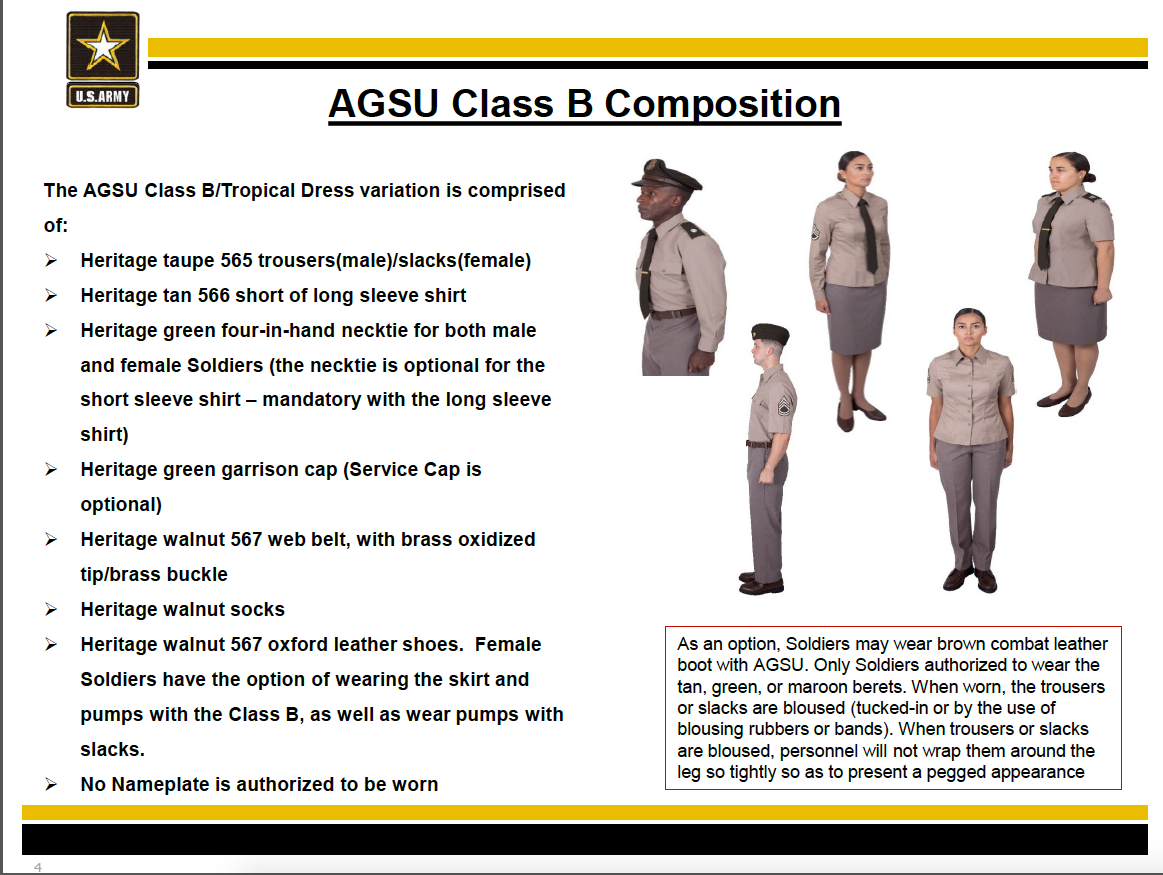
Officers must wear the authorized Heritage Green shade service shirt underneath the AGSU coat. The shirt can be worn with a necktie (long-sleeve version) or with an open collar without a tie (short-sleeve version, depending on seasonal and local command directives).
Professional Recommendation for Officers
Maintaining a flawless officer AGSU requires ongoing attention to detail, proper tailoring, and strict compliance with evolving regulatory updates. Regularly inspect your uniform for loose threads, worn stitching, and tarnished brass. Invest in high-quality storage solutions and professional dry cleaning to ensure your uniform projects the utmost authority, professionalism, and respect for military tradition.
Image Gallery