Evaluating Chamberlain University Nursing School in Denver: A 2026 Academic and Career Analysis
Chamberlain University's Denver campus offers an accelerated Bachelor of Science in Nursing (BSN) path tailored for career-changers, alongside its online RN-to-BSN, MSN, and DNP programs. Situated in the healthcare hub of Metro Denver,...
Chamberlain University's Denver campus offers an accelerated Bachelor of Science in Nursing (BSN) path tailored for career-changers, alongside its online RN-to-BSN, MSN, and DNP programs. Situated in the healthcare hub of Metro Denver, this evaluation analyzes its curriculum rigor, clinical placement integrity, regional accreditation, tuition structures, and local employment outcomes for 2026 prospective students.
Contents
Academic Architecture and Program Offerings at the Denver Campus
Understanding the structural foundation of Chamberlain University requires looking at how its nursing pathways are delivered in Colorado. Located strategically to serve the Front Range, the Denver campus primarily focuses on its flagship three-year Accelerated BSN (ABSN) option, which allows students who already hold a bachelor's degree in another discipline to transition into registered nursing rapidly.
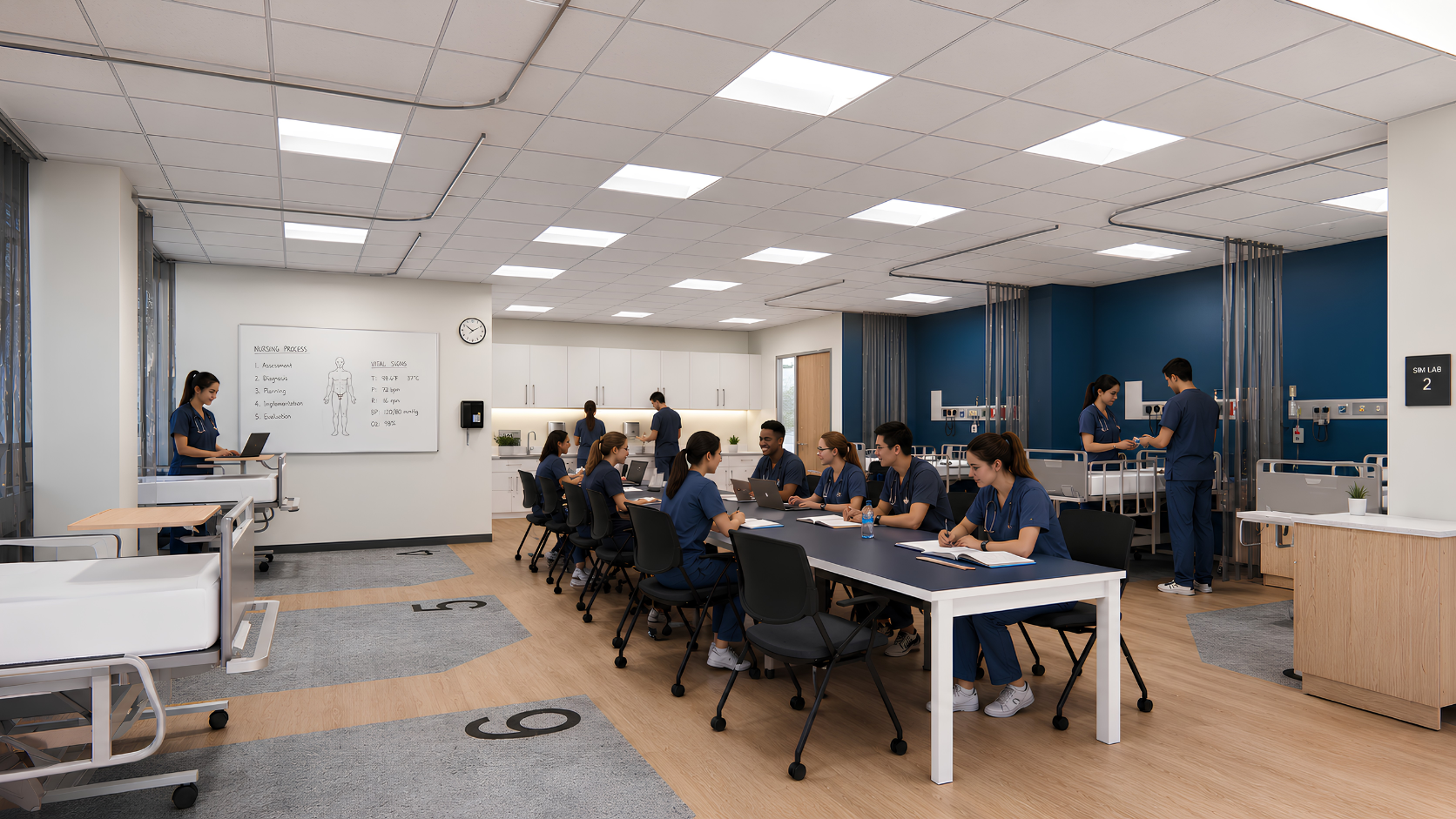
The curriculum design merges rigorous online didactic coursework with intensive, hands-on laboratory simulations and supervised clinical rotations. Students engage with foundational sciences—such as pathophysiology, pharmacology, and health assessment—before progressing into acute care, pediatric, psychiatric-mental health, and community health nursing.
- Accelerated BSN (ABSN): Designed for non-nurse college graduates, condensing nursing theory and clinical practice into an intensive timeframe.
- RN-to-BSN Degree Completion: Fully online program constructed for working registered nurses holding an associate degree or diploma.
- Master of Science in Nursing (MSN): Advanced tracks including Nurse Practitioner, Nursing Education, and Nursing Leadership, structured for working professionals.
- Doctor of Nursing Practice (DNP): Practice-focused terminal degree for nurses aiming for executive leadership or advanced clinical roles.
Clinical Partnerships and Regional Healthcare Integration in Metro Denver
A critical determinant of any nursing school's quality is the strength and reliability of its clinical placement network. In the competitive Denver healthcare market, nursing students must secure hands-on hours in major hospital systems to gain real-world proficiency.
Chamberlain University maintains clinical affiliation agreements with major healthcare networks operating along the Front Range. These partnerships are vital for exposing students to diverse patient populations, electronic health record (EHR) systems like Epic, and interprofessional clinical teams.
| Healthcare System / Provider | Facility Types | Clinical Placement Focus | Student Integration Level |
|---|---|---|---|
| UCHealth | Academic Medical Centers, Community Hospitals | Trauma care, critical care, acute medical-surgical | Direct patient care under clinical instructor supervision |
| HCA Healthcare Continental Division | General Acute Care Hospitals | Emergency medicine, perioperative care, telemetry | Rotations in med-surg and specialized step-down units |
| Centura Health / CommonSpirit | Regional Medical Centers | Women's health, pediatrics, behavioral health | Comprehensive clinical immersion and observation |
| Local Community Health Centers | Outpatient Clinics, Public Health Depts | Community health, preventative care, health education | Direct public health nursing interventions |
These clinical sites ensure that Denver-based students meet the rigorous clinical hour mandates set by the Colorado State Board of Nursing. However, students should note that clinical schedules often require early morning shifts, night rotations, or weekend placements depending on facility availability.
Accreditation, Licensure Exam Pass Rates, and Regulatory Compliance
Prospective nursing students must verify institutional accreditation and program approval to ensure eligibility for federal financial aid, credit transfers, and the National Council Licensure Examination for Registered Nurses (NCLEX-RN).
Chamberlain University is institutionally accredited by the Higher Learning Commission (HLC). Furthermore, its BSN, MSN, and DNP degree programs hold programmatic accreditation from the Commission on Collegiate Nursing Education (CCNE). Locally, the nursing program operates with full approval from the Colorado State Board of Nursing, ensuring that graduates meet all educational prerequisites required to sit for the NCLEX-RN exam and apply for state licensure.
- Institutional Accreditation: Higher Learning Commission (HLC).
- Programmatic Accreditation: Commission on Collegiate Nursing Education (CCNE).
- State Regulatory Body: Colorado State Board of Nursing.
- Licensure Milestone: Graduates must successfully pass the computerized adaptive testing (CAT) NCLEX-RN exam to practice as licensed registered nurses in Colorado or via the Nurse Licensure Compact (NLC).
Financial Investment, Tuition Structures, and Return on Investment
Pursuing a nursing education represents a significant financial commitment. Chamberlain University utilizes a per-credit-hour tuition model for its nursing programs, which means total costs fluctuate based on transfer credits, program tracks, and incidental fees such as lab coats, simulation fees, background checks, and books.
To evaluate the financial viability of attending the Denver campus, students must weigh the total cost of attendance against local entry-level registered nurse salaries in the Denver-Aurora-Lakewood metropolitan statistical area. According to data from the Bureau of Labor Statistics (BLS) and regional employment reports, the mean hourly and annual wages for registered nurses in the Denver area remain competitive, driven by high regional demand for skilled healthcare professionals.
- Tuition Calculation: Billed per credit hour, with separate fees for technology, clinical supplies, and standardized testing software.
- Financial Aid Availability: Title IV federal financial aid, including Direct Subsidized and Unsubsidized Loans, Pell Grants (where applicable), and institutional scholarships.
- Employer Tuition Assistance: Many local Denver hospital systems offer robust tuition reimbursement or loan forgiveness programs for employees who commit to working post-graduation.
Pros and Cons of Choosing Chamberlain University in Denver
Evaluating an educational institution requires an objective assessment of its operational strengths alongside its structural challenges.
Advantages of the Denver Campus Accelerated Entry: The fast-track nature of the ABSN program enables career changers to enter the nursing workforce in a fraction of the time required by traditional four-year universities. Robust Clinical Network: Established relationships with prominent Denver healthcare systems provide diverse clinical learning environments. Flexible Start Dates: Multiple cohorts per year allow students to begin their studies without waiting for traditional fall academic cycles.
Challenges and Considerations High Total Cost: Private institution tuition rates are typically higher than those of Colorado public universities and community college nursing programs. Intense Pace: The accelerated curriculum demands rigorous time management, high levels of personal discipline, and a willingness to balance heavy didactic loads with demanding clinical hours. Self-Directed Learning: A significant portion of coursework relies on digital delivery models, requiring strong independent study habits.
Step-by-Step Guide to Applying for the Denver Nursing Program
Navigating the admissions pipeline for a private nursing school requires careful attention to prerequisite completion and administrative deadlines. Prospective students should follow a structured sequence to maximize their competitiveness.
- Review Admission Prerequisites: Complete all required prerequisite science courses—such as Anatomy and Physiology I & II with labs, Microbiology, and Chemistry—with minimum grade point average (GPA) thresholds.
- Submit Transcripts: Request official transcripts from all previously attended regionally accredited colleges and universities to be evaluated for transfer credit.
- Complete Entrance Testing: Take required admissions assessments, such as the admission assessment exam measuring basic math, reading comprehension, and science knowledge, if applicable.
- Meet with an Admissions Counselor: Connect with a Denver campus admissions representative to review your credit evaluation, financial aid options, and upcoming cohort start dates.
- Submit the Formal Application: Complete the online application portal submission, ensure all background check and health immunization clearance documents are ready, and finalize your financial aid packaging.
Frequently Asked Questions About Chamberlain University Denver
Is Chamberlain University's Denver nursing program fully accredited?
Yes, Chamberlain University is institutionally accredited by the Higher Learning Commission, and its nursing programs are accredited by the Commission on Collegiate Nursing Education (CCNE). Additionally, the program is approved by the Colorado State Board of Nursing.
What is the prerequisite requirement for the Accelerated BSN program?
Applicants to the ABSN program must already hold a bachelor's degree in another field and complete specific prerequisite science and general education courses with qualifying grades before enrollment.
Are clinical placements guaranteed at specific Denver hospitals?
While Chamberlain maintains affiliation agreements with major healthcare systems in Metro Denver, specific clinical placement sites and shifts are assigned based on availability, capacity limits, and clinical rotation rotation requirements.
How does Chamberlain's tuition compare to public nursing schools in Colorado?
As a private institution, Chamberlain University's per-credit tuition is generally higher than that of public state universities or community college nursing programs in Colorado, reflecting its accelerated timelines and continuous enrollment options.
Can I work while enrolled in the Chamberlain Denver ABSN program?
Due to the intense, fast-paced nature of the curriculum and the demanding schedule of clinical rotations, faculty strongly advise against maintaining full-time employment while completing the accelerated nursing tracks.
Strategic Recommendation for Prospective Students
Deciding to enroll in Chamberlain University’s Denver nursing program depends heavily on your personal timeline, financial resources, and career urgency. If you already hold a non-nursing bachelor's degree and seek an expedited pathway into the nursing profession without waiting on long community college waitlists, the ABSN program offers a viable, direct route. However, applicants should perform a comprehensive financial audit, weigh alternative public options along the Front Range, and prepare rigorously for the accelerated academic pace required to succeed in Colorado's competitive healthcare landscape.
Image Gallery