The Truth About Enrique Tarrio: Racial Identity and the Afro-Cuban Claim
Enrique Tarrio, the former chairman of the Proud Boys, identifies as Afro-Cuban, a heritage that places him within the Black diaspora. While his African ancestry is a factual aspect of his genealogy, his leadership of a far-right organ...
Enrique Tarrio, the former chairman of the Proud Boys, identifies as Afro-Cuban, a heritage that places him within the Black diaspora. While his African ancestry is a factual aspect of his genealogy, his leadership of a far-right organization has fueled intense debate regarding whether his identity serves as a genuine representation of diversity or a strategic shield against allegations of white supremacy.
Contents
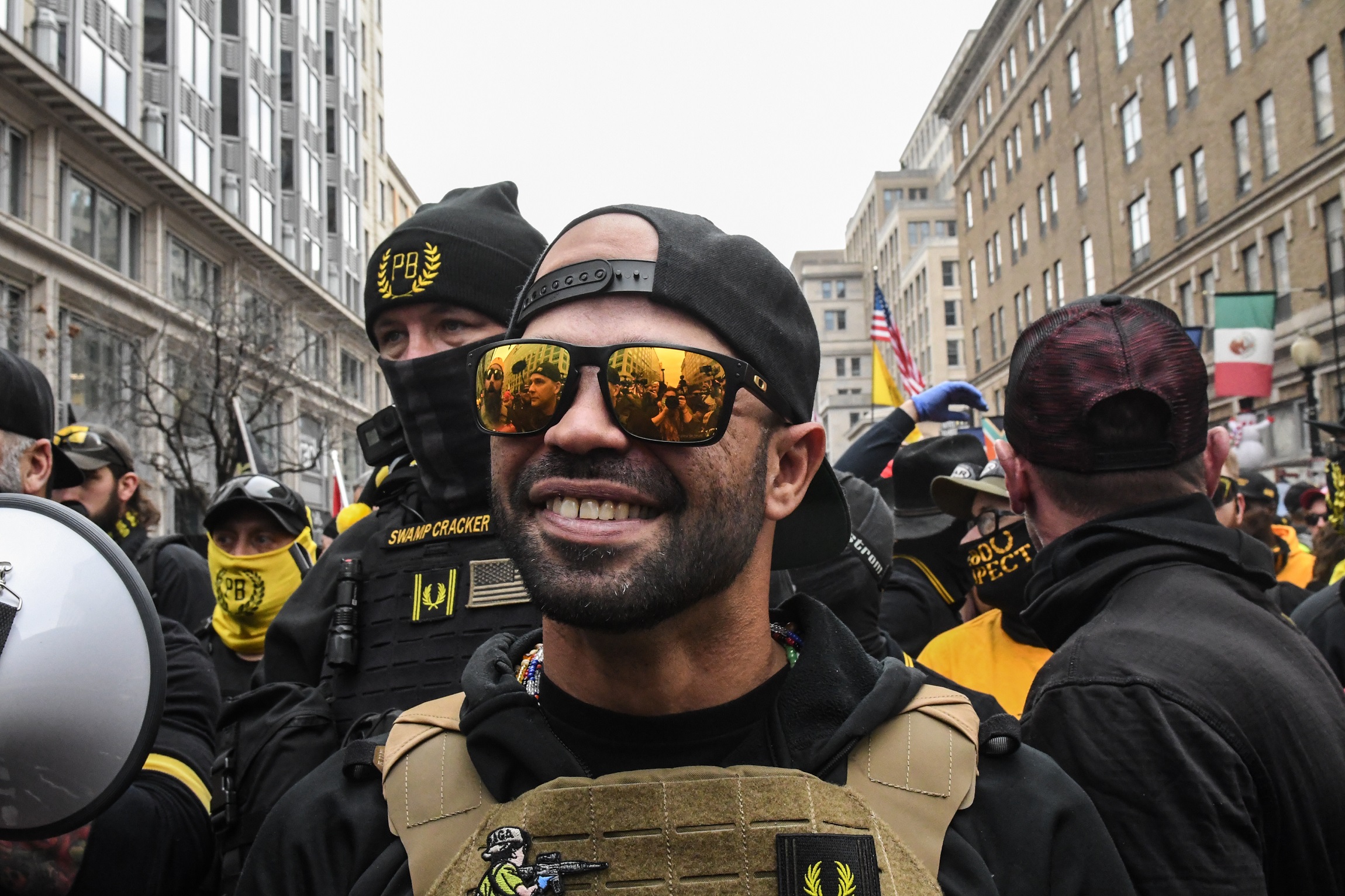
Henry "Enrique" Tarrio rose to national prominence not just for his political activism, but for the perceived paradox of his identity. As a man of color leading a group frequently characterized by watchdogs as an extremist organization, Tarrio became a central figure in discussions about the changing face of American far-right movements. To understand the "truth" about his racial identity, one must look at the intersection of his Cuban heritage, the sociological definitions of race in the United States, and how these factors influenced his public persona and legal challenges leading up to his 2023 sentencing and continued incarceration in 2026.
Family Heritage and Afro-Cuban Roots
Enrique Tarrio was born and raised in Little Havana, Miami, a hub for the Cuban-American community. His parents were Cuban immigrants, and Tarrio has consistently self-identified as Afro-Cuban. In the Caribbean and Latin American context, "Afro-Cuban" refers to Cubans of sub-Saharan African ancestry. This demographic history is rooted in the transatlantic slave trade, which brought a significant number of enslaved Africans to Cuba to work on sugar plantations.
Tarrio’s identity is not a "claim" in the sense of a fabricated pedigree; rather, it is a reflection of the multi-ethnic composition of Cuban society. In numerous interviews, Tarrio has pointed to his appearance and his family’s history as evidence of his Blackness. He has often used his background to distinguish himself from the "white nationalist" label that critics applied to him and his organization. However, the American racial landscape often categorizes individuals differently than the Latin American landscape, where "Black" and "Latino" are not seen as mutually exclusive but are often nuanced by degrees of colorism and cultural heritage.
The Proud Boys and the "Diversity" Defense
When Tarrio took over the leadership of the Proud Boys in 2018 following the departure of founder Gavin McInnes, the move was widely viewed as a rebranding effort. The organization, which describes itself as a group of "Western Chauvinists," had faced increasing scrutiny for its involvement in political violence and its proximity to white nationalist rhetoric.
Tarrio’s presence at the helm allowed the organization to argue that it could not be a white supremacist group if its leader was a Black man of Hispanic descent. This defense was used frequently in media appearances and during internal recruitment. Tarrio himself often stated that the group focused on "Western values" rather than race.
However, civil rights organizations like the Southern Poverty Law Center (SPLC) and the Anti-Defamation League (ADL) argued that Tarrio’s identity did not negate the group’s underlying ideology. These organizations pointed to the group’s track record of targeting minority groups, its promotion of "Great Replacement" conspiracy theories among certain members, and its alliance with overtly racist factions during the "Unite the Right" rally in Charlottesville. The "truth" in this context is a matter of ideological friction: Tarrio maintained that his identity proved the group was inclusive, while critics maintained that his identity was being weaponized to sanitize extremist views.
Seditious Conspiracy and the Legal Status in 2026
As of 2026, Enrique Tarrio remains incarcerated, serving a 22-year sentence—the longest handed down in relation to the January 6, 2021, Capitol riot. Although Tarrio was not present at the Capitol on the day of the breach—having been arrested two days prior for burning a Black Lives Matter flag and carrying high-capacity magazines—the Department of Justice successfully argued that he directed the Proud Boys’ actions from afar.
The legal proceedings brought Tarrio’s identity into the courtroom in complex ways. His defense often highlighted his background to argue against the notion that he was motivated by racial animus. Nevertheless, the jury found him guilty of seditious conspiracy, a charge that focuses on the intent to oppose the lawful transfer of power by force, regardless of the defendant's racial or ethnic background.
Timeline of Key Events and Identity Markers
| Date | Event | Significance of Identity/Status |
|---|---|---|
| 1984/85 | Birth in Miami | Establishes his Afro-Cuban heritage in Little Havana. |
| 2018 | Becomes Chairman | Uses his Afro-Latino identity to push back against "white supremacist" labels. |
| Dec 2020 | BLM Flag Incident | Arrested for burning a flag at a historic Black church; later cited as a hate crime. |
| Sept 2023 | Sentencing | Sentenced to 22 years for seditious conspiracy; identity did not mitigate the sentence. |
| 2026 | Current Status | Serving sentence in federal prison; remains a symbol of the multiracial far-right. |
The Complexity of Afro-Latino Identity in Politics
To address the question of whether Tarrio is "actually" Black, one must navigate the difference between race and ethnicity. In the United States, the Census Bureau treats "Hispanic or Latino" as an ethnicity, not a race. Therefore, a person can be "Black and Latino" or "White and Latino."
Tarrio’s experience reflects a growing trend observed by sociologists: the emergence of the "multiracial far-right." This phenomenon involves individuals from minority backgrounds who align themselves with movements that prioritize national identity, "Western" culture, or traditionalist values over racial solidarity. For Tarrio, his Blackness was a biological fact, but his political identity was rooted in a specific brand of American nationalism that many traditional Black civil rights leaders found antithetical to the interests of the Black community.
The controversy surrounding his identity often boiled down to a disagreement over the "Black experience." Critics argued that Tarrio’s actions—specifically the burning of a Black Lives Matter flag at Asbury United Methodist Church—demonstrated a hostility toward Black social movements that outweighed his biological heritage. Tarrio, conversely, argued that his opposition to BLM was political and not a rejection of his own race.
Public Perception and Media Representation
The media's handling of Tarrio’s race has been polarized. Conservative outlets often highlighted his heritage to criticize mainstream media for labeling the Proud Boys as white supremacists. In contrast, progressive outlets often framed him as a "token" leader or an outlier whose presence did not change the fundamental nature of the group he led.
This debate reached a fever pitch during the 2020 presidential debates when the Proud Boys were mentioned. The subsequent surge in interest regarding the group's leadership forced a public reckoning with the idea that extremist movements are not monolithic. The truth about Enrique Tarrio is that he represents a shift in extremist demographics, where shared cultural or political grievances can sometimes bridge racial divides, even within groups that have historical ties to exclusionary ideologies.
Critical Analysis of the "Black" Claim
When people ask for the "truth" about Tarrio being Black, they are often looking for a binary answer. The biological truth is that he is of African descent. The social truth is more complicated.
- Biological Reality: Tarrio has documented African ancestry via his Cuban lineage. In any standard genealogical or census-based metric, he qualifies as Black or Afro-Latino.
- Sociopolitical Labeling: The "claim" that he is Black is often challenged not on the basis of DNA, but on the basis of his alignment with groups that are perceived as harmful to Black people. This is a distinction between being Black and representing Black interests.
- Strategic Utility: There is significant evidence that both Tarrio and the Proud Boys viewed his race as a strategic asset. By positioning an Afro-Cuban man at the front of the organization, they created a rhetorical "checkmate" against certain types of media criticism.
Frequently Asked Questions
Is Enrique Tarrio still in prison in 2026?
Yes. In September 2023, Tarrio was sentenced to 22 years in federal prison for seditious conspiracy related to the January 6 Capitol attack. As of 2026, he is still serving this sentence, with several years remaining before he is eligible for any potential early release or parole, though federal crimes generally require serving at least 85% of the sentence.
Did Enrique Tarrio ever deny being Black?
No. Throughout his public life, Tarrio has leaned into his Afro-Cuban identity. He has used it as a primary defense against accusations of racism, frequently stating in interviews that he is a "person of color" and that the Proud Boys are a diverse organization.
Why was he accused of a hate crime if he is Black?
In 2021, Tarrio pleaded guilty to destruction of property for burning a Black Lives Matter banner stolen from a historic Black church in Washington, D.C. While he is Afro-Cuban, the legal system and the victims viewed the act as an attempt to intimidate a specific community and its religious institution, which led to hate crime enhancements and civil litigation.
Are the Proud Boys considered a white supremacist group?
The classification varies by organization. The Southern Poverty Law Center (SPLC) has designated them as a hate group, and the Anti-Defamation League (ADL) describes them as "extremist." While the group officially claims to reject white supremacy in favor of "Western Chauvinism," many of its members and former leaders have been linked to white nationalist movements.
Can an Afro-Cuban person be a white nationalist?
Technically, "white nationalism" focuses on the interests of white people. However, researchers note that some individuals of color join these movements by focusing on "Western culture" or "civilizational" values rather than biological race. This is often referred to as "multiracial far-right" activism.
Summary of Findings
The "truth" about Enrique Tarrio is that his racial identity is a documented fact—he is an Afro-Cuban man. However, the significance of that fact is where the public is divided. For his supporters, his race is proof that the movements he led are based on ideas rather than skin color. For his detractors, his race is a superficial mask for an ideology that remains fundamentally exclusionary. As he continues his prison sentence in 2026, Tarrio remains a primary case study in the complex ways that race, ethnicity, and political extremism intersect in modern America.
Image Gallery