Why the Whole Life Insurance Policy for Infinite Banking Often Falls Short
The infinite banking concept often falls short because policies are frequently misconfigured with high base premiums that prioritize agent commissions over early cash value. Additionally, the lengthy break-even period, rising policy lo...
The infinite banking concept often falls short because policies are frequently misconfigured with high base premiums that prioritize agent commissions over early cash value. Additionally, the lengthy break-even period, rising policy loan interest rates, and the complex tax implications of Modified Endowment Contracts (MECs) can undermine the liquidity and growth promised to policyholders.
Contents
The Structural Conflict: Commission vs. Cash Value
At the heart of why whole life insurance policies fail to deliver on the "infinite banking" (IBC) promise is a fundamental conflict of interest in how the policy is designed. For a policy to work as a banking vehicle, it must maximize cash value in the early years. However, traditional whole life insurance is designed to provide a death benefit first, with cash value accumulating slowly over decades.
In a standard whole life policy, the majority of the premium in the first few years goes toward the cost of insurance and agent commissions. For the infinite banker, this is a "sunk cost" that can take 10 to 15 years to recover. To circumvent this, the policy must be structured using Paid-Up Additions (PUA) riders. These riders allow the policyholder to overfund the policy, cramming extra cash into the contract that goes almost entirely toward cash value rather than death benefit.
The problem arises because agents, who are often the primary source of education on IBC, see their commissions slashed by up to 70% or 80% when they structure a policy with a high PUA-to-base-premium ratio. Consequently, many policies sold for infinite banking are "base-heavy," leading to poor early-stage liquidity. By 2026, the financial industry has seen a rise in "automated" insurance platforms that claim to optimize these ratios, yet many consumers still find themselves trapped in policies where their cash value doesn't equal their total premiums paid until year 12 or 15.
The "Lost Decade" of Liquidity and Opportunity Cost
One of the most significant reasons infinite banking falls short is the misunderstanding of opportunity cost. Proponents of the strategy argue that by "becoming your own banker," you are capturing the interest that would otherwise go to a commercial bank. While technically true, this ignores what that money could have earned if invested elsewhere during the policy’s "capitalization phase."
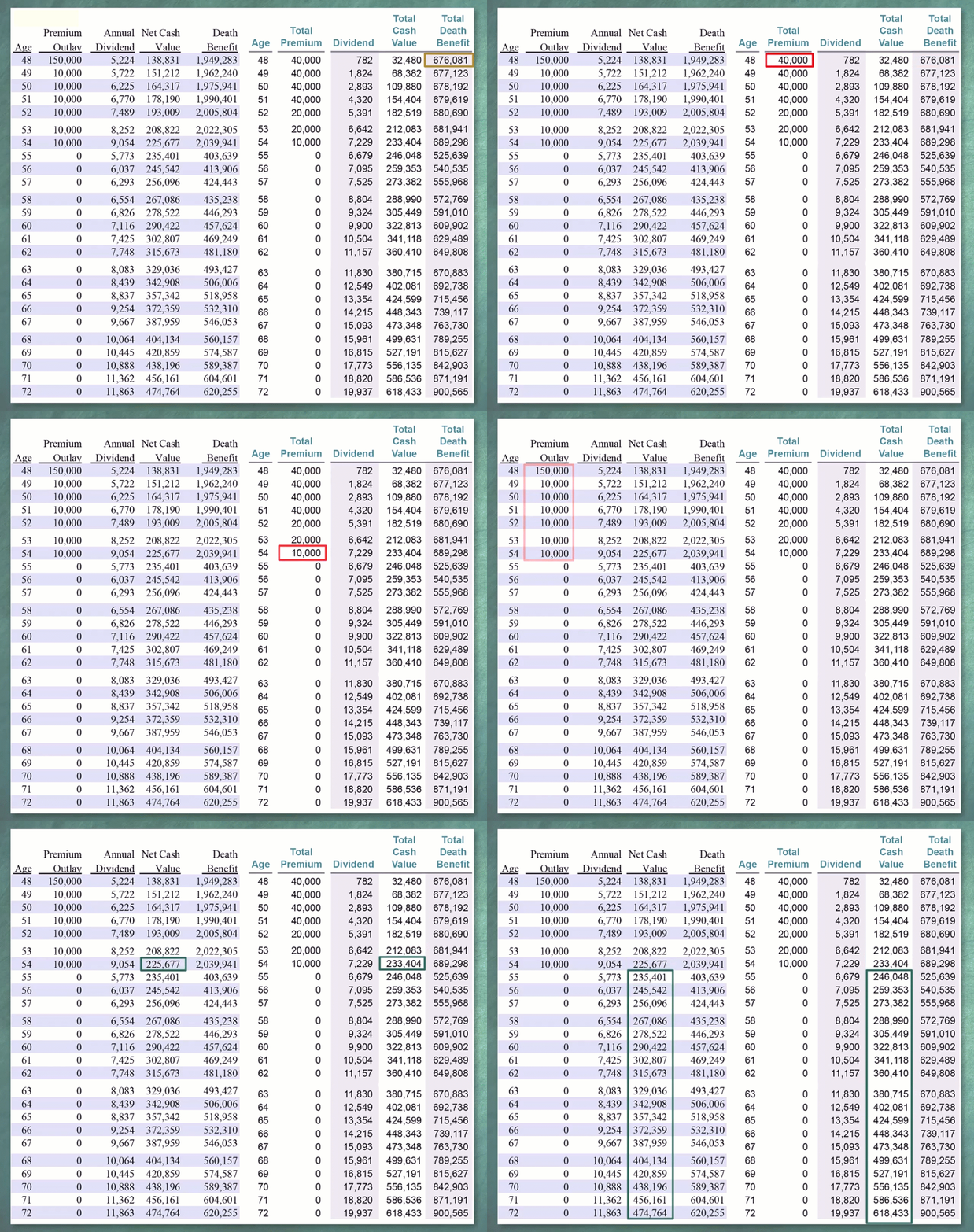
During the first 7 to 10 years of a whole life policy, the internal rate of return (IRR) is often negative. You are essentially paying more into the system than you can take out. If a business owner or investor allocates $50,000 a year to a whole life policy in 2026, they may only have access to $30,000 of that capital in the second year. The "missing" $20,000 represents a loss of liquidity that could have been used for market-based investments, real estate down payments, or business expansion.
When the market performs well—as seen in various cycles leading up to 2026—the 4% to 5% gross dividend rate of a mutual insurance company often pales in comparison to alternative assets. While whole life provides a "safe" floor, the drag created by the initial cost of insurance means the "infinite" part of the banking strategy takes a decade just to reach a baseline of zero.
The Policy Loan Interest Trap
A core tenant of infinite banking is the ability to borrow against your cash value. A common misconception is that you are "borrowing your own money" and "paying yourself the interest." In reality, you are borrowing the insurance company’s money, using your cash value as collateral. The insurance company charges you interest on this loan.
As of 2026, interest rate environments remain a critical factor in policy performance. Many whole life policies use Direct Recognition, meaning the company reduces the dividend paid on the portion of the cash value that has an outstanding loan. If the company charges 6% interest on a loan but only pays a 4% dividend on the loaned funds, the policyholder is experiencing a 2% "negative spread."
Even in Non-Direct Recognition policies—where the dividend stays the same regardless of loans—the interest rate charged by the insurer is often higher than what one might find with a Secured Line of Credit (SLOC) or a standard margin loan in a brokerage account. If the cost of borrowing from the policy exceeds the growth of the policy, the "banking" function becomes an expensive way to access capital rather than a wealth-generating tool.
The MEC Trap: Navigating IRS Section 7702
To make infinite banking efficient, you want to put as much money into the policy as possible as quickly as possible. However, the IRS has strict rules under Section 7702 to prevent life insurance from being used purely as a tax-free investment vehicle. If a policy is funded too aggressively, it becomes a Modified Endowment Contract (MEC).
Once a policy becomes a MEC, it loses the primary tax advantages that make IBC attractive:
- Loans become taxable: Instead of tax-free access to capital, loans are treated as distributions of gains first (LIFO - Last In, First Out).
- Penalty taxes: If the policyholder is under age 59½, they may face a 10% IRS penalty on the gains withdrawn or borrowed.
Navigating the "7-Pay Test" to avoid MEC status requires a delicate balance of death benefit and premium. If the policy is designed with a death benefit that is too low to save on costs, the MEC limit will also be low, restricting the amount of "banking" capital the user can deposit. This ceiling often prevents high-income earners from moving enough capital into the strategy to make it their primary banking system, leading many to realize the strategy is less "infinite" than advertised.
Comparing Strategic Outcomes
To understand why these policies often fall short, it is helpful to compare a standard whole life policy against one specifically engineered for IBC.
| Feature | Standard Whole Life Policy | IBC-Optimized Whole Life |
|---|---|---|
| Base Premium % | 90% - 100% | 10% - 40% |
| PUA Rider % | 0% - 10% | 60% - 90% |
| Year 1 Cash Value | 0% - 10% of premium | 60% - 85% of premium |
| Break-Even Year | Year 12 to 15 | Year 5 to 8 |
| Agent Commission | High (50%+ of Year 1 Premium) | Low (15% - 25% of Year 1 Premium) |
| Death Benefit | High relative to premium | Lower (minimized for efficiency) |
In the table above, it is clear that a "standard" policy—which is what many uneducated consumers receive—is mathematically incapable of functioning as an efficient banking vehicle. The high base premium creates a hole so deep that the "banking" benefits are not realized until late in life, long after the primary need for liquid capital has passed.
Complexity and the Discipline Gap
Infinite banking is not a "set it and forget it" strategy; it is an active financial management system. Many policies fall short simply because the human element fails. To work, the policyholder must:
- Commit to high premiums: IBC requires substantial cash flow. If a policyholder's income drops and they cannot sustain the PUA payments, the policy’s growth stalls.
- Repay loans diligently: While the insurance company doesn't require a strict repayment schedule, failing to pay back loans (and the accruing interest) will eventually cannibalize the death benefit and can lead to a policy lapse.
- Manage the tax consequences: A lapsed policy with an outstanding loan is treated as a sale, potentially triggering a massive, unexpected tax bill on all gains.
By 2026, the rise of "get rich quick" financial influencers has led many individuals into IBC who lack the cash flow stability to maintain the strategy. When the reality of the 10-year commitment sets in, many surrender their policies, taking a significant loss on the early premiums paid.
The Dividend Reality in 2026
Dividend rates are not guaranteed. While mutual companies (like MassMutual, Northwestern Mutual, or Guardian) have a long history of paying dividends, the rate fluctuates. In a 2026 economy characterized by volatile bond yields, the dividends paid by insurers may not keep pace with inflation or the rising costs of traditional banking loans.
If a policyholder projected a 6% dividend in their 2022 illustration but the company only pays 4.5% in 2026, the entire timeline for the "banking" strategy shifts. This volatility often surprises those who were sold on the idea of a "guaranteed" banking system. While the guaranteed portion of the contract remains, it is usually only 2% to 3%, which is rarely enough to justify the complexity and cost of the IBC structure on its own.
Expert Guidance and Next Actions
Before committing to an infinite banking strategy, it is essential to perform a rigorous "stress test" on any proposed policy illustration.
- Request a 10/90 or 30/70 split: Ask the agent for an illustration where the base premium is the absolute minimum required to keep the policy from becoming a MEC.
- Verify Non-Direct Recognition: If you plan to borrow frequently, ensure the company does not penalize your dividends for taking loans.
- Check the Surrender Value: Look at the year-one and year-two "Cash Surrender Value." If it is less than 60% of what you paid in, the policy is likely structured more for the agent's benefit than your banking needs.
- Consult a Fiduciary: Insurance agents are often held to a "suitability" standard rather than a "fiduciary" standard. Have an independent fee-only financial planner review the math to ensure it aligns with your broader wealth strategy.
Infinite banking is a legitimate tool for a specific subset of high-net-worth individuals who require a place to store "lazy capital" while maintaining some access to it. However, for the average investor, the high fees, long wait times, and interest rate spreads often make it a suboptimal choice compared to simpler, more transparent financial vehicles.
Disclaimer: This article is for informational purposes only and does not constitute financial, legal, or tax advice. Infinite banking involves complex life insurance products that vary by jurisdiction and carrier. Always consult with a qualified financial advisor and tax professional before purchasing a life insurance policy or implementing a private banking strategy.
Image Gallery