Denton County TX Property Tax: 2026 Comprehensive Guide to Payments, Exemptions, and Protests
Property taxes in Denton County, Texas, are managed through a dual-agency system where the Denton Central Appraisal District (DCAD) determines property values and the Denton County Tax Office handles the billing and collection of funds...
Property taxes in Denton County, Texas, are managed through a dual-agency system where the Denton Central Appraisal District (DCAD) determines property values and the Denton County Tax Office handles the billing and collection of funds. For the 2026 tax year, property owners must ensure all exemptions are filed by April 30 and payments are finalized by January 31, 2027, to remain in good standing and avoid significant interest penalties.
Contents
Navigating the complexities of Texas property law requires a clear understanding of the annual calendar, the specific exemptions available to Denton County residents, and the formal process for protesting a valuation that exceeds market value. As one of the fastest-growing counties in the United States, Denton County's local taxing jurisdictions—including school districts, cities, and special districts—rely heavily on these ad valorem taxes to fund infrastructure, public safety, and education.
The 2026 Denton County Property Tax Calendar
The Texas property tax cycle is a continuous process governed by the Texas Tax Code. Understanding the 2026 milestones is critical for financial planning and ensuring you do not miss deadlines for legal recourse.
- January 1, 2026 (Valuation Date): The appraisal district determines the value and ownership status of all property as of this date. This is the "snapshot" that dictates your tax liability for the entire year.
- April - May 2026 (Appraisal Notices): DCAD mails "Notice of Appraised Value" to property owners. This document is not a bill but an estimate of your property’s value and the potential taxes based on the previous year's rates.
- May 15, 2026 (Protest Deadline): This is typically the final day to file a written protest with the Appraisal Review Board (ARB) regarding your property's value. If May 15 falls on a weekend, the deadline moves to the next business day.
- October 2026 (Tax Bills Mailed): After taxing units (like Denton ISD or the City of Lewisville) set their tax rates, the Denton County Tax Office generates and mails the consolidated tax bills.
- January 31, 2027 (Payment Deadline): Property taxes for 2026 are due upon receipt and become delinquent if not paid by this date.
The Role of the Denton Central Appraisal District (DCAD)
The DCAD is a political subdivision of the state responsible for discovering, listing, and appraising all property within the county boundaries. It is important to distinguish DCAD from the Tax Office; DCAD does not set tax rates and does not collect money.
Market Value vs. Appraised Value
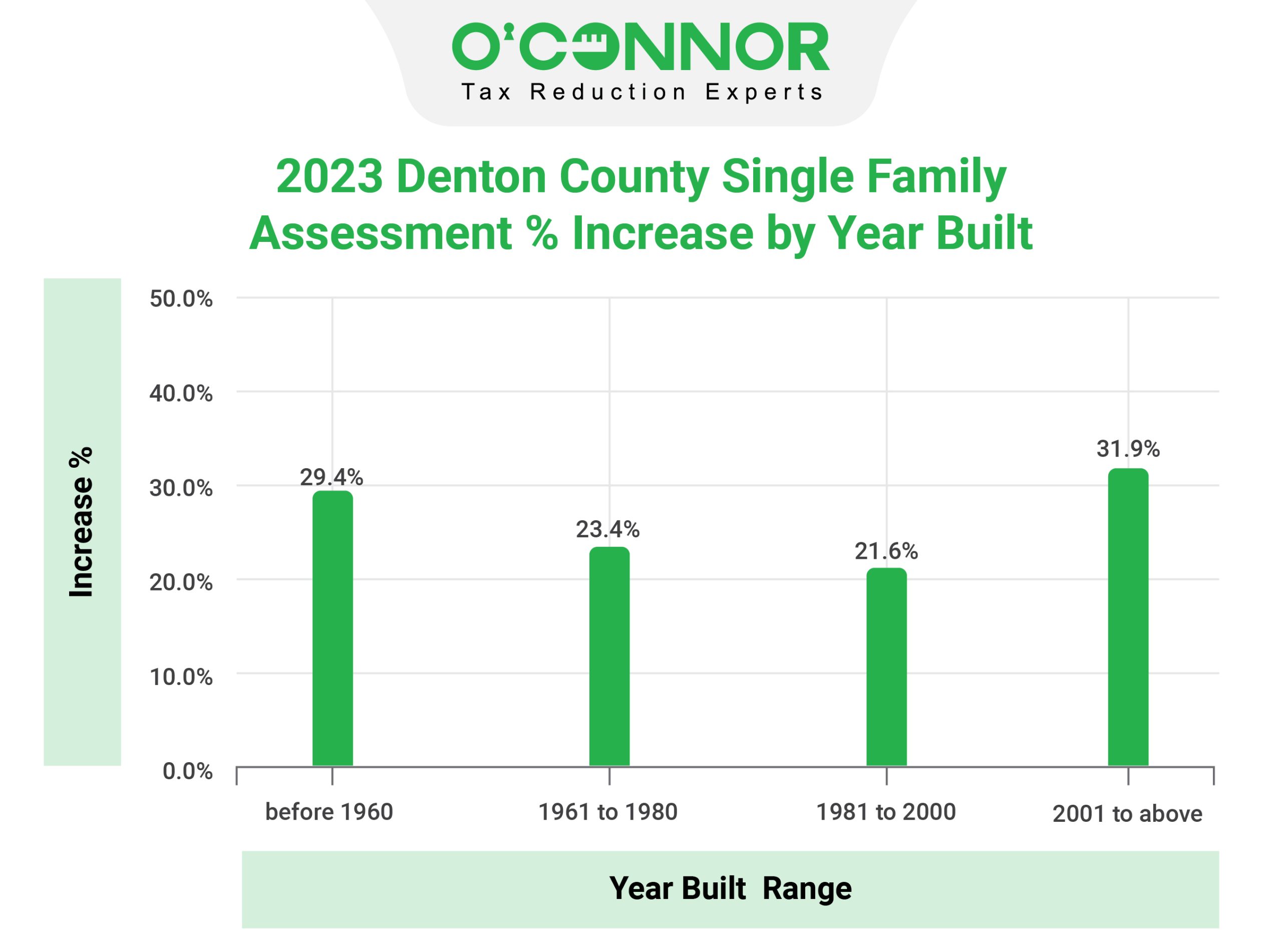
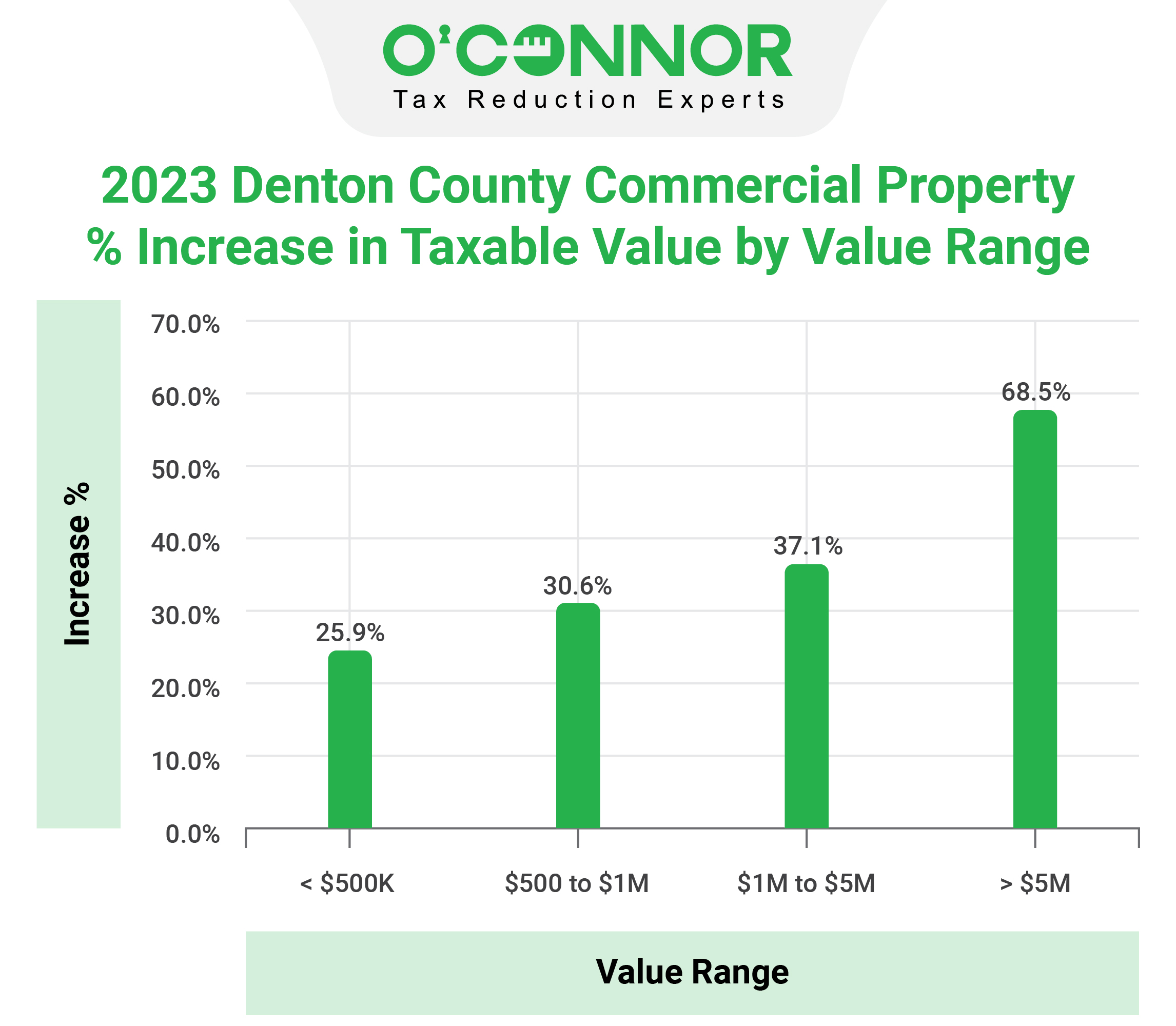
In a high-demand market like North Texas, market values often rise faster than the legal limits allowed for taxation.
- Market Value: The price at which a property would transfer for cash or its equivalent under prevailing market conditions.
- Appraised Value (The "Cap"): For homeowners with a valid General Residence Homestead Exemption, Texas law limits the increase of the appraised value to 10% per year, plus the value of any new improvements. This is often referred to as the "homestead cap."
Maximizing Tax Savings with 2026 Exemptions
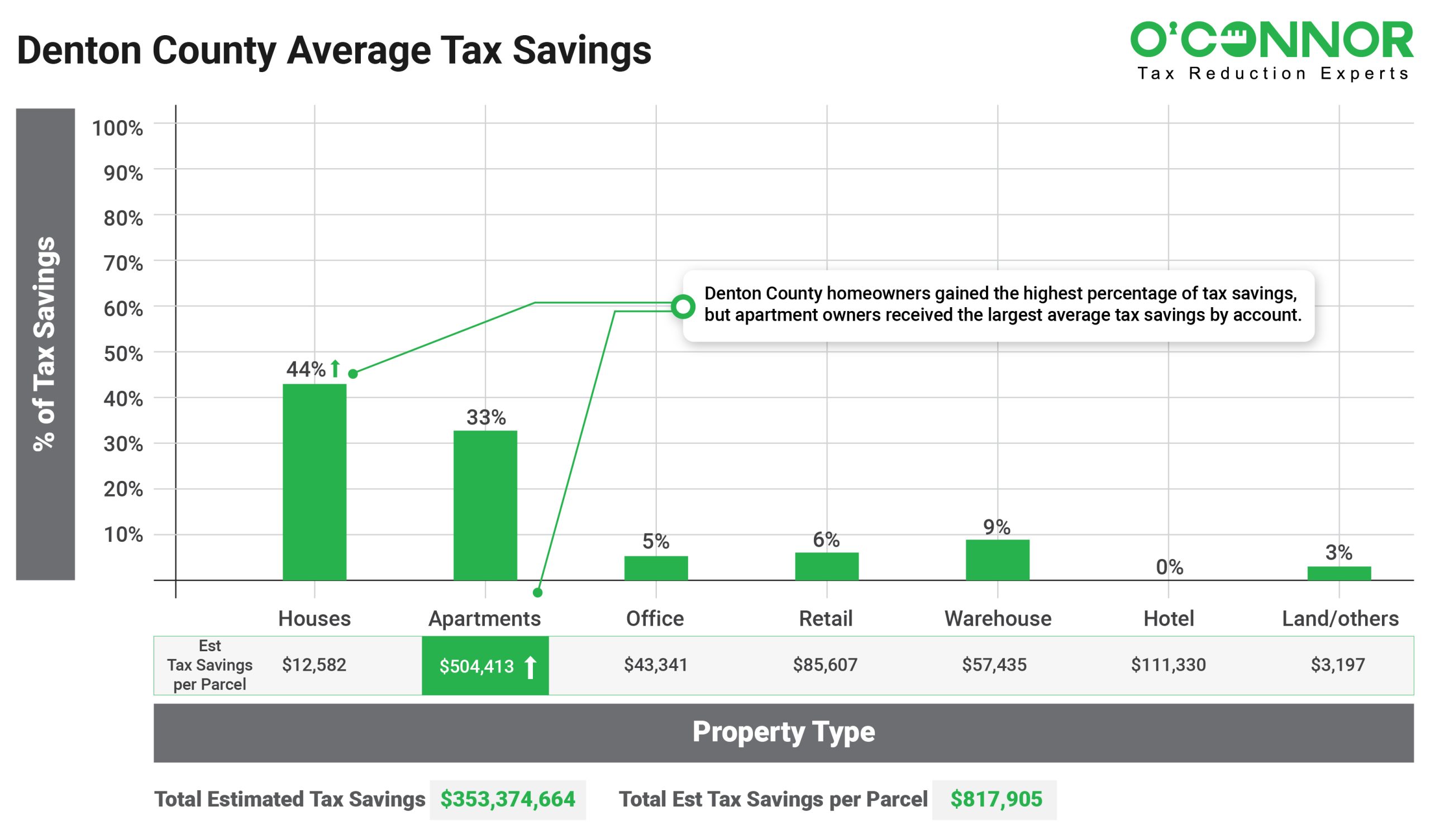
Exemptions are the most effective way to lower your property tax burden in Denton County. An exemption removes a portion of your property's value from taxation, effectively lowering your bill.
General Residence Homestead Exemption
This is the most common exemption. To qualify for the 2026 tax year, the property must be your principal residence. You must own the property and live in it as of January 1. This exemption significantly reduces the taxable value for school district taxes (a mandatory $100,000 reduction as of recent Texas constitutional amendments) and varies for other taxing units.
Over-65 and Disability Exemptions
Property owners who are 65 years of age or older, or who meet the Social Security Administration's definition of disabled, qualify for additional exemptions.
- Tax Ceiling (The "Freeze"): Once you receive an Over-65 or Disability exemption, the school district taxes on your home are "frozen." The dollar amount you pay will not increase as long as you own and live in that home, regardless of value increases or rate hikes, unless you make significant improvements to the property.
- Portability: If you move within Texas, you may be able to transfer the percentage of your tax ceiling to a new residence.
Disabled Veteran Exemptions
Texas provides robust support for veterans. The exemption amount is based on the disability rating provided by the Department of Veterans Affairs (VA).
- 100% Disability: Veterans with a 100% service-connected disability rating (or those deemed unemployable by the VA) are eligible for a 100% exemption on their primary residence, effectively paying zero property tax.
- Partial Disability: Veterans with ratings between 10% and 90% receive a specific dollar-amount deduction from their property's value.
| Exemption Type | Qualification Requirement | Primary Benefit |
|---|---|---|
| General Homestead | Primary residence in Denton County. | 10% Appraisal Cap; $100k School Tax reduction. |
| Over-65 | Age 65 or older by Dec 31. | School Tax "Freeze"; additional local deductions. |
| Disabled Person | Meets SSA disability criteria. | Tax Ceiling similar to Over-65 status. |
| Disabled Veteran (100%) | 100% VA disability or unemployable. | Total exemption from all property taxes. |
| Disabled Veteran (Partial) | 10% - 90% VA disability rating. | Tiered value reduction (up to $12,000). |
| Surviving Spouse | Spouse of individual with 65+ or Vet exemption. | Retention of the tax ceiling/exemption benefits. |
How to Protest Your 2026 Property Valuation
If you believe the DCAD has overvalued your property or treated it unequally compared to similar properties, you have the right to protest. Protesting is a critical component of managing property taxes in Denton County, especially during periods of rapid appreciation.
Step 1: File the Protest
You must file a written protest by May 15, 2026, or within 30 days of receiving your notice. You can file online via the DCAD website portal, which is the most efficient method for tracking status.
Step 2: The Informal Meeting
Before a formal hearing, you will often have the opportunity to meet informally with a DCAD appraiser. In 2026, many of these sessions are conducted via telephone or online video conference.
- Evidence: Bring photos of structural damage, foundation issues, or recent professional appraisals that show a lower value.
- Settlement: If you and the appraiser agree on a lower value, the process ends there, and the value is locked for the year.
Step 3: The Formal ARB Hearing
If no agreement is reached, you will appear before the Appraisal Review Board. The ARB is a panel of independent citizens appointed to resolve disputes between property owners and the appraisal district.
- Burden of Proof: The appraisal district has the burden of proving your property's value by a "preponderance of the evidence."
- The Decision: The ARB will listen to both sides and deliver a written order determining the final value.
Calculating the 2026 Tax Bill
The calculation of property taxes in Denton County follows a specific mathematical formula. It is important to remember that your tax bill is the sum of various local entities.
The General Formula
(Appraised Value - Exemptions) / 100 x Tax Rate = Total Tax Owed
For example, if your home is valued at $500,000 and you have a $100,000 homestead exemption, your taxable value for school taxes is $400,000. If the combined tax rate for the City of Denton, Denton ISD, and Denton County is $2.10 per $100 of value, your annual tax would be $8,400.
Major Taxing Jurisdictions in Denton County
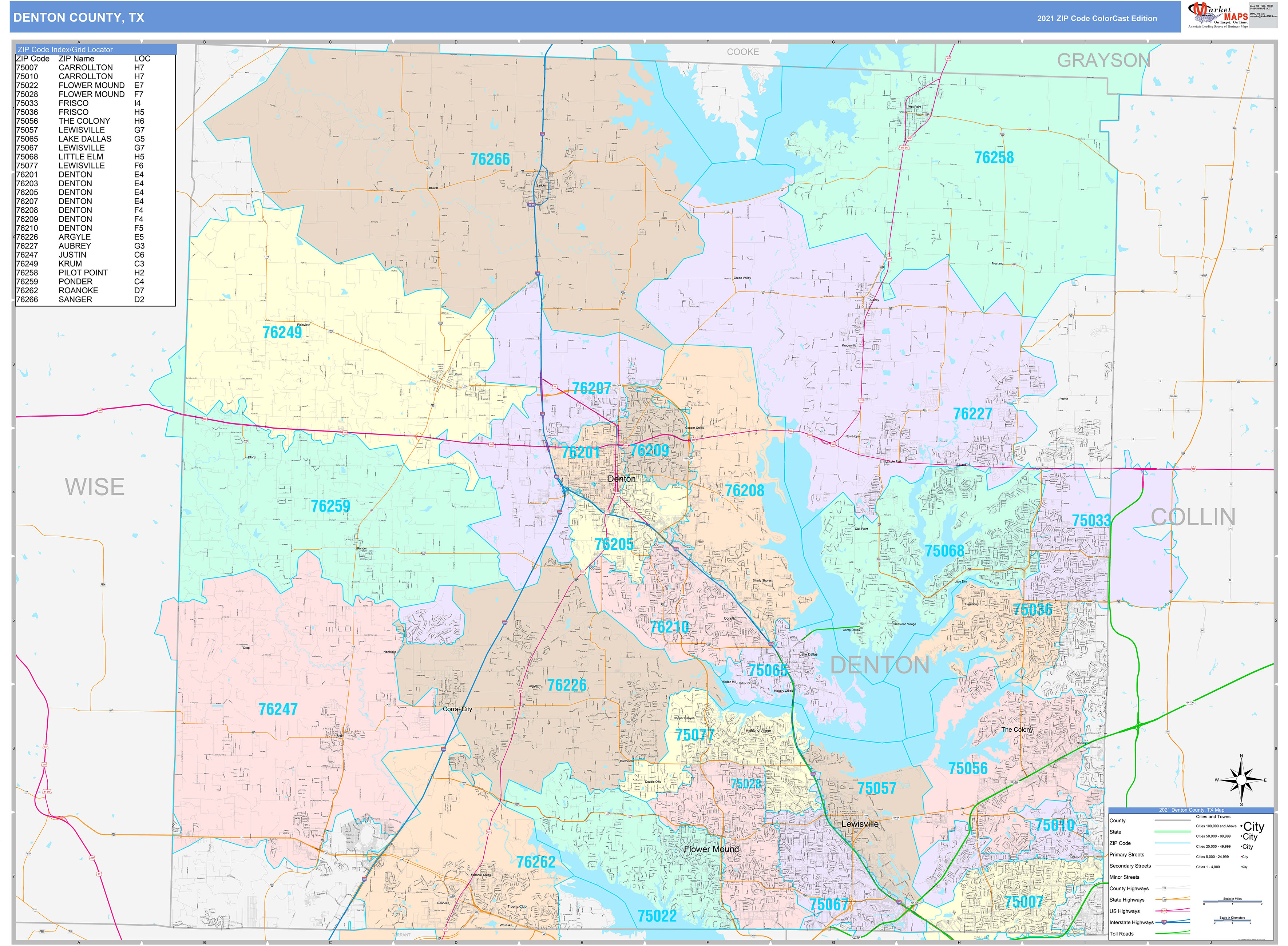
Your specific tax rate depends on exactly where your property is located. Major entities include:
- Denton County General Fund: Funds county-wide services like the Sheriff's Office and courts.
- Independent School Districts (ISDs): Such as Denton, Lewisville, Frisco, Northwest, and Little Elm ISDs. School taxes typically make up 50-60% of your total bill.
- Municipalities: Cities like Denton, Flower Mound, Highland Village, and Corinth.
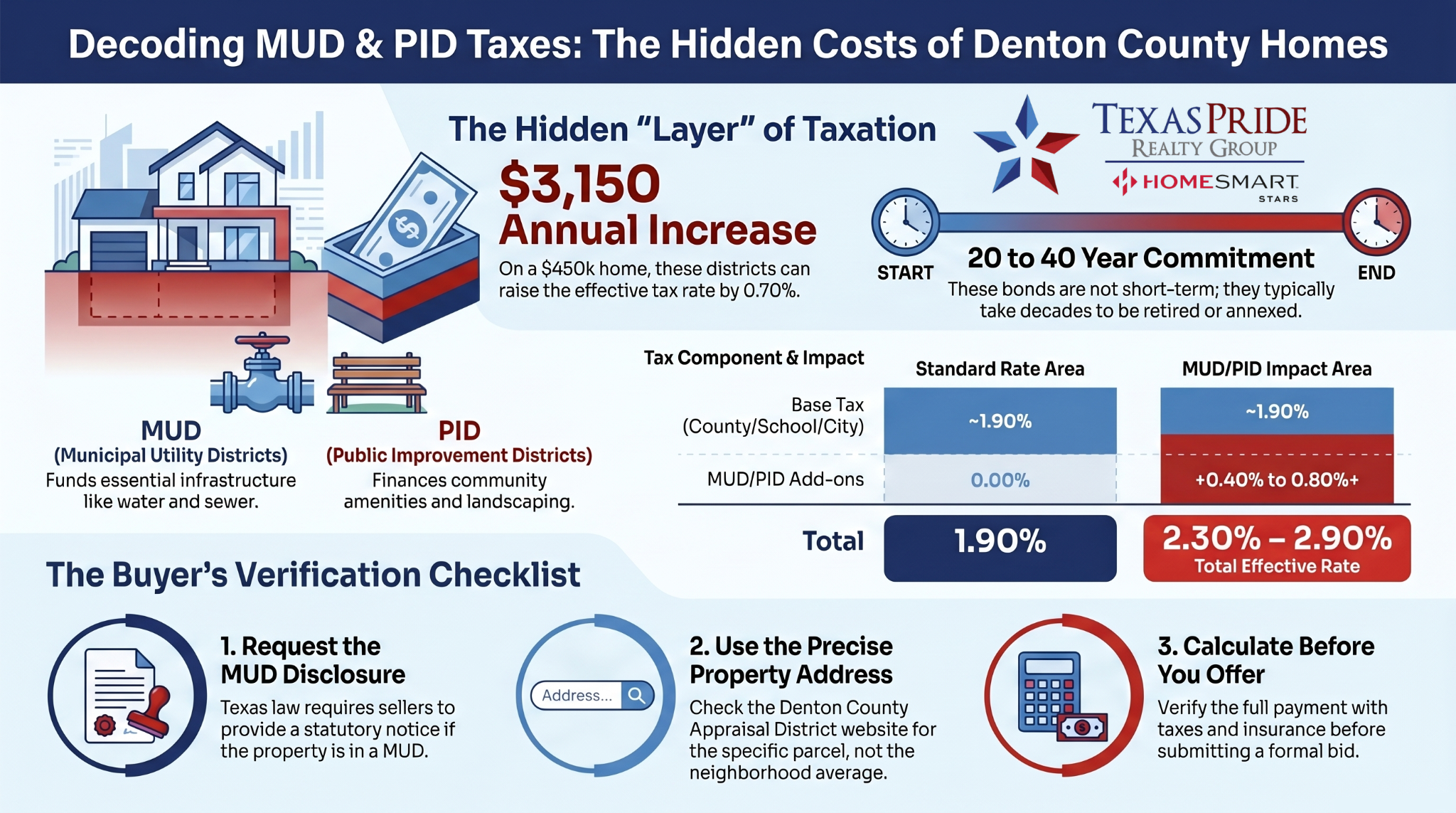
- Special Districts: These may include Municipal Utility Districts (MUDs) or Fresh Water Supply Districts (FWSDs) which fund localized infrastructure.
Payment Options and Delinquency Risks
The Denton County Tax Office, led by the Tax Assessor-Collector, offers several ways to pay your 2026 taxes.
- Online Payments: Credit card and e-check payments are accepted through the official Denton County website. Note that credit card transactions usually incur a processing fee (typically 2.15% to 2.50%).
- In-Person: Payments can be made at the Mary and Jerry Christian Courts Building in Denton or at satellite offices in Lewisville, Carrollton, Cross Roads, and Flower Mound.
- Mail: Payments must be postmarked by January 31, 2027. Using certified mail is recommended for high-value payments.
- Escrow Accounts: Most homeowners pay their taxes monthly through their mortgage company. Ensure your mortgage servicer has the correct taxing information and that they remit payment before the January deadline.
Penalties for Late Payment
If taxes are not paid by February 1, 2027, the following penalties apply:
- February: 7% (6% penalty + 1% interest).
- Monthly Increase: Interest continues to accrue at 1% per month.
- July 1st: An additional "Attorney Collection Fee" of up to 20% is typically added to delinquent accounts to cover the cost of legal action by the county.
Comparison: Denton County vs. Neighboring North Texas Counties
When evaluating property tax burdens, it is helpful to see how Denton County compares to its neighbors in the Dallas-Fort Worth metroplex.
| Feature | Denton County | Collin County | Tarrant County |
|---|---|---|---|
| Appraisal Cap | 10% (State Law) | 10% (State Law) | 10% (State Law) |
| Average Combined Rate | 1.9% - 2.3% | 1.8% - 2.2% | 2.0% - 2.5% |
| Homestead Exemption | Standard + Local Options | Heavily utilized | Wide variety of MUDs |
| Growth Rate (2026) | Very High | High | Moderate-High |
Common Pitfalls and Troubleshooting
Managing property taxes can lead to administrative errors. If you encounter issues in 2026, consider these expert tips:
- Missing Exemption: If you realize you didn't file your homestead exemption, Texas law allows you to file for it retroactively for up to two years. Contact DCAD immediately to file a "Late Homestead Exemption" application.
- Incorrect Ownership Records: If you bought a home recently and the tax bill is still in the previous owner's name, you are still responsible for the taxes. Ensure the deed was recorded properly with the Denton County Clerk.
- Mailing Address Errors: Failure to receive a tax bill does not waive the requirement to pay or the penalties for late payment. Always verify your mailing address on the DCAD website.
- Rendering Business Personal Property: If you own a business in Denton County, you must "render" your equipment and inventory by April 15 each year. Failure to do so results in a 10% penalty on your tax bill.
Frequently Asked Questions
When are 2026 Denton County property taxes due?
Property taxes for the 2026 tax year are due on January 31, 2027. While bills are mailed in October 2026, payments are considered delinquent if not received or postmarked by the end of January.
How can I lower my property tax bill in Denton County?
The most effective ways to lower your bill are ensuring you have all applicable exemptions (Homestead, Over-65, or Veteran) and actively protesting your appraised value every year before the May 15 deadline.
Does Denton County offer a payment plan for property taxes?
Yes, for certain individuals. Homeowners with an Over-65, Disability, or Disabled Veteran exemption can choose the "Quarterly Payment Plan," which allows them to pay their taxes in four equal installments without penalty or interest.
What is the "Homestead Cap" and how does it work in 2026?
The Homestead Cap limits the increase of your home's appraised value to 10% per year. Even if the market value of your home increases by 20% due to local demand, the value used to calculate your taxes can only rise by 10%, provided you have a valid homestead exemption on file.
Where is the Denton County Tax Office located?
The main office is located at the Mary and Jerry Christian Courts Building, 1505 E. McKinney St., Denton, TX 76209. There are also satellite locations in Frisco, Lewisville, and Flower Mound for convenience.
Can I protest my property taxes online in Denton County?
Yes, the Denton Central Appraisal District (DCAD) provides an online portal for filing protests and uploading evidence. This is the preferred method for most residents as it allows for electronic communication and faster settlement offers.
Summary of Action Items for Property Owners
To ensure you are not overpaying and are fully compliant with Texas law in 2026, follow this checklist:
- Verify your Homestead Exemption status on the DCAD website before April 30.
- Review your Notice of Appraised Value in May; if the market value is higher than your home's actual worth, file a protest by May 15.
- Gather evidence such as repair estimates or photos of damage to present during your informal appraisal meeting.
- Confirm with your mortgage company in November that they have received the 2026 tax bill.
- If you do not have an escrow account, ensure your final payment is made by January 31, 2027.
For further assistance, property owners should contact the Denton Central Appraisal District for valuation questions or the Denton County Tax Office for payment-related inquiries. Staying proactive in the property tax process is the only way to ensure that the rapid growth of the North Texas region does not lead to an unmanageable tax burden.
Image Gallery