What Is SAP S/4HANA: A Comprehensive Guide to the Enterprise Resource Planning System
SAP S/4HANA is an advanced, in-memory enterprise resource planning (ERP) suite designed to help organizations streamline core business operations—ranging from finance and supply chain management to procurement and human resources—by pr...
SAP S/4HANA is an advanced, in-memory enterprise resource planning (ERP) suite designed to help organizations streamline core business operations—ranging from finance and supply chain management to procurement and human resources—by processing massive volumes of operational and analytical data in real time.
Contents
Understanding the Evolution of SAP ERP
To understand what SAP S/4HANA is today, it helps to examine its architectural lineage. For decades, companies relied on older SAP generations, most notably SAP ERP Central Component (ECC), powered by traditional database management systems. While these legacy systems formed the backbone of global enterprise IT for years, they faced fundamental limitations. Traditional databases handled transactional data (OLTP) and analytical reporting (OLAP) separately. This separation meant that generating business insights, complex reports, or period-end closing figures required batch processing, overnight jobs, and data replication across disparate systems.
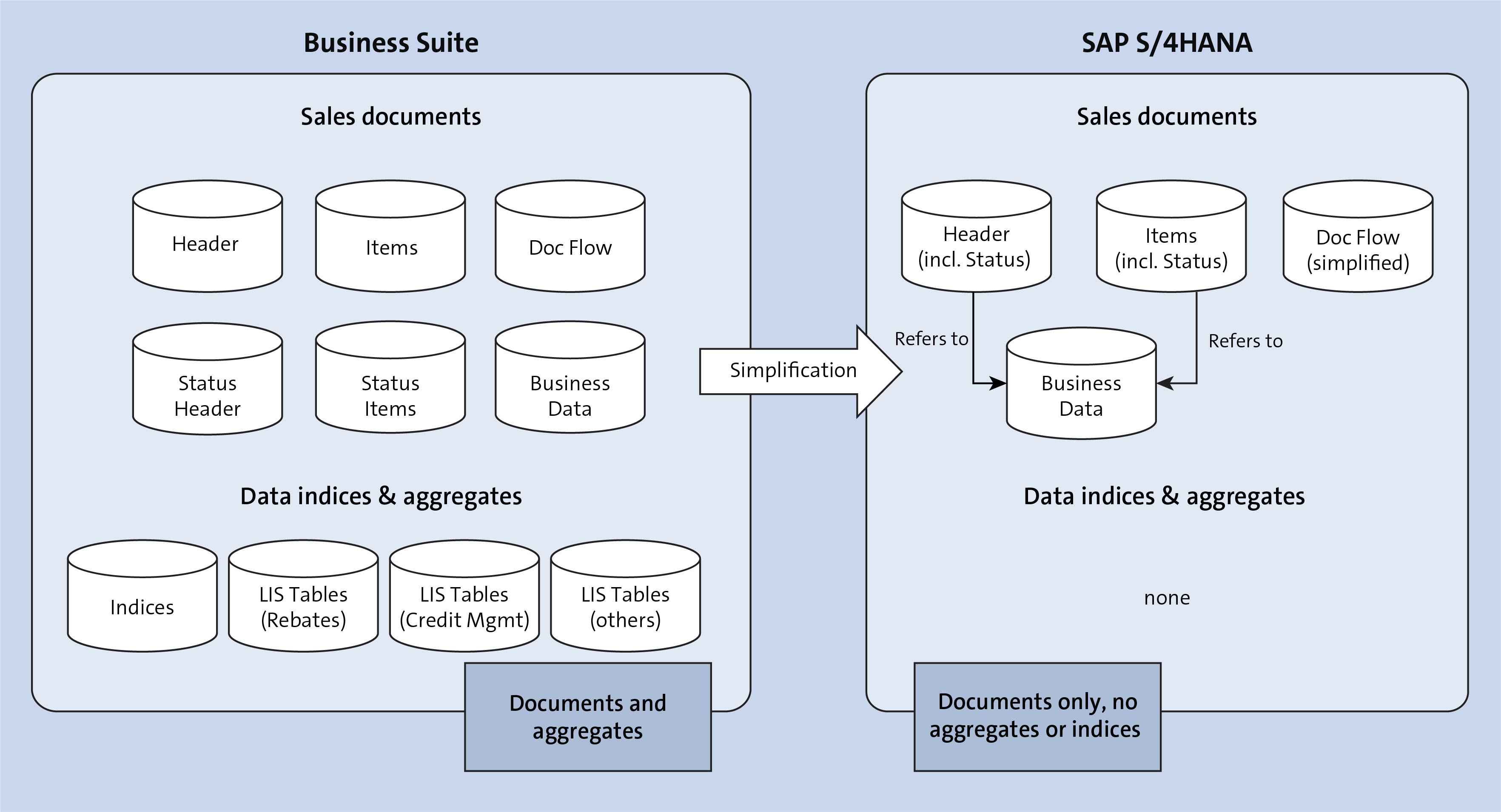
SAP S/4HANA—officially introduced as SAP Business Suite 4 SAP HANA in 2015—was built to eliminate this architectural divide. By taking full advantage of the SAP HANA in-memory database platform, the system stores all data directly in random-access memory (RAM) rather than on slower mechanical or solid-state disk drives. This shift removes database bottlenecks, shrinks the overall digital footprint by eliminating aggregate tables, and allows organizations to run complex analytics directly against live transactional data. Consequently, businesses can evaluate financial positions, monitor supply chain movements, and adjust production schedules instantaneously.
Core Architectural Pillars and Technical Specifications
The technical foundation of SAP S/4HANA rests on several tightly integrated architectural components that differentiate it from previous generations of enterprise software.
The In-Memory Database
At the heart of the suite is the SAP HANA database. By leveraging column-store data organization alongside traditional row-store capabilities, the database achieves unprecedented data compression ratios and high-speed scan performance. This means that tables containing hundreds of millions of rows can be queried in milliseconds without requiring pre-calculated index tables or materialized aggregates.
The Simplified Data Model
In legacy ERP environments, data redundancy was common because systems required aggregate and index tables to maintain acceptable reporting speeds. SAP S/4HANA re-engineered the Universal Journal (ACDOCA) in finance and streamlined inventory management tables (MATDOC). By collapsing multiple redundant tables into single, unified database views, the system reduces the database footprint significantly while maintaining complete transactional consistency.
The User Experience (UX) with SAP Fiori
Transitioning away from traditional, densely populated SAP GUI screens, SAP S/4HANA relies on SAP Fiori as its primary interface. Fiori provides role-based, responsive, and consumer-grade web applications that adapt to desktops, tablets, and smartphones. Users receive proactive notifications, task-based navigation, and contextual analytics directly on their homepages, significantly reducing training time and lowering data entry errors.
Deployment Options: Cloud, On-Premise, and Hybrid
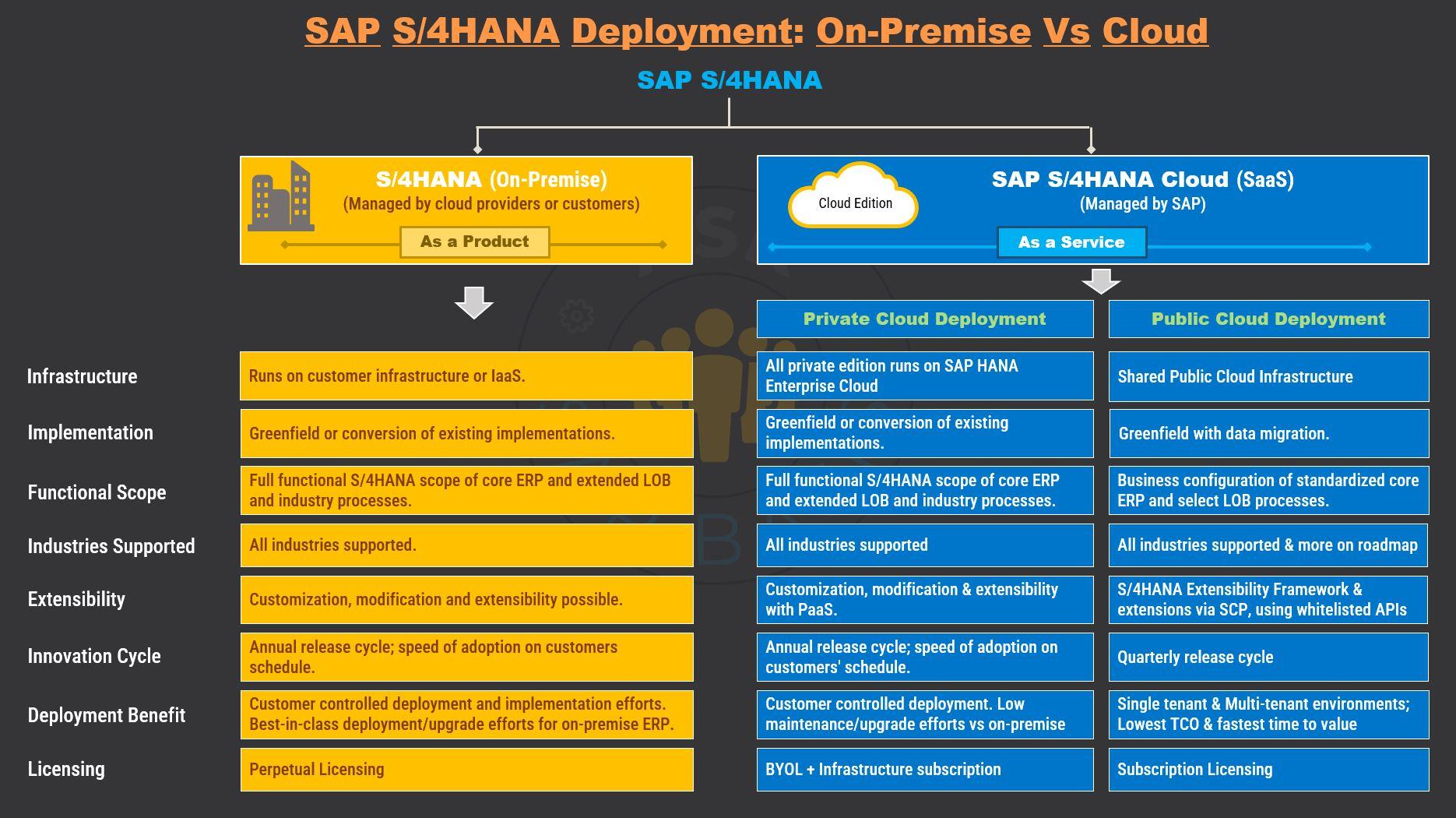
Organizations adopting SAP S/4HANA face a critical choice regarding deployment models. SAP offers multiple deployment paths to accommodate different industry regulations, IT strategies, and capital expenditure preferences.
| Deployment Model | Primary Characteristics | Target Audience | Maintenance & Updates |
|---|---|---|---|
| Public Cloud (SAP S/4HANA Cloud Public Edition) | Multi-tenant SaaS model, standardized business processes, rapid deployment, predictable subscription costs. | Fast-growing mid-market companies and enterprises seeking standardizations. | Automatic quarterly updates managed by SAP. |
| Private Cloud (SAP S/4HANA Cloud Private Edition) | Single-tenant infrastructure, highly customizable, supports extensive legacy modifications and deep industry solutions. | Large enterprises with complex, mission-critical operations requiring specific custom code. | Managed upgrade cycles controlled by the enterprise. |
| On-Premise | Deployed on the organization's own data center hardware or private cloud provider infrastructure; full customer control over setup. | Highly regulated industries with strict data residency mandates or unique custom landscapes. | Customer-managed maintenance schedules and upgrades. |
| Hybrid | Combination of cloud and on-premise deployments (e.g., core financials on-premise with cloud-based procurement). | Enterprises undergoing phased, multi-year digital transformations. | Varies by individual landscape component. |
Business Value and Functional Scope
SAP S/4HANA extends across all major functional areas of an enterprise, fundamentally altering how departments operate.
Financial Management
In finance, the Universal Journal combines general ledger, asset accounting, controlling, and profitability analysis into a single line-item table. This architecture eliminates the need for month-end reconciliation between separate modules. Financial controllers can execute real-time profitability analysis down to the individual customer or product level at any moment during the fiscal period.
Supply Chain and Procurement
Supply chain disruptions require immediate visibility into inventory levels, supplier performance, and shipping logistics. SAP S/4HANA provides advanced inventory management, material requirements planning (MRP) running in real time, and automated procurement workflows. Planners can simulate supply chain scenarios instantly, identifying material shortages before they impact production lines.
Manufacturing and Production Planning
Manufacturing execution systems integrated with SAP S/4HANA coordinate shop-floor operations with enterprise-level planning. By utilizing embedded predictive analytics, maintenance teams can anticipate machinery failures before they occur, shifting from reactive repairs to predictive maintenance strategies.
Transition Strategies: Moving from ECC to S/4HANA
With legacy SAP ERP support timelines shifting, organizations running older versions must plan their migration carefully. Choosing the right transition path depends on existing system customization, data quality, and strategic business goals.
- System Conversion (Brownfield): The existing SAP ECC system is migrated directly to SAP S/4HANA, preserving historical data and existing configuration structures. This approach suits companies satisfied with their current business processes who want to upgrade their technical foundation efficiently.
- New Implementation (Greenfield): The organization implements a completely fresh instance of SAP S/4HANA, discarding legacy technical debt and adopting standardized, best-practice processes. This path is ideal for companies undergoing major business model transformations or mergers.
- Landscape Transformation: Businesses with multiple disparate legacy systems consolidate them into a single, unified SAP S/4HANA instance. This approach involves selective data migration and organizational harmonization.
Frequently Asked Questions
What is the difference between SAP ECC and SAP S/4HANA?
SAP ECC is the older generation ERP suite that runs on various traditional relational databases, separating transactional processing from analytical reporting. SAP S/4HANA is the modern successor built exclusively on the in-memory SAP HANA database, combining transactions and analytics into a single real-time platform with a simplified data model and modern user interface.
Is SAP S/4HANA available only in the cloud?
No. While SAP heavily promotes its cloud offerings—such as SAP S/4HANA Cloud Public Edition and Private Edition—the software is also fully supported for traditional on-premise deployment or hosted infrastructure managed by third-party cloud providers.
How does in-memory computing improve ERP performance?
Traditional databases store data on magnetic or solid-state disks, requiring significant time to read and write information during database queries. In-memory computing loads the entire database into RAM, allowing the processor to scan millions of data rows instantaneously, which eliminates the need for pre-aggregated summary tables and speeds up reporting from hours to seconds.
What is SAP Fiori and why is it important for S/4HANA?
SAP Fiori is the modern user experience design system used across SAP S/4HANA. Unlike the traditional SAP GUI, which featured dense, text-heavy menus, Fiori offers role-based, responsive applications with intuitive dashboards that reduce training overhead and improve daily user productivity.
What are the main steps required to migrate to SAP S/4HANA?
Migration typically begins with an enterprise readiness assessment and custom code analysis. Organizations then choose a transition path (System Conversion, New Implementation, or Landscape Transformation), execute data cleansing, perform test migrations in sandbox environments, and complete the cutover during a planned maintenance window.
Next Actions for Enterprise Decision-Makers
Organizations evaluating SAP S/4HANA should begin by conducting a comprehensive readiness assessment of their current SAP landscape. Utilizing tools like SAP Readiness Check helps identify custom code compatibility, sizing requirements, and simplification items that must be addressed prior to migration. Engaging experienced enterprise architects and certified implementation partners ensures that the chosen deployment model aligns with long-term strategic, operational, and financial objectives.
Image Gallery